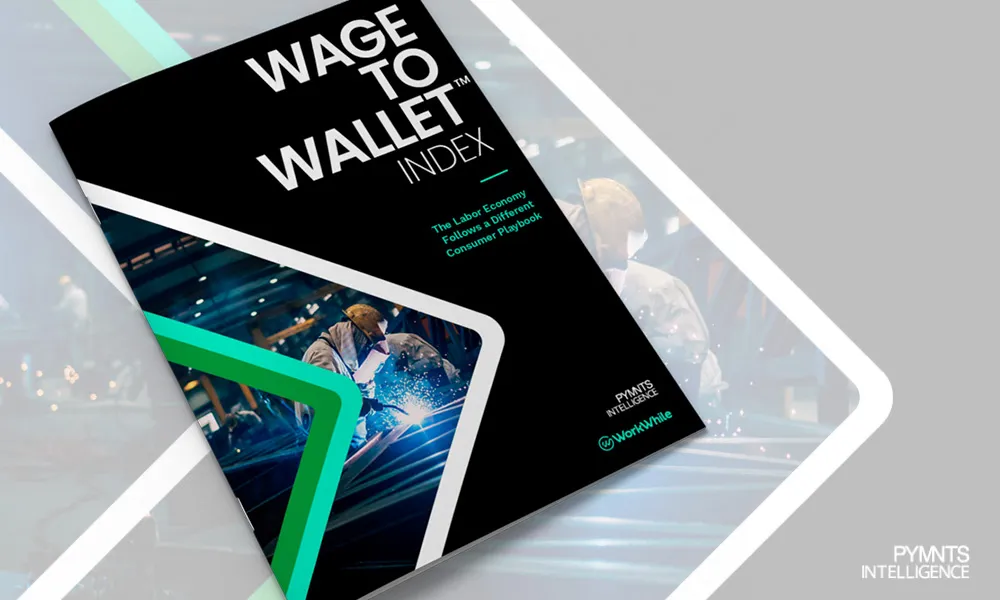
Workers earning $25 an hour or less control $1.7 trillion in annual consumer spending, and they spend it on different terms than the rest of the market. The July 2026 Wage to Wallet Index from PYMNTS and WorkWhile surveyed 2,396 U.S. adults and found that this "Labor Economy" cohort, 60 million workers representing 36.5% of employed adults, prefers debit over credit, cuts travel before anything else, and cares more about instant savings than points programs.

For fintech teams building payment products, loyalty programs, or lending tools, the data rewrites several assumptions. The spend-now, earn-later model that drives credit card rewards barely registers with nearly half of this market. These consumers are not opting out of financial products. They are opting into different ones.
Why do Labor Economy workers prefer debit?
The index found that Labor Economy households spend less each month and rely more heavily on debit than credit. That is not a poverty story. It is a liquidity story. When 45% of workers in this bracket use installment plans because they cannot cover the full purchase at once, the appeal of credit evaporates. Credit assumes you can pay the balance later. These workers cannot assume that.
Debit cards offer something credit does not: real-time visibility into what is left. The index emphasizes that these consumers place more weight on savings they can see right away. A $5 discount today beats 500 points redeemable in six months. The mental accounting is simpler, and the reward is guaranteed.
This preference has downstream effects. Rewards apps, loyalty programs, and bulk-buying clubs all see lower participation from this cohort. The report notes that "lower prices, simple offers and clear value at checkout may have greater appeal" than complex programs requiring upfront spend.
Travel gets cut first
The widest participation gap between Labor Economy workers and higher earners appears in travel spending. When budgets tighten, larger discretionary purchases get cut first. This is rational: a flight is deferrable, groceries are not. But the gap also signals where fintech products aimed at this market should not go.

Travel cards with annual fees, airline miles programs, and premium credit products built around vacations lose relevance here. The same logic applies to any product where the payoff is deferred or requires sustained high spending. The market is not rejecting financial products. It is rejecting the wrong financial products.
What this means for banks and fintechs
The report points banks, fintechs, merchants, and digital platforms toward four design principles for this market: debit-first tools, real-time balance information, transparent fees, and simple payment choices. None of these are technically difficult. Most incumbents simply have not prioritized them.
Real-time balance visibility matters because overdraft anxiety is a constant. Traditional banks show pending transactions hours or days late. Neobanks like Chime and Current built their early growth on solving exactly this problem: instant transaction posting and overdraft protection without fees. The Wage to Wallet data suggests that design choice was not a feature. It was the product.

Fee transparency is similarly undervalued by incumbents. A $35 overdraft fee on a $4 coffee is a 775% cost. For workers who track every dollar, hidden fees are not annoyances. They are dealbreakers. The report's emphasis on "clear fees" reads like obvious advice until you realize most checking accounts still bury their fee schedules in 40-page disclosures.
Buy-now-pay-later providers like Klarna and Affirm have captured share in this market, but the index complicates the narrative. If 45% of users choose installments out of necessity rather than convenience, the risk profile looks different than BNPL growth stories suggest. These are not affluent consumers splitting purchases for points. They are workers stretching paychecks. Default rates follow from that distinction.
Regulatory shifts affecting fintech and banking products
The $1.7 trillion question
A market worth $1.7 trillion annually is not a niche. It is one-third of the employed consumer base. Yet most financial products are designed for the other two-thirds: the credit-comfortable, the points-optimizers, the annual-fee payers.
The mismatch creates opportunity for whoever builds specifically for Labor Economy preferences. That means debit-native accounts, instant fee disclosure, rewards delivered at checkout rather than accumulated over months, and underwriting models that do not penalize irregular income. Gig workers, hourly employees, and service-sector staff do not fit traditional credit models. They never did.

The report's collaboration with WorkWhile, a platform focused on hourly workers, suggests where the data came from and who might act on it. Workforce platforms have direct relationships with this cohort and can embed financial products at the point of paycheck or shift completion. Earned wage access, instant pay, and shift-based budgeting tools all fit the behavioral patterns the index describes.
Logicity's Take
The Wage to Wallet Index confirms what neobanks have bet on for years: traditional banking neglects workers who live paycheck to paycheck. But the 45% figure on installment financing is the real signal. It means BNPL providers serving this market face different economics than their investor decks suggest. Fintechs building for Labor Economy workers should price for necessity, not convenience. The floor for this market is not consumer preference. It is liquidity.
Where the index falls short
The methodology notes that spending figures cover a "typical month," payment behavior spans three months, and change measures cover 12 months. These are self-reported windows, not transaction data. The 2,396-person sample is large enough for directional conclusions but not granular breakdowns by industry, region, or gig-versus-W2 status.
PYMNTS publishes these indexes regularly, and the collaboration with WorkWhile gives this edition a sharper focus than generic consumer surveys. But the report does not answer several questions fintech teams would want: What is the average number of financial apps these workers use? Which banks or neobanks already serve them? What is the churn rate on accounts that fail these design principles?
Those gaps matter because the report's recommendations are not new. Neobanks have been marketing real-time balance tools for a decade. The question is why incumbents have not matched them. The answer probably involves fee revenue, not product design. Overdraft fees generate $15 billion annually for U.S. banks. Transparent pricing means sacrificing that revenue stream. The Labor Economy may be worth $1.7 trillion, but banks have been willing to lose it.
Need Help Implementing This?
Logicity helps fintech and finance teams interpret consumer data and design products that match real user behavior. Reach out if you want to discuss what the Wage to Wallet findings mean for your roadmap.
Source: PYMNTS | / PYMNTS
Manaal Khan
Tech & Innovation Writer
Produced with AI assistance and reviewed by the Logicity editorial team. Learn more in our Editorial Policy.