Key Takeaways
3 Kitchen Gadgets Under $20 You'll Actually Use!
- All six gadgets cost under $20 and are dishwasher-safe or easy to clean
- The clip-on pasta strainer eliminates bulky colanders and saves sink space
- The Fluicer citrus juicer extracts more juice with less effort than traditional clamshell designs
Six cheap kitchen gadgets under $20 can genuinely improve your cooking routine, according to ZDNET managing editor Alison DeNisco Rayome, who tested each in her own kitchen. The list focuses on tools that solve real annoyances: bulky colanders, inefficient citrus juicers, and the eternal chaos of the Tupperware drawer.
What connects these picks isn't novelty. It's that each tool removes friction from tasks home cooks repeat daily. And for under $20 apiece, the cost of getting it wrong is negligible.
The clip-on pasta strainer ($17)
The standout recommendation is a silicone clip-on strainer that attaches directly to your pot. You drain pasta without dirtying a colander, then toss the strainer in the dishwasher. Rayome calls it a "game-changer" for households that make pasta frequently. It fits both small and large pots, stores flat, and eliminates one of the bulkiest items in the dish pile.
The appeal here is obvious. Colanders take up sink space and require scrubbing. This thing clips on, drains, and disappears into the top rack.
The Fluicer citrus juicer ($20)
Traditional clamshell juicers require significant hand strength and still leave pulp behind. The Fluicer uses a different mechanism: you press the citrus through a cone, extracting more juice with less effort. It catches seeds, lies flat in a drawer, and works for lemons and limes despite being labeled "lemon-sized."
If you juice citrus regularly, whether for cocktails, marinades, or dressings, this solves the right problem. Rayome has recommended it before and continues to do so.
Wine stoppers, avocado slicer, kitchen shears
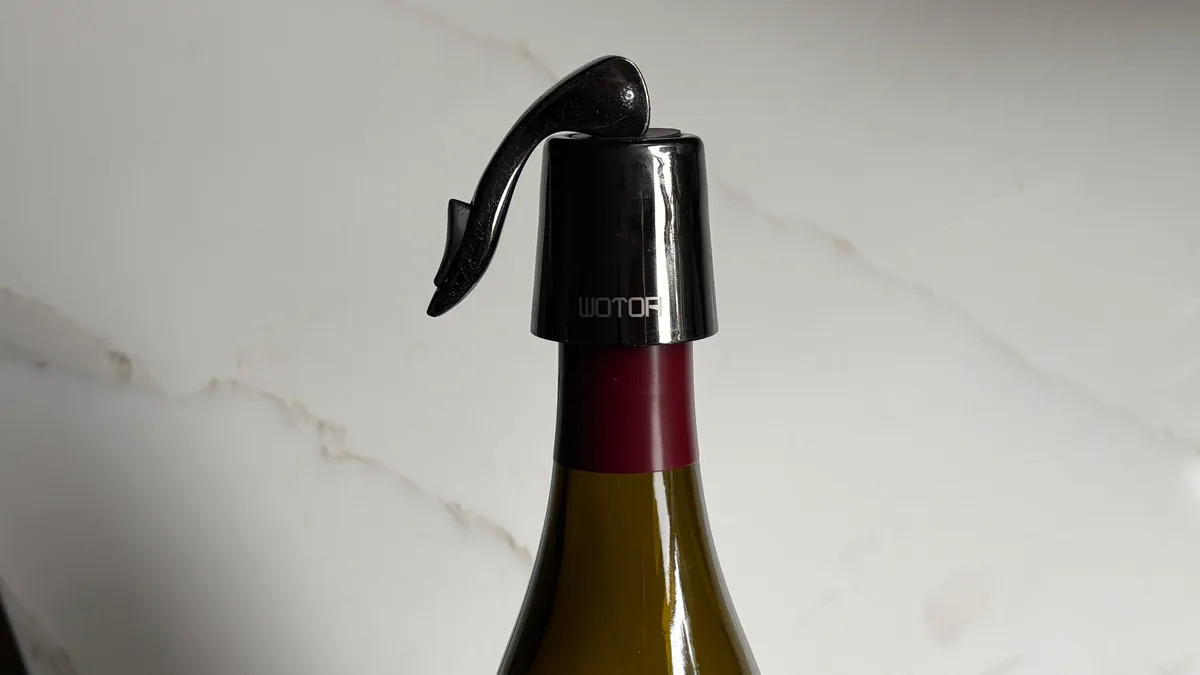
The remaining picks address smaller but persistent annoyances. Wine bottle stoppers ($10 for two) are leakproof and let you store bottles on their side. The avocado slicer ($12) handles the pit removal and slicing in one tool. Kitchen shears ($9 for two) replace the awkward knife-and-cutting-board dance for herbs, packaging, and poultry.
None of these are inventions. They're iterations on existing tools, optimized for the sub-$20 price point where impulse buys feel painless.
The Tupperware drawer organizer ($20)
The final recommendation tackles drawer chaos. A dedicated organizer keeps lids and containers matched and accessible. It won't change how you cook, but it will end the daily archaeology expedition through mismatched plastic.
Why budget kitchen tools keep going viral
The budget kitchen gadget market has grown steadily, driven partly by TikTok's #KitchenTok (billions of views) and partly by pandemic-era cooking habits that never fully reversed. Products that once seemed gimmicky, like vegetable choppers and silicone stretch lids, have proven genuinely useful.
The $15-20 price point is strategic. It's low enough that buyers don't agonize over the decision, but high enough that manufacturers can deliver decent build quality. Amazon's "Most Wished For" lists in Home & Kitchen are dominated by exactly this category.
Logicity's Take
The real pattern in these recommendations isn't kitchen-specific. It's about removing recurring friction from repetitive tasks. The same logic applies to software: tools like [Zapier](https://logicity.in/r/zapier), [Make](https://logicity.in/r/make), or [n8n](https://logicity.in/r/n8n) do for workflows what a clip-on strainer does for pasta night. The lesson for CTOs and founders: sometimes the highest-ROI investment isn't the expensive platform overhaul. It's the cheap, single-purpose tool that eliminates 30 seconds of friction from something your team does 50 times a week. Compound that and you're looking at real productivity gains for minimal spend.
Disclosure
Some links in this post are affiliate links — Logicity earns a commission if you sign up, at no extra cost to you. We only link products we have used or actively recommend.
Frequently Asked Questions
Are cheap kitchen gadgets worth buying?
At under $20, the downside risk is minimal. If the tool solves a specific, repeated task (like draining pasta or juicing citrus), it often pays for itself in saved time and reduced cleanup.
What's the best cheap kitchen gadget for small kitchens?
The clip-on pasta strainer stores flat and eliminates the need for a bulky colander, making it ideal for limited storage space.
Do silicone kitchen tools last?
High-quality silicone resists heat, doesn't retain odors, and holds up in dishwashers. Look for food-grade silicone rated to at least 400°F.
Why are budget kitchen gadgets popular on TikTok?
Short-form video thrives on visible transformations. A clip-on strainer or one-motion avocado slicer delivers an obvious before-and-after in seconds, perfect for the platform's format.
Need Help Implementing This?
Looking for ways to apply the same friction-reduction thinking to your tech stack? Reach out to Logicity's consulting team for workflow audits and automation strategy.
Source: Latest news
Manaal Khan
Tech & Innovation Writer
Produced with AI assistance and reviewed by the Logicity editorial team. Learn more in our Editorial Policy.




