Key Takeaways
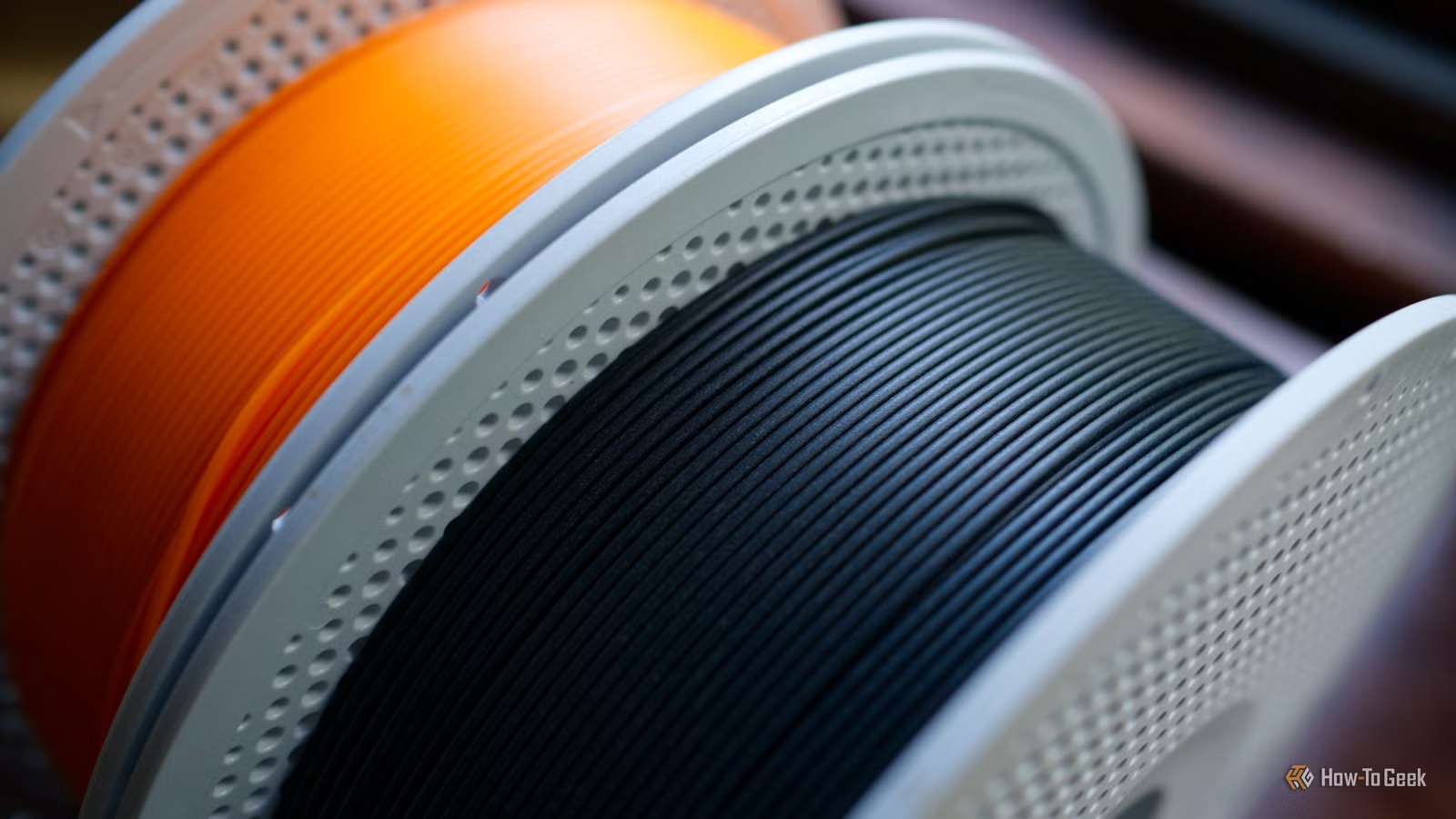
- Bulk orders from Bambu Lab can cut PLA costs from $19.99 to $10.99 per roll, a 45% discount
- Budget brands like SUNLU and JAYO offer comparable quality at $9-17 per kilogram
- Model-sharing platforms reward users with points redeemable for free filament
Filament is the single largest recurring cost for 3D printer owners. A steady habit can burn through dozens of kilograms annually at $15 to $30 per roll, eventually exceeding the price of the printer itself. The good news: a few straightforward tactics can slash that expense by 30% to 50%.
Buy filament in bulk for the steepest discounts
The math is simple: more rolls, lower per-unit cost. Bambu Lab's PLA Basic, for instance, lists at $19.99 for a single 1 kg spool. Order ten or more and that drops to $10.99, a 45% haircut. At those rates, buying ten rolls actually costs less than buying eight at regular price.
Bambu Lab consistently runs around a 40% discount on bulk orders, and you can mix and match colors within the same purchase. The catch is storage. Filament absorbs moisture, and a stockpile only pays off if you can keep it dry until you need it. If you have friends or family who also print, pooling an order solves both the storage and the commitment problem.
Start with neutrals. Black, white, and gray will end up in most projects eventually, so a buffer of basics is a safe bet.
Why pay brand prices when third parties make the filament?
Here's a fact that changes the calculus: Bambu Lab doesn't manufacture all of its filament in-house. Unlike Prusa, which runs its own Prusament division, Bambu sources rolls from third-party suppliers. That RFID chip identifying the spool in your slicer? Handy, but it takes about ten seconds to enter the same data manually.
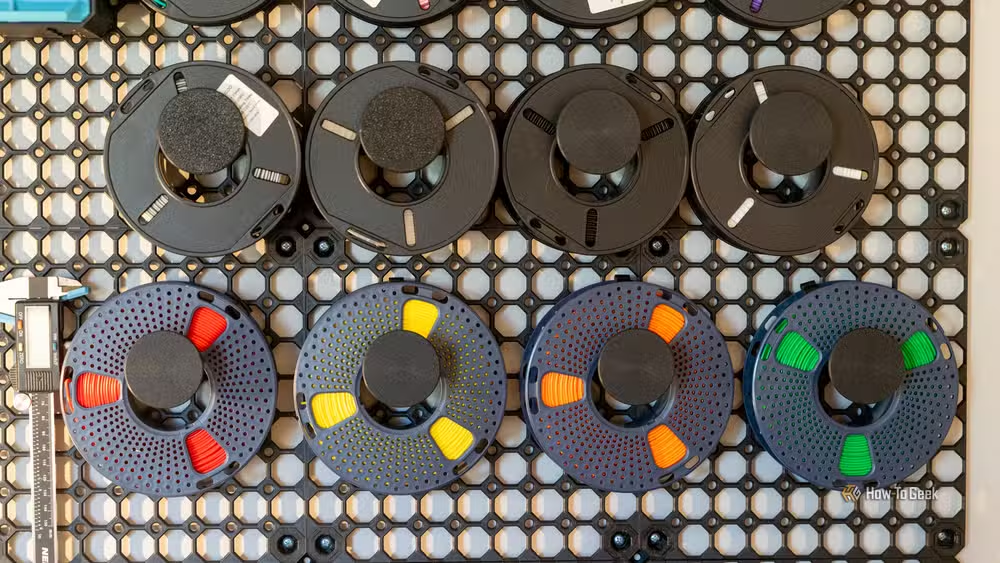
Budget brands like SUNLU, JAYO, Elegoo, and Kingroon have built reputations on usable filament at lower prices. SUNLU's PLA+ 2.0, designed for faster printing, runs about $17 per kilogram on Amazon. During sales, quality PLA can dip to $9 per kilogram.
For the risk-tolerant, AliExpress offers filament at roughly half these prices. Quality is inconsistent, though. Some rolls print beautifully; others jam or produce brittle parts. If you're prototyping rather than producing finished items, the gamble might be worth it.
Earn free filament through model sharing
Model repositories like Printables and MakerWorld want two things: content and community. To get both, they've built reward systems that convert your contributions into points, and those points into filament.
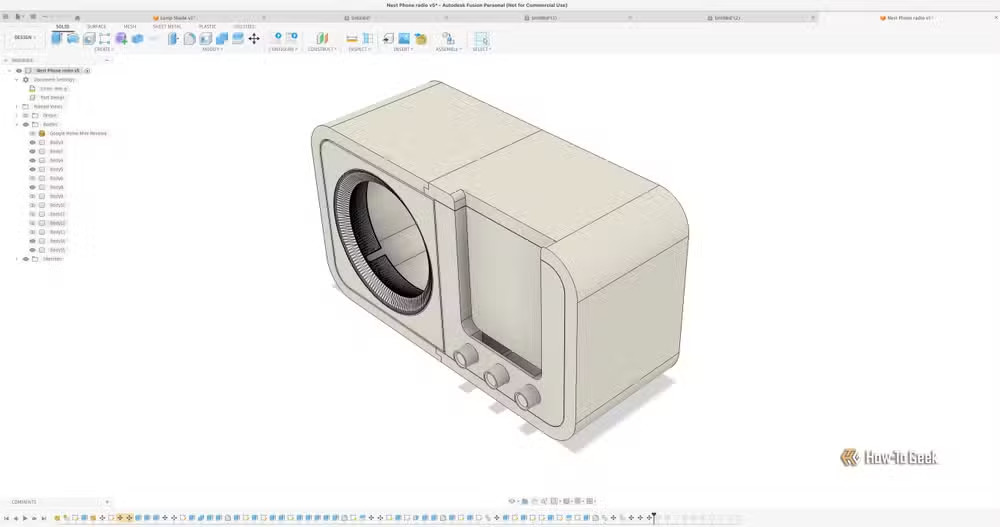
Upload a popular model, leave helpful feedback, or participate in contests and you accumulate credits redeemable for rolls shipped to your door. It's not passive income, but if you're already designing and sharing files, you might as well get paid in plastic.
Reduce waste with better print settings
Failed prints and excess supports can eat 10% to 20% of your filament budget. A few slicer tweaks help. Tree supports use less material than traditional ones. Infill at 15% is often strong enough for functional parts, no need for 30%. And calibrating your first layer eliminates most adhesion failures before they waste a hundred grams of plastic.
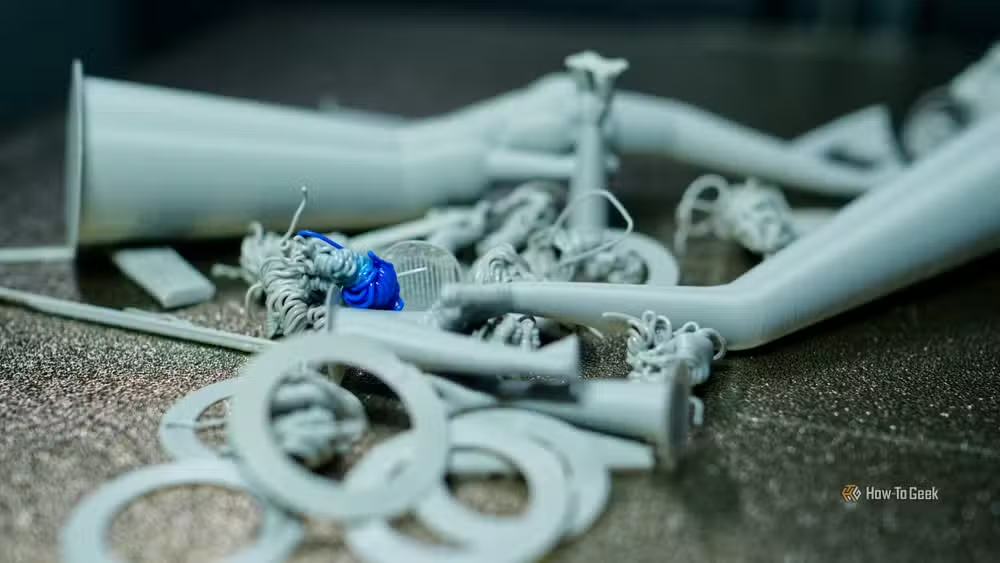
Multi-color printers generate purge waste on every color change. If you own one, batch similar-color prints together to minimize transitions. Some users collect purge material and send it through a filament recycler, though the economics only work at scale.
Storage matters more than you think
Moisture-damaged filament pops, strings, and produces weak prints. In humid climates, an unsealed roll can degrade within weeks. Vacuum bags with desiccant packs cost a few dollars and extend shelf life indefinitely. Dry boxes with active heating are overkill for most users, but they make sense if you're storing ten or more rolls at a time.
Proper storage isn't glamorous, but it's the difference between printing with what you bought and throwing money away on degraded material.
Logicity's Take
The filament market has matured to the point where brand premiums are hard to justify. Bambu Lab's own sourcing model proves the point: you're often paying extra for packaging and an RFID chip, not superior plastic. For hobbyists, the winning strategy is bulk orders of budget brands, stored properly. For businesses running production prints, the calculus shifts toward consistency, but even then, testing a cheaper supplier costs one roll and could save thousands over a year.
Frequently Asked Questions
Does cheap 3D printing filament produce worse prints?
Not necessarily. Budget brands like SUNLU and JAYO use similar base materials to premium filaments. Print quality depends more on proper storage, slicer settings, and printer calibration than brand name.
How much can you save buying filament in bulk?
Bulk discounts typically range from 30% to 45%. Bambu Lab's 10-roll orders drop per-unit cost from $19.99 to $10.99, saving nearly $90 compared to buying individually.
How long does 3D printer filament last in storage?
Sealed with desiccant, filament can last years. Unsealed in humid conditions, PLA can degrade within weeks. Nylon and PETG are especially moisture-sensitive.
Is AliExpress filament safe to use?
Quality varies widely by seller. Some AliExpress filament performs well; some causes jams or weak prints. Check reviews, start with a single roll, and avoid unbranded options for anything structural.
Can you recycle failed 3D prints into new filament?
Yes, but home filament recyclers cost $300 or more and produce inconsistent diameter. The economics only work if you generate significant waste, like from a print farm.
Need Help Implementing This?
Logicity can help your team optimize 3D printing operations for cost and quality. Contact us to discuss material strategies, supplier evaluation, or production workflow improvements.
Source: How-To Geek
Manaal Khan
Tech & Innovation Writer
Produced with AI assistance and reviewed by the Logicity editorial team. Learn more in our Editorial Policy.