ASUS ProArt P16 and P14: RTX Spark Laptops Target MacBook Pro
Key Takeaways
- ASUS ProArt P16 and P14 are thinner and lighter than MacBook Pro 16 and 14
- RTX Spark delivers 1 petaflop of AI compute with up to 128GB unified memory
- Windows 11 software ecosystem remains the biggest question mark for adoption
A New Challenger for Apple's Creator Throne
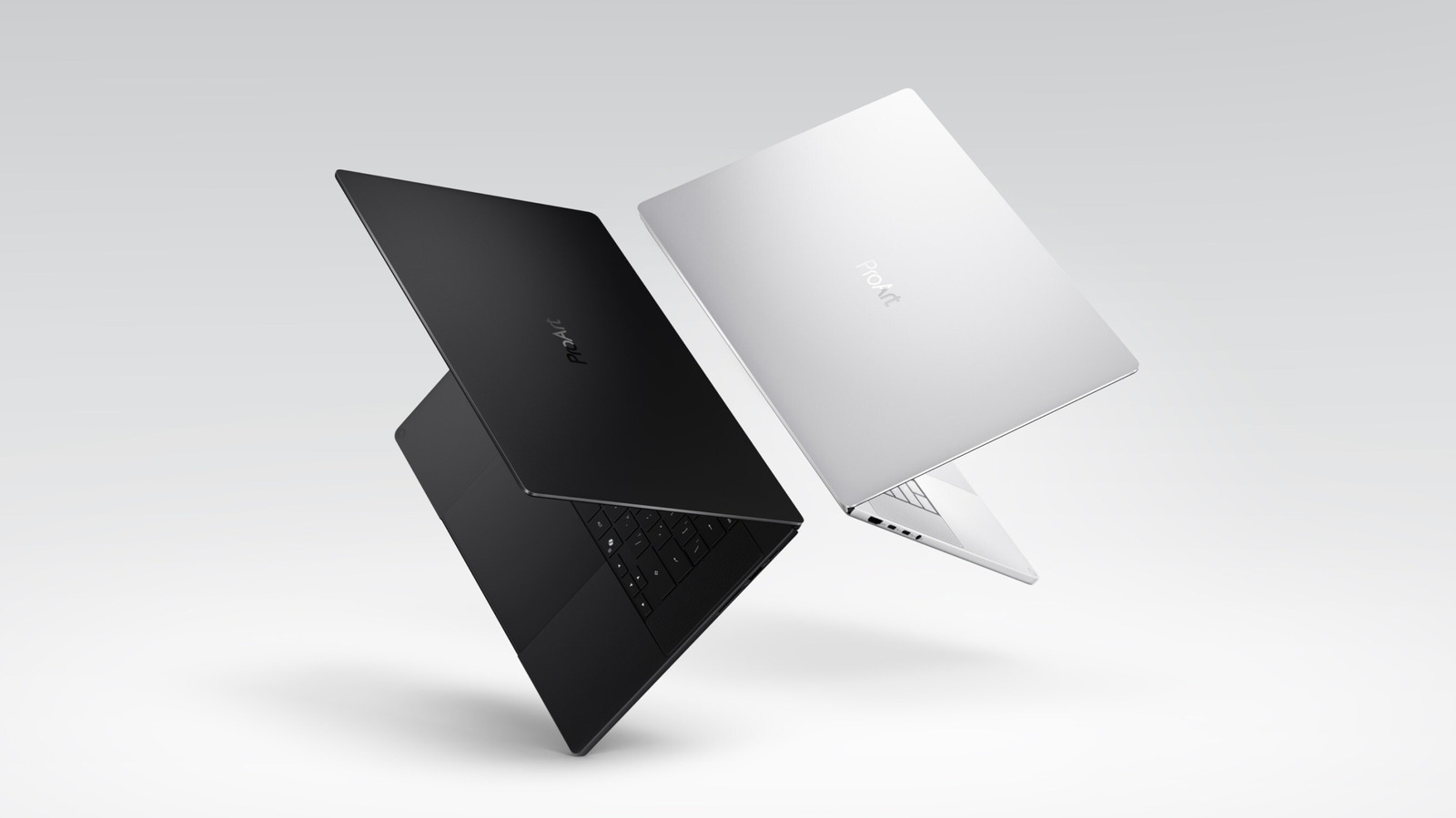
ASUS launched its ProArt P16 and P14 laptops at Computex 2026, marking one of the first commercial deployments of NVIDIA's RTX Spark ARM superchip. The company is positioning these machines as direct competitors to Apple's MacBook Pro lineup, targeting video editors, 3D artists, and other creative professionals who need serious compute power in a portable form factor.
The pitch is straightforward: match or beat Apple on specs, undercut on design bulk, and offer more connectivity options. Whether ASUS can deliver on that promise depends heavily on software support and pricing, neither of which is fully known yet.
Thinner, Lighter, More Ports
The ProArt P16 weighs 3.9 pounds and measures 0.51 inches thick. The ProArt P14 comes in at 3.2 pounds and 0.55 inches. Both are slimmer and lighter than their MacBook Pro counterparts. For creators who travel frequently or work on location, that weight difference adds up over a day of hauling gear.
Port selection is where ASUS distances itself from Apple's dongle-friendly approach. Both laptops include HDMI 2.1, USB-A, SD card slots, and Wi-Fi 7 alongside the expected USB-C ports. Video editors who need to ingest footage from SD cards or connect to external monitors without adapters will appreciate this.
Display: OLED vs Mini LED
ASUS equipped both laptops with its Lumina Pro OLED technology. The P16 offers up to 4K resolution while the P14 tops out at 3K. Both panels run at 120Hz refresh rates with 1,600 nits of peak brightness, 100 percent DCI-P3 coverage, and Delta E below 1 for color accuracy.
These specs put the displays in the same ballpark as Apple's XDR screens. But OLED has inherent advantages over Mini LED: perfect blacks, infinite contrast ratios, and no blooming around bright objects on dark backgrounds. For color grading and photo editing, that matters.
The RTX Spark Architecture
NVIDIA's RTX Spark combines a 20-core Grace CPU with Blackwell-architecture RTX GPU cores connected via high-speed NVLink. The unified memory architecture allows up to 128GB of shared RAM between CPU and GPU, eliminating the bottleneck that traditionally separates system memory from graphics memory.
“This represents the shift from the PC as a tool to the PC as a teammate. The RTX Spark enables autonomous AI agents to live on your device, not in the cloud.”
— Jensen Huang, CEO of NVIDIA
NVIDIA claims the chip can render 3D scenes exceeding 90GB, edit 12K 4:2:2 video, run 120B-parameter language models with up to 1 million tokens of context, and play AAA games at 1440p and 100 frames per second. These are marketing claims until independent benchmarks confirm them, but the architectural approach mirrors what made Apple Silicon successful: tight integration between compute and memory.
Software Support: The Real Battle
ASUS says key creative applications will support Windows 11 on Arm at launch. The list includes Adobe Creative Cloud, Blackmagic DaVinci Resolve 21, and Blender. This is similar to the compatibility Qualcomm's Arm chips achieved, but NVIDIA is targeting more demanding workflows.
“We are re-architecting the creative stack. Photoshop and Premiere Pro are being redesigned specifically for the RTX Spark to leverage its unified memory architecture.”
— Adobe Product Team lead at Computex Keynote
Adobe's commitment to optimize specifically for RTX Spark is notable. Apple Silicon succeeded partly because Adobe prioritized native support. If NVIDIA receives the same treatment, these laptops become viable professional tools rather than impressive tech demos.
The Windows 11 Problem
Hardware means nothing without software that works. Windows 11 remains the weakest link in this story. The operating system carries years of accumulated complexity, and Microsoft's aggressive CoPilot+ integration has frustrated users who want a clean, focused work environment.
Community reactions on Reddit and HackerNews reflect this concern. Users express skepticism about whether Windows 11 can shed its reputation for bloat, even with impressive underlying hardware. macOS offers a more cohesive experience, and that software polish is part of what MacBook Pro buyers pay for.
Apple's latest laptop sales show the competition ASUS faces
Pricing: The Unknown Variable
ASUS has not announced pricing for either laptop. Industry watchers expect premium positioning, with speculation on enthusiast forums suggesting entry-level configurations could exceed $3,000. That would put the ProArt line in direct competition with high-end MacBook Pro configurations.
Price anxiety is a recurring theme in community discussions. The hardware looks impressive, but creators need to justify the cost against established Apple Silicon workflows that already work reliably.
Full coverage of Computex 2026 announcements including other ASUS products
| Spec | ASUS ProArt P16 | MacBook Pro 16 |
|---|---|---|
| Weight | 3.9 lbs | 4.7 lbs |
| Thickness | 0.51 in | 0.66 in |
| Display Tech | OLED | Mini LED |
| Peak Brightness | 1,600 nits | 1,600 nits |
| Max Unified Memory | 128GB | 128GB |
| HDMI Port | Yes (2.1) | Yes (2.1) |
| SD Card Slot | Yes | Yes |
| USB-A Port | Yes | No |
What Matters for Buyers
The ProArt P16 and P14 represent the most credible Windows challenge to MacBook Pro dominance in years. The hardware specifications match or exceed Apple on paper. The design is more portable. The connectivity is more practical.
But professionals buying creative workstations care about reliability, software compatibility, and long-term support as much as benchmark numbers. Apple has spent years building that trust. ASUS and NVIDIA are asking buyers to bet on a new platform.
Battery life under real workloads remains unknown. Game performance claims need verification. And the Windows 11 experience needs to prove it can stay out of the way while professionals work.
Logicity's Take
The RTX Spark architecture looks genuinely competitive with Apple Silicon for the first time. But hardware parity was never the only reason creatives chose MacBooks. ASUS needs to prove the software experience matches the silicon. Until we see real-world battery life, verified benchmarks, and pricing, this is a promising announcement, not a proven alternative.
Frequently Asked Questions
When will the ASUS ProArt P16 and P14 be available?
ASUS announced the laptops at Computex 2026 but has not confirmed release dates or regional availability yet.
How much will the ASUS ProArt RTX Spark laptops cost?
Pricing has not been revealed. Industry speculation suggests entry-level configurations may exceed $3,000.
Can the RTX Spark laptops run Adobe Creative Cloud?
Yes. ASUS confirms support for Adobe Creative Cloud, DaVinci Resolve 21, and Blender on Windows 11 for Arm. Adobe is specifically optimizing Photoshop and Premiere Pro for the RTX Spark architecture.
What is the RTX Spark chip?
The RTX Spark is NVIDIA's new ARM-based superchip combining a 20-core Grace CPU with Blackwell-architecture RTX GPU cores via NVLink. It delivers up to 1 petaflop of AI compute with 128GB unified memory.
Are the ProArt laptops lighter than MacBook Pro?
Yes. The ProArt P16 weighs 3.9 pounds versus 4.7 pounds for MacBook Pro 16. The ProArt P14 weighs 3.2 pounds compared to the heavier MacBook Pro 14.
Need Help Implementing This?
Evaluating new creative workstation hardware for your team? Logicity can help you compare total cost of ownership, software compatibility, and deployment considerations. Reach out for a consultation on your creative infrastructure decisions.
Source: Engadget
Microsoft Announces Surface RTX Spark Dev Box
The new source details Microsoft's 'Surface RTX Spark Dev Box', a separate mini-PC device also utilizing the RTX Spark chip. It provides specific hardware capabilities for developers, such as a 100W thermal envelope for sustained workloads, local fine-tuning support for models up to 120 billion parameters, and specialized pre-installed development software.
Huma Shazia
Senior AI & Tech Writer
اقرأ أيضاً

رأي مغاير: كيف يؤثر اختراق الأمن الداخلي الأميركي على شركاتنا الخاصة؟
في ظل اختراق عقود الأمن الداخلي الأميركي مع شركات خاصة، نناقش تأثير هذا الاختراق على مستقبل الأمن السيبراني. نستعرض الإحصاءات الموثوقة ونناقش كيف يمكن للشركات الخاصة أن تتعامل مع هذا التهديد. استمتع بقراءة هذا التحليل العميق

الإنسان في زمن ما بعد الوجود البشري: نحو نظام للتعايش بين الإنسان والروبوت - Centre for Arab Unity Studies
في هذا المقال، سنناقش كيف يمكن للبشر والروبوتات التعايش في نظام متكامل. سنستعرض التحديات والحلول المحتملة التي تضعها شركات مثل جوجل وأمازون. كما سنلقي نظرة على التوقعات المستقبلية وفقًا لتقرير ماكنزي

إطلاق ناسا لمهمة مأهولة إلى القمر: خطوة تاريخية نحو استكشاف الفضاء
تعتبر المهمة الجديدة خطوة هامة نحو استكشاف الفضاء وتطوير التكنولوجيا. سوف تشمل المهمة إرسال رواد فضاء إلى سطح القمر لconducting تجارب علمية. ستسهم هذه المهمة في تطوير فهمنا للفضاء وتحسين التكنولوجيا المستخدمة في استكشاف الفضاء.