Anthropic Adds 'Dreaming' to Claude Agents for Error Learning

Key Takeaways

- Dreaming analyzes up to 100 past sessions to build organized memory from patterns and errors
- Outcomes lets a separate evaluator grade agent outputs against fixed criteria, with up to 20 revision attempts
- Multiagent Orchestration supports up to 20 specialized agents running 25 parallel threads
How Dreaming Works
Anthropic launched its Claude Managed Agents platform in April. Now it is adding Dreaming, a system that lets AI agents review their own history and learn from it. The feature runs as an asynchronous job. It reads an existing memory store and can process up to 100 past sessions.
The process cleans up duplicates and outdated entries, then builds a new, organized memory. The original memory stays intact. Think of it as an AI agent that periodically reflects on what went wrong and what worked.
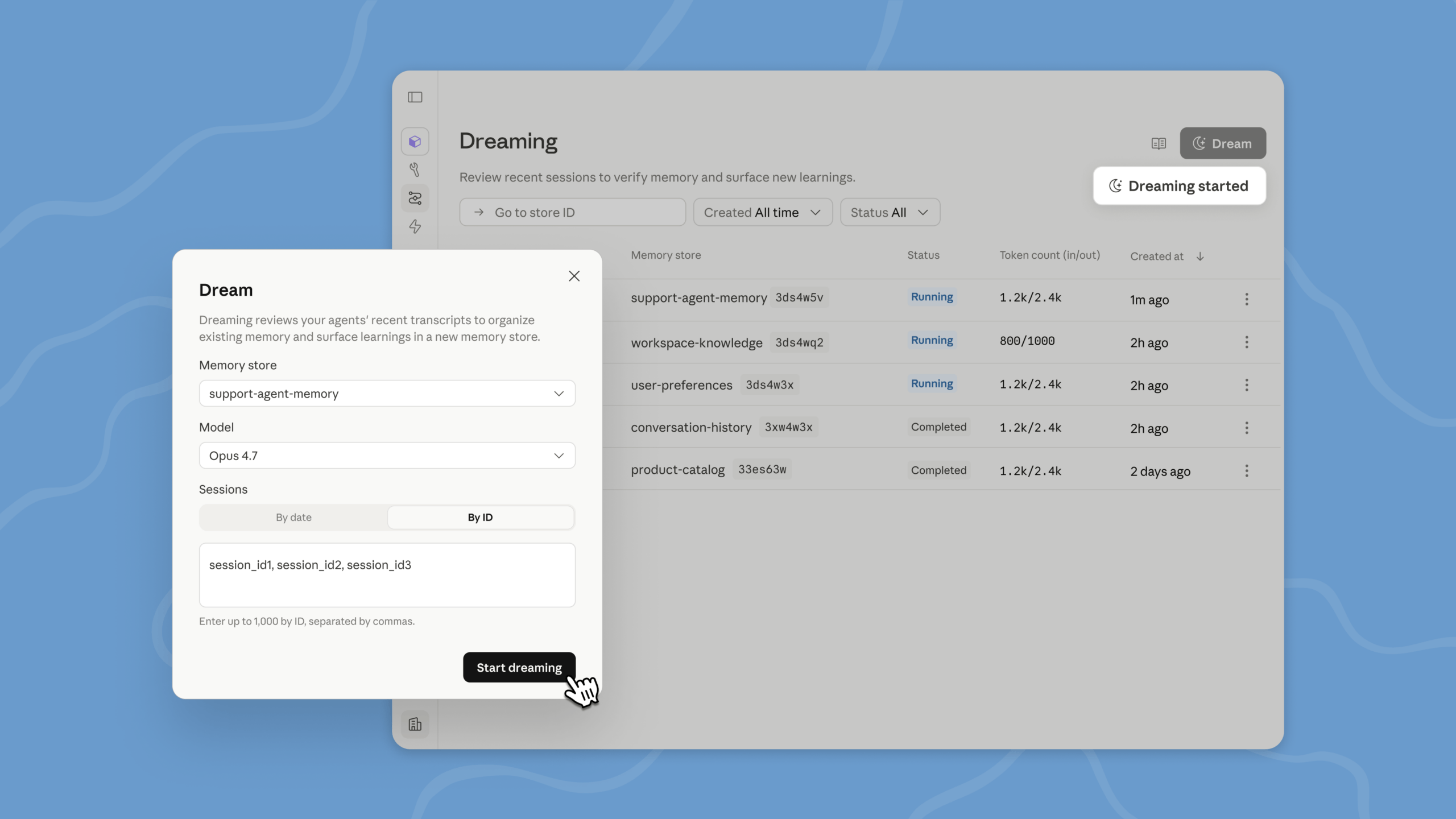
Dreaming supports Claude Opus 4.7 and Claude Sonnet 4.6. Billing follows standard API token pricing. Developers can access the Dreaming interface through the Claude Console, where they select a memory store, pick a model, specify which sessions to analyze, and start the process.

Dreaming is currently available as a research preview. Developers can request access through a form on Anthropic's website.
Outcomes: A Separate Grader for Agent Work
Outcomes is moving from research preview to public beta. The feature lets developers define a rubric with specific success criteria. For example: 'The CSV file contains a price column with numerical values.'
A separate evaluator, called a grader, then checks the agent's output against these criteria. The grader runs in its own context window, isolated from the agent's reasoning. This separation matters. It prevents the grader from being influenced by how the agent justified its work.
If the output does not meet the specs, the grader identifies the gaps. The agent then revises its work. By default, it can retry up to three times. The maximum is 20 attempts.
Multiagent Orchestration: Parallel Specialized Agents
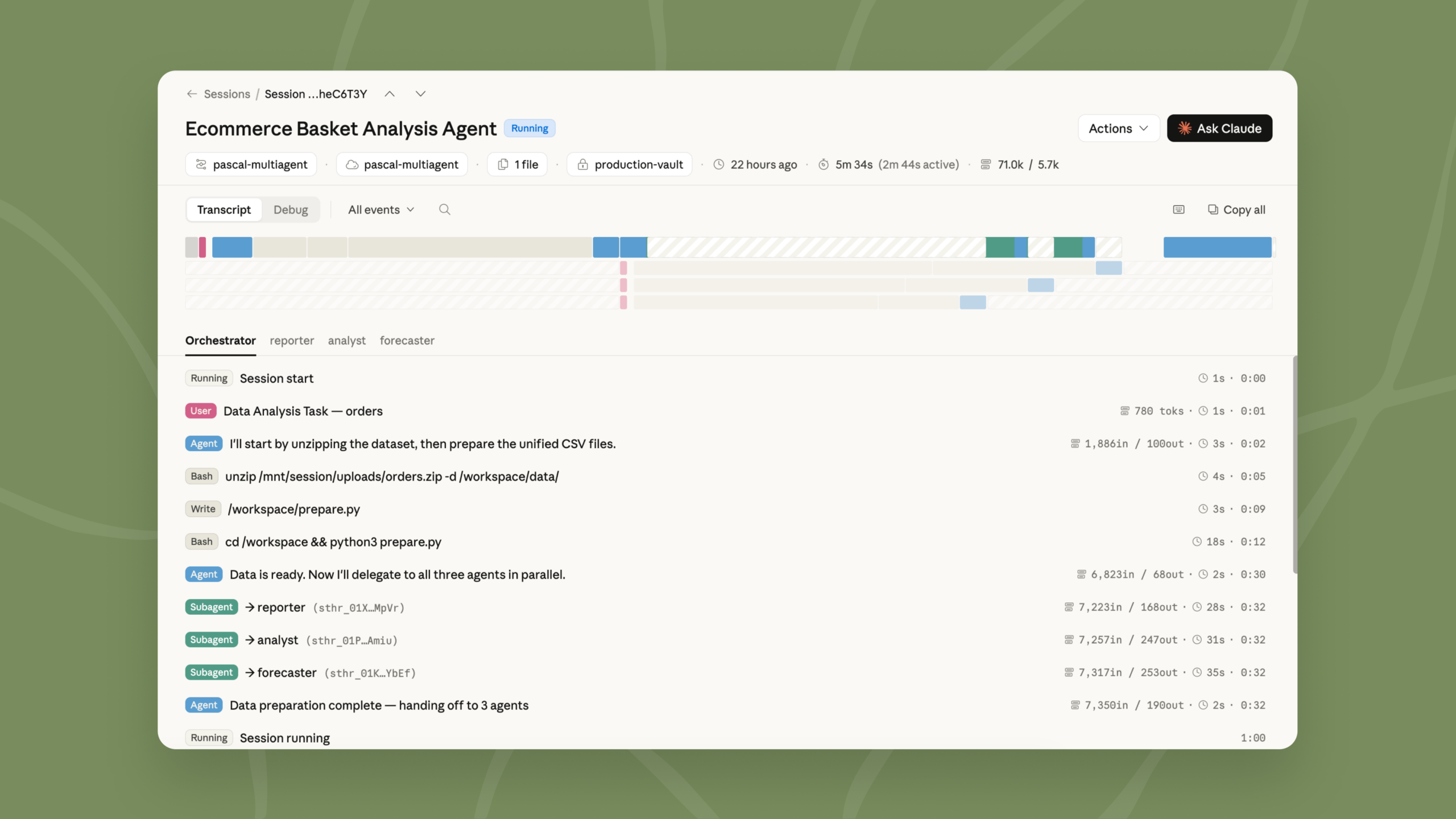
Multiagent Orchestration is also moving to public beta. In this setup, a lead agent, called a coordinator, manages several specialized agents. Each agent runs in its own thread with an isolated context. They have their own model, system prompt, and dedicated tools. But they share the same file system.
The coordinator can hand out tasks in parallel. For instance, it might delegate code review to one agent and test creation to another, running both at the same time. The system supports up to 20 different agents and a maximum of 25 threads running simultaneously.
What This Means for Agent Reliability
These three features address a core problem with AI agents: they make mistakes, and they do not remember them. Dreaming tackles the memory problem. Outcomes adds a quality check. Multiagent Orchestration lets complex tasks be broken into pieces handled by specialists.
Memory is part of the same public beta. It works alongside these features as part of Anthropic's Managed Agents platform. Full documentation is available on Anthropic's website and in the Claude Console.
Logicity's Take
Related coverage of Anthropic's infrastructure investments
Comparison of how major AI providers handle user data and memory
Frequently Asked Questions
What is Claude's Dreaming feature?
Dreaming is a process that reviews up to 100 past agent sessions, identifies patterns like recurring errors or successful workflows, and builds an organized memory that agents can reference in future sessions.
Which Claude models support Dreaming?
Dreaming currently supports Claude Opus 4.7 and Claude Sonnet 4.6. Billing follows standard API token pricing.
How does Outcomes work in Claude Managed Agents?
Developers define success criteria in a rubric. A separate evaluator grades the agent's output against those criteria. If it fails, the agent can revise its work up to 20 times.
What are the limits for Multiagent Orchestration?
The system supports up to 20 different specialized agents and a maximum of 25 threads running simultaneously. All agents share the same file system.
How can developers access the Dreaming feature?
Dreaming is available as a research preview. Developers can request access through a form on Anthropic's website. Outcomes and Multiagent Orchestration are in public beta.
Need Help Implementing This?
Source: The Decoder / Matthias Bastian
Manaal Khan
Tech & Innovation Writer
مقالات ذات صلة
تصفح الكل
GLM-5.2 يقترب من عرش النماذج المغلقة في سباق البرمجة الماراثونية
في خطوة تعيد رسم خريطة المنافسة بين النماذج المفتوحة والمغلقة، أطلق مختبر Zhipu AI الصيني نموذج GLM-5.2 الذي يحقق أداءً يكاد يلامس قمة النماذج التجارية المغلقة في مهام البرمجة الماراثونية. النموذج الج

أزمة Fable: من المسؤول عن إغلاق نماذج Anthropic — البيت الأبيض أم الشركة؟
في مساء الجمعة من منتصف يونيو 2026، اتخذ البيت الأبيض قراراً غير مسبوق أربك صناعة الذكاء الاصطناعي بأكملها: فرض قيود تصدير طارئة على نموذجَي Fable 5 وMythos 5 من شركة Anthropic، ما أجبر الشركة على إيق

أسطول روبوتات Nvidia يُدرِّب نفسه ذاتياً عبر وكلاء برمجة بالذكاء الاصطناعي
نجحت Nvidia بالتعاون مع جامعتي Carnegie Mellon وUC Berkeley في تحويل مختبر روبوتات إلى منظومة ذاتية التحسين، حيث تُدرِّب روبوتات ذاتية التدريب نفسها على مهام معقدة دون الحاجة إلى إشراف بشري مستمر. أسط

إنفاق عمالقة التقنية على الذكاء الاصطناعي قد يتجاوز تدفقاتهم النقدية بحلول الربع الثالث من 2026
يواجه عمالقة التقنية الخمسة — Microsoft وAmazon وAlphabet وMeta وOracle — لحظة فارقة في تاريخهم المالي: إنفاقهم المتسارع على البنية التحتية للذكاء الاصطناعي بات يهدد بتجاوز قدرتهم على تمويله ذاتياً. و
اقرأ أيضاً

5 مشاريع عملية للطباعة ثلاثية الأبعاد تتجاوز الألعاب والتحف
تجاوزت الطباعة ثلاثية الأبعاد مرحلة إنتاج التحف والألعاب البلاستيكية لتصبح أداة عملية حقيقية في المنزل والورشة. بينما يركز معظم المستخدمين على طباعة مشاريع شهيرة مثل Gridfinity أو الديناصور المرن Flex
كيف أنقذ متصفح Opera هاتفي الأندرويد من بطء Chrome المزمن
لم أفكر يوماً في استبدال Chrome. كان يعمل بشكل مقبول، وبما أنه مثبّت مسبقاً على كل هاتف أندرويد، لم يكن هناك دافع للبحث عن بديل. لكن قبل أربعة أشهر تقريباً، قرأت منشوراً يتحدث عن خفة متصفح Opera للأند

عندما رفض اللاعبون تصنيف Guild Wars كـ CORPG: كيف تغيّر مفهوم ألعاب MMO خلال عقدين؟
قبل عشرين عاماً، حاولت استديو ArenaNet إقناع العالم بأن لعبتها Guild Wars ليست من ألعاب MMO التقليدية، بل تنتمي لتصنيف جديد ابتكرته الشركة: CORPG أو لعبة الأدوار التعاونية عبر الإنترنت. لكن اللاعبين و