3 subscriptions a Raspberry Pi can replace right now
Key Takeaways
- Joplin, Navidrome, and Vaultwarden on a Pi 4/5 or Pi Zero 2 W can replace Evernote, Spotify, and paid password managers
- The setup requires Docker knowledge and ongoing maintenance, but saves $300+ annually
- You trade discovery algorithms and zero-maintenance convenience for data ownership and no recurring fees
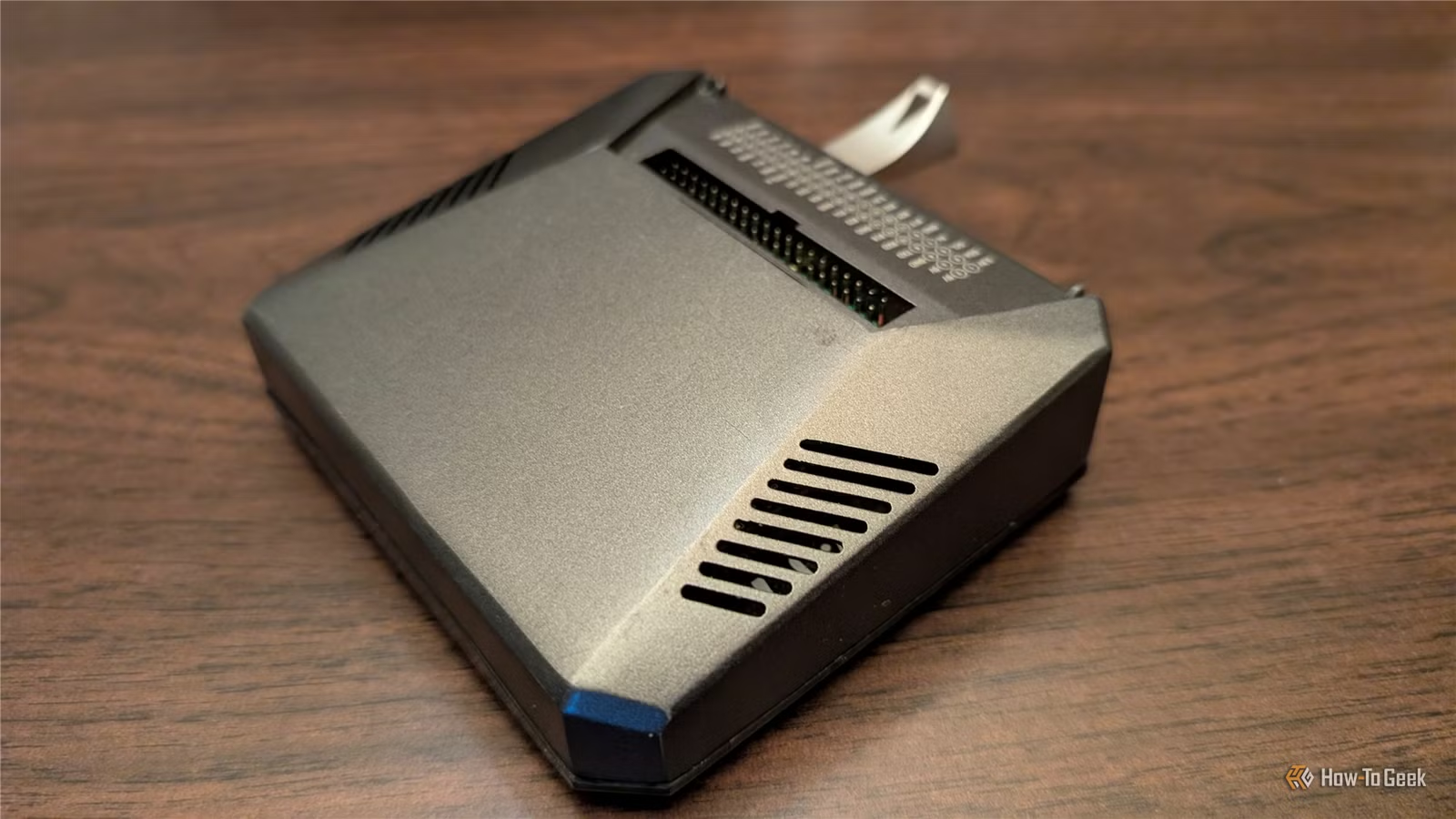
A Raspberry Pi 4, a microSD card, and a weekend with Docker can eliminate three subscription services that collectively cost over $300 a year. Nick Lewis at How-To Geek documents the swap: Joplin for notes, Navidrome for music streaming, and Vaultwarden for passwords. The hardware requirement is modest. A Pi 4 or 5 with 1-2GB of RAM handles all three services. Even the $15 Pi Zero 2 W works.
The motivation is straightforward. Evernote raised prices and capped free accounts at 50 notes. Spotify Premium Individual hit $12.99 a month in February 2026, the third increase since 2023. Password managers require subscriptions unless you want limited features. Self-hosting sidesteps all of it.
Joplin replaces Evernote with unlimited notes
Evernote's late-2025 overhaul split its paid tiers into Starter (roughly $100 per year) and Advanced ($250 per year). The free tier now caps at 50 notes. For anyone drafting articles or keeping extensive research, that limit arrives fast.
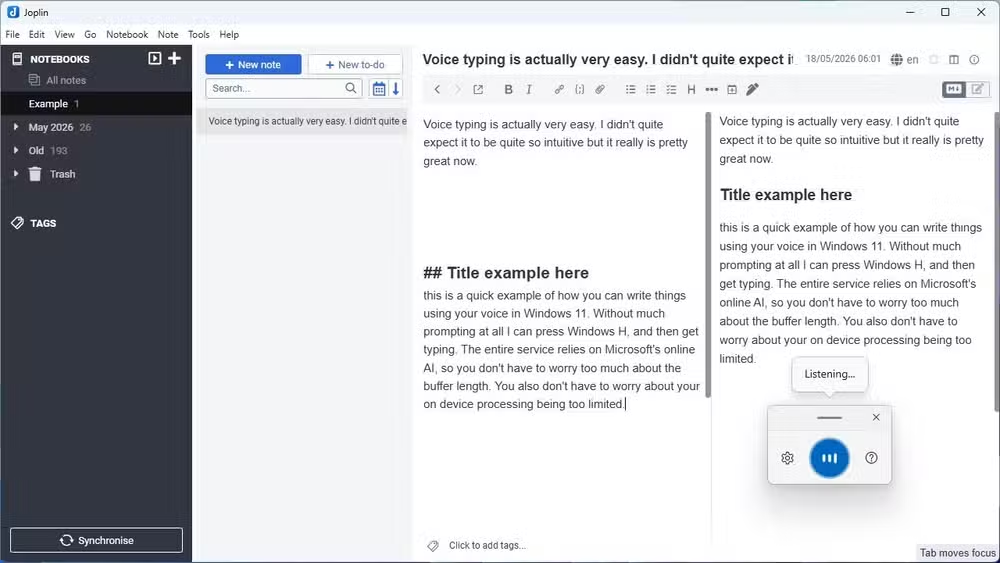
Joplin is open-source, supports images, hyperlinks, and diagrams, and organizes notes into notebooks. A self-hosted Joplin Server syncs across desktop and mobile clients. You lose Evernote's OCR features and get a more minimal interface. The payoff is zero recurring cost and no cap on notes or devices.
Navidrome turns your music collection into a private Spotify
Navidrome creates a lightweight streaming server for music you own. It exposes a Subsonic-compatible API, which means dozens of third-party players work with it. Lewis uses Symfonium for Android Auto integration. The server handles transcoding on the fly, converting FLACs to whatever bitrate your device needs and saving mobile data when you're off Wi-Fi.
The trade-off is real: no discovery algorithm. You only stream what you own. Building a library means ripping CDs or buying digital files. Second-hand CDs remain cheap, but the effort isn't zero. Albums also never disappear because a licensing agreement expired.
Vaultwarden hosts your passwords without the subscription
Password managers are table stakes in 2026. Dozens of logins, each ideally unique, long, and random. Memorizing them is impractical. Vaultwarden is an open-source, lightweight implementation of the Bitwarden API. It runs in a Docker container on the Pi and syncs with official Bitwarden clients on desktop and mobile.
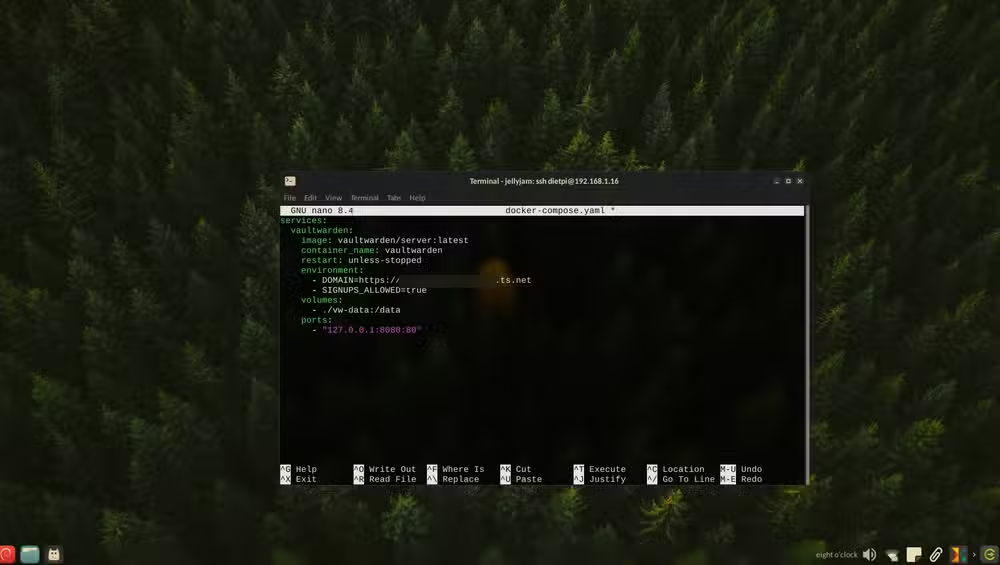
The setup requires understanding Docker and maintaining your own backups. If the Pi's SD card fails and you have no backup, your vault is gone. But once running, Vaultwarden provides the same autofill and sync experience as paid Bitwarden tiers.
What does self-hosting actually demand?
Hacker News commenters on similar guides consistently flag the same point: self-hosting is not set-and-forget. Updates, security patches, backups, and troubleshooting are your responsibility. The 81.4% of the self-hosting community working in IT-related fields suggests this isn't a casual hobby.
Docker simplifies deployment, but you still need to understand networking basics, port forwarding, and ideally a reverse proxy if you want secure external access. The time investment is front-loaded. Once configured, daily maintenance is minimal, but failures require diagnosis skills that subscription services abstract away.
Is $300 a year worth the effort?
The math varies by person. A Pi 4 with 2GB RAM costs around $45. A quality microSD card adds $10-15. A case and power supply bring the total to roughly $70-80 upfront. If you value your time at $50 an hour and spend 10 hours configuring everything, the first-year savings disappear. But ongoing costs are near zero. The Pi draws about 3-5 watts, less than a night light.
The r/selfhosted community largely approves of these specific tools. Navidrome is frequently called the most stable and lightweight music server available. Joplin and Vaultwarden have mature ecosystems with active development. These aren't experimental projects.
The bigger picture: subscription fatigue meets technical capability
This trend reflects a broader reaction to price increases across software services. When Evernote, Spotify, and password managers each raise prices annually, the cumulative effect pushes technically capable users toward alternatives. Docker and containerization lowered the barrier. A decade ago, self-hosting these services required Linux system administration skills. Now it requires reading a Docker Compose file.
The question is whether mainstream users will follow. For CTOs and engineers, the setup is a weekend project. For non-technical users, it remains inaccessible. The subscription model persists because it offers convenience most people will pay for.
Another case where technical users are finding workarounds as software policies change
Related to maximizing utility from hardware you already own
Frequently Asked Questions
Can a Raspberry Pi really replace Spotify?
Navidrome can stream music you own to any Subsonic-compatible app, but it has no discovery algorithm. You only get what you put on it.
How much technical skill does self-hosting require?
Basic Docker knowledge, networking fundamentals, and comfort with the command line. The initial setup takes several hours; maintenance is occasional but your responsibility.
What happens if the Raspberry Pi fails?
Without backups, you lose everything. Regular backups to an external drive or cloud storage are essential for self-hosted setups.
Is Vaultwarden as secure as paid Bitwarden?
Vaultwarden implements the same API and encryption. Security depends on your configuration, HTTPS setup, and keeping the software updated.
Which Raspberry Pi model works best for this?
A Pi 4 or 5 with 2GB RAM handles all three services comfortably. A Pi Zero 2 W works but with less headroom.
Logicity's Take
This isn't for everyone, and that's the point. Self-hosting appeals to users who already have technical skills and value data control over convenience. For busy professionals, the real question is whether $300 annually is worth the hours spent configuring, troubleshooting, and maintaining. If you enjoy the tinkering, it's a clear win. If you view infrastructure as a tax on your time, the subscriptions remain the rational choice.
Need Help Implementing This?
Setting up a self-hosted stack for your team or organization? Logicity connects you with infrastructure consultants who specialize in Docker, Kubernetes, and homelab deployments. Contact us for recommendations tailored to your technical requirements.
Source: How-To Geek
Manaal Khan
Tech & Innovation Writer
مقالات ذات صلة
تصفح الكل
5 إعدادات في متصفحك تسرّب بياناتك حتى مع تفعيل VPN
ماذا لو أخبرتك أن متصفحك المفضل يسلّم عنوان IP الحقيقي وموقعك الفعلي وعادات تصفحك لأي موقع يطلبها، حتى مع تفعيل VPN؟ هذا بالضبط ما يحدث لملايين المستخدمين يومياً، ومنهم من يكتشف ذلك بالصدفة عند إجراء

كيف تعرض شاشة هاتف Android على التلفزيون مجاناً باستخدام Google Cast
هل تبحث عن طريقة لعرض شاشة هاتف Android على التلفزيون دون دفع أموال لتطبيقات مليئة بالإعلانات أو شراء كابلات HDMI؟ الحل موجود فعلياً داخل هاتفك: ميزة Google Cast المدمجة في نظام Android 16 تتيح لك بث

4 تطبيقات سامسونج تستحق البقاء على هاتفك Galaxy
يأتي هاتف Galaxy الجديد محملاً بأكثر من 50 تطبيقاً مُثبتاً مسبقاً، وليست جميعها ضرورية. لكن وسط هذا الكم من التطبيقات، تبرز أربعة تطبيقات سامسونج تستحق فعلاً أن تبقى على جهازك — بل قد تفضّلها على بدائ

استدعاءات يونيو 2026 للسيارات: Ford وHonda وToyota تسحب ملايين المركبات من الأسواق
سجّلت الهيئة الوطنية الأمريكية لسلامة المرور على الطرق السريعة NHTSA أكثر من 300 استدعاء للسلامة شملت أكثر من 100 شركة مصنّعة منذ بداية عام 2026، لكن استدعاءات يونيو 2026 للسيارات جاءت الأضخم والأخطر.
اقرأ أيضاً
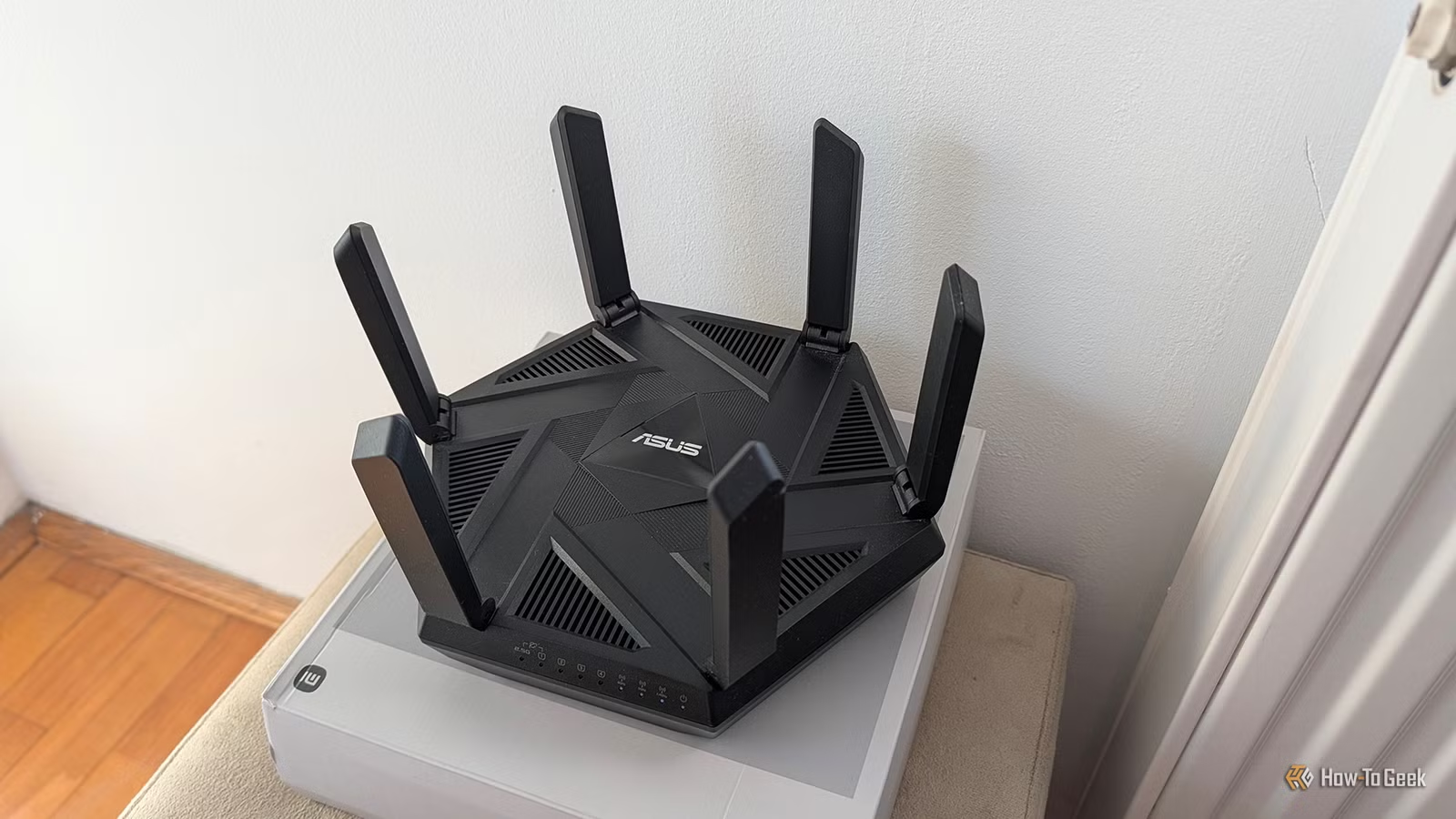
أجهزة راوتر Wi-Fi 8 وصلت: ضخمة الحجم وعديمة الفائدة حالياً
وصلت أولى أجهزة راوتر Wi-Fi 8 إلى الأسواق، وهي ليست مجرد ترقية عادية بل تحوّل جذري في مفهوم الشبكات المنزلية. أعلنت ASUS عن جهاز ROG Rapture GT-BN98 Pro الذي تصفه بأنه أول راوتر Wi-Fi 8 مخصص للألعاب ف

5 أفلام وثائقية عن كرة القدم لمشاهدتها خلال مونديال 2026
انطلقت أكبر نسخة من كأس العالم في التاريخ، بمشاركة 48 منتخباً للمرة الأولى، و104 مباريات موزّعة على ثلاث دول مستضيفة: الولايات المتحدة وكندا والمكسيك. لكن إن كانت تسعون دقيقة من المباريات لا تكفيك، فإ

7 شركات ناشئة من جامعة ميونخ التقنية تستعد لجولات تمويلية جديدة
تبرز جامعة ميونخ التقنية (TUM) كواحدة من أكثر منظومات التقنيات العميقة (Deeptech) إنتاجية في أوروبا، مع خط إنتاج متواصل من الشركات الناشئة في مجالات التكنولوجيا الحيوية والبنية التحتية للذكاء الاصطناع