2026 Toyota Tundra Fleet Costs: Which Trim Delivers ROI?
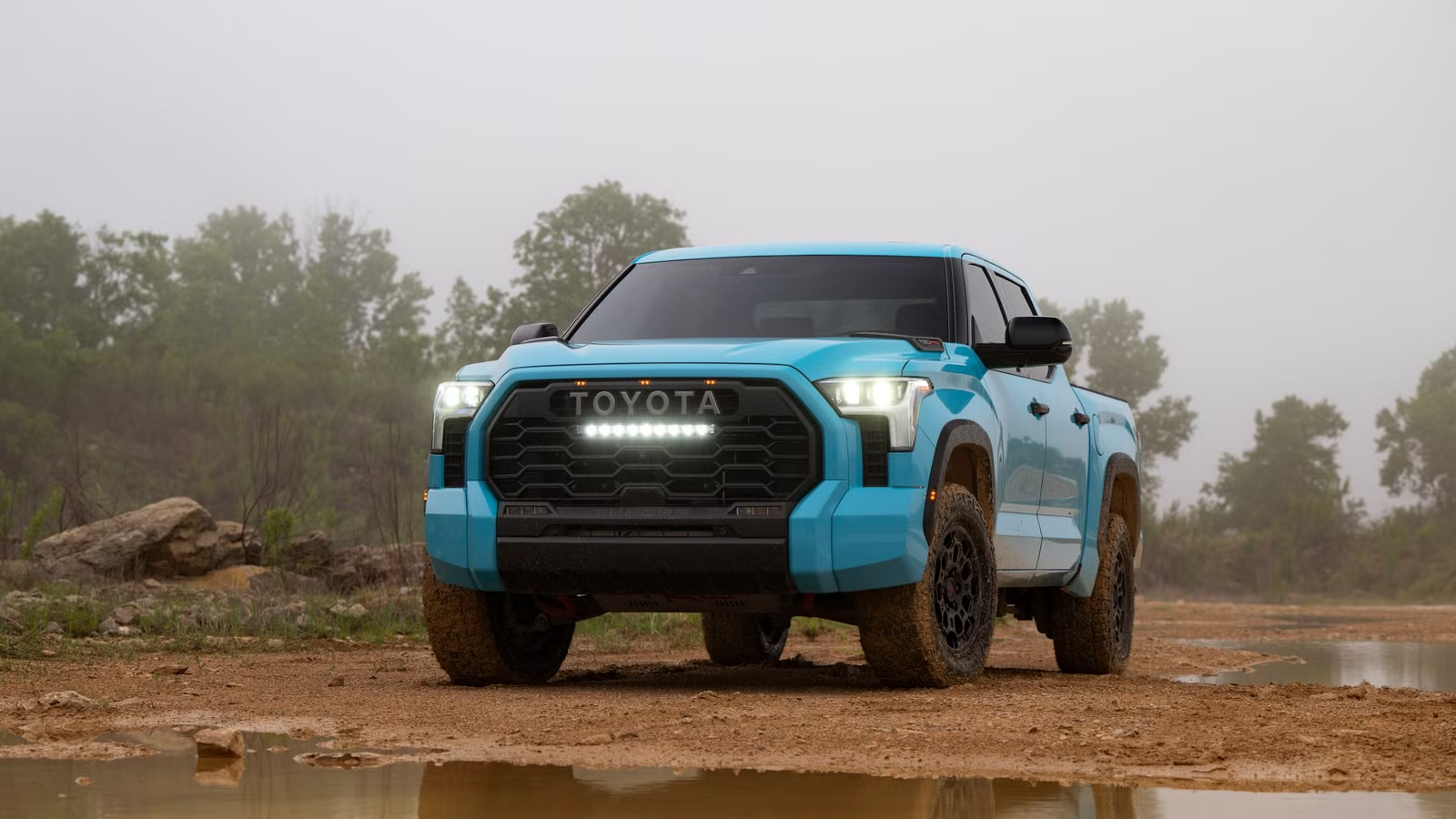
Key Takeaways
- SR5 with TRD Off-Road package offers best value for commercial and fleet use
- Base Tundra starts at $40,090 with 358 HP twin-turbo V6 standard across all trims
- Toyota Connected Services trial included, reducing fleet management software costs
According to [How-To Geek](https://www.howtogeek.com/2026-toyota-tundra-trims-explained/), the 2026 Toyota Tundra lineup ranges from rugged work trucks to executive-level cruisers, with the SR5 TRD Off-Road package emerging as the sweet spot for buyers who need both daily utility and weekend capability.
If you're managing a company fleet, running a construction business, or simply need a vehicle that doubles as your mobile office and job site workhorse, the truck you choose isn't just about horsepower. It's about total cost of ownership, resale value, maintenance predictability, and how much productivity you squeeze out of every dollar spent.
The 2026 Tundra competes directly against the Ford F-150, Ram 1500, and Chevy Silverado 1500. But Toyota's reliability reputation and historically strong resale values make this a different calculation than simply comparing sticker prices. Let's break down what each trim actually delivers for business buyers.
What Does Each 2026 Tundra Trim Cost?
Every 2026 Tundra shares the same foundation: a 3.4L twin-turbocharged V6 producing 358 horsepower and 406 lb-ft of torque, paired with a 10-speed automatic transmission. Four-wheel drive comes standard. This powertrain consistency means you're not paying a premium for basic capability — you're paying for comfort, features, and specialized equipment.
| Trim Level | Est. Starting MSRP | Best For | Key Business Features |
|---|---|---|---|
| SR5 | $40,090 | Fleet/Work Use | Basic connectivity, durable interior, standard 4WD |
| SR5 + TRD Off-Road | ~$44,000 | Field Work/Construction | Locking rear diff, Bilstein shocks, skid plates |
| Limited | ~$52,000 | Executive Transport | Premium interior, advanced safety, leather |
| Platinum | ~$58,000 | Client-Facing Roles | Full luxury, JBL audio, panoramic roof |
| TRD Pro | ~$60,000 | Specialized Off-Road | Fox shocks, lifted suspension, unique styling |
For most business applications, the sweet spot sits in the SR5 to Limited range. The TRD Pro commands a premium that only makes sense if your work genuinely requires serious off-road capability — think oil field services, remote construction, or specialized logistics.
Which Tundra Trim Offers the Best Fleet ROI?
Fleet managers obsess over three numbers: acquisition cost, operating cost, and residual value. Toyota trucks historically dominate the residual value conversation. According to industry data, full-size Toyota trucks retain approximately 60-65% of their value after three years — significantly higher than domestic competitors averaging 50-55%.
The Fleet Manager's Math
If you buy an SR5 at $40,090 and sell after 3 years at 62% residual value, your depreciation cost is roughly $15,234. Compare that to a similarly-priced competitor at 52% residual: $19,243 depreciation. That $4,000 difference per vehicle adds up fast across a 20-truck fleet.
The SR5 with TRD Off-Road package (estimated around $44,000) represents the value inflection point. You get meaningful mechanical upgrades — the locking rear differential alone can save a tow truck call when your employee gets stuck on a muddy job site. Bilstein shocks improve ride quality and durability. These aren't luxury items; they're productivity tools.
2026 Tundra vs F-150 vs Silverado: Business Buyer Comparison
Cross-shopping is essential. Here's how the Tundra stacks up against its competitors for business use cases:
| Factor | 2026 Tundra | 2026 F-150 | 2026 Silverado |
|---|---|---|---|
| Base Work Truck MSRP | $40,090 | ~$36,000 | ~$37,500 |
| Standard Drivetrain | 4WD | RWD (4WD optional) | RWD (4WD optional) |
| 3-Year Residual Value | ~62% | ~54% | ~52% |
| Dealer Network Density | Good | Excellent | Excellent |
| Hybrid Option | i-FORCE MAX available | PowerBoost available | Not available |
| Reliability Reputation | Excellent | Good | Average |
The F-150 wins on initial price and dealer availability. If you need a service center on every corner and prioritize upfront cost savings, Ford remains the safe choice. But the Tundra's total cost of ownership story gets compelling when you factor in resale value and Toyota's reliability track record.
Another ROI-focused analysis for time-strapped business owners
Does Toyota Connected Services Add Business Value?
Every 2026 Tundra includes a trial of Toyota Connected Services. For fleet operators, this bundled tech deserves attention. The package includes cloud navigation, vehicle health reports, and parental controls (useful for limiting employee vehicle use after hours).
- Vehicle health reports can predict maintenance needs before breakdowns cause project delays
- Cloud navigation reduces the need for separate fleet tracking subscriptions
- Stolen vehicle locator can protect your capital investment
- Remote start and climate control keeps crews comfortable without idling waste
After the trial period, you'll need to evaluate whether continuing the subscription (typically $8-15/month per vehicle) makes sense versus third-party fleet management solutions. For smaller fleets under 10 vehicles, Toyota's integrated system often beats cobbling together separate GPS tracking, maintenance scheduling, and telematics services.
When Does the TRD Pro Make Business Sense?
At approximately $60,000, the TRD Pro costs 50% more than the base SR5. That premium only pencils out for specific use cases:
- Oil and gas field services requiring daily off-road travel
- Remote construction sites without maintained access roads
- Utility companies servicing rural infrastructure
- Outdoor recreation businesses where the truck IS the brand image
For everyone else, the TRD Off-Road package on the SR5 provides 80% of the capability at a significantly lower investment. Fox shocks and lifted suspension look impressive in the parking lot but rarely justify the premium for actual work applications.
Executive Transport: Is the Platinum Worth It?
If your truck serves double duty as a client transport vehicle, the calculus changes. The Platinum trim (around $58,000) delivers genuine luxury: premium leather, JBL audio, advanced driver assistance, and an interior that won't embarrass you when picking up investors from the airport.
✅ Pros
- • Interior quality rivals luxury SUVs at lower price point
- • Full safety suite reduces liability exposure
- • Strong resale value protects the larger investment
- • Makes a statement without being ostentatious
❌ Cons
- • Premium over SR5 approaches $18,000
- • Luxury features add maintenance complexity
- • May be over-spec'd for pure work applications
- • Employees may treat it less carefully than a work truck
Another technology investment decision analysis for business leaders
The Business Case for Standardizing on One Trim
Fleet managers often overlook the operational benefits of trim standardization. When every truck in your fleet is the same configuration, you gain:
- Parts interchangeability for faster repairs
- Simplified training — every employee knows every vehicle
- Bulk purchasing power on accessories and modifications
- Easier resale when disposing of multiple units simultaneously
- Consistent insurance rates across the fleet
The SR5 with TRD Off-Road package offers the best standardization target for most businesses. It handles everything from highway commuting to job site access without the maintenance complexity of higher trims or the capability gaps of the base model.
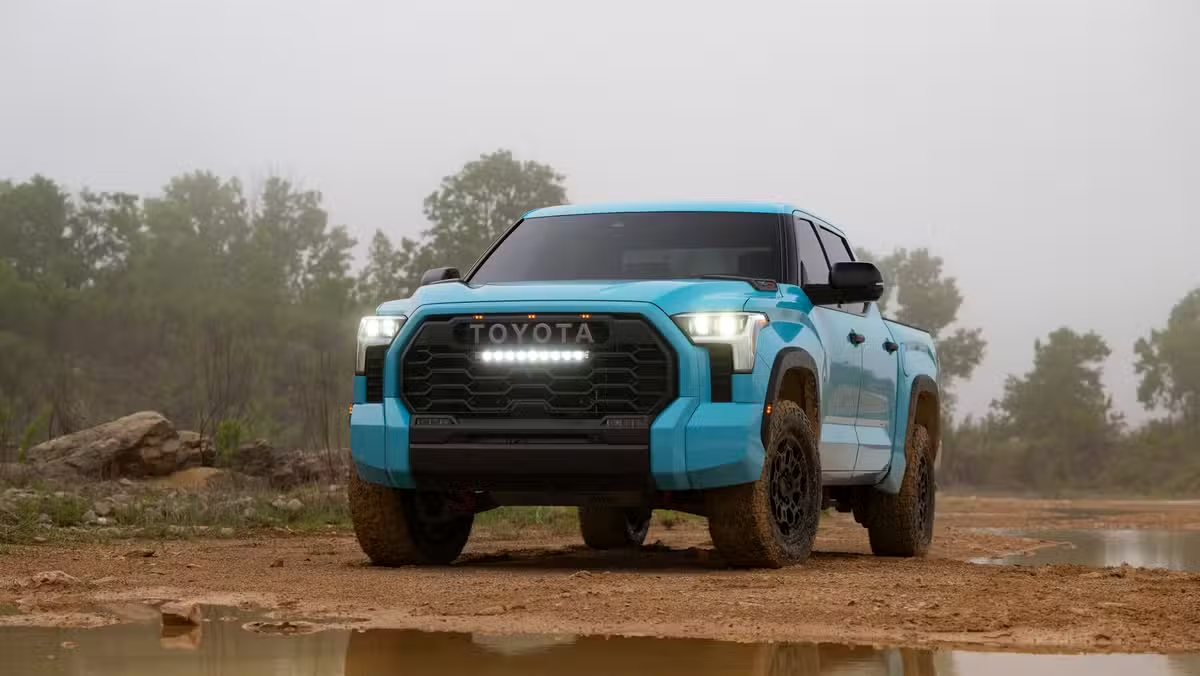
Frequently Asked Questions
Frequently Asked Questions
How much does a 2026 Toyota Tundra cost for fleet purchases?
Base SR5 starts at $40,090 MSRP. Fleet discounts typically range 5-12% depending on volume. The SR5 with TRD Off-Road package runs approximately $44,000 before fleet incentives. Contact Toyota's fleet division directly for volume pricing.
Is the Tundra reliable enough for commercial use?
Toyota trucks consistently rank among the most reliable full-size pickups. The 2026 Tundra's twin-turbo V6 has proven itself since its 2022 introduction. Expect maintenance costs 15-20% lower than domestic competitors over a 5-year ownership period based on historical data.
Which Tundra trim has the best resale value?
The TRD Pro typically holds the highest percentage of original value due to limited availability and enthusiast demand. However, the SR5 and Limited trims offer better absolute ROI because you're retaining a percentage of a lower initial investment.
Should I buy or lease a Tundra for business use?
For vehicles driven under 15,000 miles annually, leasing can make sense for cash flow management. For higher-mileage commercial use, purchasing captures the Tundra's strong residual value. Section 179 deductions may favor purchasing for tax optimization — consult your accountant.
How does Tundra fuel economy affect fleet operating costs?
At 19 MPG combined and current fuel prices around $3.50/gallon, a Tundra driven 20,000 miles annually costs approximately $3,684 in fuel. The available i-FORCE MAX hybrid improves economy to roughly 22 MPG combined, saving about $600 annually per vehicle.
Logicity's Take
We're a web development and AI agency in Hyderabad — not automotive experts. But we work with plenty of business owners who face similar investment decisions across different categories. The framework here applies universally: total cost of ownership matters more than sticker price. Toyota's connected services strategy mirrors what we see in enterprise software: bundling ecosystem services to increase switching costs. For Indian business owners watching international truck markets, note how Toyota integrates telematics, maintenance prediction, and fleet management into a single platform. This is the same bundling strategy we implement for clients using tools like n8n for workflow automation — consolidate your tools, reduce integration complexity, and own your data. Whether you're buying trucks or building tech stacks, the winners are those who calculate true 3-5 year costs rather than optimizing for day-one savings.
The Bottom Line for Business Buyers
The 2026 Toyota Tundra lineup offers genuine differentiation across trims, but the SR5 with TRD Off-Road package emerges as the clear winner for most business applications. You get the reliability Toyota is known for, meaningful mechanical upgrades that prevent costly downtime, and a price point that won't require board approval.
Skip the TRD Pro unless your work genuinely demands it. Consider the Platinum only if client perception justifies the premium. And remember that the best truck for your business isn't necessarily the most capable one — it's the one that delivers the lowest total cost per mile of productive work.
Decision-making frameworks for business leaders evaluating technology investments
Need Help With Your Tech Stack Decisions?
At Logicity, we help business leaders make smart technology investments — from AI automation to web infrastructure. While we can't help you choose a truck, we can help you build the digital systems that make your fleet more productive. Get in touch for a consultation on workflow automation, custom dashboards, or AI-powered business tools.
Source: How-To Geek
Huma Shazia
Senior AI & Tech Writer
اقرأ أيضاً

رأي مغاير: كيف يؤثر اختراق الأمن الداخلي الأميركي على شركاتنا الخاصة؟
في ظل اختراق عقود الأمن الداخلي الأميركي مع شركات خاصة، نناقش تأثير هذا الاختراق على مستقبل الأمن السيبراني. نستعرض الإحصاءات الموثوقة ونناقش كيف يمكن للشركات الخاصة أن تتعامل مع هذا التهديد. استمتع بقراءة هذا التحليل العميق

الإنسان في زمن ما بعد الوجود البشري: نحو نظام للتعايش بين الإنسان والروبوت - Centre for Arab Unity Studies
في هذا المقال، سنناقش كيف يمكن للبشر والروبوتات التعايش في نظام متكامل. سنستعرض التحديات والحلول المحتملة التي تضعها شركات مثل جوجل وأمازون. كما سنلقي نظرة على التوقعات المستقبلية وفقًا لتقرير ماكنزي

إطلاق ناسا لمهمة مأهولة إلى القمر: خطوة تاريخية نحو استكشاف الفضاء
تعتبر المهمة الجديدة خطوة هامة نحو استكشاف الفضاء وتطوير التكنولوجيا. سوف تشمل المهمة إرسال رواد فضاء إلى سطح القمر لconducting تجارب علمية. ستسهم هذه المهمة في تطوير فهمنا للفضاء وتحسين التكنولوجيا المستخدمة في استكشاف الفضاء.