Key Takeaways
Zepto IPO - Must watch! Zepto IPO analysis
- Zepto may reduce its IPO size by 20% to $650-700 million as domestic investors push back on valuation
- Tata's semiconductor fab will begin production with 90nm and 55nm chips, not the 28nm nodes originally touted
- Zepto's FY26 adjusted EBITDA loss of Rs 5,000 crore dwarfs competitors Blinkit (Rs 277 crore) and Swiggy Instamart (Rs 3,500 crore)
Quick commerce startup Zepto is reconsidering the size of its public offering after domestic institutional investors balked at its valuation. The company may raise $650-700 million in fresh capital, down from the $850 million originally planned. Separately, Tata Group's semiconductor ambitions hit a reality check: its new fab will lean on older chip technology before graduating to more modern nodes.

Why are investors pushing back on Zepto's valuation?
Domestic mutual funds want what they call "rationalised pricing." The numbers explain why. Zepto's expected IPO valuation of $3.5-4 billion is nearly half its last private round valuation of $7 billion. That kind of down-round pricing in a public market signals serious skepticism about the company's path to profitability.
The skepticism is grounded in Zepto's financials. In FY26, the company reported an adjusted EBITDA loss of about Rs 5,000 crore. Compare that to Blinkit's Rs 277 crore loss and Swiggy Instamart's Rs 3,500 crore. Zepto is burning cash at a rate that makes even its well-funded competitors look capital-efficient.
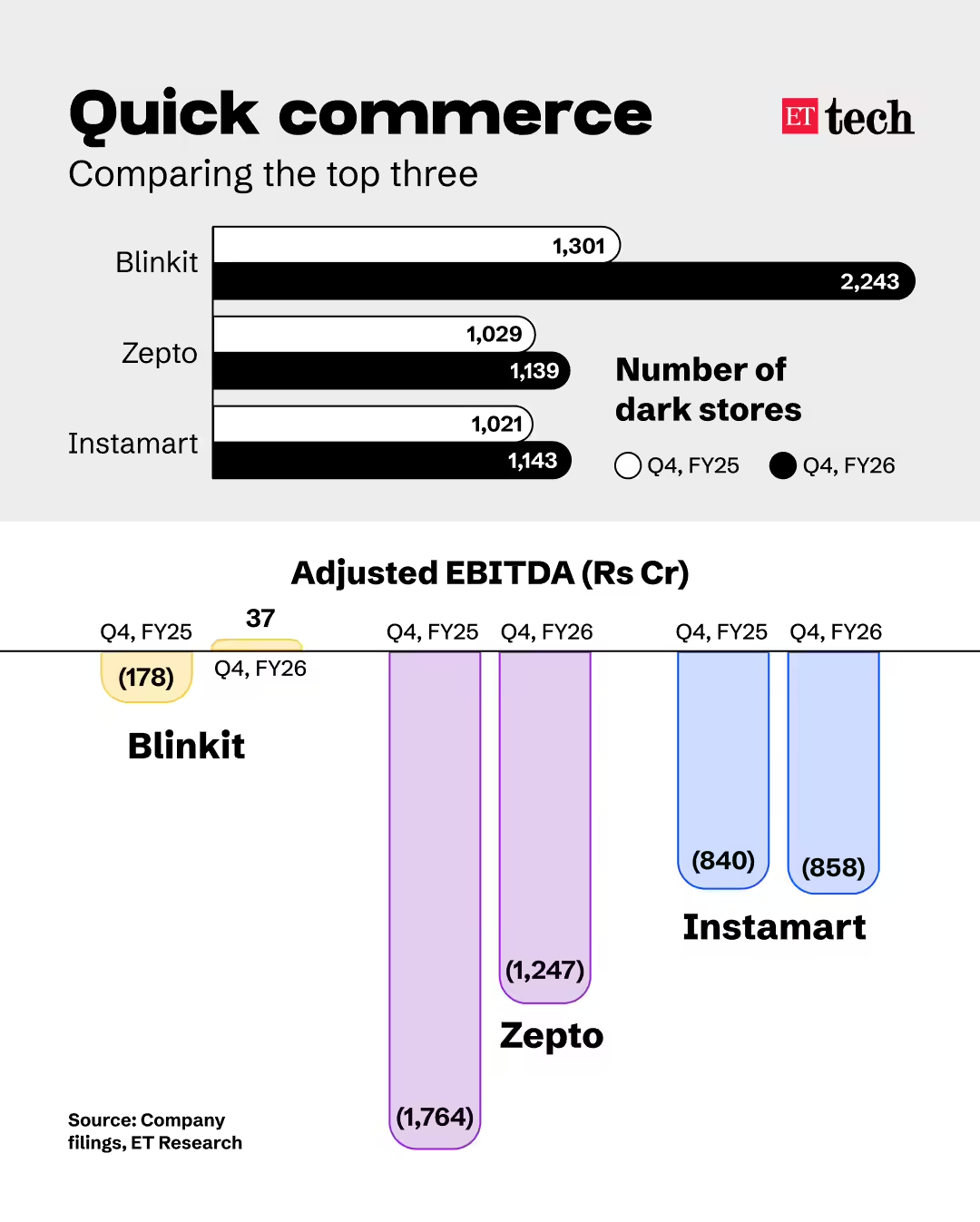
Analysts have flagged Zepto's aggressive pricing strategy as the culprit. The company has prioritized market share over monetization, discounting heavily to win customers in India's crowded quick commerce market. That strategy works when private capital is cheap. It becomes a liability when you need public market investors to buy in.
What's the timeline for Zepto's public listing?
Zepto filed for an IPO confidentially in December 2025 and submitted updated papers in June. The company plans to announce its price band in the next 7-8 days. The compressed timeline suggests management wants to move quickly before market conditions shift further.
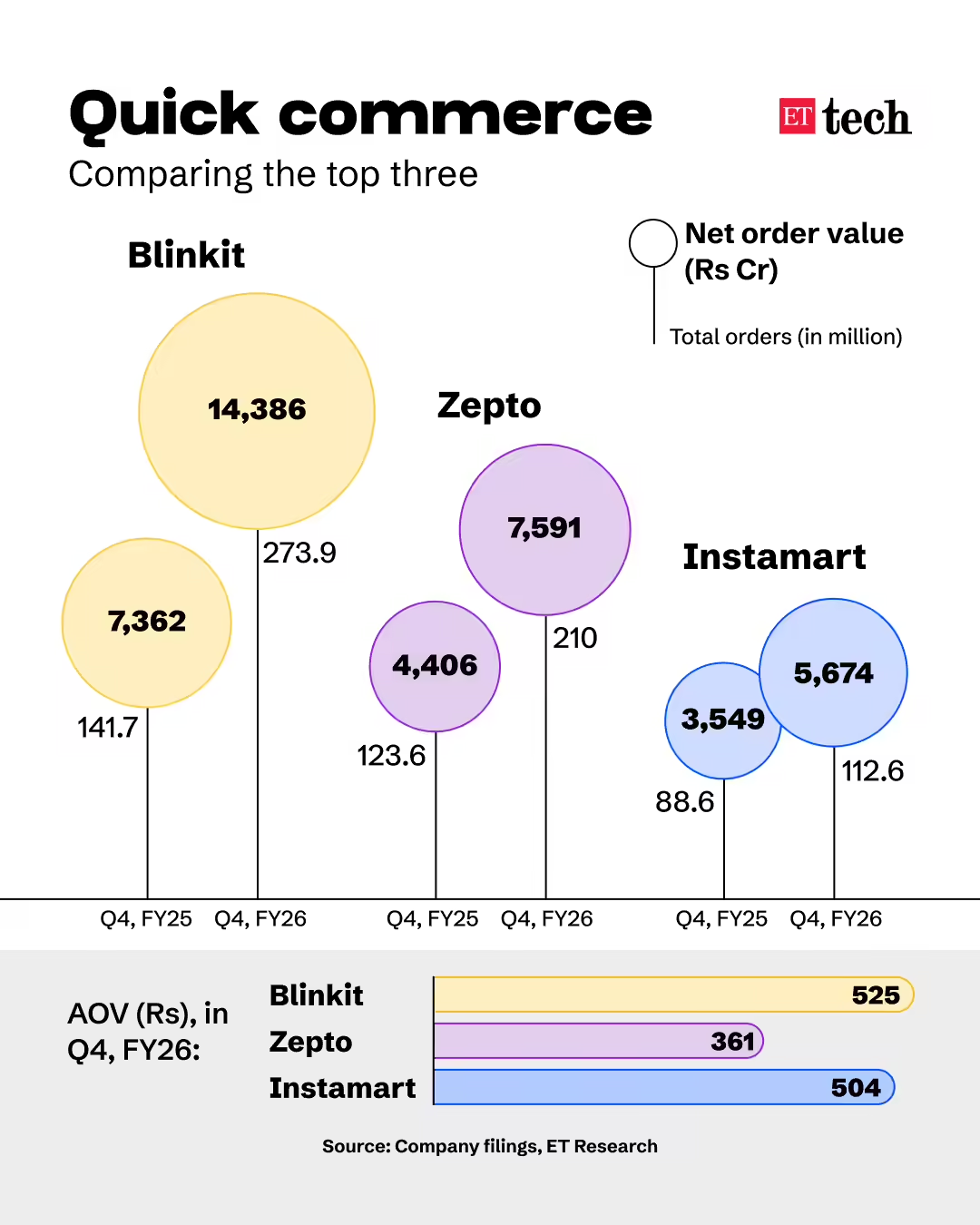
The quick commerce company trails only Blinkit in order volumes, making it the second-largest player in a market growing at over 40% annually. But volume without profit is a tough sell to institutional investors who've watched several Indian tech IPOs underperform.
Tata's chip ambitions start smaller than advertised
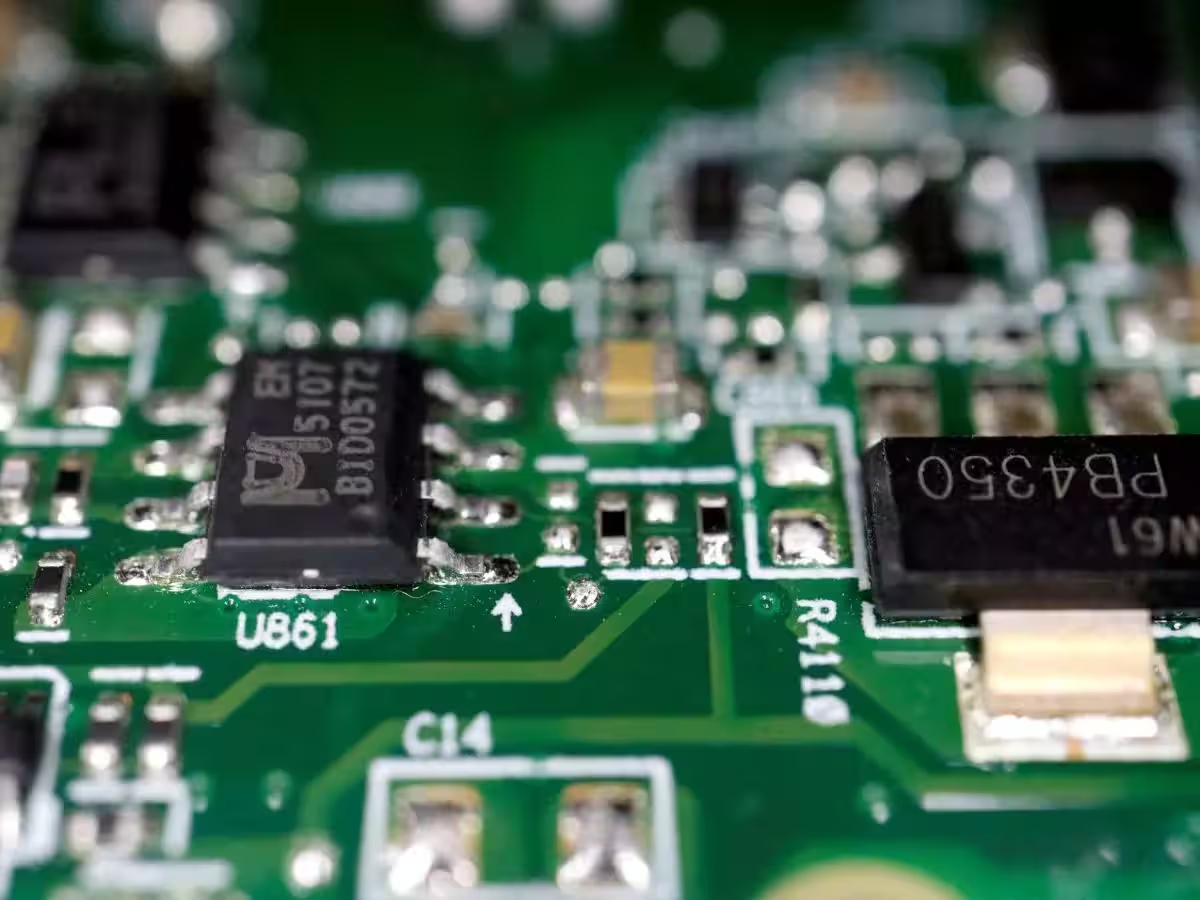
Tata Electronics' semiconductor fab in Dholera will begin production with 90nm and 55nm chips, Bloomberg reported. These are older nodes used primarily in lower-end industrial applications and automotive components. The more advanced 28nm technology that Tata Sons touted as its starting point will come later.
A company spokesperson said the plan "was always to start with 55 and 90nm, followed by 28nm." But Tata Sons' annual report for March 2025 described 28nm as the starting point of its chipmaking journey. The discrepancy suggests public ambitions may have outpaced near-term technical capabilities.
Tata is partnering with Taiwan's Powerchip Semiconductor Manufacturing to offer chips in the 28-110nm range. The 28nm node is described as a "key part" of the future portfolio. For context, the most advanced chips today are manufactured at 3nm and below. Even 28nm, while useful for many applications, is technology that TSMC commercialized over a decade ago.
Why does India's chip learning curve matter?
The government just launched ISM 2.0, a $13 billion boost to India's semiconductor ecosystem. Starting with legacy nodes isn't necessarily a failure. It's how Taiwan, South Korea, and China all began their chip industries. The question is how quickly Tata can move up the technology ladder.
Older chips still have substantial markets. Automotive, industrial controls, and IoT devices don't need cutting-edge nodes. But these markets are also lower margin and increasingly commoditized. Tata will need to reach 28nm and beyond to compete for higher-value contracts.
Tech Mahindra's results lift IT stocks
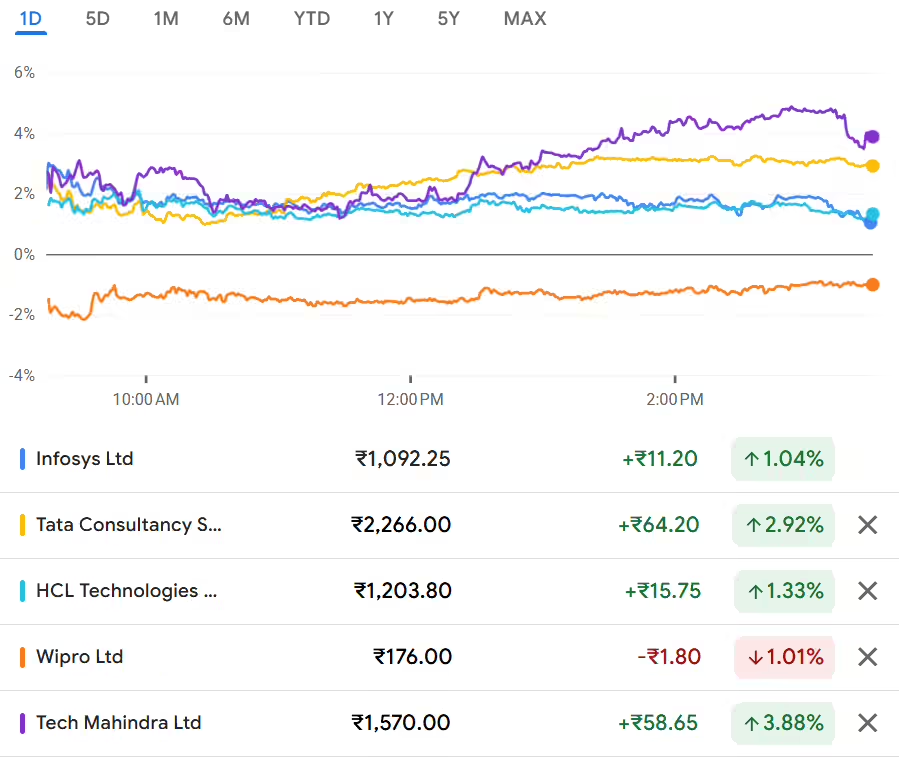
In other market news, Tech Mahindra's Q1 results triggered a rally across IT stocks. The company's net profit jumped 28.4% year-on-year and 8.2% sequentially to Rs 1,465 crore, beating expectations. Lower expenses and strong performance across business segments drove the gains.

Tech Mahindra closed about 4% higher. Infosys rose 1.5%, HCLTech climbed 1.3%, and TCS gained 3%. The rally was also supported by HCLTech's new seven-year agreement with The Guardian Life Insurance Company of America. Midcap firms Persistent Systems and Coforge bucked the trend, declining 1-2% each. Wipro fell about 3% after reporting weak Q1 numbers.
Neo Group raises Rs 350 crore
Wealth manager Neo Group has signed agreements to raise about Rs 350 crore ($36.3 million) in a round led by existing investor Peak XV Partners. The funding will support expansion of the company's wealth management platform.


Logicity's Take
Zepto's valuation haircut tells a broader story about Indian tech IPOs in 2025. Domestic institutional investors have learned from the post-IPO slumps of Paytm and Zomato. They're demanding realistic pricing, not private-market fantasy valuations. For founders watching this, the lesson is clear: burn rates matter more than GMV when you're pitching public markets. Tata's chip story is different but equally instructive. Starting with legacy nodes isn't defeat. It's pragmatism. India's semiconductor journey will be measured in decades, not quarters. The risk is if government press releases continue to outpace actual capabilities. Credibility matters when you're trying to attract global chip customers.
Frequently Asked Questions
Why is Zepto reducing its IPO size?
Domestic mutual funds are pushing back on Zepto's valuation, citing concerns about the company's Rs 5,000 crore EBITDA loss and aggressive cash burn amid intense competition in quick commerce.
What is Zepto's expected IPO valuation?
Zepto's IPO valuation is expected to be $3.5-4 billion, roughly half its last private round valuation of $7 billion.
What chip technology will Tata's semiconductor fab use?
Tata's Dholera fab will start with 90nm and 55nm chips before moving to 28nm technology. These older nodes are used in industrial applications and automotive components.
When will Zepto announce its IPO price band?
Zepto plans to announce its price band in the next 7-8 days, following its confidential filing in December 2025 and updated papers in June.
How much did Tech Mahindra's profit grow in Q1?
Tech Mahindra's net profit grew 28.4% year-on-year and 8.2% sequentially to Rs 1,465 crore in Q1.
Another major tech valuation story showing how market sentiment is shifting for high-growth companies
Need Help Implementing This?
For founders preparing for IPO or raising institutional capital, understanding how public market investors evaluate tech companies is critical. Reach out to Logicity's network of advisors for guidance on investor communications and market positioning.
Source: Tech-Economic Times
Norges, Motilal Oswal emerge as key anchor investors in Zepto's Rs 11,000 crore IPO
The new article reveals specific anchor investors (Norges Sovereign Wealth Fund and Motilal Oswal) who may take 40-45% of the anchor book. It provides the precise IPO valuation of $5.1 billion and notes this is down from the $7 billion valuation in October 2025. It also details the issue structure: Rs 8,010 crore fresh issue plus OFS of 11.35 crore shares, and mentions three top Indian bankers are in talks to invest via mutual funds.
Manaal Khan
Tech & Innovation Writer
Produced with AI assistance and reviewed by the Logicity editorial team. Learn more in our Editorial Policy.