Key Takeaways
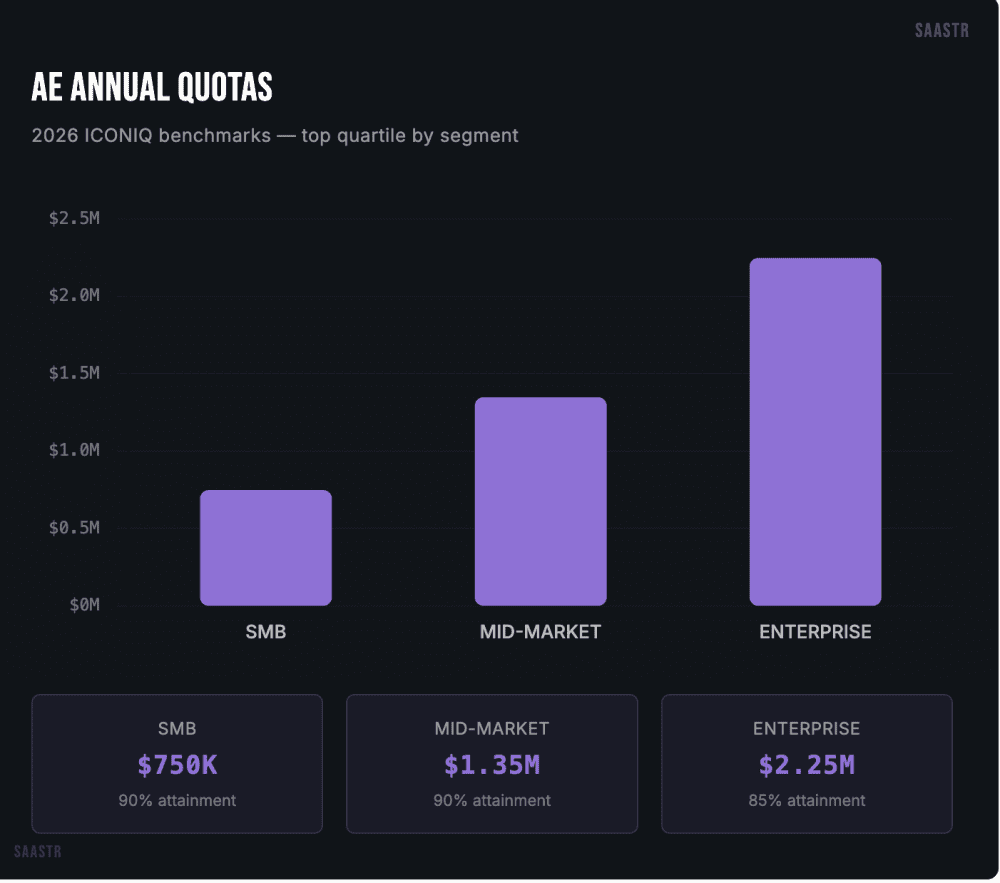
- Top-quartile enterprise AEs now carry $2.25M annual quotas, up from typical $1.5M figures
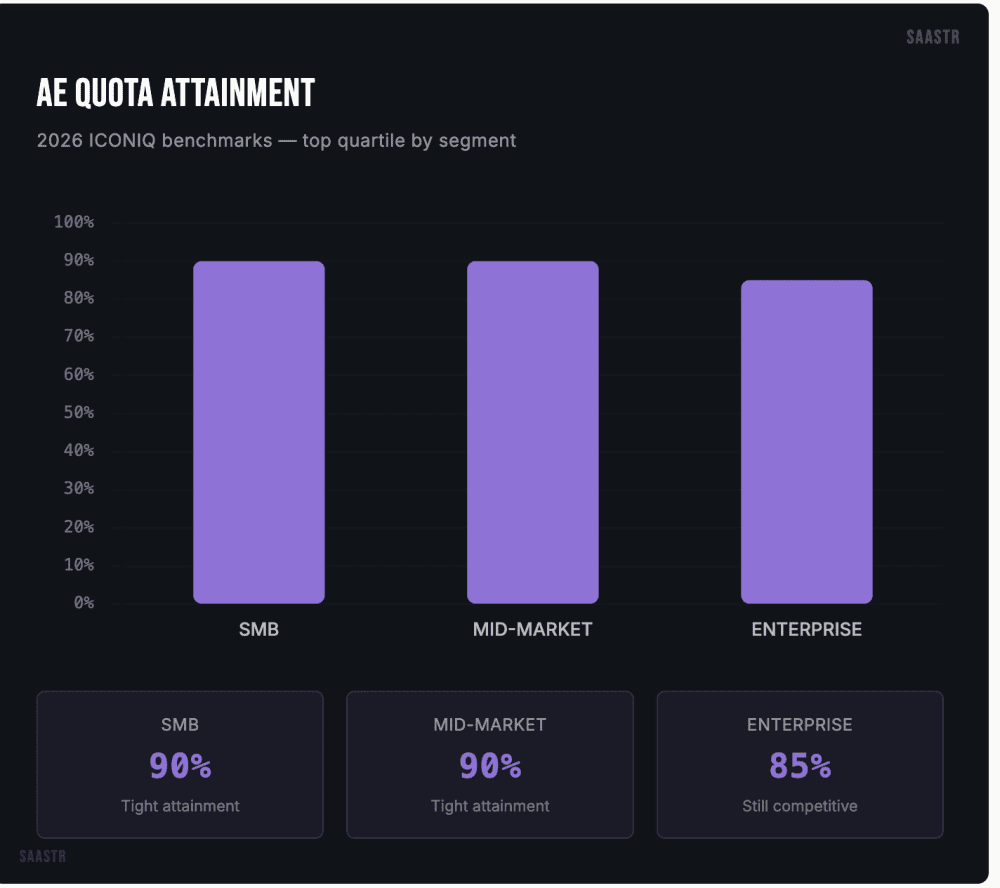
- Leading B2B and AI companies are hitting 85-90% quota attainment, far above the traditional 65-75%
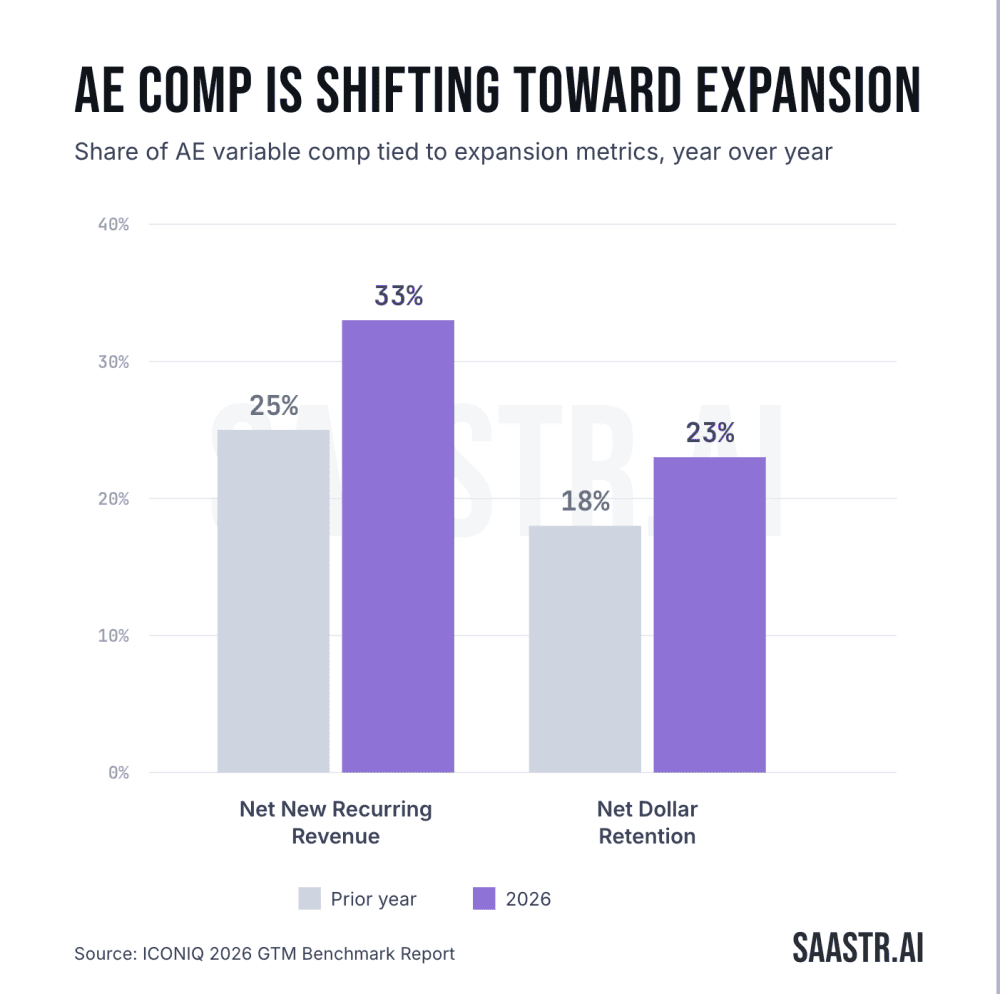
- AE compensation tied to expansion revenue jumped from 25% to 33% in a single year
ICONIQ Growth released its 2026 GTM benchmark report, and the numbers tell a clear story: sales quotas have climbed, but the underlying economics remain familiar. Top-quartile enterprise account executives are now carrying $2.25M annual quotas. Mid-market sits at $1.35M. SMB lands at $750K. The data comes from 150+ B2B and AI software companies spanning early to late stage.
Disclosure
Some links in this post are affiliate links — Logicity earns a commission if you sign up, at no extra cost to you. We only link products we have used or actively recommend.
Jason Lemkin of SaaStr summarized it bluntly: "Overall sales quotas and processes are similar to the pre-AI era. Just... ramped up." The reps aren't doing fundamentally different work. They're doing more of it, with better tools, and getting paid accordingly.
One caveat matters here. ICONIQ invests at the growth stage in some of the best B2B and AI companies around. Their portfolio includes Canva, Datadog, GitLab, and Notion. These benchmarks skew toward the top end. Treat them as what fast-growing, well-funded startups that have hit true product-market fit are doing, not what the median SaaS company achieves.
Why are top companies hitting 85-90% quota attainment?
Traditional B2B sales orgs see 65-75% of reps hit quota. That's been the baseline for years. But the companies in ICONIQ's data are hitting 85-90% attainment. Higher quotas usually mean lower attainment. For these leaders, the opposite is happening.
The explanation isn't magic. It's pipeline. Companies with AI embedded in their marketing and SDR motions are generating 10-11 points more lead-to-MQL conversion and 8 points more MQL-to-SQL conversion. More qualified pipeline per rep is what lets the quota go up without attainment cratering.
You can't just announce a $2M quota and expect it to hold. The quota is only as real as the pipeline behind it. If your pipeline generation isn't climbing at the same rate as your quota, attainment will crater. That's not a riddle. It's arithmetic.
How is sales compensation shifting toward expansion?
AEs now own more of the customer relationship than they did two years ago. Comp has followed the work. AE compensation tied to Net New Recurring Revenue jumped from 25% to 33% in a single year. Comp tied to Net Dollar Retention went from 18% to 23%.
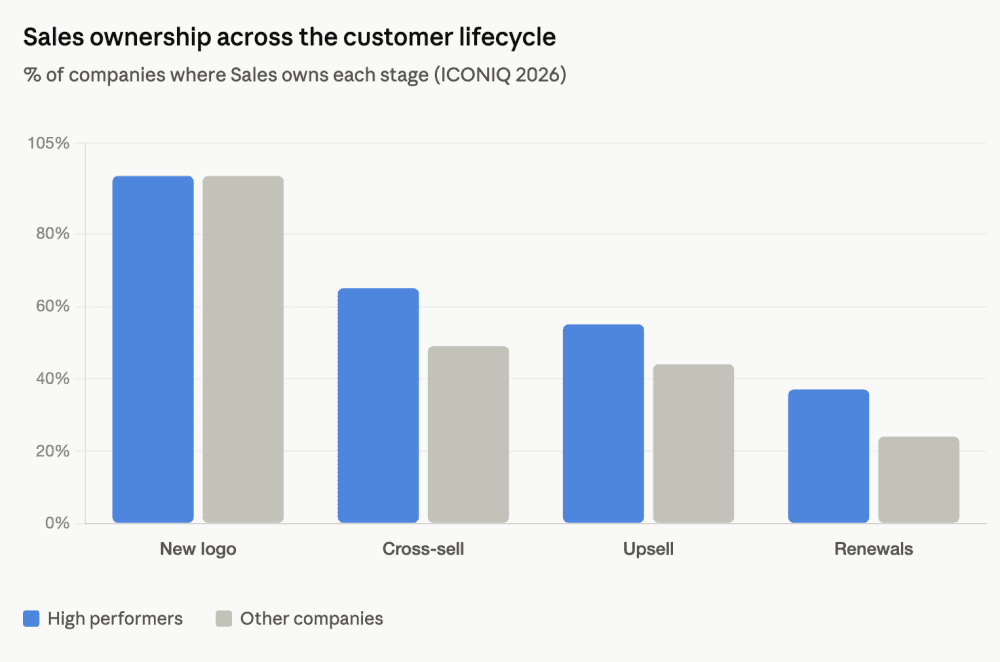
The numbers on cross-sell and upsell ownership are equally stark. 65% of high performers have Sales owning cross-sell, compared to 49% of others. 55% own upsell versus 44%. And 37% own renewals versus 24%. The pattern is consistent: top performers give their AEs more ownership of the full customer lifecycle.
If your comp plan is still 80% new business and 20% expansion, you're out of step with how the best companies pay. The reps who can carry $2M+ quotas expect meaningful expansion comp. They'll leave for the companies that offer it. Most founders haven't made this move. Their comp plan still looks like 2023.
What should founders actually do with these benchmarks?
Here's the baseline for 2026 quota planning. SMB: $750K annual quota, expect roughly 90% attainment from competent reps. Mid-Market: $1.35M annual quota, expect roughly 90% attainment from solid performers. Enterprise: $2.25M annual quota, expect roughly 85% attainment from top-quartile reps.
If your enterprise AE quota is still sitting at $1.5M, you're likely leaving 30% of potential revenue on the table. But if you jump to $2.5M without the pipeline and comp structure to support it, attrition will spike. The gap between high performers and everyone else isn't strategy anymore. It's quota-setting, pipeline generation, and comp architecture.
The practical question for founders building or restructuring sales teams: do you have the pipeline infrastructure to support higher quotas? Companies using CRM platforms like Salesforce, HubSpot, or Pipedrive with AI-assisted lead scoring and pipeline forecasting tend to have better visibility into whether their quotas are realistic or aspirational.
The underlying economics haven't changed
One finding that might surprise people: paying reps around 20% of what they close in base and bonus hasn't changed materially. The fundamental unit economics of sales compensation remain intact. What's changed is capacity per rep and the distribution of that comp across new business versus expansion.
Rising OTEs partly explain the higher quotas. If you're paying an enterprise AE $300K OTE, you need them closing enough to justify it. At 20% total comp load, that means roughly $1.5M closed-won at minimum. Push OTE to $400K+ and the math demands $2M+ quotas.
Logicity's Take
The ICONIQ data confirms what many operators suspected: AI hasn't rewritten sales playbooks, it's just accelerated them. The companies pulling ahead are doing three things simultaneously: raising quotas, shifting comp toward expansion, and investing in AI-powered pipeline generation. Miss any one of those and the others fall apart. For founders still running 2023 comp plans, the competitive gap is widening fast. Tools like Salesforce Einstein, HubSpot's AI forecasting, or standalone solutions like Gong and Clari can help close the pipeline visibility gap, but the comp restructuring requires a harder conversation with your sales leadership.
Frequently Asked Questions
What is a good sales quota for an enterprise AE in 2026?
Top-quartile enterprise AEs at fast-growing B2B and AI companies carry $2.25M annual quotas, according to ICONIQ's 2026 benchmark. The median is lower, but high performers are hitting these numbers with 85% attainment.
How much of AE comp should be tied to expansion revenue?
Leading companies now tie 33% of AE compensation to Net New Recurring Revenue and 23% to Net Dollar Retention. If your plan is still 80% new business, you're behind market.
What quota attainment rate should I expect from sales reps?
Traditional B2B orgs see 65-75% attainment. Top B2B and AI companies in ICONIQ's data are hitting 85-90%, but this requires strong pipeline generation to support higher quotas.
Should SMB reps carry the same quota as mid-market reps?
No. ICONIQ's benchmarks show SMB at $750K annually, mid-market at $1.35M, and enterprise at $2.25M. Each segment has different deal sizes, sales cycles, and volume requirements.
How does AI affect sales quota attainment?
Companies with AI in their marketing and SDR motions generate 10-11 points more lead-to-MQL conversion and 8 points more MQL-to-SQL conversion. This additional pipeline capacity is what allows higher quotas without killing attainment.
Need Help Implementing This?
If you're restructuring your sales quotas or comp plans based on these benchmarks, Logicity covers B2B SaaS operations weekly. Subscribe for tactical breakdowns on sales, marketing, and product-led growth strategies.
Source: SaaStrAI
Manaal Khan
Tech & Innovation Writer
Produced with AI assistance and reviewed by the Logicity editorial team. Learn more in our Editorial Policy.