Key Takeaways
- Rivian priced 75 million shares at $15.50 each, raising approximately $1.2 billion
- Proceeds will fund equity contributions for a DOE loan agreement backing R2 production
- Shares dropped 18% on the announcement despite strong Q2 deliveries and raised annual guidance
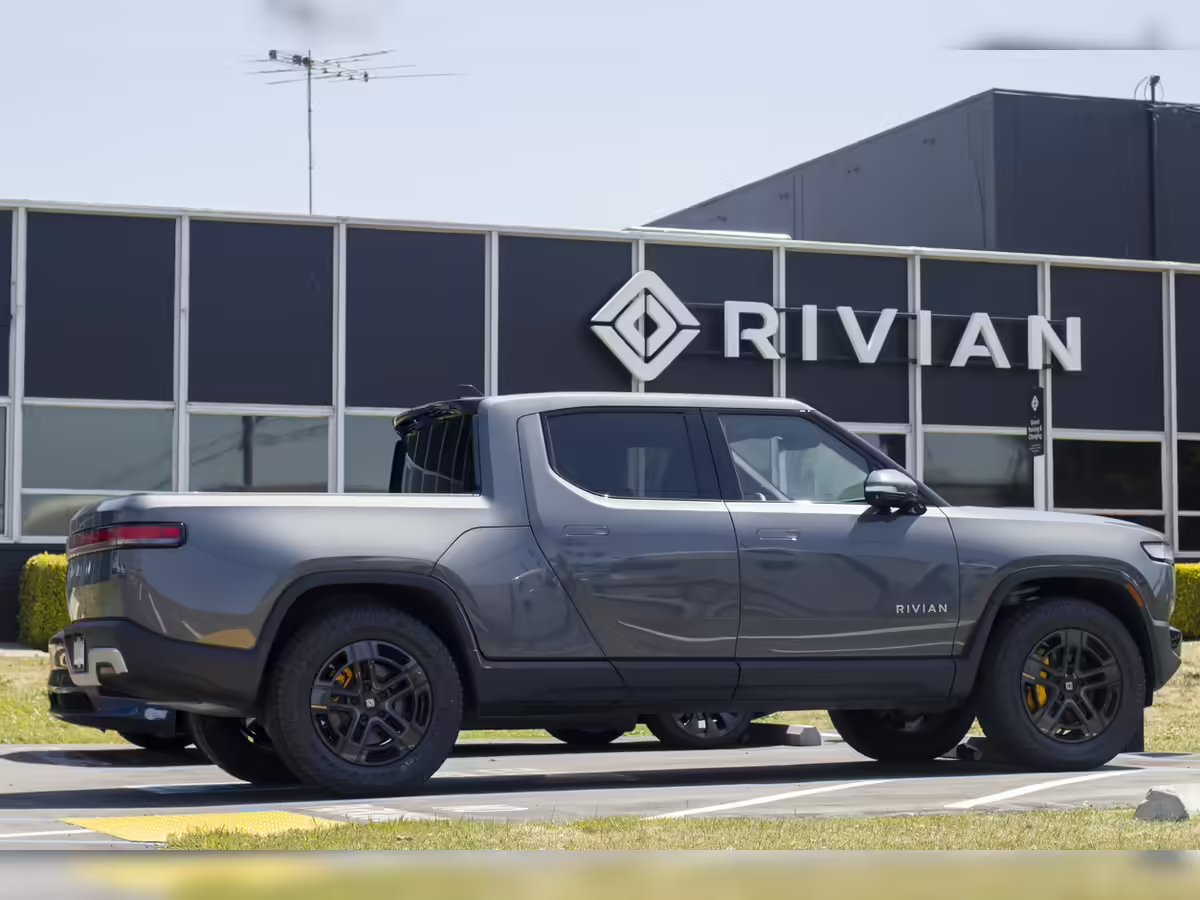
Rivian priced its 75-million-share offering at $15.50 per share on Tuesday, aiming to raise roughly $1.2 billion. The proceeds will fund equity contributions required under a loan agreement with the U.S. Department of Energy. Shares closed 18% lower at $16.49 following the announcement.
The timing is deliberate. Rivian is transitioning from a maker of expensive trucks and SUVs to a company that can compete on volume. Its R1T pickup and R1S SUV start above $70,000. The upcoming R2 SUV, expected to start around $45,000, is the vehicle Rivian believes will bring it to profitability.
Why raise cash now?
Rivian secured a $6.6 billion loan facility from the DOE in 2024 to build its new manufacturing plant in Georgia. That factory will produce the R2. But government loans come with strings. The equity contribution requirement means Rivian must put up its own capital before drawing DOE funds. This offering covers that obligation.
The stock sale came just days after Rivian reported strong Q2 deliveries of 13,790 vehicles and raised its full-year delivery forecast. That positive momentum made the offering possible, though diluting existing shareholders by roughly 8% still stung. The 18% single-day drop reflects investor unease with the dilution, not necessarily doubt about the company's direction.
The R2 is make-or-break
Rivian's survival depends on the R2. The company has burned billions ramping up R1 production while chasing profitability. CEO RJ Scaringe has been clear about the stakes. At the R2 reveal in March 2024, he said the vehicle will be "the one that brings Rivian to the masses."
A $45,000 starting price puts the R2 in direct competition with Tesla's Model Y, the world's best-selling EV. Rivian is betting that its brand identity, outdoor-adventure positioning, and build quality can carve out share in that segment. The Georgia factory is designed to produce R2s at scale, which should improve unit economics.
What the dilution means for investors
Pricing at $15.50 when shares traded near $16.49 signals underwriters wanted a quick, clean sale. The discount attracted buyers but punished existing shareholders. For long-term investors, the question is whether R2 production ramps fast enough to justify the capital raise.
Rivian went public in November 2021 with one of the largest U.S. IPOs ever, briefly touching a $150 billion valuation. It now trades at roughly a tenth of that. The gap between promise and execution has been painful, but the company remains one of the few EV startups with real production volume and a credible path forward.
Logicity's Take
Rivian's capital raise is less about survival and more about execution speed. The DOE loan removes most of the Georgia factory's financing risk, so this equity contribution is a formality rather than a lifeline. The real test comes in 2025 and 2026 when R2 units start hitting driveways. If Rivian can hit 100,000+ annual R2 deliveries at reasonable margins, the 2024 dilution will look like a smart trade. If production stumbles, no amount of government backing will matter.
Broader EV market context
EV startups have had a brutal two years. Lordstown Motors filed for bankruptcy. Fisker followed. Lucid has struggled with sales despite Saudi backing. Rivian's partnership with Volkswagen and its DOE loan set it apart, but capital markets remain skeptical of any EV maker not named Tesla or BYD.
The offering shows Rivian can still access public markets when needed. That flexibility matters. The company ended Q1 2024 with around $7.9 billion in cash, and this raise adds another $1.2 billion. Cash runway is not the immediate concern. Execution is.
Frequently Asked Questions
How much is Rivian raising in this stock offering?
Rivian is raising approximately $1.2 billion by selling 75 million shares at $15.50 each.
What will Rivian use the proceeds for?
The funds will cover equity contributions required under Rivian's loan agreement with the U.S. Department of Energy, which is financing the company's new Georgia manufacturing plant.
Why did Rivian stock drop 18% after the announcement?
The offering dilutes existing shareholders by roughly 8%. Even though Rivian reported strong Q2 deliveries, investors reacted negatively to the dilution and the below-market pricing of new shares.
When will the Rivian R2 be available?
Production is expected to begin at the Georgia factory in 2026, with deliveries following shortly after. The R2 is priced around $45,000, significantly below Rivian's current R1 lineup.
Is Rivian profitable?
No. Rivian continues to burn cash as it scales production. The R2 is seen as critical to reaching profitability due to its higher volume potential and improved unit economics.
Need Help Implementing This?
Logicity covers the tools and strategies shaping modern business. Subscribe to our newsletter for weekly analysis on tech, finance, and operational decisions that matter.
Source: Tech-Economic Times / ET
Huma Shazia
Senior AI & Tech Writer
Produced with AI assistance and reviewed by the Logicity editorial team. Learn more in our Editorial Policy.