Key Takeaways
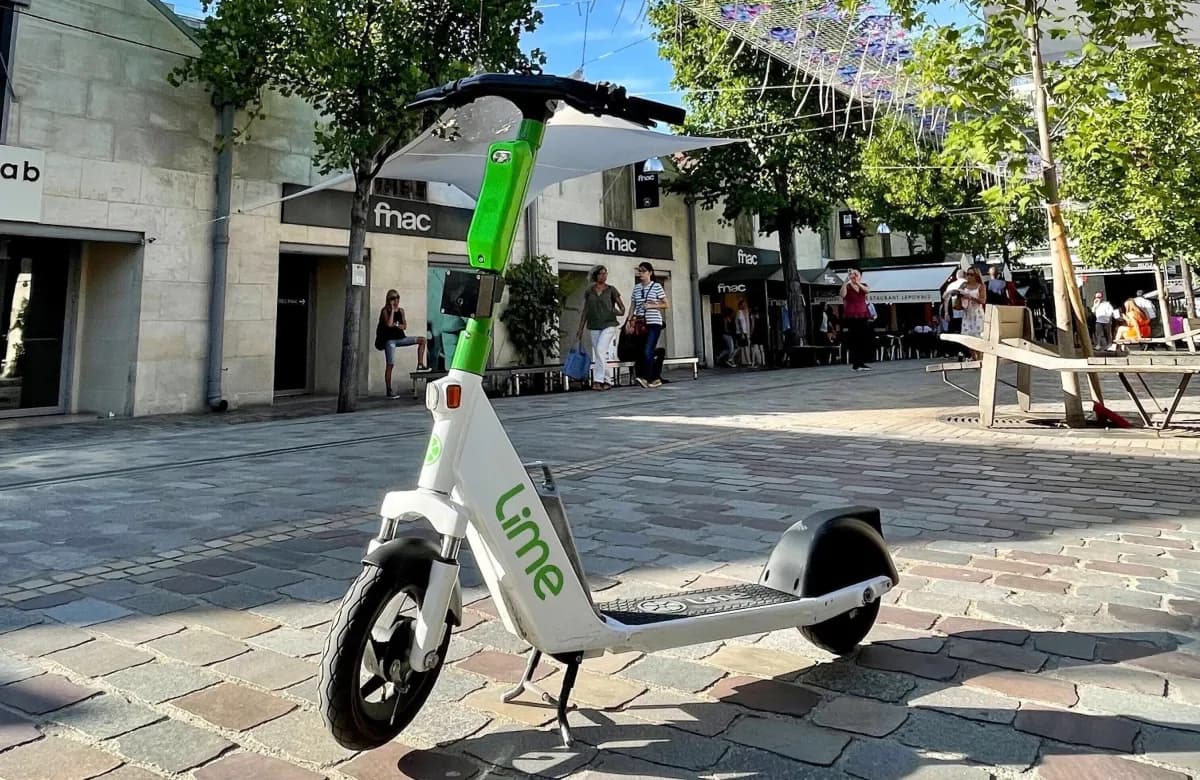
- Lime sold 6.68 million shares at $25 each, raising $167 million and achieving a $1.66 billion valuation
- The company needs IPO proceeds to address roughly $1 billion in liabilities, with more than half due by year-end
- Lime has grown revenue from $521 million in 2023 to $886.7 million in 2025, while trimming losses significantly
Lime went public Wednesday, raising $167 million by selling 6.68 million shares at $25 each. The nine-year-old micromobility company, backed by Uber, now trades on Nasdaq under the ticker "LIME" with a valuation of approximately $1.66 billion. Shares jumped around 9% in the first hour of trading.
The IPO ends years of speculation about when, or whether, Lime would make its public debut. CEO Wayne Ting first floated a 2022 timeline following a $523 million funding round in 2021. He revisited the idea in 2023, citing unfavorable market conditions. This time, Ting says, the fundamentals are in place.
“Having that resilience and patience and belief and optimism that we will get through the toughest moments [has] really paid dividends over the long run, because there were many days, weeks, months, where I wasn't sure if Lime was going to make it past the next three months, four months.”
— Wayne Ting, CEO of Lime
Why Lime needs this capital now
The IPO isn't just a victory lap. In its May filing, Lime expressed "substantial doubt" about its ability to continue as a going concern. The company carries roughly $1 billion in liabilities, with more than half due by the end of 2026. Some of that debt is convertible, but without IPO proceeds, Lime would have needed alternative financing sources.
This financial pressure reflects the broader carnage in micromobility. Bird, which went public via SPAC in 2021 at a $2.3 billion valuation, later filed for bankruptcy protection. Tier and Dott merged to survive. Micromobility.com got delisted. Superpedestrian shut down entirely.
Lime survived by doing what its competitors couldn't: growing revenue while shrinking losses. The company pulled in $521 million in 2023, $686.6 million in 2024, and $886.7 million last year. Losses dropped from $122.3 million in 2023 to $33.9 million in 2024, though they ticked back up to $59.3 million in 2025. On an adjusted basis, Lime reported gross profit exceeding $400 million last year.
How Lime built an edge over dead competitors
Ting credits two factors. First, relentless focus on unit economics. Second, software and machine learning tools that help manage operations across 230 cities in 29 countries. These aren't flashy advantages, but in a business Ting describes as "a real game of inches," they compound.
"We're constantly looking for this 1%, 2% improvement," he said. Public market access should amplify those gains, Ting argues, by providing capital to invest in technology and expansion.
There's a strategic angle, too. Cities burned by operators who collapsed within months of launching now scrutinize financial health before granting permits. A public company's transparent books could be a selling point. "I know a lot of cities don't like the fact that they sometimes would bring an operator into the market and that operator will go out of business in six to 12 months," Ting said.
The Uber dependency
One risk worth noting: Uber owns 24% of Lime and accounted for more than 14% of the company's revenue last year. In certain cities, riders can book Lime scooters and bikes directly through the Uber app. That's a powerful distribution channel, but it also makes Lime partially reliant on a larger company's strategic priorities.
If Uber ever decides to build or buy its own micromobility fleet, or simply deprioritizes the integration, Lime's top line would feel it. For now, the relationship appears stable and mutually beneficial.
A modest valuation with room to prove
At $1.66 billion, Lime's IPO valuation sits just below the $2.3 billion Bird commanded in 2021. But Bird's subsequent collapse makes that comparison more cautionary than flattering. Lime at peak private market hype in 2019 reportedly touched $2.4 billion. The IPO price represents a sobered market, not a triumphant one.
Still, Lime is the last major scooter company standing with a plausible path to sustained profitability. Three consecutive years of positive free cash flow gave Ting the confidence to time this debut. Whether public investors reward that patience depends on whether the company can keep trimming losses while growing revenue, something no micromobility company has managed at scale over the long term.
Logicity's Take
Lime's IPO is less a celebration than a survival milestone. The company needed this capital to avoid a liquidity crisis, and it got the deal done at a valuation that neither embarrasses nor excites. For tech decision-makers watching mobility infrastructure, the lesson is clear: unit economics beat growth metrics when the music stops. Lime won by optimizing operations city by city, not by blitzing new markets with subsidized rides. The 14% revenue dependency on Uber is a structural vulnerability worth monitoring, but with $167 million in fresh capital and public market discipline ahead, Lime has bought itself time to prove the model works without a benefactor.
Frequently Asked Questions
What is Lime's IPO valuation?
Lime's IPO values the company at approximately $1.66 billion, based on 6.68 million shares sold at $25 each.
Why did Lime delay its IPO for so long?
CEO Wayne Ting wanted to demonstrate that Lime was a self-sustaining, profitable business before going public. The company achieved three consecutive years of positive free cash flow before proceeding.
How much of Lime does Uber own?
Uber owns 24% of Lime and contributed more than 14% of the company's revenue in 2025 through in-app ride bookings.
What happened to Lime's competitors?
Bird filed for bankruptcy after going public. Tier and Dott merged. Micromobility.com was delisted. Superpedestrian went out of business entirely.
Is Lime profitable?
Lime reported three years of positive free cash flow and adjusted gross profit exceeding $400 million in 2025. Net losses were $59.3 million last year, down from $122.3 million in 2023.
Need Help Implementing This?
If your company is navigating IPO readiness, financial reporting systems, or mobility infrastructure decisions, Logicity's consulting team can help you evaluate vendors, structure data pipelines, and build investor-ready dashboards. Reach out at consulting@logicity.in.
Source: TechCrunch / Sean O'Kane
Huma Shazia
Senior AI & Tech Writer
Produced with AI assistance and reviewed by the Logicity editorial team. Learn more in our Editorial Policy.