Key Takeaways
- Data center sizing spans from edge deployments to hyperscale facilities, and bigger isn't always better
- Average enterprise server utilization sits at 40-50%, indicating widespread over-provisioning
- AI workloads are forcing a fundamental rethink of traditional capacity planning models
Meta's Louisiana facility reportedly approaches the footprint of Manhattan. A planned Utah complex spans 20,000 acres. Headlines suggest that data center strategy now means building colossal. The reality is more interesting: right-sizing data centers to actual workload demand, power constraints, and growth trajectories matters far more than raw square footage.
Christopher Tozzi, writing for Data Center Knowledge, offers a practical framework for matching facility size to business need. The core argument is straightforward: over-provisioning wastes capital and energy, while under-provisioning creates painful bottlenecks. Getting it right requires understanding where your workloads actually sit on the size spectrum.
What does the data center size spectrum look like?
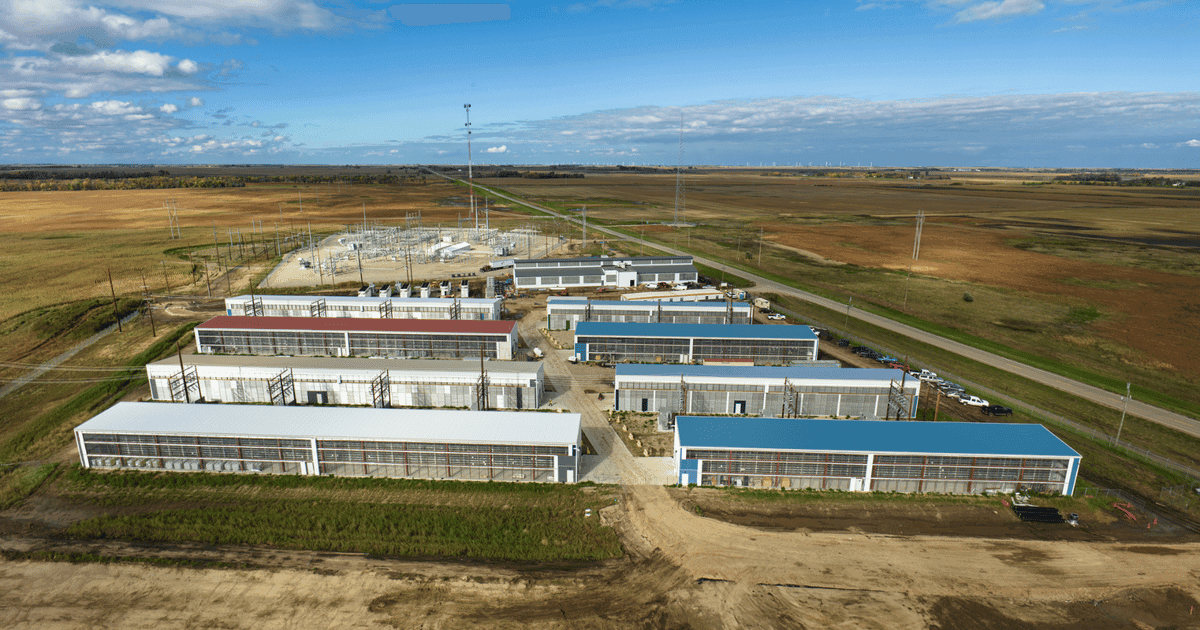
Data centers range from minimal edge deployments (sometimes just a small collection of servers, PCs, or even smartphones) to multi-building hyperscale campuses. Edge sites serve latency-sensitive applications close to users. Traditional enterprise facilities handle internal workloads. Colocation providers offer shared infrastructure. Hyperscalers build at scales that require their own substations and water supplies.
Each tier has distinct economics. Edge deployments trade efficiency for proximity. Enterprise facilities balance control with utilization rates that Uptime Institute estimates hover around 40-50%. Hyperscalers achieve economies of scale but require capital commitments most organizations cannot justify.
Why do enterprises consistently over-provision?
The 40-50% average server utilization figure tells a story. IT teams historically sized for peak capacity plus generous headroom. Procurement cycles measured in years meant guessing growth trajectories far into the future. The penalty for running out of capacity felt worse than the cost of unused racks.
That calculus is shifting. Data centers now consume 2-3% of global electricity, with projections climbing toward 4% by 2030. ESG commitments make stranded capacity harder to defend. And the rise of cloud and colocation options means organizations can burst into external capacity rather than building permanent headroom.
How AI workloads complicate capacity planning
Traditional workloads were predictable. Email servers, databases, and web applications scaled linearly with user counts. Capacity planning meant projecting headcount growth and adding proportional compute.
AI breaks this model. Training runs can spike GPU utilization to 100% for weeks, then drop to near-zero. Inference workloads scale with adoption curves that are genuinely hard to forecast. Power density per rack has jumped from 5-10 kW to 40-80 kW for AI-heavy deployments. Cooling requirements have shifted accordingly.
The result: static capacity planning is increasingly obsolete for organizations deploying significant AI workloads. Modular approaches, where capacity can be added in discrete chunks as demand materializes, are gaining traction.
A practical framework for sizing decisions
Tozzi's framework centers on three variables: current workload requirements, realistic growth projections, and the cost of being wrong in either direction.
- Measure actual utilization, not provisioned capacity. Many organizations discover significant headroom in existing facilities.
- Model workload growth scenarios rather than single-point forecasts. AI adoption, M&A activity, and product launches create step changes.
- Calculate the cost of stranded capacity versus the cost of constraint. Cloud burst options reduce the downside of running lean.
- Factor power and cooling constraints early. Many facilities hit power limits before space limits.
The global data center infrastructure market exceeds $300 billion and continues growing. But that growth increasingly flows to hyperscalers and specialized facilities rather than enterprise-owned data centers. For most organizations, the smart play is right-sizing owned capacity while maintaining relationships with cloud and colocation providers for flexibility.
When does bigger actually make sense?
Hyperscale economics work for hyperscalers. Meta, Google, and Microsoft operate at scales where custom silicon, dedicated power generation, and novel cooling systems pay off. Their workloads are predictable enough to justify multi-year build cycles.
For most enterprises, the answer is rarely to build at scale. Colocation handles growth spurts. Cloud handles experimentation. Owned capacity should cover baseline, predictable workloads where control and economics favor ownership.
Logicity's Take
The data center sizing conversation misses a key point: most IT teams lack accurate utilization data in the first place. Before debating edge versus hyperscale, organizations need observability into what they're actually running. Tools like Datadog, New Relic, or open-source alternatives like Prometheus can surface utilization patterns that make capacity decisions evidence-based rather than political. The 40-50% utilization figure is an industry average; your mileage may vary dramatically, and you won't know until you measure.
Frequently Asked Questions
What is data center right-sizing?
Right-sizing means matching data center capacity to actual workload demand rather than over-provisioning for hypothetical peak loads. It balances capital efficiency, energy consumption, and operational headroom.
How much do data centers typically over-provision?
Industry estimates suggest average enterprise server utilization runs 40-50%, meaning roughly half of provisioned capacity sits idle under normal conditions.
Why is AI making capacity planning harder?
AI training workloads spike unpredictably and require dramatically higher power density per rack (40-80 kW versus traditional 5-10 kW). Static capacity models built for steady-state workloads struggle with these patterns.
Should enterprises build their own data centers?
For most organizations, owned data centers make sense only for baseline, predictable workloads where control matters. Cloud and colocation handle growth spurts and experimentation more economically.
Need Help Implementing This?
Contact Logicity's advisory team for data center capacity assessments and infrastructure planning guidance tailored to your workload profile.
Source: datacenterknowledge
Huma Shazia
Senior AI & Tech Writer
Produced with AI assistance and reviewed by the Logicity editorial team. Learn more in our Editorial Policy.