Key Takeaways

- Gradium raised $100M total in an unusually large seed round, with Nvidia joining as a new investor
- The Paris-based startup is opening a Bay Area office to compete for AI talent near Anthropic, Google, and OpenAI
- Gradium focuses on ultra-low latency voice AI and has already landed Renault as a customer
Gradium, a Paris-based voice AI startup, has closed a $100 million seed round after reopening the round to bring in Nvidia as an investor. The company announced Thursday it will use the capital to open an office in the Bay Area and compete directly for talent against Anthropic, Google, Meta, and OpenAI.
A $100 million seed round is staggering. Typical seed rounds range from $1 million to $5 million. Gradium's round is 20 to 50 times that size, a signal of how aggressively investors are chasing AI infrastructure plays, and how much conviction exists around voice as the next interface layer.
Why is Nvidia investing in voice AI?
Nvidia has been systematically investing in AI startups that will drive demand for its GPUs. The chipmaker has backed companies like Mistral AI and Cohere with the same logic: more AI adoption means more compute demand, which means more Nvidia hardware sales. Voice AI at scale requires significant GPU resources for both training and inference, making Gradium a natural fit for Nvidia's portfolio strategy.
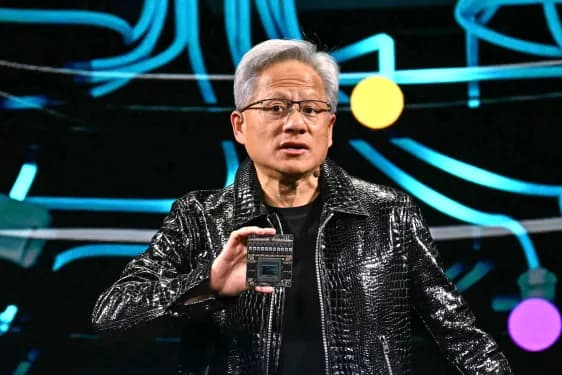
Gradium originally launched from stealth in December with $70 million from FirstMark Capital, Eurazeo, DST Global Partners, Eric Schmidt, and Xavier Niel, the French telecom billionaire. The startup spun out of Kyutai, a French AI research lab also backed by Niel.
What makes Gradium's voice AI different?
Gradium is building audio models designed for ultra-low latency. The goal: eliminate the awkward pause that plagues most AI voice interactions. When you talk to an AI agent and wait a beat too long for a response, that lag breaks the conversational flow and reminds you that you're talking to a machine. Gradium claims its models can respond almost instantly.
The company's co-founder, Neil Zeghidour, previously worked at Google Brain, DeepMind, and Facebook. That pedigree matters in AI recruiting, where technical credibility attracts other top researchers.
The competitive landscape is crowded
Gradium enters a market with well-funded incumbents. ElevenLabs hit an $11 billion valuation in February 2026. Google's Gemini has strong voice capabilities baked in. Amazon and Apple continue investing in their voice assistants. OpenAI has added real-time voice to ChatGPT.
Still, Gradium appears to be gaining ground. Since December, the company has signed Renault, the French automaker, as a customer. Enterprise deals like this suggest the technology works at production scale, not just in demos.
Paris to Bay Area: acknowledging Silicon Valley's pull
Paris has emerged as Europe's leading AI hub. Mistral AI is valued above $6 billion. Hugging Face built its open-source empire from there. Kyutai operates there. But Gradium's decision to open a Bay Area office is a candid admission: if you want to hire from the same talent pool as OpenAI and Anthropic, you need to be where they are.
The company framed this as "strengthening its position at the heart of the world's leading AI ecosystem." Translation: they're going to spend heavily on Bay Area salaries to compete for researchers and engineers.

What this signals for AI startup funding
Seed rounds of this magnitude are becoming more common in AI, but they remain exceptional. Investors are willing to write large checks early because the cost of building foundation models is high and the window to establish market position is narrow. Waiting until Series A means letting competitors get ahead.
For founders outside AI, these numbers can be misleading. Most startups don't need $100 million at seed. Most shouldn't raise that much even if they could. The AI infrastructure layer is a specific game with specific economics.
Logicity's Take
Gradium's real test isn't raising money. It's whether ultra-low latency voice can command premium pricing in a market where ElevenLabs already has scale and Google bundles voice into Gemini. The Renault deal suggests enterprise buyers will pay for specialized performance, but Gradium needs a dozen more wins like that before the $100M seed looks like a smart bet rather than an expensive one. Watch their enterprise customer count over the next 12 months.
Frequently Asked Questions
How much did Gradium raise in total?
Gradium raised $100 million in its seed round. The company initially raised $70 million in December 2025, then reopened the round to add $30 million more, including investment from Nvidia.
What does Gradium's voice AI do?
Gradium builds audio models designed for ultra-low latency voice interactions. The technology aims to eliminate the pause that typically occurs when AI agents process and respond to speech.
Who are Gradium's competitors?
Gradium competes with ElevenLabs (valued at $11 billion), Google Gemini's voice features, and voice capabilities from OpenAI, Amazon, and Apple.
Why is Gradium opening a Bay Area office?
Despite being based in Paris, Gradium is opening a Bay Area office to recruit AI talent from the same pool as Anthropic, Google, Meta, and OpenAI.
Who founded Gradium?
Gradium was co-founded by Neil Zeghidour, a researcher who previously worked at Google Brain, DeepMind, and Facebook. The company spun out of French AI lab Kyutai.
Another AI startup commanding a massive valuation in the current funding environment
Need Help Implementing This?
Building a startup that needs to scale voice or audio capabilities? Logicity covers the tools, funding trends, and technical decisions that matter for founders. Subscribe to our newsletter for weekly analysis on what's working in AI infrastructure.
Source: Venture Capital News | TechCrunch / Julie Bort
Huma Shazia
Senior AI & Tech Writer
Produced with AI assistance and reviewed by the Logicity editorial team. Learn more in our Editorial Policy.