Key Takeaways
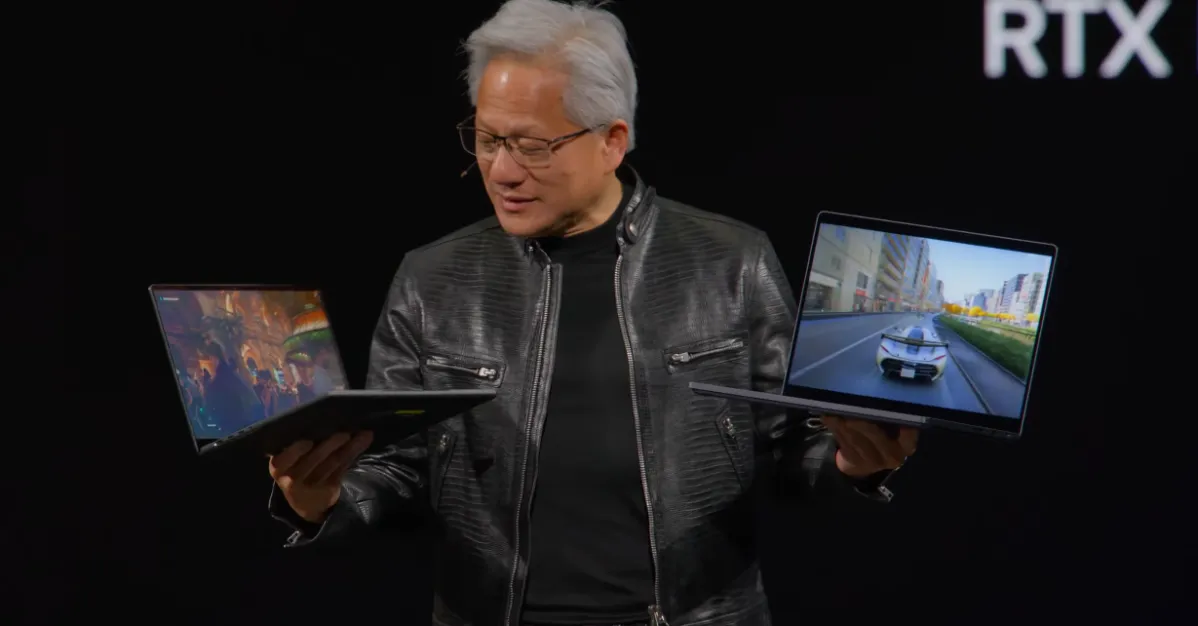
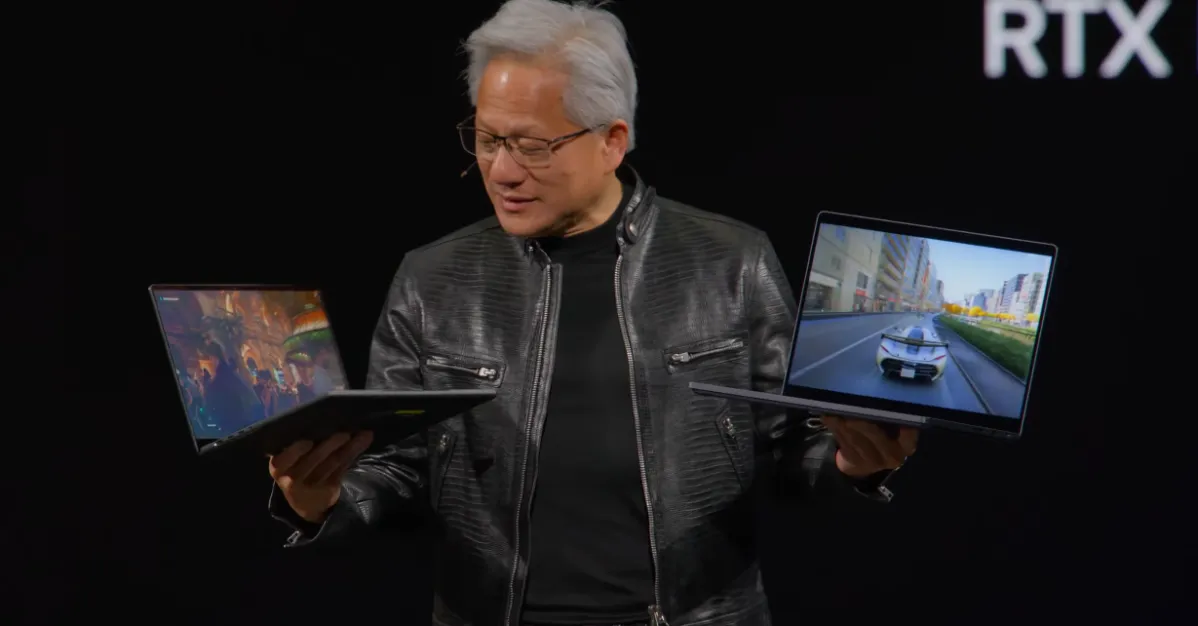
- Nvidia's RTX Spark is the company's first consumer PC chip, arriving in laptops from Microsoft, Asus, HP, MSI, Lenovo, and Dell this fall
- Intel's Arc G3 and Arc G3 Extreme chips are built specifically for gaming handhelds, starting with the Acer Predator Atlas 8
- AMD committed to supporting the AM5 socket through 2029, giving consumers a five-year upgrade path
The Shift to Autonomous PCs
Computex 2026 opened in Taipei this week with a clear theme: the PC is becoming an AI-native device. Every major chipmaker announced hardware designed around local AI processing, not cloud dependency. The result is a new class of machines that can run large language models, generate images, and automate complex tasks without sending data to external servers.
Jensen Huang set the tone in Nvidia's keynote. "We are moving beyond the era of the 'smart' PC to the era of the 'autonomous' PC, where the machine doesn't just assist, it executes," the CEO said. That vision now has hardware to back it up.
Nvidia RTX Spark: The Laptop Chip Everyone Expected
Nvidia finally entered the consumer laptop market with RTX Spark, an Arm-based system-on-chip that combines CPU, GPU, and unified memory on a single package. The flagship configuration includes 20 CPU cores, 6,144 GPU cores, and 128GB of LPDDR5X memory. That makes it nearly identical to the GB10 chip inside Nvidia's DGX Spark workstation.

The chip delivers one petaflop of AI compute. In practical terms, that's enough performance to run sophisticated local AI agents, generate video in real time, or process multiple large language models simultaneously. Nvidia is positioning RTX Spark as the foundation for "Copilot+" class experiences that don't require a cloud connection.
Microsoft, Asus, HP, MSI, Lenovo, and Dell have all committed to RTX Spark laptops launching this fall. Entry-level versions with 16GB of memory will follow, though Nvidia hasn't announced pricing for any configuration.
Microsoft Surface Laptop Ultra
Microsoft used Computex to announce the Surface Laptop Ultra, the first device to ship with RTX Spark. The company is clearly positioning it as a MacBook Pro competitor, though details on pricing and availability remain thin.
Deep dive into Microsoft's Surface Laptop Ultra specs and positioning
Intel Arc G3: Custom Silicon for Gaming Handhelds
Intel took a different approach. Instead of competing for laptop market share, the company launched two chips built specifically for handheld gaming devices: Arc G3 and Arc G3 Extreme. Both are optimized for the power and thermal constraints of portable gaming.
The Acer Predator Atlas 8 will be the first device to use these processors. Intel has been struggling in the discrete graphics market, but handhelds represent a growing category where AMD's Ryzen chips currently dominate. The Arc G3 Extreme aims to change that with better performance-per-watt than existing solutions.
Asus Xbox Ally X20: The OLED Handheld Upgrade
Asus announced the Xbox Ally X20, an updated version of its Windows gaming handheld with two major changes. The screen is now OLED with slightly larger dimensions, reducing the bezel that made the original feel cramped. And the "Library" button that accidentally kicked users out of games? It's gone.

These might sound like minor updates, but they address the two most common complaints about the original Ally X. Windows handheld gaming remains rough around the edges, but the hardware keeps improving.
AMD's Strategy: Longevity Over Novelty
AMD took a defensive posture at Computex. Instead of announcing entirely new architectures, the company extended its commitment to the AM5 socket through 2029. That gives builders a five-year upgrade path on a single platform.
“By extending AM5 support to 2029, we are ensuring that our users don't just own a machine for today's gaming, but a platform that matures with the hardware of the future.”
— Dr. Lisa Su, CEO of AMD
The move is a direct response to what enthusiasts call "RAMaggedon," the rapid memory standard changes that force expensive motherboard replacements. AMD is betting that stability will attract buyers who are tired of rebuilding their systems every two years.
AMD also launched updated versions of existing Ryzen processors with minor performance bumps. The strategy is straightforward: the company believes its current architecture is competitive enough that refinement beats reinvention.
Qualcomm Snapdragon C: The Budget Play
Qualcomm announced the Snapdragon C platform, an entry-level chip aimed at competing with Apple's MacBook Neo. The company is targeting the sub-$700 laptop market where Apple has been gaining ground with its education-focused devices.
Details are sparse, but Qualcomm's pitch centers on battery life and thin, fanless designs. Whether the chip can deliver acceptable Windows performance remains to be seen. Qualcomm's previous laptop efforts have struggled with app compatibility and raw processing speed.
Dell XPS 13 Returns at $599
Dell surprised attendees by reviving the XPS 13 as a MacBook Neo competitor. The company is offering a temporary launch discount of $599, though the regular price wasn't announced. The move signals that Dell sees an opening in the budget ultrabook segment.
Acer also entered this fight with a $699 laptop using Intel chips and 8GB of RAM. Both companies are betting that not everyone wants or needs the AI-focused hardware that dominated the rest of the show.
What the Community Is Saying
On Reddit's r/hardware forum, AMD's AM5 extension is drawing the most praise. Users are calling it a "consumer-first move" that contrasts with Intel's frequent socket changes. The five-year commitment gives DIY builders confidence that their motherboard investment won't become obsolete.
Nvidia's RTX Spark is generating more debate. The Arm-based architecture raises compatibility questions for legacy x86 gaming titles. Enthusiasts are waiting to see how well Windows on Arm handles their existing Steam libraries before committing to the new platform.
The Bigger Picture
Computex 2026 marks the moment when AI stopped being a feature and became the foundation. Every major announcement centered on local AI processing, from Nvidia's petaflop-class chips to AMD's long-term platform stability. The cloud isn't going away, but the PC is becoming powerful enough to handle sophisticated AI workloads without it.
For enterprise buyers, this shift has real implications. Devices that can run AI locally reduce data exposure, cut latency, and work offline. The tradeoff is cost: flagship RTX Spark configurations with 128GB of unified memory won't be cheap.
Logicity's Take
Context on Microsoft's AI strategy ahead of Surface Laptop Ultra
Frequently Asked Questions
When will Nvidia RTX Spark laptops be available?
Nvidia and its partners expect RTX Spark laptops to launch in fall 2026. Microsoft, Asus, HP, MSI, Lenovo, and Dell have all announced devices, though specific release dates haven't been confirmed.
How long will AMD support the AM5 socket?
AMD has committed to supporting AM5 through 2029, providing a five-year upgrade path from the socket's original 2022 launch.
What is the difference between Intel Arc G3 and Arc G3 Extreme?
Both chips are designed for gaming handhelds, but the Arc G3 Extreme offers higher performance for demanding games. The Acer Predator Atlas 8 will be the first device to use these processors.
Can Nvidia RTX Spark run x86 Windows games?
RTX Spark uses Arm architecture, so it relies on Windows' x86 emulation layer for legacy games. Performance and compatibility will vary by title. Enthusiasts are waiting for real-world benchmarks before judging the platform.
What is the Qualcomm Snapdragon C platform?
Snapdragon C is Qualcomm's entry-level laptop chip, designed to compete with Apple's MacBook Neo in the budget ultrabook market. It prioritizes battery life and thin designs over raw processing power.
Need Help Implementing This?
Detailed Technical Specifications and Hardware Reveals
The new article provides detailed technical specifications for the Nvidia RTX Spark, including its 20 Arm CPU cores, 128GB of RAM, and Blackwell-class GPU architecture, as well as its target of 1 petaflop of AI compute. It also introduces the specific 'Surface Laptop Ultra' product, detailing its 15-inch Mini LED display, resolution, peak brightness, and port selection, which were not in the original piece.
Manaal Khan
Tech & Innovation Writer
Produced with AI assistance and reviewed by the Logicity editorial team. Learn more in our Editorial Policy.




