Key Takeaways
- ChatGPT Plus and Pro users in the US can now connect bank, credit card, and investment accounts through Plaid
- The AI can analyze spending patterns, subscriptions, and debt but cannot move money or access full account numbers
- This marks OpenAI's first major push into personal finance, competing with tools like Mint (now Credit Karma) and Copilot
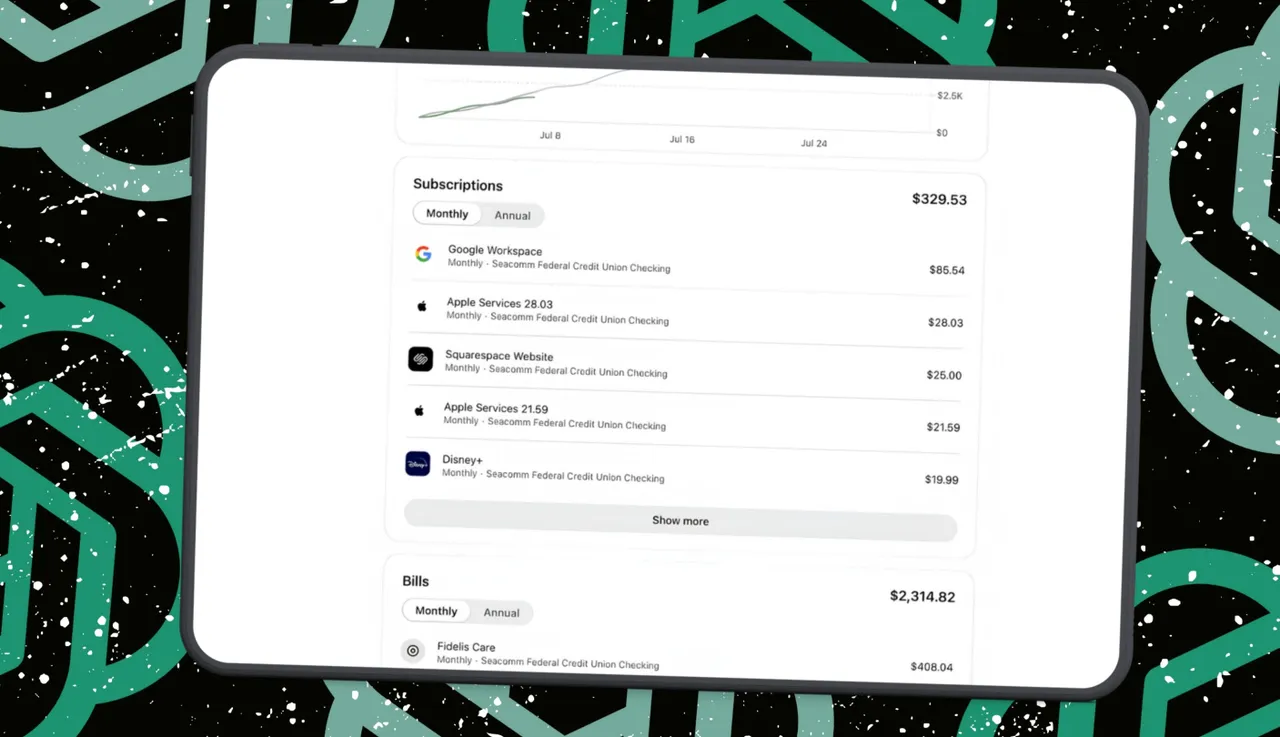
OpenAI has launched ChatGPT Finances, a feature that lets paying users connect their bank accounts, credit cards, and investment portfolios directly to the chatbot through Plaid. Once linked, ChatGPT can answer questions about spending habits, recurring subscriptions, debts, and portfolio performance using your actual financial data. The feature is live now for ChatGPT Plus and Pro subscribers in the US.
The move turns ChatGPT into something closer to a personal finance assistant than a general-purpose chatbot. Instead of exporting CSVs and building spreadsheets, users can ask plain-English questions like "How much did I spend on food last month?" or "What subscriptions am I paying for that I haven't used?" The AI pulls the answer from synced account data.
How the Plaid integration works
Plaid, the fintech middleware that powers account connections for Venmo, Robinhood, and thousands of other apps, serves as the secure bridge between your financial institutions and ChatGPT. Plaid connects to over 12,000 banks and credit unions in the US. When you authorize the connection, Plaid shares transaction data, balances, and account metadata with OpenAI. It does not share full account numbers or login credentials.
To set it up, users navigate to the Finances section in the ChatGPT sidebar (under "More") or type "@Finances, connect my accounts" in any conversation. ChatGPT walks through the Plaid authorization flow for each institution. The feature then appears pinned in the sidebar for quick access.
Critically, this is read-only. ChatGPT can see your money. It cannot move it. No transfers, no bill payments, no trades. OpenAI positioned this as a safety guardrail, and it's a sensible one. Giving an AI write access to your bank account would raise liability and security questions that neither OpenAI nor most users would want to navigate yet.
What ChatGPT Finances can actually do
According to ZDNET's hands-on testing, the feature handles several common personal finance tasks well:
- Aggregates balances across checking, savings, credit cards, loans, and investment accounts in one view
- Identifies recurring charges and subscriptions, including those you may have forgotten
- Analyzes spending by category over custom time periods
- Summarizes investment holdings and performance
- Answers natural-language questions about your finances with specific numbers
The writer reported using ChatGPT for financial advice before this feature existed. After following its recommendations on setting up a brokerage account and learning investment basics, they claim a 16% average return. That's anecdotal, but it speaks to how some users already treat ChatGPT as a financial coach.
The privacy tradeoff
Connecting your financial data to an AI raises obvious questions. You're handing OpenAI a detailed map of your income, spending habits, debts, and net worth. The company processes this data on its servers, which means it's subject to OpenAI's privacy policy and data retention practices.
Plaid has faced scrutiny before. In 2022, it settled a class-action lawsuit for $58 million over allegations that it collected more user data than necessary. The company has since updated its practices, but users should understand that both Plaid and OpenAI become data processors when you enable this feature.
For some users, the convenience will outweigh the privacy cost. For others, particularly those handling sensitive business finances or high-net-worth portfolios, the calculus may differ.
Where this fits in the AI finance landscape
OpenAI isn't the first to try AI-powered personal finance. Mint dominated this space for years before Intuit shut it down in early 2024, migrating users to Credit Karma. Copilot, a newer entrant, charges $10/month for AI-driven budgeting with bank sync. Rocket Money (formerly Truebill) focuses on subscription tracking and bill negotiation.
ChatGPT's advantage is context. Users already talk to it about career decisions, tax questions, and business strategy. Adding live financial data means the AI can give more specific answers without requiring users to manually input numbers or switch apps. The disadvantage is that it's not purpose-built. Dedicated finance apps offer charts, alerts, and automations that ChatGPT currently lacks.
Logicity's Take
This is OpenAI's clearest signal yet that it sees ChatGPT as a platform, not just a chatbot. By integrating Plaid, they're competing with Mint's successors while also sidestepping the need to build financial infrastructure from scratch. For CTOs and founders, the interesting question is what else OpenAI will connect next. CRMs? Accounting software? The agentic AI trend points toward chatbots that don't just answer questions but act on your behalf across services. If you're building products that touch user data, expect customers to ask why they can't just "ask ChatGPT" to do it.
Who should use this
ChatGPT Finances makes the most sense for users who already pay for ChatGPT Plus ($20/month) or Pro ($200/month) and want consolidated account visibility without adopting another app. It's less compelling if you need advanced budgeting features, automated savings rules, or detailed investment analytics. Those users will find more value in dedicated tools.
The feature is US-only for now. OpenAI hasn't announced international expansion plans, though Plaid does operate in Canada, the UK, and parts of Europe.
Frequently Asked Questions
Is ChatGPT Finances free?
No. It's available only to ChatGPT Plus ($20/month) and Pro ($200/month) subscribers in the US.
Can ChatGPT access my bank login credentials?
No. Plaid handles authentication directly with your bank. ChatGPT receives transaction data and balances but never sees your passwords or full account numbers.
Can ChatGPT move money between my accounts?
No. The integration is read-only. ChatGPT can analyze your finances but cannot execute transfers, payments, or trades.
Which banks work with ChatGPT Finances?
Any institution supported by Plaid, which includes over 12,000 US banks, credit unions, credit card issuers, and investment platforms.
How do I disconnect my accounts from ChatGPT?
You can revoke access through the Finances section in ChatGPT settings or directly through your Plaid account portal.
Need Help Implementing This?
If you're evaluating AI integrations for your product or want to understand how Plaid-style data connections work, reach out to Logicity's consulting team. We help engineering leaders navigate the build-vs-buy decision for AI features.
Source: Latest news
Huma Shazia
Senior AI & Tech Writer
Produced with AI assistance and reviewed by the Logicity editorial team. Learn more in our Editorial Policy.