Key Takeaways
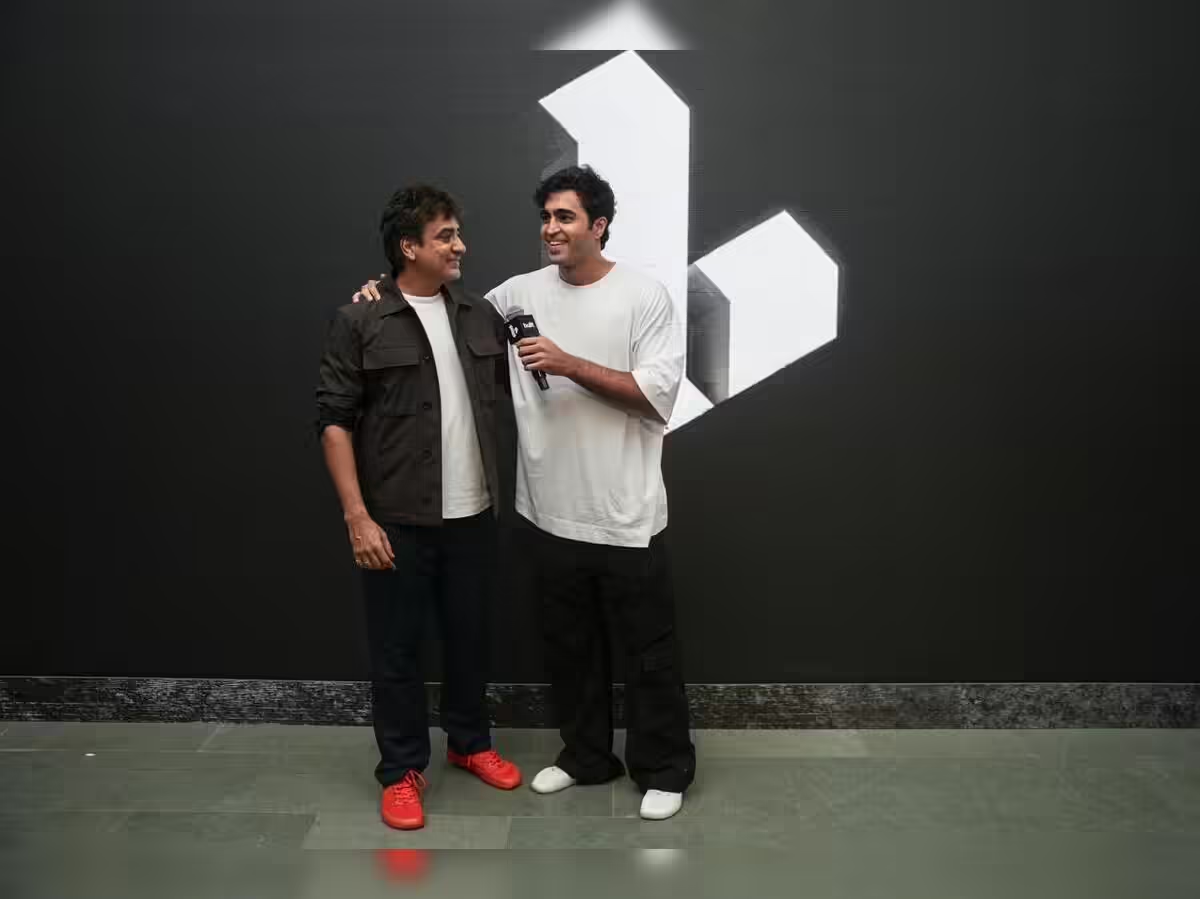
- Built raised $2 million led by Tanglin Venture Partners to develop natural movement footwear in India
- The Mumbai startup focuses on wider toe boxes, minimal heel drop, and enhanced flexibility for athletes
- Built plans to expand from 2 footwear variants to 20 SKUs across apparel and accessories
Mumbai-based Built, a direct-to-consumer footwear brand focused on natural movement shoes, has raised $2 million in seed funding. Singapore's Tanglin Venture Partners led the round, with participation from Bharat Kalia, founder of consumer electronics brand Lifelong.
The company launched operations earlier this month. It sells shoes designed around biomechanics principles: wider toe boxes that let toes splay naturally, minimal heel-to-toe drop, and flexible soles. The pitch is simple. Most performance footwear sold in India is adapted from designs built for Western markets. Built wants to create products for Indian feet and Indian sports.
Who started Built and what's the product?
Vijayant Dhaka, previously at PolicyBazaar, and Vedant Lamba, founder of Mainstreet Marketplace, started Built. Their debut line offers natural movement footwear in four colors. The company also sells clothing and accessories for men and women.
"Performance footwear isn't just about cushioning or grip. It's biomechanics, material science, durability, weight distribution, surface interaction, and manufacturing precision working together," Dhaka said. "India deserves products built for performance first, not adapted versions of something built for someone else."
The team currently numbers seven people in R&D. Built sources raw materials independently and works with a contract manufacturer for production. The target customer: young working professionals who hit the gym or play racquet sports like pickleball, tennis, badminton, and squash.
How will Built use the funding?
Three priorities. First, expand the product line from two footwear variants to 20 SKUs across shoes, apparel, and accessories. Second, grow the team. Third, strengthen the supply chain, which matters for a brand that wants to control quality while scaling production.
"We're building products that allow strength to develop in its most natural state, creating a generational shift in how people think about performance footwear," Lamba said.
Where does Built fit in India's D2C footwear market?
India's footwear market sits around $6.5 billion and is projected to cross $12 billion by 2030. D2C sneaker and shoe brands have attracted investor attention as Gen Z shoppers shift toward homegrown labels that compete on design and quality rather than price alone.
The competition is real. Gully Labs raised $3 million in January from Saama Capital. Comet pulled in $5 million from Elevation Capital in 2024. Other players like Neeman's, Thaely, Banjaaran, and Bacca Bucci are building followings. Built enters a crowded field, but natural movement footwear, a niche dominated globally by brands like Vivobarefoot and Xero Shoes, remains underserved in India.
The barefoot and minimal shoe category appeals to a specific audience: runners, CrossFit athletes, and fitness enthusiasts who believe conventional cushioned shoes weaken foot muscles over time. Whether Built can convert mainstream Indian consumers, or needs to stay niche, will shape its growth trajectory.
Why Tanglin Venture Partners backed Built
Tanglin Venture Partners is a Singapore-based early-stage VC that backs consumer and tech startups across Southeast Asia and India. The firm typically writes checks into brands with differentiated products and clear category positioning.
Bharat Kalia's participation is notable. As the founder of Lifelong, a consumer electronics brand that built distribution across online and offline channels, Kalia brings operational experience in scaling D2C products in India. His involvement suggests Built may pursue a hybrid distribution model rather than staying purely online.
Logicity's Take
Built is betting on a Western trend, natural movement footwear, that hasn't yet taken off in India. The addressable market is smaller than the broader sneaker category, but margins can be higher because customers in this niche pay for philosophy, not just materials. The real test: can Built educate Indian consumers on why minimal shoes matter, or will it remain a product for fitness purists? With only $2 million and a seven-person R&D team, the company doesn't have runway for mass marketing. It needs organic word-of-mouth from gyms and sports communities. Competitor Neeman's raised larger rounds and has broader distribution. Built's edge will come from product credibility, not brand awareness.
Frequently Asked Questions
What is natural movement footwear?
Shoes designed with wider toe boxes, minimal heel-to-toe drop, and flexible soles to let feet move as they would barefoot. The concept emphasizes strengthening foot muscles rather than cushioning them.
Who are Built's founders?
Vijayant Dhaka, formerly at PolicyBazaar, and Vedant Lamba, founder of Mainstreet Marketplace. Both are based in Mumbai.
How much has Built raised?
$2 million in seed funding led by Tanglin Venture Partners, with participation from Bharat Kalia, founder of Lifelong.
Who competes with Built in India?
D2C footwear brands like Neeman's, Comet, Gully Labs, Thaely, and Bacca Bucci. In the natural movement niche specifically, Built competes with global brands like Vivobarefoot.
What sports is Built targeting?
Gym training and racquet sports including pickleball, tennis, badminton, and squash.
Another Indian D2C brand raising capital to build products designed specifically for Indian consumers
Need Help Implementing This?
Building a D2C brand requires the right tech stack for inventory, CRM, and marketing automation. Contact Logicity for guidance on selecting tools that scale with your business.
Source: Tech-Economic Times / ET
Manaal Khan
Tech & Innovation Writer
Produced with AI assistance and reviewed by the Logicity editorial team. Learn more in our Editorial Policy.




