Key Takeaways
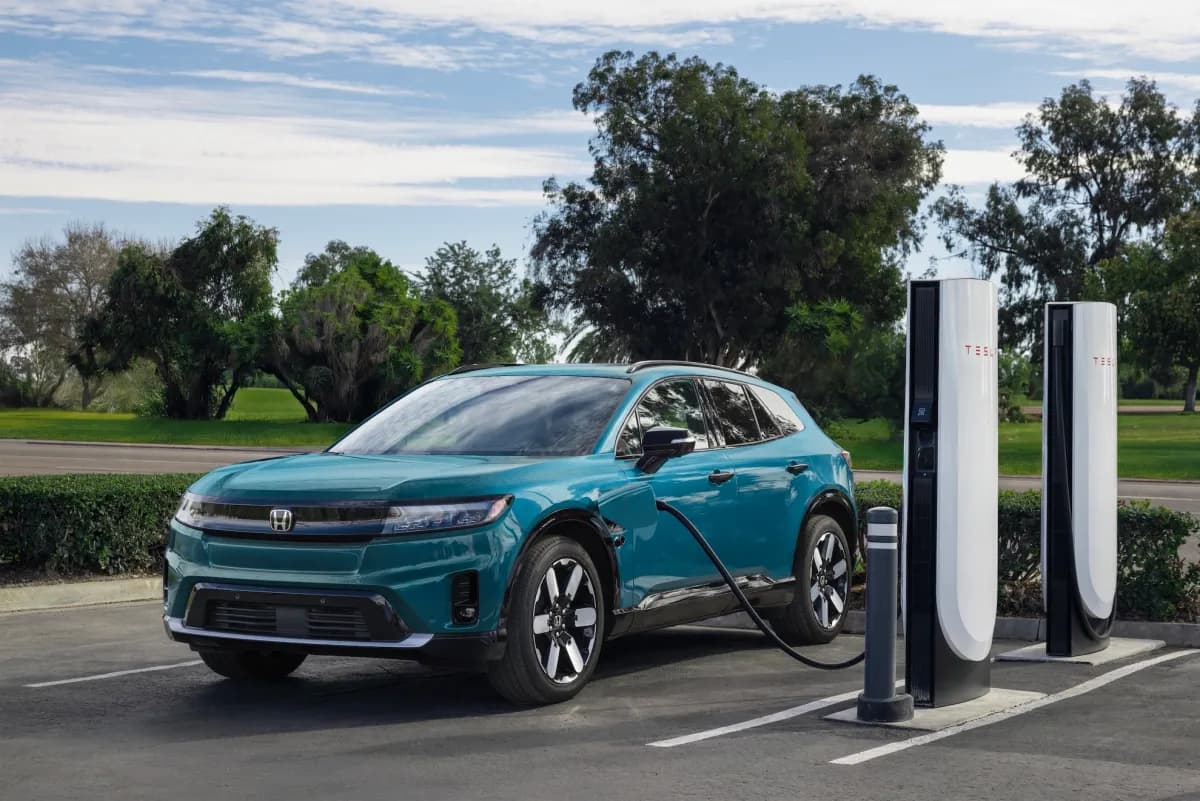
- Honda has exited the U.S. EV market entirely, killing the Prologue and canceling its Series 0 lineup
- The end of the $7,500 federal tax credit and new tariffs are the primary drivers behind EV discontinuations
- Q2 2026 EV sales were down 20.5% year-over-year, though the gap is narrowing from Q4 2025's 36% decline
Honda confirmed this week that the Prologue, its only all-electric vehicle sold in America, is dead. The decision leaves the Japanese automaker with zero EVs in its U.S. portfolio and caps a brutal first half of 2026 for electric vehicles. At least seven EV models have been discontinued or canceled for the American market this year, driven by tariffs, the loss of federal incentives, and shifting company priorities.
The numbers tell a clear story. According to Kelley Blue Book and Cox Automotive data published in July, 247,226 EVs sold in Q2 2026, representing just 5.8% of the total U.S. auto market. Sales remain down 20.5% compared to the same quarter in 2025. That's an improvement from the 36% year-over-year drop in Q4 2025, but the recovery is slow. The elimination of the $7,500 federal EV tax credit last fall removed the single largest purchase incentive for American buyers.
Which EVs have been discontinued in 2026?
Here's the full list of electric vehicles that have left or are leaving the U.S. market this year.
Honda Prologue: the flagship that couldn't survive tariffs
The Prologue represented Honda's most practical EV bet. Built at GM's Ramos Assembly Plant in Mexico through a partnership with General Motors, the SUV shared its platform with the Chevrolet Blazer EV. It sold roughly 33,000 units in 2024 and 39,000 in 2025. Then the tax credit ended. Sales collapsed, and Honda pulled the plug. CarBuzz first reported the discontinuation on July 16; TechCrunch confirmed with Honda the same week.
Honda 0 Series and Acura RDX EV: concepts that never shipped
Just two years ago, Honda unveiled its ambitious 0 Series at CES 2025, including a mid-sized SUV prototype scheduled for production at the company's Ohio "EV Hub" factory in early 2026. Honda also had plans for an Acura RDX electric variant. In March 2026, the company canceled all three vehicles, blaming U.S. tariffs and intensifying competition from Chinese automakers. The 0 Series never reached production.
Afeela: the Sony-Honda venture that went nowhere
Sony surprised CES 2020 attendees with the Vision S prototype, a sleek EV concept that generated genuine excitement. Honda joined the effort in 2022, and the companies formed a joint venture. They rebranded the project Afeela and embarked on a marketing blitz. Prototypes appeared at tech conferences, including TechCrunch Disrupt. Despite all the visibility, no Afeela ever reached a customer. In March 2026, the joint venture abandoned both planned Afeela models, just two weeks after Honda's broader EV pullback.
Hyundai Ioniq 6: a tariff casualty
Hyundai has actually performed well selling EVs in America. The Ioniq 5 and Ioniq 9 continue to roll off the line at the company's Georgia factory. But in March, Hyundai announced it would stop selling the Ioniq 6 sedan in the U.S. The reason is straightforward: the Ioniq 6 is built in South Korea and imported, exposing it to tariffs that vehicles assembled domestically avoid. Hyundai will continue importing the low-volume, high-margin Ioniq 6 N performance model.
Nissan Ariya: a quiet exit
Nissan unveiled the Ariya SUV in 2020 with plans to sell it in Japan by 2021. The U.S. launch came later, but the vehicle never gained traction. Last year, Nissan decided not to produce a 2026 model year Ariya for the American market. It does not appear to be returning.
What's driving the EV retreat?
Three forces are converging. First, the $7,500 federal tax credit that ended in fall 2025 made EVs instantly more expensive for buyers. Second, tariffs on imported vehicles, particularly from China and other markets, have increased costs for automakers who don't manufacture domestically. Third, regulatory pressure on automakers to meet EV quotas has eased under the current administration.
The calculus for automakers is simple: if an EV can't turn a profit without the tax credit, and if tariffs make imported models uncompetitive, the business case evaporates. Honda's decision to exit the U.S. EV market entirely, at least temporarily, reflects this math.
Are any new EVs still coming to the U.S.?
Yes. The Rivian R2 is one example of a new EV entering the market. And despite the discontinuations, Americans are still buying electric vehicles. The 247,226 units sold in Q2 2026 represent a growing segment, even if growth has slowed. Automakers with domestic manufacturing, like Hyundai's Georgia plant and Tesla's Texas and California facilities, are better positioned to weather tariffs.
The EV market isn't dying. It's consolidating. Vehicles that can be built in the U.S. without tariff exposure, priced competitively without federal subsidies, will survive. The rest won't.
Logicity's Take
For fleet managers and CTOs evaluating EV adoption, 2026's discontinuations underscore a critical point: don't build your electrification strategy around a single model or manufacturer. The vehicles that survive will be those with domestic production. If your company tracks fleet assets or operational costs, tools like [Airtable](https://logicity.in/r/airtable) or [ClickUp](https://logicity.in/r/clickup) can help model total cost of ownership scenarios across multiple EV options. Expect pricing instability for at least another 12-18 months.
Disclosure
Some links in this post are affiliate links — Logicity earns a commission if you sign up, at no extra cost to you. We only link products we have used or actively recommend.
Frequently Asked Questions
Why did Honda discontinue the Prologue?
Honda cited the end of the $7,500 federal EV tax credit, U.S. tariffs, and competition from Chinese automakers. Sales dropped sharply after the tax credit ended in fall 2025.
What happened to the Sony Honda Afeela?
The Afeela joint venture between Sony and Honda was canceled in March 2026. Despite years of prototypes and marketing, no Afeela vehicle ever reached production.
Is the Hyundai Ioniq 6 still available in the U.S.?
The standard Ioniq 6 is no longer sold in the U.S. due to import tariffs. Only the high-performance Ioniq 6 N variant remains available.
How much did U.S. EV sales drop in 2026?
Q2 2026 EV sales were down 20.5% compared to Q2 2025. This is an improvement from the 36% year-over-year decline seen in Q4 2025.
Which EVs are still coming to the U.S. market?
The Rivian R2 is one confirmed new entrant. Automakers with U.S. manufacturing, like Hyundai and Tesla, continue to release new models.
Need Help Implementing This?
If you're planning EV fleet adoption or need help tracking vehicle costs and availability, contact Logicity's advisory team for guidance on building a resilient electrification roadmap.
Source: TechCrunch / Kirsten Korosec
Huma Shazia
Senior AI & Tech Writer
Produced with AI assistance and reviewed by the Logicity editorial team. Learn more in our Editorial Policy.