Why Vinyl Records Keep Getting More Expensive
Key Takeaways
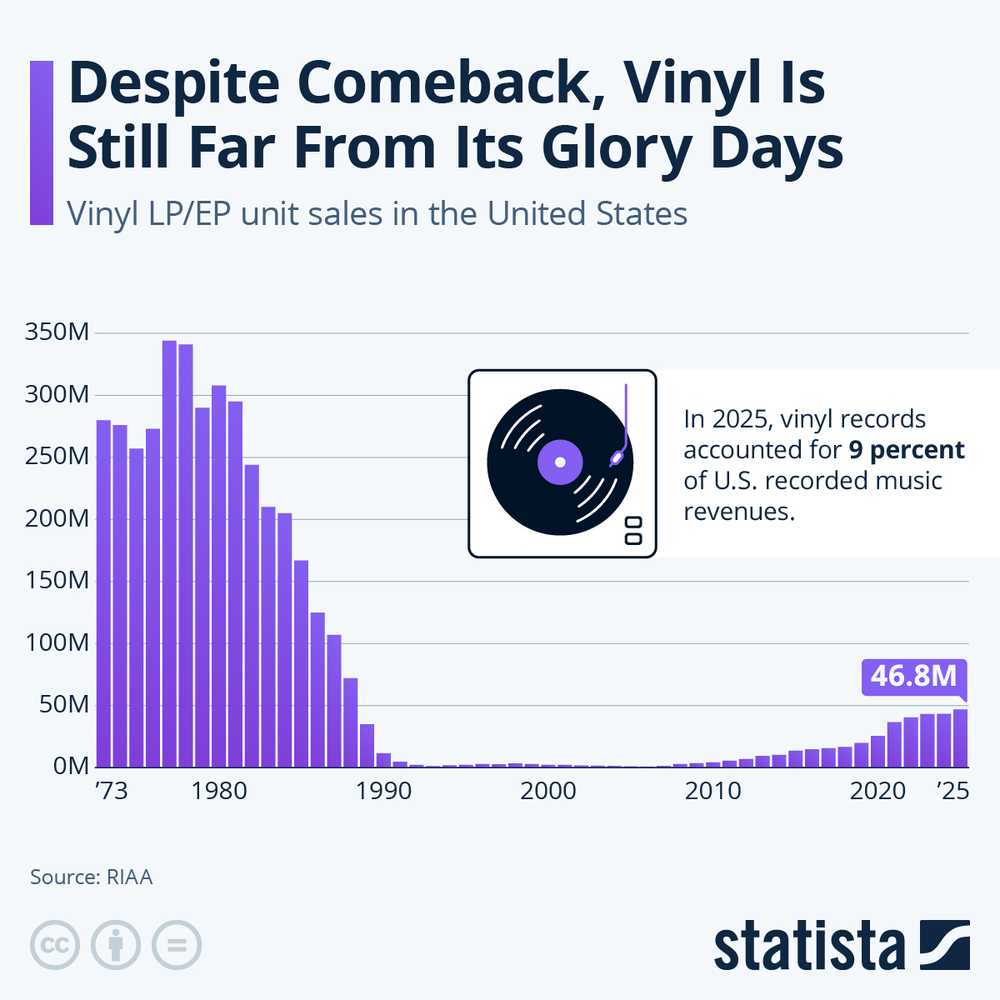
- U.S. vinyl revenue hit $1.04 billion in 2025, the first billion-dollar year since 1983
- Standard LP prices have risen from ~$22 in 2020 to $35-$45 in 2026
- 76% of Gen Z vinyl buyers still purchase monthly despite rising costs
The Billion-Dollar Comeback Has a Catch
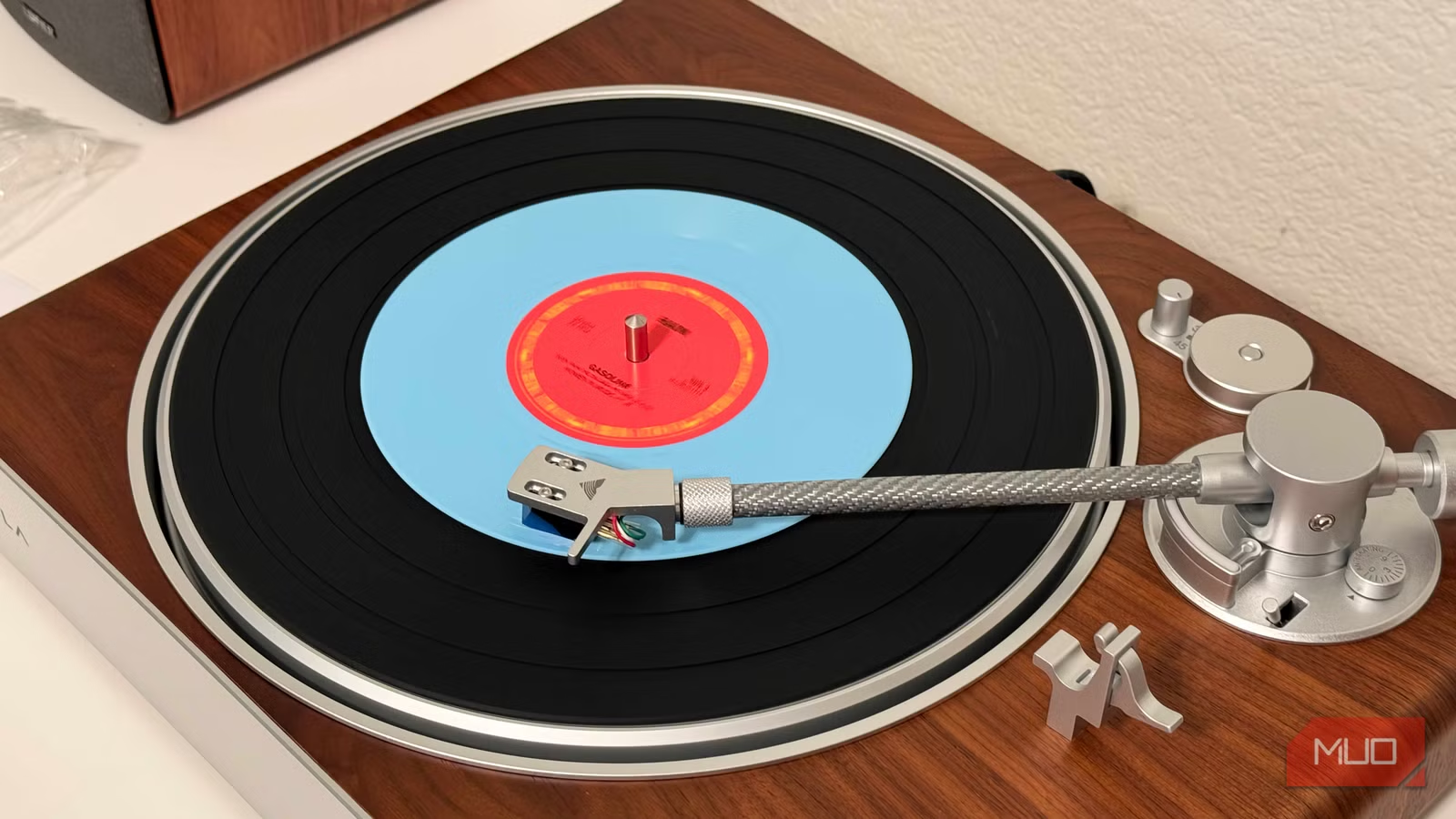
Vinyl records have officially made it. U.S. revenue crossed $1.04 billion in 2025. That's the first time the format has hit the billion-dollar mark since 1983. Roughly 46.8 million EPs and LPs sold last year. Streaming and physical media are coexisting, and vinyl is winning the physical media battle.
But the comeback story has soured. What started as a feel-good revival a decade ago has become what collectors are calling a "price circus." Standard black LPs that cost around $22 in 2020 now retail for $35 to $45. Limited variants push even higher.
What's Driving the Price Surge
The price increases come from multiple directions. PVC pellets, the raw material for records, saw a 12% cost increase in 2025 due to supply chain volatility. Manufacturing capacity remains tight. Pressing plants that closed during the CD era never fully returned, and the ones operating today have years-long backlogs for some releases.
But raw materials don't explain the whole picture. Record labels have discovered that variants sell. Release the same album on black vinyl, red vinyl, blue splatter vinyl, and a picture disc. Some collectors buy all four. Labels are chasing sales records by encouraging "variant collecting" and exploiting fear of missing out on limited editions.
“We are shifting from buying music to buying 'identity objects'—when the price of entry is a $50 variant, the music is secondary to the object itself.”
— Sarah Jenkins, Music Industry Analyst at SoundTrends
The Collector's Dilemma
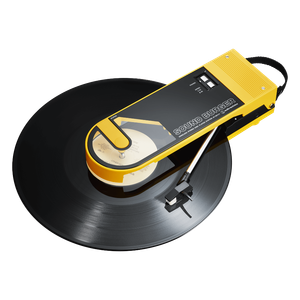
Brady Snyder, a tech journalist who has collected vinyl for a decade, has around 350 records. His collection's median value sits around $10,000 according to Discogs. He uses three Audio Technica turntables, including the AT-SB727 Sound Burger and the AT-LPW40WN as his main listening station.
"I'm thrilled with the state of my collection today," Snyder writes. "If streaming services ceased to exist tomorrow, I'd still be able to listen to all my favorite tunes on a durable physical media format for decades." But he acknowledges the cost: "It took me a while to get here, and I spent a fortune doing it."
For Snyder, vinyl offers intentionality. When he starts spinning a record, it's his main focus. He plays albums from start to finish. Streaming encourages skipping. Vinyl encourages listening.
Gen Z Keeps Buying Anyway
Despite the prices, younger buyers haven't walked away. A striking 76% of Gen Z vinyl buyers purchase at least one record every month. The format has found a new audience that grew up with streaming but craves something physical.
The appeal makes sense. Streaming costs roughly $11 to $15 per month for access to everything. Owning nothing. Vinyl offers ownership. A tangible object. Album art you can hold. Something that works without an internet connection or a subscription.
The Breaking Point
Not everyone can sustain the hobby at current prices. Industry surveys are capturing a shift in sentiment. The 2026 "State of the Collector" survey found a common refrain among respondents.
“If the refrigerator is empty and the car won't start, you can't buy any more records.”
— Common response in the 2026 'State of the Collector' survey
On Reddit's r/vinyl and industry forums, the mood has shifted from excitement to frustration. Many users now advocate for buying used records instead of new. Some are boycotting limited-variant "hype releases" entirely. A growing consensus holds that the industry is inflating a bubble that will collapse when casual buyers hit economic limits.
Where This Leaves Collectors
The vinyl market finds itself in a strange position. Revenue is at record highs. But the average unit price has outpaced inflation for three straight years. Major labels are prioritizing pressing capacity for their biggest releases, squeezing independent labels and smaller artists out of the supply chain.
For collectors, the options are narrowing. Pay premium prices for new releases. Hunt for used copies. Or scale back the hobby. The intentionality that draws people to vinyl, playing albums from start to finish, focusing on music rather than algorithms, remains. But the barrier to entry keeps rising.
Logicity's Take
Practical Options for Budget Collectors
- Buy used: Discogs, local record stores, and estate sales offer older pressings at lower prices
- Skip variants: The music on the black vinyl sounds the same as the limited splatter edition
- Wait for restocks: Limited releases often get repressed once initial hype dies down
- Focus on labels with fair pricing: Some indie labels still price LPs under $25
- Set a monthly budget: Treat vinyl like any other discretionary spending category
If vinyl's current prices are prohibitive, other hobbies offer better entry points
Frequently Asked Questions
Why are vinyl records so expensive in 2026?
Several factors: a 12% increase in PVC pellet costs, limited pressing plant capacity, and record labels pushing variant editions and limited releases that command premium prices.
How much does a standard vinyl record cost now?
A standard black LP now retails for $35 to $45, up from approximately $22 in 2020. Limited variants and colored pressings often cost $50 or more.
Is vinyl still worth collecting in 2026?
For listeners who value intentional, focused listening and physical ownership, yes. But the cost of entry has risen significantly, and buyers should budget accordingly.
Are Gen Z buyers still purchasing vinyl despite high prices?
Yes. 76% of Gen Z vinyl buyers purchase at least one record monthly. The format appeals to younger listeners who want something tangible that streaming doesn't offer.
Will vinyl prices come down?
Unlikely in the near term. Supply chain costs remain elevated, and labels have little incentive to lower prices while sales stay strong. Some industry observers predict an eventual bubble correction.
Need Help Implementing This?
Source: MakeUseOf
Huma Shazia
Senior AI & Tech Writer
اقرأ أيضاً

رأي مغاير: كيف يؤثر اختراق الأمن الداخلي الأميركي على شركاتنا الخاصة؟
في ظل اختراق عقود الأمن الداخلي الأميركي مع شركات خاصة، نناقش تأثير هذا الاختراق على مستقبل الأمن السيبراني. نستعرض الإحصاءات الموثوقة ونناقش كيف يمكن للشركات الخاصة أن تتعامل مع هذا التهديد. استمتع بقراءة هذا التحليل العميق

الإنسان في زمن ما بعد الوجود البشري: نحو نظام للتعايش بين الإنسان والروبوت - Centre for Arab Unity Studies
في هذا المقال، سنناقش كيف يمكن للبشر والروبوتات التعايش في نظام متكامل. سنستعرض التحديات والحلول المحتملة التي تضعها شركات مثل جوجل وأمازون. كما سنلقي نظرة على التوقعات المستقبلية وفقًا لتقرير ماكنزي

إطلاق ناسا لمهمة مأهولة إلى القمر: خطوة تاريخية نحو استكشاف الفضاء
تعتبر المهمة الجديدة خطوة هامة نحو استكشاف الفضاء وتطوير التكنولوجيا. سوف تشمل المهمة إرسال رواد فضاء إلى سطح القمر لconducting تجارب علمية. ستسهم هذه المهمة في تطوير فهمنا للفضاء وتحسين التكنولوجيا المستخدمة في استكشاف الفضاء.