Why Microsoft's Open Source Era Still Has a Catch
Key Takeaways
- Microsoft's shift from anti-open-source hostility to GitHub ownership represents one of tech's most dramatic corporate pivots
- The company uses an 'open core' model where foundational tools are free, but valuable extensions and integrations remain proprietary
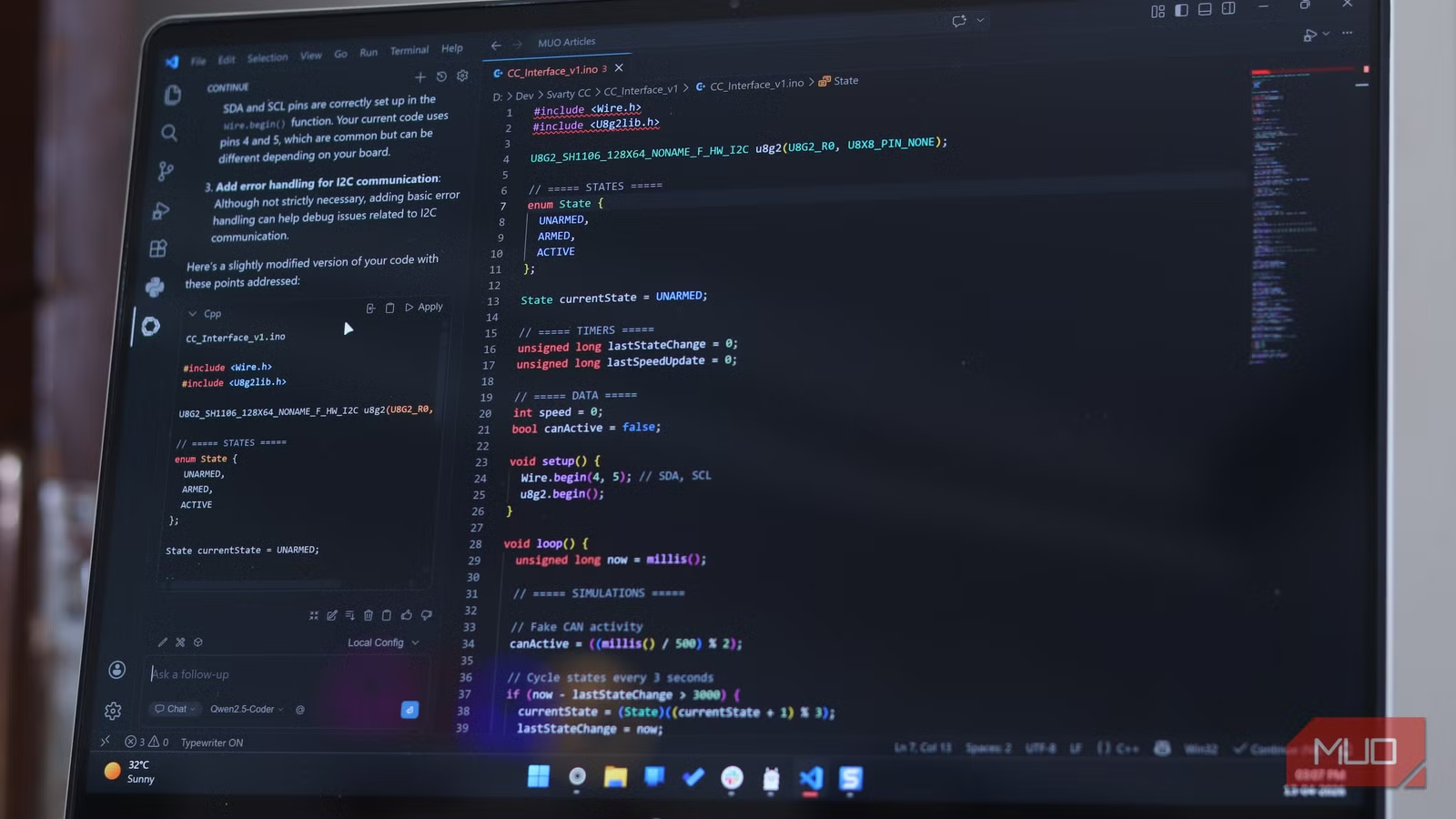
- VS Code captures 75% of developers, but Microsoft restricts key extensions from working on truly open-source forks like VSCodium
From 'Cancer' to Contributor
Microsoft's relationship with open source has one of the strangest redemption arcs in tech history. This is the company whose former CEO Steve Ballmer once described Linux as 'a cancer.' That line was so cartoonishly hostile it still follows Microsoft around like an embarrassing yearbook photo.
Two decades later, Microsoft talks about Linux with heart emojis. The company builds tools developers actually love. It owns GitHub. It maintains its own Linux distribution. It has open-sourced parts of Windows Subsystem for Linux to the point where developers run both operating systems on the same machine.
The interesting question is not whether Microsoft has changed. It clearly has. The better question is why it changed, and how much of that change survives when open source no longer serves the business plan.
The Old Microsoft Was Openly Hostile
Ballmer's famous comment was only a headline version of a broader posture. The company covertly funneled over $100 million into SCO Group's copyright attack on Linux. It claimed in the media that Linux violated 235 unnamed Microsoft patents without ever publicly identifying them. It weaponized its legal department to force Linux-based Android hardware vendors into paying royalty fees.
The anti-open-source campaign dates back to Bill Gates' 1976 'Open Letter to Hobbyists,' which scolded early computer enthusiasts for copying Altair BASIC software without paying. This was not a company with a passive relationship with open source. It treated open source like an existential threat to its monopoly business model.
Then Satya Nadella took over as CEO in 2014. The tone shifted immediately.
The Open Core Model: Free Foundation, Proprietary Moats
Microsoft's current approach is often called 'open source as a service' or the 'open core' model. The strategy works like this: release a popular tool under an open-source license. Capture developer mindshare. Then build proprietary extensions, marketplace restrictions, and cloud integrations that lock users into revenue-generating services.
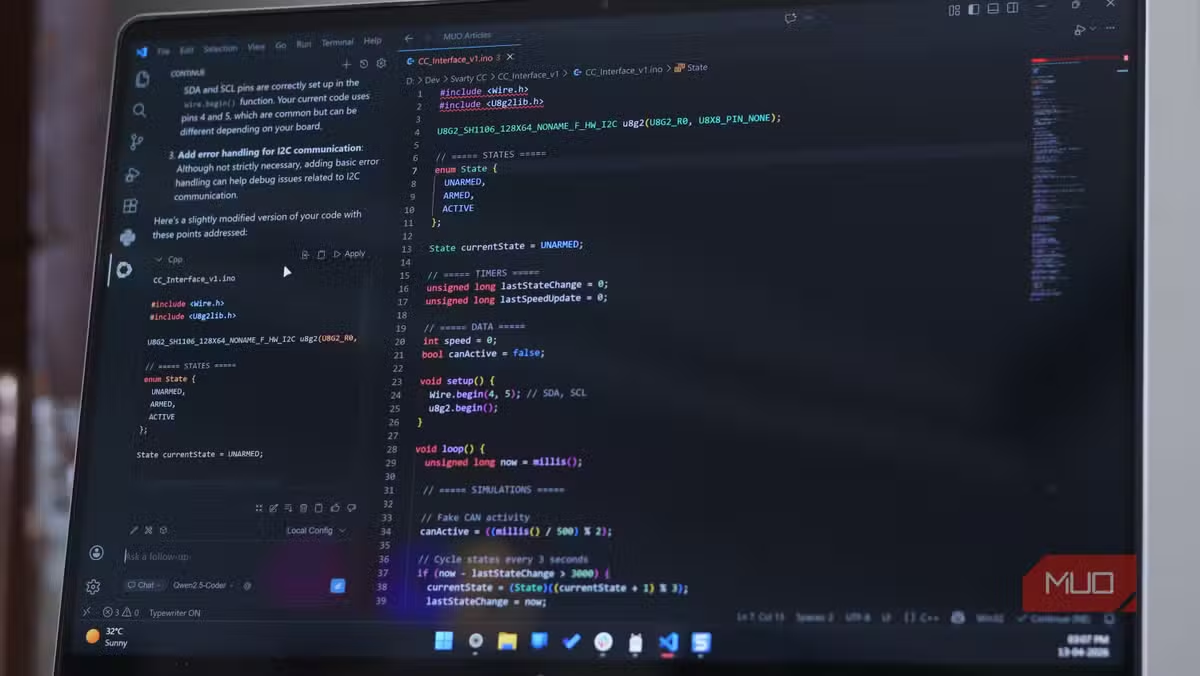
VS Code is the clearest example. The editor's core, called Code-OSS, is genuinely open source under the MIT license. But the version you download from Microsoft includes proprietary telemetry, branding, and crucially, access to the Visual Studio Marketplace. That marketplace contains extensions many developers consider essential.
“The distinction between 'Code-OSS' and the Microsoft-branded binary is a masterful example of corporate rebranding to make a proprietary product appear community-owned.”
— Open Source Advocate
VSCodium and the Extension Problem
VSCodium exists as a 'de-Microsofted' alternative. It strips out telemetry and uses the open-source foundation without Microsoft's proprietary additions. In theory, it should work identically. In practice, Microsoft has made that difficult.
Key extensions like Pylance, Microsoft's Python language server, are technically blocked from working on non-official builds. The VSCodium project has highlighted these restrictions repeatedly. Users who want the full VS Code experience find themselves pushed back to Microsoft's version.
This pattern has intensified debates in developer communities. Some see it as 'embrace, extend, extinguish' applied to the code editor market. Others argue Microsoft is simply protecting its investment in extensions that cost money to develop.
“Microsoft has successfully adopted open source to build platforms, but they maintain proprietary moats around the features that actually drive developers into Azure.”
— Industry Analyst, Software Development Infrastructure
GitHub: The $10.6 Billion Ecosystem
GitHub acquisition in 2018 for $7.5 billion initially terrified open-source advocates. Would Microsoft ruin it? Would projects flee to GitLab? Six years later, GitHub remains dominant. Projects stayed. Features improved.
But GitHub also became the foundation for Copilot, Microsoft's AI coding assistant. GitHub-related services now generate $10.6 billion in annual revenue. The platform that hosts open-source projects now uses their code to train AI tools sold back to developers.
Recent changes to Copilot pricing illustrate Microsoft's monetization strategy for developer tools.
The dynamic is clear: open source builds the platform, proprietary services extract the revenue.
Why the Change Happened
Microsoft's transformation was not philosophical. It was financial. The Windows licensing monopoly stopped being the company's primary growth engine. Cloud computing became the future. And cloud computing runs on Linux.
Azure needed to support Linux workloads. Azure needed developers to choose Microsoft's cloud over AWS or Google Cloud. Fighting open source became counterproductive. Embracing it, selectively, became essential.
Under Nadella, Microsoft contributed to Linux kernel development. The company joined the Linux Foundation. It released .NET as open source. It built Windows Subsystem for Linux. Every move served the larger goal: make Azure the default choice for developers who had already chosen open-source tools.
The Asterisk Remains
Microsoft has genuinely changed. The developer tools are good. The contributions are real. The hostility is gone. But the business model still depends on converting open-source adoption into proprietary lock-in.
The Reddit communities r/programming and r/opensource remain polarized. Many developers appreciate VS Code's quality while advocating for alternatives like VSCodium or Neovim. The debates intensify each time Microsoft restricts a feature from working outside its official builds.
The old Microsoft wanted open source to lose. The new Microsoft wants open source to win, as long as Microsoft captures the value. That is a real change. It is also not the same as unconditional support.
Logicity's Take
Frequently Asked Questions
Is VS Code really open source?
The core (Code-OSS) is MIT-licensed and open source. The Microsoft-branded download includes proprietary telemetry, marketplace access, and branding. VSCodium offers a truly open-source alternative but lacks access to some Microsoft extensions.
Why did Microsoft buy GitHub?
GitHub gave Microsoft the dominant platform where developers host and collaborate on code. It also became the training data source and distribution channel for Copilot, now generating $10.6 billion in annual revenue across GitHub services.
What is the open core model?
Open core means releasing foundational software as open source while keeping premium features, extensions, or cloud integrations proprietary. Users get free tools but pay for advanced capabilities.
Can I use VS Code extensions on VSCodium?
Many community extensions work on both. However, Microsoft restricts some proprietary extensions like Pylance from running on unofficial builds, limiting VSCodium's functionality for certain languages.
Is Microsoft's open source commitment permanent?
The commitment will last as long as it serves business goals. Open source helps Microsoft attract developers to Azure and its toolchain. If cloud economics change, so could the strategy.
Need Help Implementing This?
Source: MakeUseOf
Huma Shazia
Senior AI & Tech Writer
اقرأ أيضاً

رأي مغاير: كيف يؤثر اختراق الأمن الداخلي الأميركي على شركاتنا الخاصة؟
في ظل اختراق عقود الأمن الداخلي الأميركي مع شركات خاصة، نناقش تأثير هذا الاختراق على مستقبل الأمن السيبراني. نستعرض الإحصاءات الموثوقة ونناقش كيف يمكن للشركات الخاصة أن تتعامل مع هذا التهديد. استمتع بقراءة هذا التحليل العميق

الإنسان في زمن ما بعد الوجود البشري: نحو نظام للتعايش بين الإنسان والروبوت - Centre for Arab Unity Studies
في هذا المقال، سنناقش كيف يمكن للبشر والروبوتات التعايش في نظام متكامل. سنستعرض التحديات والحلول المحتملة التي تضعها شركات مثل جوجل وأمازون. كما سنلقي نظرة على التوقعات المستقبلية وفقًا لتقرير ماكنزي

إطلاق ناسا لمهمة مأهولة إلى القمر: خطوة تاريخية نحو استكشاف الفضاء
تعتبر المهمة الجديدة خطوة هامة نحو استكشاف الفضاء وتطوير التكنولوجيا. سوف تشمل المهمة إرسال رواد فضاء إلى سطح القمر لconducting تجارب علمية. ستسهم هذه المهمة في تطوير فهمنا للفضاء وتحسين التكنولوجيا المستخدمة في استكشاف الفضاء.