Why Firefox Lost to Chrome Despite Being Free and Private
Key Takeaways
- Firefox's global market share has dropped to approximately 3%, while Chrome holds 68-71%
- Google's control of Android, search, and advertising gave Chrome distribution advantages Firefox could never match
- 78% of web traffic now runs on Chromium-based browsers, creating a 'Blink monoculture' that threatens web standards independence
The Numbers Tell a Brutal Story
Mozilla Firefox now commands roughly 3% of the global browser market. Google Chrome sits at 68-71%. That gap is not a rounding error. It represents one of the most complete reversals in tech history.
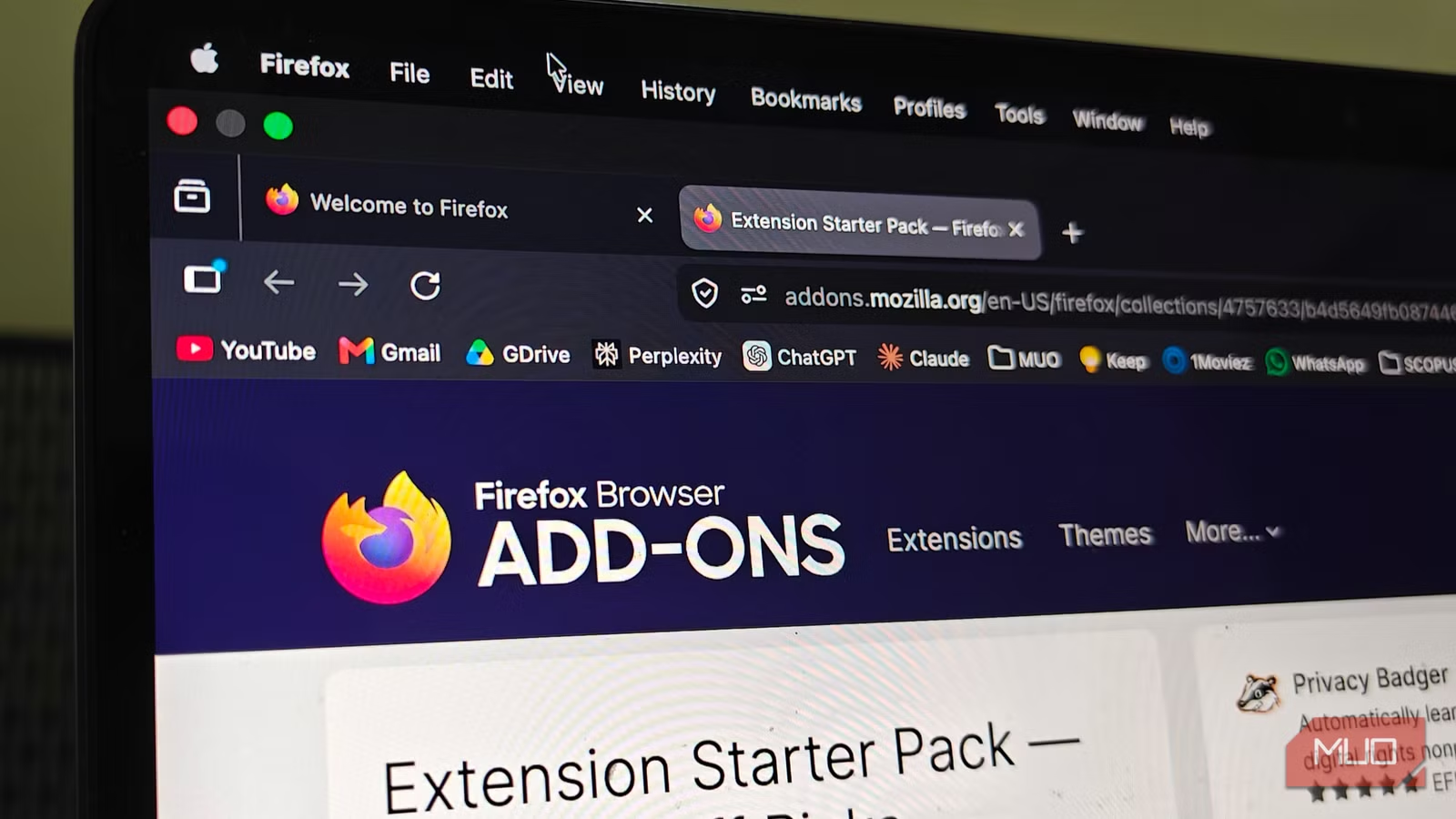
Here's what makes this puzzling: Firefox is objectively better by almost every metric privacy-conscious users care about. It's completely free. It's open-source, meaning anyone can audit the code. It blocks trackers by default. It doesn't belong to an advertising company.
Chrome, by contrast, is built by Google. The same Google that makes 80% of its revenue from advertising. The same Google that needs to track user behavior to sell targeted ads. As Washington Post tech columnist Geoffrey A. Fowler put it: "Having the world's biggest advertising company make the most popular web browser was about as smart as letting kids run a candy shop... Chrome looks a lot like surveillance software."
“Having the world's biggest advertising company make the most popular web browser was about as smart as letting kids run a candy shop... Chrome looks a lot like surveillance software.”
— Geoffrey A. Fowler, Tech Columnist at The Washington Post
So why did the privacy nightmare win?
Chrome Didn't Win on Merit Alone
Google Chrome launched in 2008. Within five years, it became the world's most popular browser. That rise had less to do with Chrome's quality and more to do with Google's reach.
Think about what Google controls: the world's most visited website (Google Search), the world's most popular mobile operating system (Android), the world's largest video platform (YouTube), and one of the largest email services (Gmail). Every single one of these properties became a billboard for Chrome.
Remember those persistent banners on Google.com asking you to "Try Chrome"? Firefox users saw them for years. YouTube would occasionally display warnings that the site "works best on Chrome." Gmail would push Chrome extensions. The message was everywhere, relentless, and effective.
Firefox, despite Mozilla's best efforts, had no comparable distribution channel. It relied on word of mouth, tech reviews, and people actively seeking out an alternative. That's not a fair fight when your competitor owns the front page of the internet.
The Android Default That Changed Everything
In 2012, Google made Chrome the default browser on Android smartphones. This single decision probably did more to cement Chrome's dominance than any technical improvement.
Most people never change their default browser. They use whatever comes with the device. When billions of people got Android phones with Chrome pre-installed, they learned to browse the web on Chrome. They got familiar with its interface. They synced their bookmarks and passwords.
When those same people sat down at a computer, which browser did they choose? The one they already knew. The one that synced with their phone. The one that felt familiar.

Firefox exists on Android. You can download it from the Play Store right now. But asking users to actively seek out and install an alternative browser is asking a lot. Most people have better things to do than optimize their browser choice.
Firefox's Own Missteps
Distribution disadvantages explain part of the story. But Firefox made real mistakes too.
In Chrome's early years, it was genuinely faster than Firefox. Chrome pioneered a multi-process architecture that kept the browser responsive even when tabs crashed. Firefox took years to catch up with its Quantum engine in 2017. By then, Chrome's reputation as "the fast browser" was already cemented.
“Firefox did not keep up with the market and what people really want. A lot of hardcore Firefox fans are now happy Chrome users.”
— Chris Beard, Former CEO of Mozilla
Chrome also launched with a minimalist interface at a time when Firefox was cluttered with toolbars and menus. Google understood that people wanted browsers to get out of the way. Firefox eventually adopted similar design principles, but again, it was playing catch-up.
The Blink Monoculture Problem
Here's where the story gets concerning for everyone, not just Firefox fans.
78% of all web traffic now runs on the Blink rendering engine. Blink powers Chrome, but it also powers Microsoft Edge, Opera, Brave, Vivaldi, and dozens of other browsers. When Opera and Microsoft abandoned their own engines to adopt Chromium, they handed Google enormous influence over how the web works.
Only two major rendering engines remain outside Google's orbit: Firefox's Gecko and Apple's WebKit (used in Safari). If Firefox disappears, Google would effectively control web standards. Whatever features Google wants to add or remove from the web would become the de facto standard.
This is not a hypothetical concern. Google recently implemented Manifest V3, a change to Chrome's extension system that limits how effectively ad blockers can work. Firefox has no such limitations. But if Firefox fades into irrelevance, users lose that alternative.
The Google Dependency Paradox
Here's the irony that frustrates privacy advocates: Mozilla depends on Google for survival.
Google pays Mozilla hundreds of millions of dollars annually to be the default search engine in Firefox. This deal provides the majority of Mozilla's revenue. Mozilla is, in effect, funded by the same company it's competing against.
Reddit and Hacker News discussions frequently highlight this "Google Dependency Paradox." How hard can Firefox really compete when its existence depends on Google's goodwill? What happens if Google decides the payments aren't worth it anymore?
Mozilla has tried to diversify its revenue through VPN services, email relay products, and other offerings. So far, none have come close to replacing the Google search deal.
Is There Hope for Firefox?
Chrome's dominance looks unshakeable, but cracks are appearing.
Manifest V3 has triggered genuine anger among users who rely on ad blockers. Every time Google limits privacy features or pushes intrusive changes, some users look for alternatives. Firefox gets periodic spikes in downloads whenever Chrome makes an unpopular decision.
Growing awareness about privacy has helped too. More people understand that free products are often paid for with their data. Firefox's pitch as "the browser that doesn't spy on you" resonates more today than it did a decade ago.

But these factors haven't reversed Firefox's decline, only slowed it. Moving from 3% to 5% market share would be a victory. Getting back to the 20-30% Firefox held in 2010 seems impossible without a major shift in how browsers are distributed.
What This Means for the Web
Firefox's decline is not just a story about two browsers. It's a story about how default settings and distribution channels matter more than product quality. It's about how network effects and ecosystem integration can overcome technical merit.
It's also a warning. A web controlled by a single company's rendering engine is a web where that company sets the rules. Google has generally been a responsible steward of web standards, but "generally" is doing a lot of work in that sentence.
Using Firefox won't single-handedly save the open web. But it keeps an alternative alive. And in tech, alternatives matter.
Logicity's Take
Frequently Asked Questions
Is Firefox actually more private than Chrome?
Yes. Firefox blocks third-party tracking cookies by default, doesn't belong to an advertising company, and has consistently stronger privacy protections. Chrome is built by Google, which makes most of its money from targeted advertising based on user data.
Why does Google pay Mozilla to be Firefox's default search engine?
Google pays to ensure it captures search traffic from Firefox users. This deal generates hundreds of millions in revenue for Mozilla annually and represents the majority of Mozilla's income. Critics call this the "Google Dependency Paradox" since Mozilla competes against the company that funds it.
What is the Blink monoculture and why does it matter?
Blink is Chrome's rendering engine, now used by 78% of web traffic across Chrome, Edge, Opera, Brave, and others. This gives Google enormous influence over web standards. If Firefox disappears, only Apple's Safari would remain outside Google's control.
Is Chrome really that much worse for memory usage?
Chrome historically used more RAM than Firefox, especially with many tabs open. Modern versions of both browsers have improved, but Chrome's reputation as a "RAM hog" persists because it was true for years during its rise to dominance.
Should I switch from Chrome to Firefox?
If privacy matters to you, yes. Firefox offers stronger default protections, supports more effective ad blockers (especially after Chrome's Manifest V3 changes), and isn't owned by an advertising company. The main tradeoff is that some websites are optimized for Chrome and may work slightly better there.
More on Google's expanding influence across its product ecosystem
Need Help Implementing This?
Source: MakeUseOf
Manaal Khan
Tech & Innovation Writer
اقرأ أيضاً

رأي مغاير: كيف يؤثر اختراق الأمن الداخلي الأميركي على شركاتنا الخاصة؟
في ظل اختراق عقود الأمن الداخلي الأميركي مع شركات خاصة، نناقش تأثير هذا الاختراق على مستقبل الأمن السيبراني. نستعرض الإحصاءات الموثوقة ونناقش كيف يمكن للشركات الخاصة أن تتعامل مع هذا التهديد. استمتع بقراءة هذا التحليل العميق

الإنسان في زمن ما بعد الوجود البشري: نحو نظام للتعايش بين الإنسان والروبوت - Centre for Arab Unity Studies
في هذا المقال، سنناقش كيف يمكن للبشر والروبوتات التعايش في نظام متكامل. سنستعرض التحديات والحلول المحتملة التي تضعها شركات مثل جوجل وأمازون. كما سنلقي نظرة على التوقعات المستقبلية وفقًا لتقرير ماكنزي

إطلاق ناسا لمهمة مأهولة إلى القمر: خطوة تاريخية نحو استكشاف الفضاء
تعتبر المهمة الجديدة خطوة هامة نحو استكشاف الفضاء وتطوير التكنولوجيا. سوف تشمل المهمة إرسال رواد فضاء إلى سطح القمر لconducting تجارب علمية. ستسهم هذه المهمة في تطوير فهمنا للفضاء وتحسين التكنولوجيا المستخدمة في استكشاف الفضاء.