Why Android Launchers Don't Matter Anymore
Key Takeaways
- Google tied gesture navigation to stock launchers in Android 10, creating lag and broken animations for third-party alternatives
- Nova Launcher went from 12 developers to 1 after Branch Metrics' 2024 layoffs
- Samsung's One UI and Google's Pixel Launcher now offer most features that once required third-party launchers
The golden age of Android customization
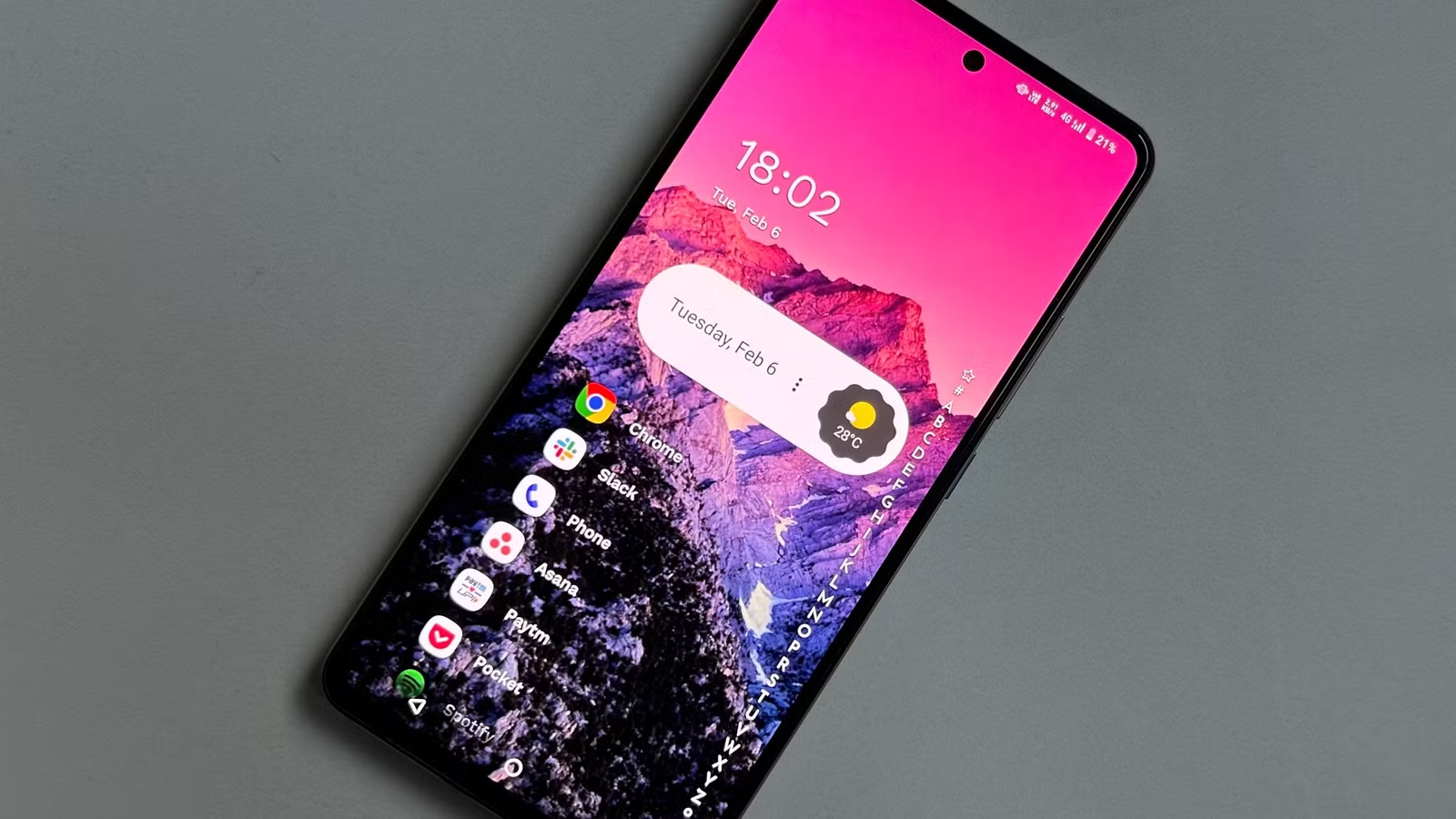
If you owned an Android phone a decade ago, you probably hated your home screen. Samsung's TouchWiz was bloated and slow. HTC Sense looked dated. Motorola and LG weren't much better. The solution was obvious: download a third-party launcher from the Play Store and pretend your phone was something else entirely.
Nova Launcher and GO Launcher became household names among Android users. They offered features stock skins couldn't match: custom grid sizes, gesture shortcuts, icon packs, folder styles, and app drawer layouts you could tweak for hours. Nova alone racked up over 50 million downloads on the Play Store, making it the most popular third-party launcher in history.
The appeal wasn't just aesthetics. These launchers were often faster and smoother than the manufacturer's default software. For many users, installing Nova was step one after buying a new phone.
What changed: Google's gesture problem
The decline started with Android 10 in 2019. Google introduced gesture navigation, replacing the traditional three-button layout with swipes from the screen edges. The problem: Google tied these gestures directly to the system's stock launcher.
When you use a third-party launcher on a modern Android phone with gesture navigation enabled, you get what users call "gesture jank." Animations stutter. There's a 2-second delay when swiping home. The recents menu feels broken. It's not a bug in Nova or any other launcher. It's how Google built the system.
“The era of the third-party launcher is effectively over because Google won't fix the gesture APIs.”
— Cliff Wade, Former Director of Customer Relations at Nova Launcher
Google could fix this by opening up the gesture APIs to third-party developers. They haven't. Years of bug reports and feature requests have gone unanswered. The workaround is switching back to three-button navigation, but that feels like going backward on a modern phone.
Stock Android skins got better
The other half of the equation: manufacturers stopped shipping terrible software. Samsung's One UI is now genuinely good. It's smooth, customizable, and full of features that used to require a third-party launcher. You can change icon shapes, grid sizes, and folder styles without downloading anything.
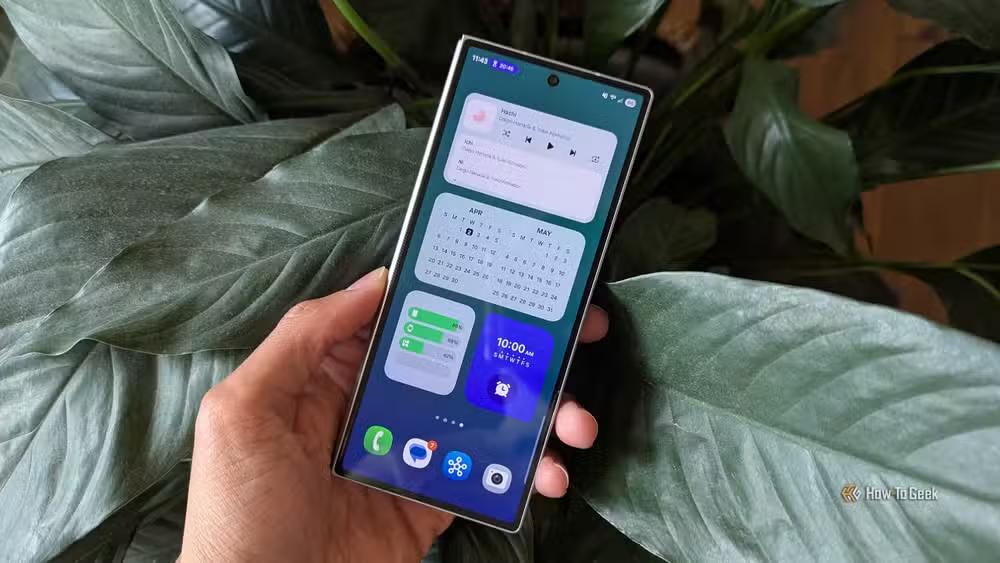
Google's Pixel Launcher has followed a similar path. It's minimal but functional, with solid search integration and at-a-glance widgets. OnePlus, Xiaomi, and other manufacturers have all improved their default experiences to the point where the average user has no reason to look elsewhere.
The customization gap that launchers once filled has closed. The features that made Nova essential in 2014 are now standard in 2026.
Nova Launcher's collapse
The state of Nova Launcher tells the whole story. In July 2022, Branch Metrics acquired the app. At the time, founder Kevin Barry assured users that development would continue normally.
Two years later, Branch gutted the team. The development staff went from roughly 12 people to a single full-time developer. Barry himself acknowledged the damage in a statement after the layoffs.
“I'll continue to control the direction and development of Nova Launcher... [but] I have less resources. This is hugely disappointing.”
— Kevin Barry, Founder of Nova Launcher
The third-party launcher market is now projected to shrink at a rate of 7.8% annually through 2033. Nova's collapse isn't an outlier. It's the trend.
When launchers still make sense
There are still edge cases where a third-party launcher might be worth the trade-offs. If you use three-button navigation and don't care about gesture controls, you'll avoid the jank entirely. Some minimal launchers like Niagara offer genuinely different interaction models that stock software can't replicate.
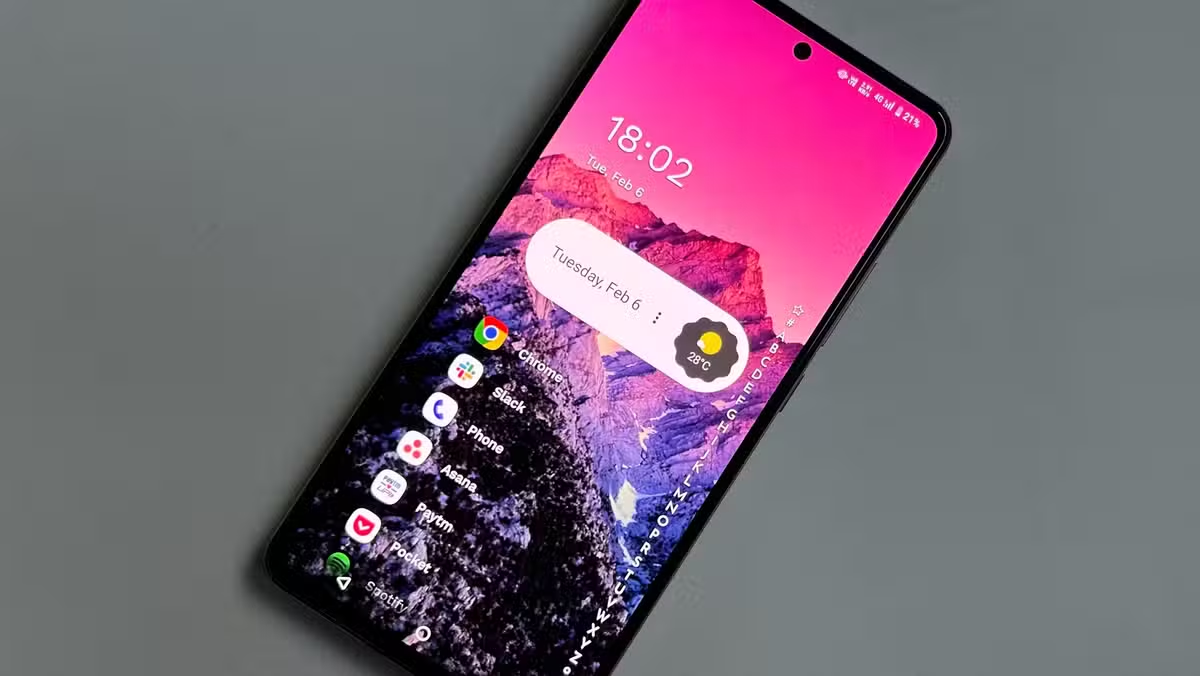
But for most users, the calculation has flipped. The benefits of a third-party launcher no longer outweigh the costs. You lose smooth gesture navigation. You might lose app continuity during updates. And you're betting on software that increasingly has no business model.
The broader pattern
Android launchers aren't dying because users stopped caring about customization. They're dying because Google made architectural decisions that favor its own software, and manufacturers closed the quality gap that launchers once exploited.
It's a familiar pattern in tech. Third-party tools thrive when first-party software is bad. When the default gets good enough, the ecosystem shrinks. The launcher market in 2026 looks a lot like the ringtone market in 2016: technically still there, but culturally irrelevant.
Logicity's Take
If you're sticking with stock, these settings help you get more from the Pixel Launcher
Samsung's One UI improvements are part of why third-party launchers became unnecessary
Frequently Asked Questions
Why do third-party Android launchers have gesture lag?
Google tied gesture navigation directly to the stock launcher in Android 10. Third-party launchers can't access the same APIs, causing a delay of roughly 2 seconds and broken animations when swiping home or accessing recent apps.
Is Nova Launcher still being developed?
Barely. After Branch Metrics' 2024 layoffs, the team went from around 12 people to a single full-time developer. Founder Kevin Barry continues to oversee the project, but with severely limited resources.
What's the best Android launcher in 2026?
For most users, the stock launcher that came with your phone. Samsung's One UI, Google's Pixel Launcher, and OnePlus's OxygenOS all offer the customization features that once required third-party apps, without the gesture navigation problems.
Can I use Nova Launcher without gesture lag?
Yes, if you switch to three-button navigation instead of gesture controls. This avoids the API limitations Google imposed, but you lose the modern swipe-based interface.
Will Google ever fix the gesture API for third-party launchers?
There's no indication they will. The issue has been reported since 2019, and Google has not prioritized a fix. Platform incentives favor keeping the smoothest experience on stock launchers.
Need Help Implementing This?
Source: How-To Geek
Huma Shazia
Senior AI & Tech Writer
اقرأ أيضاً

رأي مغاير: كيف يؤثر اختراق الأمن الداخلي الأميركي على شركاتنا الخاصة؟
في ظل اختراق عقود الأمن الداخلي الأميركي مع شركات خاصة، نناقش تأثير هذا الاختراق على مستقبل الأمن السيبراني. نستعرض الإحصاءات الموثوقة ونناقش كيف يمكن للشركات الخاصة أن تتعامل مع هذا التهديد. استمتع بقراءة هذا التحليل العميق

الإنسان في زمن ما بعد الوجود البشري: نحو نظام للتعايش بين الإنسان والروبوت - Centre for Arab Unity Studies
في هذا المقال، سنناقش كيف يمكن للبشر والروبوتات التعايش في نظام متكامل. سنستعرض التحديات والحلول المحتملة التي تضعها شركات مثل جوجل وأمازون. كما سنلقي نظرة على التوقعات المستقبلية وفقًا لتقرير ماكنزي

إطلاق ناسا لمهمة مأهولة إلى القمر: خطوة تاريخية نحو استكشاف الفضاء
تعتبر المهمة الجديدة خطوة هامة نحو استكشاف الفضاء وتطوير التكنولوجيا. سوف تشمل المهمة إرسال رواد فضاء إلى سطح القمر لconducting تجارب علمية. ستسهم هذه المهمة في تطوير فهمنا للفضاء وتحسين التكنولوجيا المستخدمة في استكشاف الفضاء.