Visa Embeds Payment Network in ChatGPT for AI Shopping
Key Takeaways
- Visa's payment network is now embedded in ChatGPT, allowing AI agents to complete purchases at any merchant accepting Visa
- This replaces OpenAI's retired Instant Checkout, which failed due to its 4% merchant fee
- Guardrails include spending limits, approval steps, and approved merchant lists to prevent fraud
What the Integration Does
Payments giant Visa announced Wednesday that it has embedded its payment network directly inside ChatGPT. The integration lets the AI chatbot independently shop and complete transactions on behalf of users. Unlike Visa's previous attempts at AI-powered commerce, which were limited to a single retailer or small set of enrolled merchants, this integration spans Visa's entire network.
Users can link their Visa cards to ChatGPT. From there, the AI agent can recommend products and then complete the purchase without the user needing to visit a merchant's website or enter payment details manually.
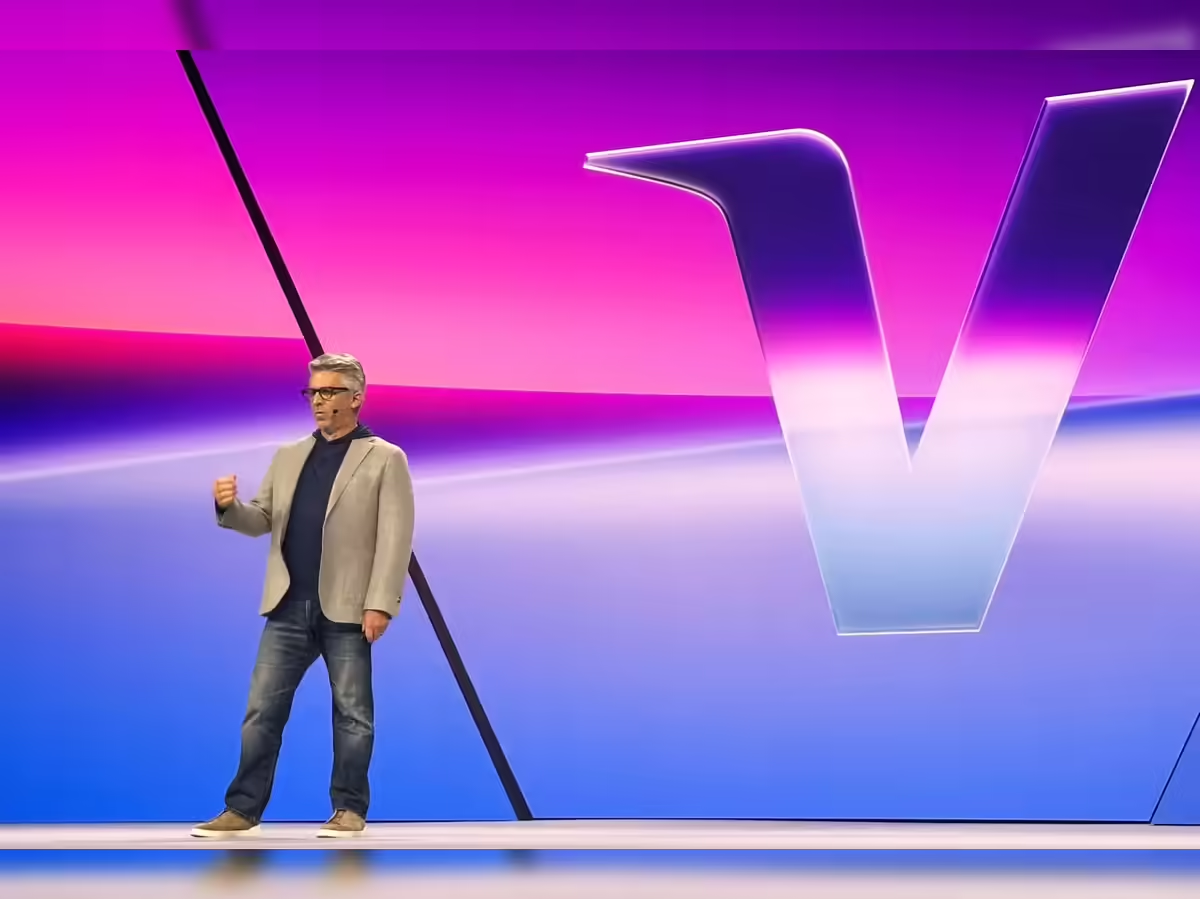
Jack Forestell, Visa's chief product and strategy officer, gave an example at a company event in San Francisco. A customer tells ChatGPT they want wireless headphones under $150. The chatbot finds a pair meeting those criteria and buys it on the customer's behalf.
“As AI agents become active participants in the economy, Visa's focus is to ensure transactions are trusted, secure and seamless.”
— Jack Forestell, Chief Product and Strategy Officer at Visa
Why OpenAI's Previous Attempt Failed
This is not OpenAI's first shot at e-commerce. Late last year, the company launched Instant Checkout, which let ChatGPT search the internet for specific items like a digital personal shopper. The feature flopped. It was prone to errors and merchants balked at the 4% transaction fee OpenAI charged. The company retired Instant Checkout in March 2025.
The Visa collaboration takes a different approach. OpenAI provides the technology for agents to interact, make decisions, and initiate purchases. Visa, the world's largest payment network outside China, handles payment authorization and fraud monitoring. This division of labor lets each company focus on what it does best.
How the Partnership Works
Neither Visa nor OpenAI disclosed the financial terms of the deal. They also did not reveal what fees merchants or customers will pay. This is notable given that Instant Checkout's 4% fee was the main reason merchants rejected it.
The partnership leverages Visa's existing merchant relationships and tokenization technology. When a user links their Visa card to ChatGPT, the actual card number is replaced with a token. The AI agent uses this token to complete purchases without ever seeing the real card details.
The Fraud and Authorization Problem
Letting AI agents buy products raises real concerns for banks and retailers. A customer could overspend. The agent might buy the wrong item. A customer might claim they never authorized a transaction. Banks have worried about fraud claims that could arise when an agent uses a customer's credit or debit card.
Visa says the feature will include guardrails: spending limits, required approval steps, and approved merchant lists. The details of how these guardrails work in practice remain unclear.
- Spending limits: Users can set maximum amounts per transaction or time period
- Approval steps: Certain purchases may require explicit user confirmation
- Approved merchants: Users can restrict which retailers the agent can buy from
What This Means for Agentic Commerce
This integration represents a shift in how AI interacts with the economy. Instead of being a research tool that helps users find products, ChatGPT can now act as an economic participant. It can browse, decide, and transact.
“This integration marks a shift from AI as a research tool to AI as an active economic participant, empowering agents to act on the user's behalf with the security and scale of the Visa network.”
— Rajat Taneja, President of Technology at Visa
The broader market for AI-driven agentic transactions is estimated to reach over $10 billion by 2028. Visa's move positions it as the payment rail for this emerging category. For merchants, accepting agent-initiated payments becomes as simple as accepting Visa. No special integration required.
OpenAI's regulatory positioning affects how agentic commerce will be governed
Community Reaction
Discussion on Reddit's r/technology and Hacker News shows mixed reactions. Some users are excited about the convenience of having an AI handle shopping. Others are skeptical about security. The main question: will the guardrails actually prevent AI agents from accidental or unauthorized overspending?
Several commenters pointed out that the success of this integration depends on how well Visa and OpenAI handle edge cases. What happens when an AI buys something at the wrong price? What if the AI misunderstands a request and purchases the wrong item? These scenarios will test the dispute resolution process.
Data security remains critical as payment networks integrate with AI systems
Logicity's Take
Frequently Asked Questions
How do I link my Visa card to ChatGPT?
Visa and OpenAI have not released detailed instructions yet. The integration was announced Wednesday, and the companies have not specified a public launch date or setup process.
What fees will merchants pay for AI-initiated purchases?
The companies did not disclose financial terms. However, the integration uses Visa's existing network, so merchants likely pay their standard Visa processing fees rather than an additional AI-specific charge.
Can ChatGPT buy things without my approval?
Visa says guardrails will include required approval steps for certain purchases, spending limits, and approved merchant lists. Users will be able to configure these controls, though exact implementation details are not yet public.
What happens if the AI buys the wrong item?
This falls under existing dispute resolution processes. The specifics of how Visa and OpenAI will handle AI-initiated purchase disputes have not been disclosed.
Why did OpenAI's Instant Checkout fail?
Instant Checkout charged merchants 4% of each transaction's value. Merchants considered this too expensive on top of their existing payment processing fees. The feature also had accuracy problems. OpenAI retired it in March 2025.
Need Help Implementing This?
Source: Tech-Economic Times / ET
Manaal Khan
Tech & Innovation Writer
اقرأ أيضاً

رأي مغاير: كيف يؤثر اختراق الأمن الداخلي الأميركي على شركاتنا الخاصة؟
في ظل اختراق عقود الأمن الداخلي الأميركي مع شركات خاصة، نناقش تأثير هذا الاختراق على مستقبل الأمن السيبراني. نستعرض الإحصاءات الموثوقة ونناقش كيف يمكن للشركات الخاصة أن تتعامل مع هذا التهديد. استمتع بقراءة هذا التحليل العميق

الإنسان في زمن ما بعد الوجود البشري: نحو نظام للتعايش بين الإنسان والروبوت - Centre for Arab Unity Studies
في هذا المقال، سنناقش كيف يمكن للبشر والروبوتات التعايش في نظام متكامل. سنستعرض التحديات والحلول المحتملة التي تضعها شركات مثل جوجل وأمازون. كما سنلقي نظرة على التوقعات المستقبلية وفقًا لتقرير ماكنزي

إطلاق ناسا لمهمة مأهولة إلى القمر: خطوة تاريخية نحو استكشاف الفضاء
تعتبر المهمة الجديدة خطوة هامة نحو استكشاف الفضاء وتطوير التكنولوجيا. سوف تشمل المهمة إرسال رواد فضاء إلى سطح القمر لconducting تجارب علمية. ستسهم هذه المهمة في تطوير فهمنا للفضاء وتحسين التكنولوجيا المستخدمة في استكشاف الفضاء.