This Free App Reveals Every Tracker Hidden in Your Android Apps
Key Takeaways
- 76% of free Android apps contain at least one third-party tracker, often invisible to users
- Exodus Privacy is a free, open-source app that scans your phone and lists every tracker in each installed app
- Trackers differ from permissions: they're hidden SDKs that transmit data to external servers without explicit consent
You probably know your Android apps are tracking you. It's the unspoken cost of free software. But do you know exactly how many trackers are embedded in each app, or what they're actually doing? Most people don't, because Android gives you no easy way to see this information.
That's where Exodus Privacy comes in. It's a free, open-source app that scans every app on your phone and tells you precisely which trackers are baked into each one. The results are often sobering.
Permissions vs. Trackers: The Distinction That Matters
There's a common misconception about app privacy on Android. When you install Uber, it asks for location access. When you install a camera app like Snapseed, it requests camera and location permissions. These permission requests are visible, and you can deny them.
Trackers are different. They're third-party software libraries (SDKs) embedded directly into apps. They don't ask for separate permission because they piggyback on whatever access the app already has. Once the app is installed, these trackers can transmit data to external servers without any notification to you.
“The biggest problem with app privacy isn't just what you allow; it's the invisible third-party SDKs that piggyback on those permissions to profile you without your consent.”
— Independent Security Researcher
Some trackers serve legitimate purposes. Crash reporting tools help developers fix bugs. A/B testing frameworks improve user experience. But others exist purely to harvest behavioral data for advertising networks like Meta Audience Network and Google AdMob.
How Exodus Privacy Works
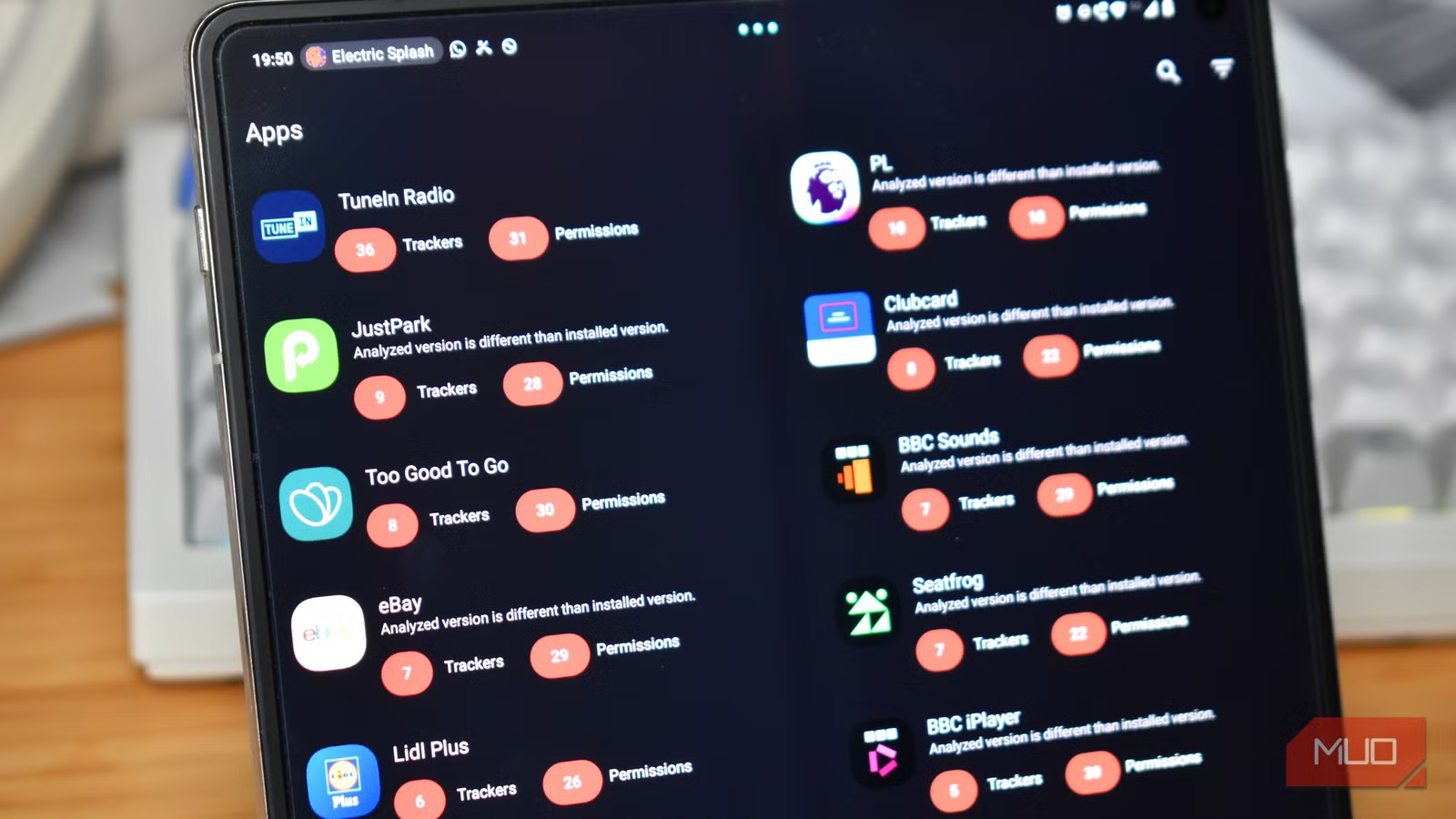
Exodus Privacy is maintained by a French nonprofit organization. The app itself is simple: install it from the Play Store (or F-Droid if you prefer), open it, and it scans every app on your device. Within seconds, you get a list of your apps along with the number of trackers and permissions each one contains.
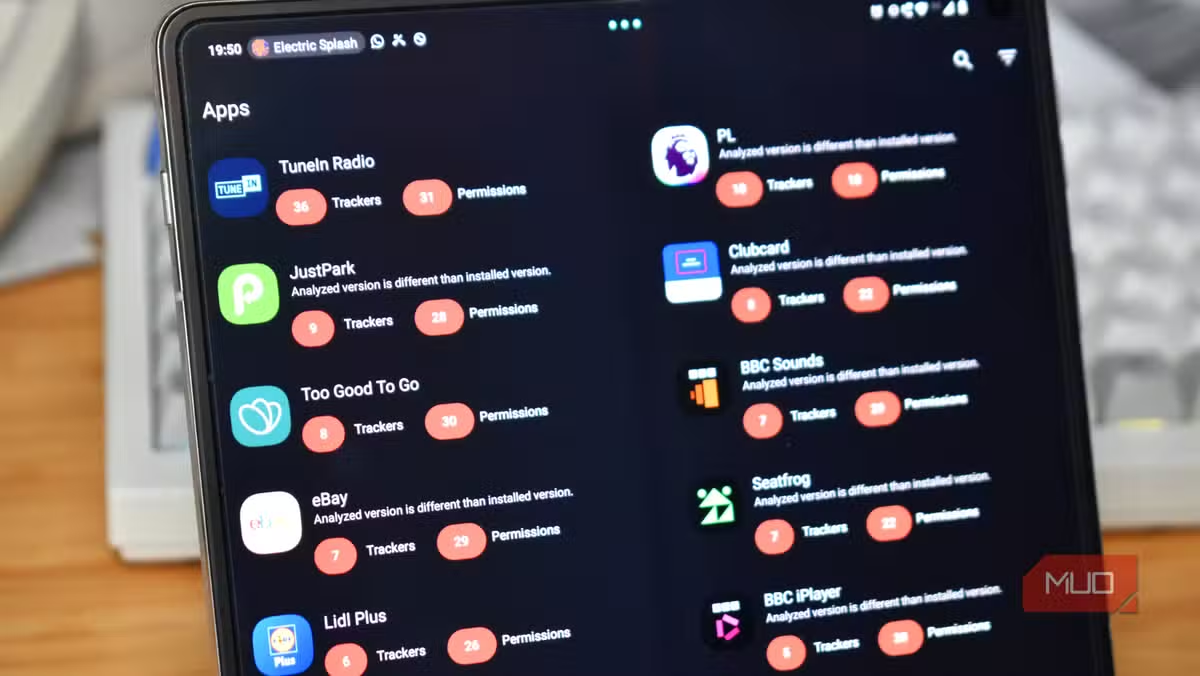
Tap any app in the list and you'll see the specific trackers identified. Exodus maintains a database of over 4,000 unique tracker signatures, so it can identify everything from Google Firebase Analytics to more obscure advertising SDKs.
The app doesn't block trackers or modify anything on your phone. It's purely diagnostic. Think of it as a privacy audit that shows you the true cost of each app you've installed.
What You'll Likely Find
The results tend to be eye-opening. Popular free-to-play mobile games average 12 or more trackers. Social media apps often contain advertising SDKs from multiple competing networks. Even utility apps that seem simple may carry several trackers.
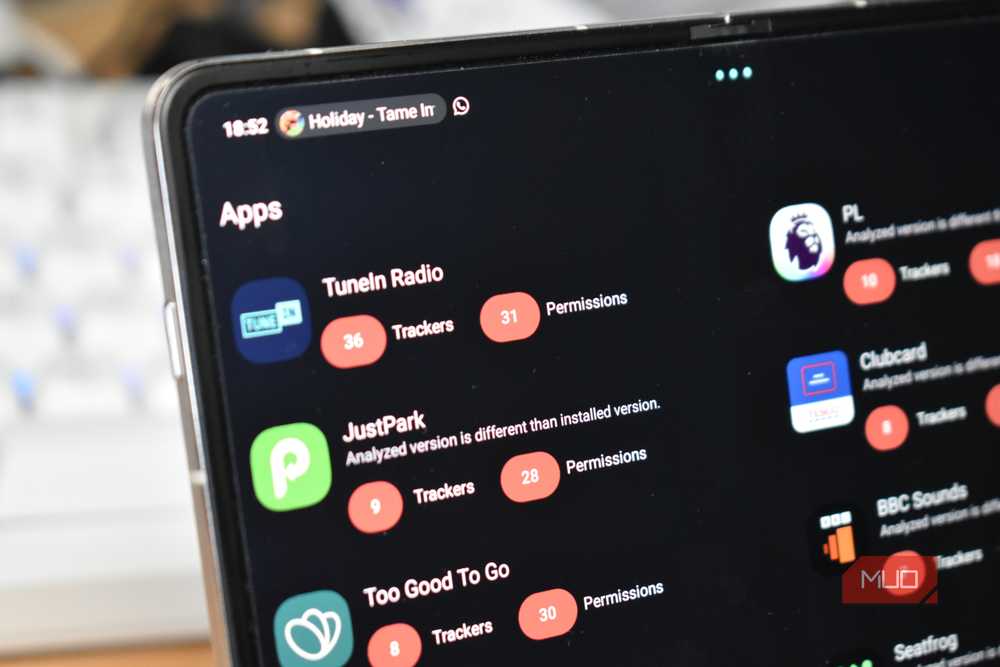
Gavin Phillips, a tech journalist who covers security and privacy, described using Exodus as "a timely reminder that I've got unused apps going back years lurking, and potentially getting away with more than I realize." That's the secondary benefit here: the app highlights forgotten installs that may still be collecting data.
What You Can Do With This Information
Once you know which apps contain the most trackers, you have options. The simplest is to uninstall apps you don't actively use. Every dormant app with trackers is still potentially reporting back.
- Uninstall unused apps, especially those with high tracker counts
- For apps you keep, review and restrict permissions where possible
- Consider paid alternatives to heavily-tracked free apps
- Check Exodus reports before installing new apps (they have a web tool too)
For apps you need to keep, restricting permissions can limit what trackers can access. If an app doesn't need your location to function, deny that permission. The trackers will have less data to harvest.
More ways to get control over your Android experience
The Broader Privacy Reality
Reddit communities like r/privacy and r/Android consistently recommend Exodus Privacy as the standard tool for auditing apps. But users also note a frustrating pattern: even "trusted" daily-driver apps rely heavily on telemetry SDKs. The consensus is that truly private apps are becoming rare in mainstream app stores.
Google has made improvements over the years. Android's permission system is more granular than it used to be. But the company hasn't addressed the tracker problem directly, likely because its advertising business depends on the same data collection infrastructure.
Exodus Privacy doesn't solve this structural issue. It just makes it visible. And sometimes, seeing the problem clearly is the first step toward making better choices about which apps earn a place on your phone.
Logicity's Take
Frequently Asked Questions
Is Exodus Privacy free to use?
Yes. Exodus Privacy is completely free and open-source. It's maintained by a French nonprofit organization and contains no trackers itself.
Does Exodus Privacy block trackers?
No. It's a diagnostic tool that identifies trackers but doesn't modify your apps or block data transmission. For blocking, you'd need a separate solution like a firewall app or DNS-based blocker.
How does Exodus identify trackers?
Exodus maintains a database of over 4,000 tracker signatures. It scans the code of installed apps and matches known SDK patterns against this database.
Can I check apps before installing them?
Yes. Exodus has a web tool at reports.exodus-privacy.eu.org where you can search for any app on the Play Store and see its tracker report before you install it.
Are all trackers bad?
Not necessarily. Some trackers handle crash reporting or analytics that improve app quality. The concern is advertising and behavioral tracking SDKs that profile users without explicit consent.
Need Help Implementing This?
Source: MakeUseOf
Huma Shazia
Senior AI & Tech Writer
اقرأ أيضاً

رأي مغاير: كيف يؤثر اختراق الأمن الداخلي الأميركي على شركاتنا الخاصة؟
في ظل اختراق عقود الأمن الداخلي الأميركي مع شركات خاصة، نناقش تأثير هذا الاختراق على مستقبل الأمن السيبراني. نستعرض الإحصاءات الموثوقة ونناقش كيف يمكن للشركات الخاصة أن تتعامل مع هذا التهديد. استمتع بقراءة هذا التحليل العميق

الإنسان في زمن ما بعد الوجود البشري: نحو نظام للتعايش بين الإنسان والروبوت - Centre for Arab Unity Studies
في هذا المقال، سنناقش كيف يمكن للبشر والروبوتات التعايش في نظام متكامل. سنستعرض التحديات والحلول المحتملة التي تضعها شركات مثل جوجل وأمازون. كما سنلقي نظرة على التوقعات المستقبلية وفقًا لتقرير ماكنزي

إطلاق ناسا لمهمة مأهولة إلى القمر: خطوة تاريخية نحو استكشاف الفضاء
تعتبر المهمة الجديدة خطوة هامة نحو استكشاف الفضاء وتطوير التكنولوجيا. سوف تشمل المهمة إرسال رواد فضاء إلى سطح القمر لconducting تجارب علمية. ستسهم هذه المهمة في تطوير فهمنا للفضاء وتحسين التكنولوجيا المستخدمة في استكشاف الفضاء.