SpaceX IPO overwhelms Robinhood as 855,000 users fight for shares
Key Takeaways
- 855,424 Robinhood users requested SpaceX shares, but many received just 1 share despite requesting 1,000
- Retail demand hit $100 billion while the IPO raised $85.7 billion total
- Robinhood experienced latency and outages during the launch, frustrating users
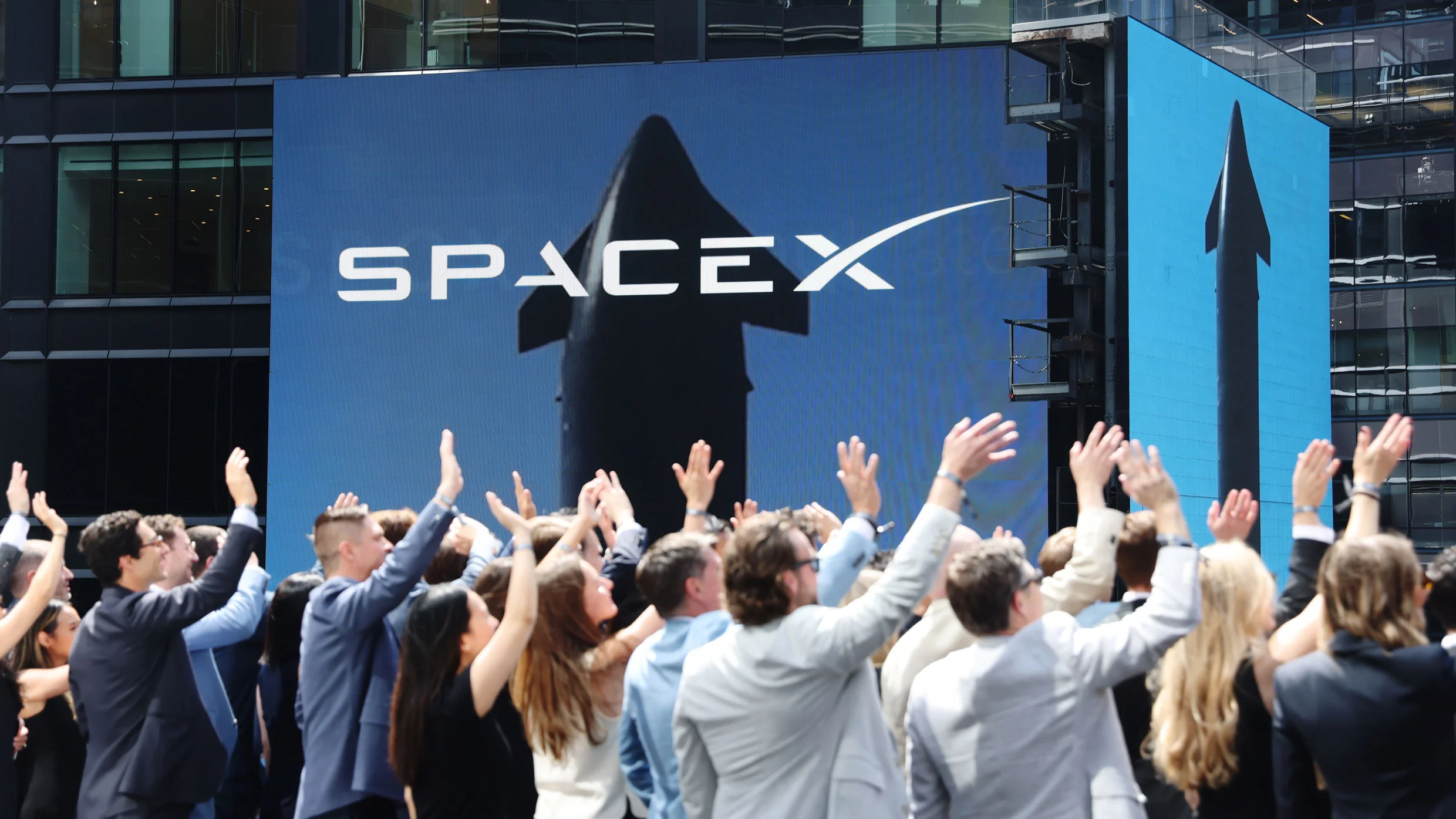
SpaceX's June 12 IPO exposed a brutal reality for retail investors: even on platforms built to democratize trading, the little guy still gets crumbs. Of the 855,424 Robinhood users who requested shares, many walked away with a single share after asking for 1,000. The $100 billion in retail demand simply could not fit through the narrow pipe Wall Street allocates to individual investors.
The numbers tell the story. SpaceX priced at $135 per share, seeking $75 billion from public markets. It received more than $250 billion in total demand. The stock closed its second day of trading at $192, a 43% gain. Elon Musk became the world's first trillionaire. More than 4,000 SpaceX employees became millionaires. Retail traders, meanwhile, fought over scraps.
Why did retail investors get so few SpaceX shares?
Jay Ritter, director of the IPO Initiative at the University of Florida's Warrington College of Business, explained the mechanics to Fast Company. One colleague requested 100 SpaceX shares through Robinhood and received exactly one. Another requested 1,000 and also got one. A Fidelity customer asked for 300 shares and received 10.
“The demand was unlike anything we've seen in our lifetime. When retail investors are requesting thousands of shares and walking away with just one, it tells you the market is fundamentally changing its appetite for high-stakes aerospace technology.”
— Jay Ritter, Director of the IPO Initiative at the University of Florida
The squeeze comes from two directions. Stock allocators prefer institutional investors over retail apps. Goldman Sachs and Morgan Stanley clients get priority. Robinhood customers, despite numbering 27.7 million, represent a tiny fraction of overall market liquidity. When demand exceeds supply by this margin, retail platforms can only distribute what they're given.
Robinhood's infrastructure buckled under the pressure
Beyond allocation problems, Robinhood's systems simply couldn't handle the traffic. The company acknowledged on X that "some customers experienced latency and intermittent issues" due to record-breaking demand. For a platform that processes 231 million options contracts in a typical month, the SpaceX IPO proved a stress test it couldn't pass cleanly.
Users were not understanding about the technical difficulties. Social media filled with complaints from people who couldn't access their accounts during the opening hours, missing the initial surge entirely.
The frustration runs deeper than one bad day. Retail investors increasingly suspect the system is rigged against them. They download apps promising access to the hottest IPOs, watch institutional players scoop up the bulk of shares, and then scramble to buy at inflated prices on the open market.
What the SpaceX IPO reveals about AI and tech valuations
SpaceX's $2.6 trillion valuation isn't just about rockets. The company integrated xAI, Musk's artificial intelligence venture, before going public. That combination of space infrastructure and AI capabilities created a narrative institutional investors couldn't resist. The valuation now exceeds Apple's and approaches Microsoft's.
Skeptics point to SpaceX's Q1 2026 net loss of $4.3 billion. Bulls counter with Starlink's subscriber growth and the long-term revenue potential of orbital infrastructure. This tension, between current losses and future dominance, defines the most heated tech investment debates. Retail investors are betting on the future regardless of quarterly reports.
Musk himself framed the IPO in grand terms. "This isn't just an IPO; it's the democratization of interplanetary commerce," he posted on X. "Seeing nearly a million retail investors fight for a piece of our future is exactly what I envisioned when we started this journey." Whether retail investors actually got meaningful pieces of that future is the uncomfortable question.
The coming wave of AI company IPOs
SpaceX isn't the last buzzy tech company eyeing public markets. OpenAI and Anthropic have both discussed eventual IPOs. If retail demand for AI companies matches or exceeds the SpaceX frenzy, trading platforms face a choice: scale infrastructure dramatically or watch users defect to competitors who can handle the load.
The allocation problem is harder to solve. Underwriters control who gets shares at IPO price. Retail platforms get a fixed allotment, then divide it among millions of users. Unless regulators force changes to how IPO shares are distributed, individual investors will continue receiving lottery-ticket allocations for the most anticipated offerings.
Context on how AI companies are becoming systemically important, relevant to the IPO demand discussion
Frequently Asked Questions
How many people tried to buy SpaceX stock through Robinhood?
855,424 Robinhood customers requested shares in the SpaceX IPO through the platform's IPO Access program.
Why did Robinhood users only get one share when they requested 1,000?
Retail platforms receive a small fixed allocation from IPO underwriters. When demand far exceeds supply, as with SpaceX's $100 billion in retail demand, platforms must divide limited shares among hundreds of thousands of users.
What is SpaceX's market cap after the IPO?
SpaceX reached a market capitalization of $2.6 trillion as of June 16, 2026, making it one of the most valuable companies globally.
Did Robinhood have outages during the SpaceX IPO?
Yes. Robinhood confirmed that some customers experienced latency and intermittent issues due to record-breaking traffic during the IPO launch.
How much did SpaceX stock rise after the IPO?
SpaceX shares gained 43% from the IPO price of $135 to the close of the second trading day at $192.
Logicity's Take
The SpaceX IPO didn't democratize anything. It revealed that retail trading apps are marketing access they can't actually deliver. When 855,000 users request shares and walk away with lottery-ticket allocations, the platform is selling hope, not equity. Robinhood and its competitors need to be honest with users: IPO Access is a raffle, not a trading feature. The real question is whether regulators will eventually force underwriters to allocate a meaningful percentage of hot IPOs to retail, or whether the current two-tier system persists indefinitely.
Need Help Implementing This?
If your fintech or trading platform is struggling with infrastructure scaling for high-demand events, contact Logicity's advisory network. We connect technical teams with engineers who've built systems handling millions of concurrent users during market-moving moments.
Source: Fast Company / Chris Stokel-Walker
Huma Shazia
Senior AI & Tech Writer
اقرأ أيضاً

رأي مغاير: كيف يؤثر اختراق الأمن الداخلي الأميركي على شركاتنا الخاصة؟
في ظل اختراق عقود الأمن الداخلي الأميركي مع شركات خاصة، نناقش تأثير هذا الاختراق على مستقبل الأمن السيبراني. نستعرض الإحصاءات الموثوقة ونناقش كيف يمكن للشركات الخاصة أن تتعامل مع هذا التهديد. استمتع بقراءة هذا التحليل العميق

الإنسان في زمن ما بعد الوجود البشري: نحو نظام للتعايش بين الإنسان والروبوت - Centre for Arab Unity Studies
في هذا المقال، سنناقش كيف يمكن للبشر والروبوتات التعايش في نظام متكامل. سنستعرض التحديات والحلول المحتملة التي تضعها شركات مثل جوجل وأمازون. كما سنلقي نظرة على التوقعات المستقبلية وفقًا لتقرير ماكنزي

إطلاق ناسا لمهمة مأهولة إلى القمر: خطوة تاريخية نحو استكشاف الفضاء
تعتبر المهمة الجديدة خطوة هامة نحو استكشاف الفضاء وتطوير التكنولوجيا. سوف تشمل المهمة إرسال رواد فضاء إلى سطح القمر لconducting تجارب علمية. ستسهم هذه المهمة في تطوير فهمنا للفضاء وتحسين التكنولوجيا المستخدمة في استكشاف الفضاء.