Social Media Scams Cost Americans $2.1 Billion in 2025

Key Takeaways
- Social media scam losses hit $2.1 billion in 2025, up 8x since 2020
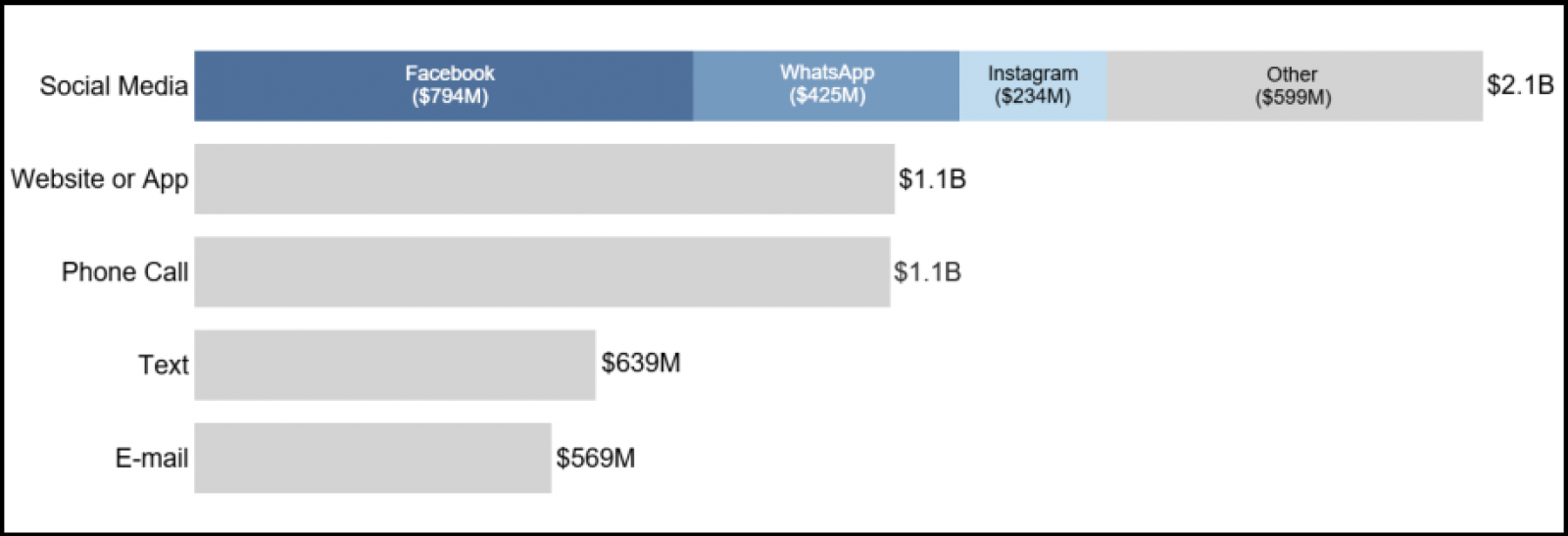
- Facebook generated more fraud losses than text and email scams combined
- Meta removed 159 million scam ads and 10.9 million fraudulent accounts in 2025
The Scale of the Problem
The U.S. Federal Trade Commission warned this week that social media scams have become the dominant fraud vector in America. Losses reached $2.1 billion in 2025, an eightfold increase from 2020 levels.
The numbers come from the FTC's Consumer Sentinel Network, which tracks fraud reports across the country. Nearly 30% of people who reported losing money to a scam last year said it started on social media. That's a higher share than any other contact method scammers use.
“Social media creates easy access to billions of people from anywhere in the world, making a scammer's job easier at very little cost. Scammers may hack a user's account, exploit what a user posts to figure out how to target them, or buy ads and use the same tools used by real businesses to target people by age, interests or shopping habits.”
— FTC
Facebook Dominates Fraud Losses
The FTC's data reveals a clear pattern across age groups. Every demographic except people 80 and older lost more money to scams originating on Facebook than on any other social platform. People over 80 were primarily targeted through phone calls.
WhatsApp and Instagram ranked second and third in reported fraud losses, but both trailed Facebook by a wide margin. Here's the striking finding: people reported losing more money to Facebook scams alone than to text and email scams combined.
Meta's Response
Meta has rolled out several anti-scam features in recent months across WhatsApp, Facebook, and Messenger. The company is testing warnings that flag suspicious Facebook friend requests. These alerts look at signals like profile locations that don't match a user's region or accounts with few mutual connections.
In October, Meta introduced a more advanced scam-detection system for suspicious chats. When a new contact sends a message that matches scam patterns, users now see a warning. The company also added WhatsApp alerts that tell users to only share their screen with trusted contacts during video calls.
By the numbers, Meta removed over 159 million scam ads in 2025 and took down more than 10.9 million accounts on Facebook and Instagram linked to criminal scam operations.
Another example of how scammers exploit trusted platforms
The Broader Cybercrime Picture
Social media fraud is just one slice of the cybercrime problem. The FBI's 2025 Internet Crime Report shows the agency received over 1 million complaints through its Internet Crime Complaint Center. Those complaints linked to nearly $21 billion in losses from crimes including investment scams, business email compromise, tech support fraud, and data breaches.
That puts social media's $2.1 billion share at roughly 10% of total reported cyber-enabled crime losses. But the growth rate is what stands out. No other fraud contact method has seen anything close to an eightfold increase over five years.
Related cybersecurity incident affecting millions of Americans
Why Social Media Scams Work
The FTC points to several factors that make social media ideal for scammers. The platforms offer access to billions of potential targets at minimal cost. Scammers can hack existing accounts to impersonate trusted friends. They can study public posts to craft personalized approaches. And they can buy ads using the same targeting tools legitimate businesses use.
The result is a fraud ecosystem that scales in ways phone or email scams never could. A single scammer can target thousands of people simultaneously, filtering for the most vulnerable based on their online behavior and interests.
Logicity's Take
Frequently Asked Questions
How much did Americans lose to social media scams in 2025?
Americans lost over $2.1 billion to scams originating on social media platforms in 2025, according to FTC data. This represents an eightfold increase since 2020.
Which social media platform has the most scams?
Facebook leads all social media platforms in fraud losses across nearly every age group. Losses from Facebook scams alone exceeded combined losses from text and email scams.
What is Meta doing to prevent scams on its platforms?
Meta has introduced suspicious friend request warnings, chat-based scam detection, and screen-sharing alerts on WhatsApp. In 2025, the company removed 159 million scam ads and 10.9 million accounts linked to fraud.
What percentage of scam victims were contacted on social media?
Nearly 30% of people who reported losing money to scams in 2025 said the scam started on social media, making it the most common contact method for fraudsters.
How do scammers use social media for fraud?
Scammers hack user accounts, analyze public posts to personalize attacks, and use the same advertising tools as legitimate businesses to target people by age, interests, and shopping habits.
Need Help Implementing This?
Source: BleepingComputer
Manaal Khan
Tech & Innovation Writer
اقرأ أيضاً

رأي مغاير: كيف يؤثر اختراق الأمن الداخلي الأميركي على شركاتنا الخاصة؟
في ظل اختراق عقود الأمن الداخلي الأميركي مع شركات خاصة، نناقش تأثير هذا الاختراق على مستقبل الأمن السيبراني. نستعرض الإحصاءات الموثوقة ونناقش كيف يمكن للشركات الخاصة أن تتعامل مع هذا التهديد. استمتع بقراءة هذا التحليل العميق

الإنسان في زمن ما بعد الوجود البشري: نحو نظام للتعايش بين الإنسان والروبوت - Centre for Arab Unity Studies
في هذا المقال، سنناقش كيف يمكن للبشر والروبوتات التعايش في نظام متكامل. سنستعرض التحديات والحلول المحتملة التي تضعها شركات مثل جوجل وأمازون. كما سنلقي نظرة على التوقعات المستقبلية وفقًا لتقرير ماكنزي

إطلاق ناسا لمهمة مأهولة إلى القمر: خطوة تاريخية نحو استكشاف الفضاء
تعتبر المهمة الجديدة خطوة هامة نحو استكشاف الفضاء وتطوير التكنولوجيا. سوف تشمل المهمة إرسال رواد فضاء إلى سطح القمر لconducting تجارب علمية. ستسهم هذه المهمة في تطوير فهمنا للفضاء وتحسين التكنولوجيا المستخدمة في استكشاف الفضاء.