Samsung Chip Strike Talks: 18 Days That Could Cost $20 Billion
Key Takeaways
- Samsung's union plans an 18-day strike from May 21 to June 7, with 30,000 to 40,000 workers expected to participate
- A one-day April strike cut memory fab output by 18% and foundry output by 58%, previewing full-stoppage impact
- The union demands uncapped bonuses at 15% of operating profit, which could mean $408,000 per employee by 2026
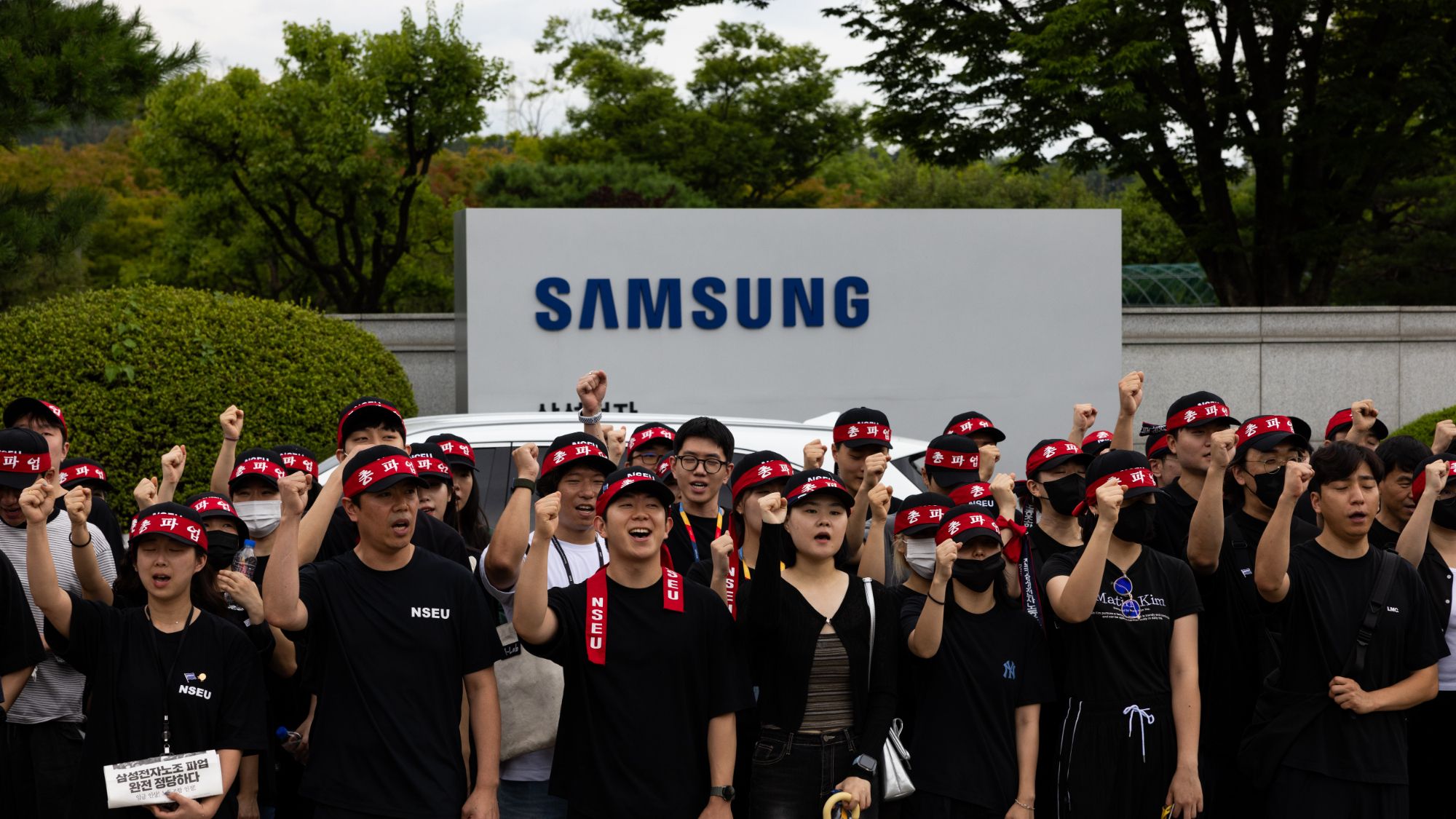
Samsung and its largest labor union have 10 days to prevent what could become the most disruptive strike in memory chip history. The two sides sat down for government-mediated negotiations this week, with the union warning it will walk out from May 21 through June 7 if talks fail.
The numbers are stark. The union has grown to roughly 73,000 members, with estimates putting expected participation at 30,000 to 40,000 workers. According to Digitimes, the strike could create a shortfall of $20.4 billion.
What the April Strike Revealed
A one-day strike in April offered a preview of what a full stoppage could look like. Samsung's memory fab output fell 18% on the affected night shift. Its contract foundry output dropped 58%.
That was with limited participation. The stakes have grown considerably since Samsung's first-ever strike in 2024, when the union had about 32,000 members and only around 15% of them participated. Now membership has more than doubled, and the planned walkout is 18 times longer.
The Money at the Center of the Fight
The dispute centers on performance bonuses. The union wants Samsung to uncap payouts and set them at 15% of operating profit.
Here is where the math gets interesting. Market analysts project Samsung's 2026 operating profit at roughly KRW 300 trillion. Under the union's formula, that would translate to per-employee bonuses approaching KRW 600 million, or about $408,000, in the semiconductor division.
JPMorgan analysts warned earlier this month that Samsung's annual operating profit could fall by 7% to 12% if management accepts the union's core demands. They estimate that allocating 10% to 15% of operating profit as performance bonuses and raising base salaries by 5% would generate KRW 21 trillion to KRW 39 trillion ($14.3 billion to $26.5 billion) in additional labor costs above current projections.
Management has offered what it describes as industry-leading compensation but has refused to permanently remove the cap. Workers rejected a counteroffer of a $340,000 one-time bonus.
Why This Strike Matters Beyond Samsung
Samsung is the world's biggest memory chip maker. A prolonged shutdown would ripple through global supply chains at a moment when demand for high-bandwidth memory (HBM) chips is surging. These chips are essential for AI training systems, and Samsung has been racing to catch up with rival SK hynix in this market.
A separate production-disruption scenario put the potential sales hit from the 18-day walkout at around KRW 4 trillion. That figure may understate the impact if the strike disrupts HBM production schedules or causes customers to shift orders to competitors.
How chip industry dynamics are shifting as AI demand reshapes hardware priorities
Where Negotiations Stand
The two sides are meeting through South Korea's National Labor Relations Commission. Earlier rounds of mediation in February and March collapsed without a deal.
South Korean Labor Minister Kim Young-hoon welcomed the resumption of talks on X, writing that "the solution may already be close." But as of 3 p.m. local time on the first day of talks, no deal had been reached.
“The solution may already be close.”
— Kim Young-hoon, South Korean Labor Minister, on X
The Competitive Pressure
Reports that SK hynix workers can expect guaranteed bonuses add pressure to Samsung's negotiations. In the tight labor market for semiconductor talent, compensation gaps between rivals matter.
Samsung faces a difficult choice. Accept demands that JPMorgan says could cut operating profit by up to 12%. Or risk a strike that could cost billions in lost production and hand market share to competitors at a critical moment in the AI chip race.
Logicity's Take
Frequently Asked Questions
When is the Samsung chip factory strike planned to start?
The union has warned it will strike from May 21 through June 7, 2025, an 18-day walkout, if negotiations fail.
How many workers are expected to participate in the Samsung strike?
With roughly 73,000 union members, estimates put expected participation at 30,000 to 40,000 workers.
What does Samsung's union want?
The union wants Samsung to uncap performance payouts and set them at 15% of operating profit, which could mean bonuses of $408,000 per employee by 2026.
How did the April 2025 one-day strike affect Samsung production?
Memory fab output fell 18% on the affected night shift, and contract foundry output dropped 58%.
Could the strike affect AI chip supply?
Yes. Samsung is racing to catch up in high-bandwidth memory (HBM) chips essential for AI training, and a prolonged shutdown could disrupt production schedules.
Need Help Implementing This?
Source: Latest from Tom's Hardware
Huma Shazia
Senior AI & Tech Writer
اقرأ أيضاً

رأي مغاير: كيف يؤثر اختراق الأمن الداخلي الأميركي على شركاتنا الخاصة؟
في ظل اختراق عقود الأمن الداخلي الأميركي مع شركات خاصة، نناقش تأثير هذا الاختراق على مستقبل الأمن السيبراني. نستعرض الإحصاءات الموثوقة ونناقش كيف يمكن للشركات الخاصة أن تتعامل مع هذا التهديد. استمتع بقراءة هذا التحليل العميق

الإنسان في زمن ما بعد الوجود البشري: نحو نظام للتعايش بين الإنسان والروبوت - Centre for Arab Unity Studies
في هذا المقال، سنناقش كيف يمكن للبشر والروبوتات التعايش في نظام متكامل. سنستعرض التحديات والحلول المحتملة التي تضعها شركات مثل جوجل وأمازون. كما سنلقي نظرة على التوقعات المستقبلية وفقًا لتقرير ماكنزي

إطلاق ناسا لمهمة مأهولة إلى القمر: خطوة تاريخية نحو استكشاف الفضاء
تعتبر المهمة الجديدة خطوة هامة نحو استكشاف الفضاء وتطوير التكنولوجيا. سوف تشمل المهمة إرسال رواد فضاء إلى سطح القمر لconducting تجارب علمية. ستسهم هذه المهمة في تطوير فهمنا للفضاء وتحسين التكنولوجيا المستخدمة في استكشاف الفضاء.