Redmi Turbo 5 debuts in India with 7,540mAh battery
Key Takeaways
- Redmi Turbo 5 packs a 7,540mAh battery in a 6.59-inch body, with 100W fast charging
- MediaTek Dimensity 8500-Ultra powers the device, paired with up to 12GB RAM and UFS 4.1 storage
- Pricing starts at Rs 37,999 for 8GB/128GB, with sales beginning June 19 on Mi.com and Amazon
Xiaomi's Redmi Turbo 5 has arrived in India, bringing a 7,540mAh battery and MediaTek's Dimensity 8500-Ultra chipset at a starting price of Rs 37,999. The phone marks the Turbo series' first appearance in the Indian market after launching in China earlier this year.
Sales kick off June 19 through Mi.com, Amazon India, and select offline retailers. The base 8GB/128GB variant costs Rs 37,999 (about $400), while stepping up to 12GB RAM and 256GB storage pushes the price to Rs 40,999 ($435).
What's inside the Redmi Turbo 5?
The standout spec is that massive battery. At 7,540mAh, it's among the largest capacities you'll find in a mainstream smartphone, slightly smaller than the 7,560mAh cell in the Chinese variant. Xiaomi pairs it with 100W wired fast charging, meaning you won't spend hours tethered to a wall despite the capacity. The phone also supports 27W reverse wired charging, useful for topping up earbuds or another device in a pinch.
MediaTek's Dimensity 8500-Ultra handles processing duties. To keep temperatures in check, Xiaomi has fitted a 3D ice-loop cooling system with a 5,300 mm² vapor chamber. That's a substantial cooling surface for a mid-range device, designed to sustain performance during gaming sessions or extended multitasking.
Memory configurations include up to 12GB of LPDDR5X RAM paired with 256GB of UFS 4.1 storage. The faster storage standard should translate to quicker app loads and file transfers compared to UFS 3.1 phones in the same price bracket.
Display and camera specifications
The 6.59-inch flat AMOLED panel runs at 1.5K resolution with a 120Hz refresh rate. Peak brightness hits 3,500 nits, a figure typically reserved for phones costing twice as much. That brightness should help outdoors under direct sunlight, though sustained brightness in real use will be lower.
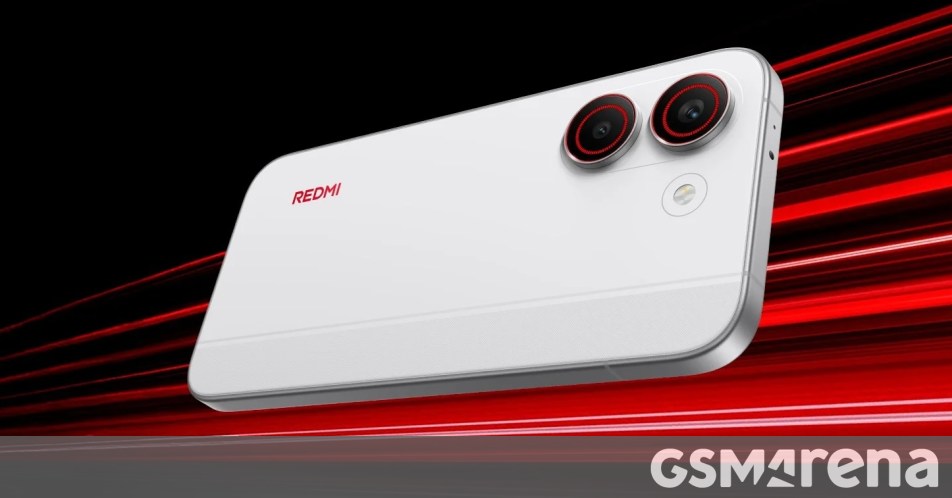
For cameras, Redmi has opted for a 50MP Sony IMX882 main sensor alongside an 8MP ultrawide. The front-facing camera uses a 20MP sensor for selfies and video calls. RGB ring lights sit inside the camera module, a design flourish borrowed from gaming phones.
Build quality and software commitment
The Turbo 5 features a metal frame and carries an IP69K rating, meaning it can withstand high-pressure hot water jets. That's a step beyond the IP68 rating common at this price point. Additional features include an in-display fingerprint scanner, infrared sensor, and stereo speakers.
On the software front, the phone ships with Android 16-based HyperOS 3. Xiaomi promises four years of Android updates and six years of security patches. Whether the company delivers on that timeline remains to be seen, given the mixed track record of budget and mid-range phones receiving long-term support.
Color options include Asphalt Black, Nitro Blue, and Turbo White.
How does it compare to Sharp's Aquos R11?
The Turbo 5 enters a competitive space. Sharp recently unveiled the Aquos R11 with a 3,600-nit display and Snapdragon 8s Gen 4. The Aquos targets a slightly higher-end segment, but the brightness comparison is instructive: Redmi is bringing near-flagship display specs to the Rs 38,000-41,000 range. The Dimensity 8500-Ultra won't match Qualcomm's latest silicon in raw benchmarks, but for most users, the difference won't surface outside synthetic tests.
Another recent phone launch with flagship-tier display brightness
Early reactions from Indian buyers
Discussion on Indian tech forums centers on the battery capacity. The 7,540mAh cell inevitably adds weight and thickness, and some prospective buyers are debating whether the trade-off makes sense for their usage. Enthusiasts interested in the Dimensity 8500-Ultra's gaming performance seem optimistic, though skepticism lingers about Xiaomi's ability to deliver on the six-year security update promise.
Logicity's Take
The Redmi Turbo 5 makes a clear bet: battery anxiety matters more to Indian buyers than shaving off a few millimeters of thickness. At Rs 37,999, it undercuts most phones with comparable battery life while matching them on display quality. The real test will be whether Xiaomi's cooling system can sustain Dimensity 8500-Ultra performance during extended gaming, and whether the software support promise holds beyond year two.
Frequently Asked Questions
When does the Redmi Turbo 5 go on sale in India?
Sales begin June 19, 2025, on Mi.com, Amazon India, and select offline retailers.
What is the price of Redmi Turbo 5 in India?
The 8GB/128GB variant costs Rs 37,999. The 12GB/256GB version is priced at Rs 40,999.
Does the Redmi Turbo 5 support wireless charging?
No. It supports 100W wired fast charging and 27W reverse wired charging, but not wireless charging.
What is the difference between Indian and Chinese Redmi Turbo 5?
The only difference is the battery size. The Chinese model has a 7,560mAh battery, while the Indian variant packs 7,540mAh.
How long will Redmi Turbo 5 receive software updates?
Xiaomi promises four years of Android updates and six years of security patches.
Need Help Implementing This?
Looking for guidance on smartphone selection for your team or enterprise mobility strategy? Reach out to Logicity for tailored recommendations and procurement insights.
Source: GSMArena.com / Siddharth
Huma Shazia
Senior AI & Tech Writer
اقرأ أيضاً

رأي مغاير: كيف يؤثر اختراق الأمن الداخلي الأميركي على شركاتنا الخاصة؟
في ظل اختراق عقود الأمن الداخلي الأميركي مع شركات خاصة، نناقش تأثير هذا الاختراق على مستقبل الأمن السيبراني. نستعرض الإحصاءات الموثوقة ونناقش كيف يمكن للشركات الخاصة أن تتعامل مع هذا التهديد. استمتع بقراءة هذا التحليل العميق

الإنسان في زمن ما بعد الوجود البشري: نحو نظام للتعايش بين الإنسان والروبوت - Centre for Arab Unity Studies
في هذا المقال، سنناقش كيف يمكن للبشر والروبوتات التعايش في نظام متكامل. سنستعرض التحديات والحلول المحتملة التي تضعها شركات مثل جوجل وأمازون. كما سنلقي نظرة على التوقعات المستقبلية وفقًا لتقرير ماكنزي

إطلاق ناسا لمهمة مأهولة إلى القمر: خطوة تاريخية نحو استكشاف الفضاء
تعتبر المهمة الجديدة خطوة هامة نحو استكشاف الفضاء وتطوير التكنولوجيا. سوف تشمل المهمة إرسال رواد فضاء إلى سطح القمر لconducting تجارب علمية. ستسهم هذه المهمة في تطوير فهمنا للفضاء وتحسين التكنولوجيا المستخدمة في استكشاف الفضاء.