Qualcomm Launches Snapdragon 6 Gen 5 and 4 Gen 5 Chips
Key Takeaways
- Snapdragon 6 Gen 5 offers 21% faster GPU and 20% faster app launches than Gen 4
- Both chips lose USB 3.0 support, dropping to USB 2.0 speeds
- Wi-Fi 7 and Bluetooth 6.0 arrive, but mmWave 5G is gone
Qualcomm Brings Gen 5 to Budget Phones
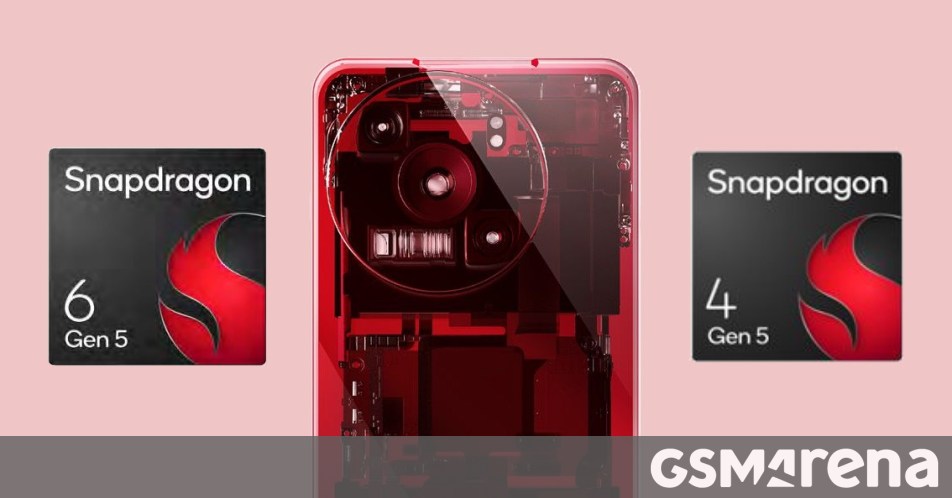
Qualcomm launched its first Gen 5 chips last year with the Snapdragon 8 Elite Gen 5 and the standard 8 Gen 5. Now the company is pushing the architecture down to cheaper phones with the Snapdragon 6 Gen 5 and Snapdragon 4 Gen 5.
Both chips target the same goals: longer battery life, smoother user interfaces, and better gaming. The Snapdragon 6 Gen 5 (model SM6850) leads with Adaptive Performance Engine 4.0 and Adaptive Performance FPS 3.0, which aim to keep frame rates steady during games.
What's New in Snapdragon 6 Gen 5
Qualcomm hasn't released full core details, but the CPU has four cores running at up to 2.6GHz. That's a noticeable jump from the Snapdragon 6 Gen 4, which had only one core hitting 2.3GHz. The rest ran slower.
The Adreno GPU delivers 21% higher performance than the previous generation. Power efficiency improved by 8%. Qualcomm kept the same TSMC 4nm process node from Gen 4.
Memory support stays at LPDDR5 RAM up to 3,200MHz. Phone makers can also use cheaper LPDDR4X for budget designs. Storage uses UFS 3.1. The display controller handles screens up to 1080p+ at 144Hz refresh rate. AV1 hardware decoding is still missing.
Smooth Motion UI and Faster App Launches
Both new chips include something Qualcomm calls Snapdragon Smooth Motion UI. The feature targets lag-free scrolling and quicker app launches.
According to Qualcomm's internal testing, the Snapdragon 6 Gen 5 launches apps 20% faster than Gen 4. Stutter dropped by 18%. These numbers come from Qualcomm's benchmarks, so real-world results will depend on how phone makers implement the chips.
Camera Changes: Simpler Hardware, AI Features
The imaging system changed in an unexpected direction. Qualcomm equipped the Snapdragon 6 Gen 5 with a dual ISP (12-bit), down from the triple ISP in Gen 4. Single camera support goes up to 200MP, or 64MP with zero shutter lag. Dual cameras max out at 16+16MP, compared to 32+16MP before.
Video encoding handles 4K at 30fps using H.264 and H.265. No upgrade there.
Qualcomm added AI camera features to compensate: AI night vision, AI image quality enhancements, and digital zoom up to 100x. Whether software processing can match dedicated hardware remains to be seen.
Connectivity: Wi-Fi 7 In, mmWave Out
The 5G modem reaches download speeds up to 2.8Gbps. But Qualcomm removed mmWave support, which was present on Gen 4. Most budget phones never used mmWave anyway, so this cut probably won't matter to buyers.
Wi-Fi 7 arrives with tri-band connectivity across 2.4GHz, 5GHz, and 6GHz. Bluetooth jumps from 5.4 to 6.0. The chip supports aptX Adaptive audio, but aptX Lossless is gone.
For GPS and positioning, the chip works with major satellite constellations on L1 and L5 bands. Gen 4 also had L2 support. That's another cut.
The USB 2.0 Downgrade
The strangest change: USB-C support dropped to USB 2.0 speeds. The Gen 4 chip handled USB 3.2 Gen 1. That's a significant step backward for file transfers and accessories.
Qualcomm likely talked to phone makers and found that nobody was using USB 3.0 on budget devices. The ports were there, but the speeds weren't. Still, removing the option entirely limits what manufacturers can do with these chips.
What We Know About Snapdragon 4 Gen 5
Qualcomm announced the Snapdragon 4 Gen 5 alongside its bigger sibling, but shared fewer details. The chip targets entry-level phones and carries the same battery life and smooth UI promises. Specific performance numbers weren't released.
| Feature | Snapdragon 6 Gen 5 | Snapdragon 6 Gen 4 |
|---|---|---|
| CPU Clock | Up to 2.6GHz (4 cores) | Up to 2.3GHz (1 core) |
| GPU Performance | +21% over Gen 4 | Baseline |
| Power Efficiency | +8% over Gen 4 | Baseline |
| Wi-Fi | Wi-Fi 7 tri-band | Wi-Fi 6E |
| Bluetooth | 6.0 | 5.4 |
| USB | USB 2.0 | USB 3.2 Gen 1 |
| mmWave 5G | No | Yes |
| ISP | Dual 12-bit | Triple |
✅ Pros
- • Faster CPU with better multi-core performance
- • 21% GPU improvement and 8% better power efficiency
- • Wi-Fi 7 and Bluetooth 6.0 support
- • Smoother UI with 20% faster app launches
❌ Cons
- • USB downgraded from 3.2 to 2.0
- • mmWave 5G support removed
- • Dual ISP instead of triple
- • L2 GPS band dropped
Frequently Asked Questions
When will phones with Snapdragon 6 Gen 5 be available?
Qualcomm has announced the chips, but hasn't given a specific timeline for phone launches. Devices typically appear within 3-6 months of chip announcements.
Does Snapdragon 6 Gen 5 support 5G?
Yes, with download speeds up to 2.8Gbps. However, it lacks mmWave 5G support, which the previous generation had.
Can Snapdragon 6 Gen 5 handle 4K video?
Yes, it records 4K video at 30fps using H.264 and H.265 codecs. There's no AV1 hardware decoding.
What's the difference between Snapdragon 6 Gen 5 and 4 Gen 5?
The 6 Gen 5 targets mid-range phones with higher performance. The 4 Gen 5 is for entry-level devices. Qualcomm hasn't released detailed 4 Gen 5 specs yet.
Why did Qualcomm remove USB 3.0 from Snapdragon 6 Gen 5?
Qualcomm apparently found that phone makers weren't using USB 3.0 speeds on budget devices, so they dropped support to USB 2.0 levels.
Logicity's Take
Related semiconductor industry news
Need Help Implementing This?
Source: GSMArena.com / Peter
Manaal Khan
Tech & Innovation Writer
اقرأ أيضاً

رأي مغاير: كيف يؤثر اختراق الأمن الداخلي الأميركي على شركاتنا الخاصة؟
في ظل اختراق عقود الأمن الداخلي الأميركي مع شركات خاصة، نناقش تأثير هذا الاختراق على مستقبل الأمن السيبراني. نستعرض الإحصاءات الموثوقة ونناقش كيف يمكن للشركات الخاصة أن تتعامل مع هذا التهديد. استمتع بقراءة هذا التحليل العميق

الإنسان في زمن ما بعد الوجود البشري: نحو نظام للتعايش بين الإنسان والروبوت - Centre for Arab Unity Studies
في هذا المقال، سنناقش كيف يمكن للبشر والروبوتات التعايش في نظام متكامل. سنستعرض التحديات والحلول المحتملة التي تضعها شركات مثل جوجل وأمازون. كما سنلقي نظرة على التوقعات المستقبلية وفقًا لتقرير ماكنزي

إطلاق ناسا لمهمة مأهولة إلى القمر: خطوة تاريخية نحو استكشاف الفضاء
تعتبر المهمة الجديدة خطوة هامة نحو استكشاف الفضاء وتطوير التكنولوجيا. سوف تشمل المهمة إرسال رواد فضاء إلى سطح القمر لconducting تجارب علمية. ستسهم هذه المهمة في تطوير فهمنا للفضاء وتحسين التكنولوجيا المستخدمة في استكشاف الفضاء.