Police Hack Criminal VPN, Expose Thousands of Users
Key Takeaways
- Europol and Dutch police infiltrated First VPN before seizing it, accessing criminal user traffic
- Thousands of users linked to ransomware and fraud were identified through the operation
- The VPN marketed 'no logs' policies on Russian cybercrime forums but police had full access
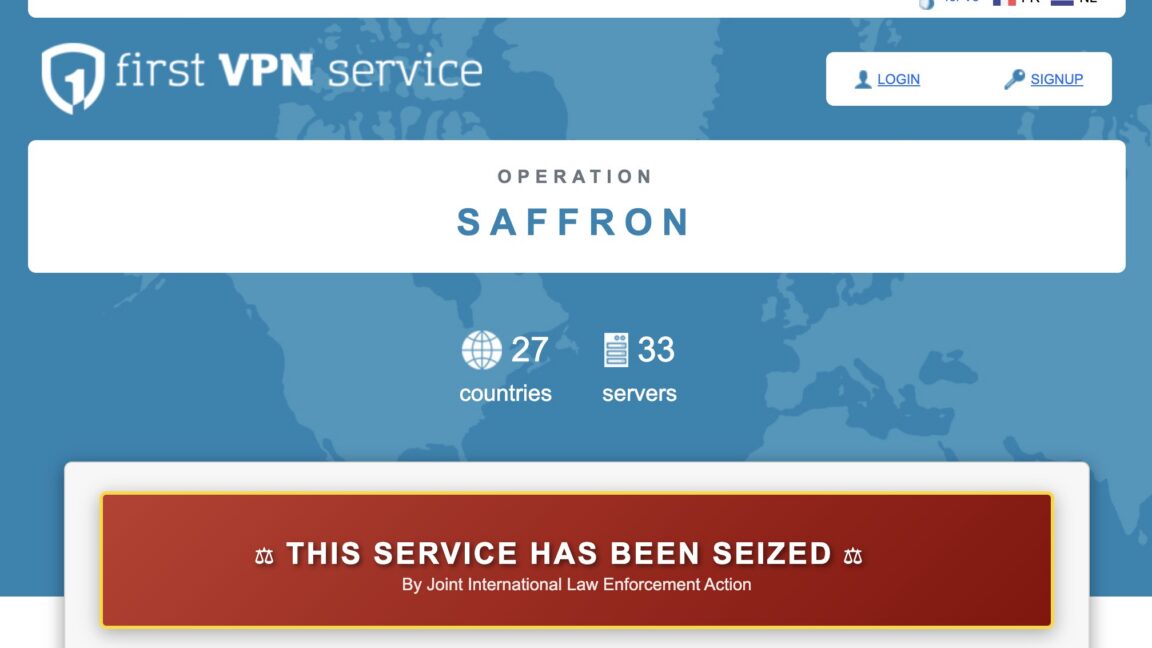
European law enforcement agencies have dismantled First VPN, a service that advertised itself as a safe haven for cybercriminals. But here's the twist: police had already infiltrated the service and monitored user traffic before making any arrests.
Europol announced the results of the operation yesterday. France and the Netherlands led the investigation, with support from Europol and Eurojust. The probe began in December 2021.
At some point during the multi-year investigation, police gained access to First VPN's internal systems. They obtained the user database and identified VPN connections used by criminals trying to hide their activities. Security vendor Bitdefender assisted with the operation.
“Police had access to the criminal traffic of the users of the service, who mistakenly believed themselves to be safe.”
— Dutch National Police Corps
What First VPN Promised
First VPN marketed itself aggressively on Russian-speaking cybercrime forums. The service promised anonymous payments, hidden infrastructure, and tools designed specifically for criminal use.
An archived version of the now-defunct website shows First VPN advertised IP address concealment, encrypted communications, and the ability to hide user actions "from the provider and other interested persons."
The service also made the standard "no logs" promise common among VPN providers. The website declared: "All of our servers meet high security requirements and do not keep logs, are set up by specialists with vast experience in this field. Big Brother is watching you, we are not!"
That last claim aged poorly.
Thousands Exposed
The intelligence gathered through the infiltration exposed thousands of users linked to the cybercrime ecosystem. Europol says the operation generated leads connected to ransomware attacks, fraud schemes, and other serious offenses worldwide.
The First VPN administrator has been arrested. The domain now displays a message confirming the joint international law enforcement seizure.
Dutch police emphasized that First VPN was "considered criminal, because it specifically targeted cyber criminals" in its marketing. This distinguishes it from mainstream VPN services that have legitimate privacy uses.
The Broader Problem with VPN Trust
This case highlights a fundamental issue with VPN services: users cannot verify whether a provider's privacy claims are true. Every VPN can claim "no logs" on its website. Few can prove it.
Some legitimate VPN providers undergo independent security audits. Others publish transparency reports. But the infrastructure remains opaque by design. Users ultimately trust the operator's word.
The risk of law enforcement infiltrating a VPN's internal systems adds another layer of uncertainty. If police can gain access to a criminal-focused VPN, they can potentially do the same to others.
For everyday users seeking privacy from advertisers or insecure public WiFi, mainstream VPNs from reputable companies remain useful tools. For criminals seeking to evade law enforcement, this case proves the obvious: no tool provides absolute protection.
Related coverage on digital security vulnerabilities
A Pattern of Criminal Infrastructure Takedowns
This operation follows a pattern of law enforcement targeting infrastructure used by cybercriminals. In recent years, police have taken down encrypted phone networks, dark web marketplaces, and bulletproof hosting providers.
The strategy has shifted from chasing individual criminals to dismantling the services they depend on. By infiltrating these platforms before seizure, police gather intelligence on entire criminal networks rather than isolated actors.
For organizations defending against ransomware and cybercrime, these operations provide some relief. But they also reveal how sophisticated criminal infrastructure has become. First VPN operated for years before investigators gained access.
Logicity's Take
Frequently Asked Questions
What was First VPN?
First VPN was a VPN service marketed on Russian-speaking cybercrime forums. It promised anonymous payments, no-logs policies, and infrastructure designed for criminal use. European law enforcement dismantled it in May 2026.
How did police access First VPN user data?
Investigators gained access to First VPN's internal systems at some point after the probe began in December 2021. They obtained the user database and monitored VPN connections before seizing the domain.
Can VPN providers really guarantee 'no logs'?
Users cannot independently verify no-logs claims. Some providers undergo third-party audits, but ultimately users must trust the operator. This case shows that promises can be hollow.
Does this affect legitimate VPN users?
Dutch police emphasized that First VPN was specifically marketed to criminals, distinguishing it from mainstream VPN services. However, the case highlights the inherent trust required when using any VPN.
How many people were exposed in the First VPN takedown?
Europol says thousands of users were identified and linked to the cybercrime ecosystem, generating leads connected to ransomware attacks and fraud worldwide.
Need Help Implementing This?
Source: Ars Technica
Manaal Khan
Tech & Innovation Writer
اقرأ أيضاً

رأي مغاير: كيف يؤثر اختراق الأمن الداخلي الأميركي على شركاتنا الخاصة؟
في ظل اختراق عقود الأمن الداخلي الأميركي مع شركات خاصة، نناقش تأثير هذا الاختراق على مستقبل الأمن السيبراني. نستعرض الإحصاءات الموثوقة ونناقش كيف يمكن للشركات الخاصة أن تتعامل مع هذا التهديد. استمتع بقراءة هذا التحليل العميق

الإنسان في زمن ما بعد الوجود البشري: نحو نظام للتعايش بين الإنسان والروبوت - Centre for Arab Unity Studies
في هذا المقال، سنناقش كيف يمكن للبشر والروبوتات التعايش في نظام متكامل. سنستعرض التحديات والحلول المحتملة التي تضعها شركات مثل جوجل وأمازون. كما سنلقي نظرة على التوقعات المستقبلية وفقًا لتقرير ماكنزي

إطلاق ناسا لمهمة مأهولة إلى القمر: خطوة تاريخية نحو استكشاف الفضاء
تعتبر المهمة الجديدة خطوة هامة نحو استكشاف الفضاء وتطوير التكنولوجيا. سوف تشمل المهمة إرسال رواد فضاء إلى سطح القمر لconducting تجارب علمية. ستسهم هذه المهمة في تطوير فهمنا للفضاء وتحسين التكنولوجيا المستخدمة في استكشاف الفضاء.