Pillar Raises $20M Seed Round: How This AI Startup Wants to Democratize Financial Hedging for Commodity Businesses
Key Takeaways
- Pillar secured $20M in seed funding led by Andreessen Horowitz, bringing total funding to $23M
- The platform automates hedging for commodity businesses in metals, food, and airlines
- AI ingests data from contracts, inventories, ERP systems, and even WhatsApp messages
- Uber CEO Dara Khosrowshahi participated in the round alongside Crucible Capital and Gallery Ventures
- Founded in 2023, Pillar aims to give smaller businesses access to institutional-grade risk management tools
Read in Short
Pillar just bagged $20 million in seed funding to build AI that automatically manages hedging for commodity businesses. Andreessen Horowitz led the round, and yes, Uber's CEO threw in some cash too. The startup wants to give metals traders and food importers the same risk management firepower that Goldman Sachs has.
Here's the thing about hedging: it's basically insurance for businesses that deal with volatile prices. If you're buying and selling copper, or importing coffee beans, or running an airline that needs jet fuel, price swings can wreck your margins overnight. Big financial institutions have armies of quants and traders managing this stuff. Everyone else? They're mostly winging it with spreadsheets.
That's the gap Pillar wants to close. And apparently, some very smart money agrees it's a problem worth solving.
What Pillar Actually Does
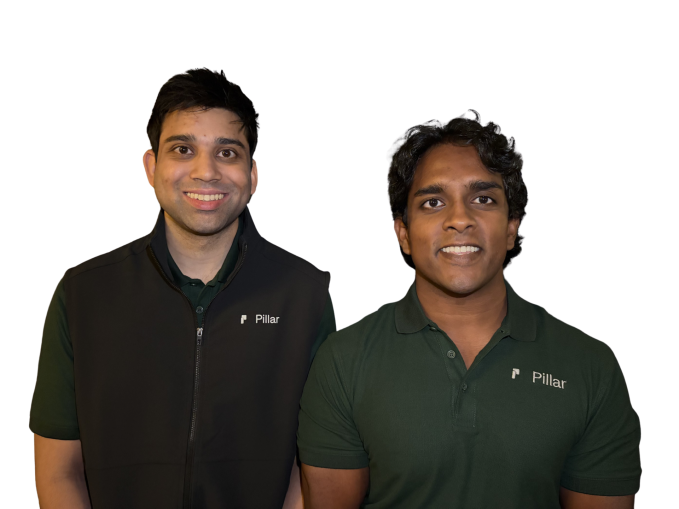
The San Francisco-based startup, founded in 2023 by Harsha Ramesh and Chinmay Deshpande, has built a platform that turns hedging from a manual, periodic task into something that runs continuously in the background. Think of it like autopilot for your company's financial risk.
The AI pulls data from basically everywhere. We're talking client contracts, cash flow statements, inventory records, ERP software, random spreadsheets, and, I kid you not, WhatsApp messages. It then analyzes your exposure across commodities, foreign exchange, and freight costs.
“It can then build and manage a hedge portfolio for its clients and adjust positions automatically based on market conditions, volatility, and the client's risk tolerance.”
— Harsha Ramesh, Pillar CEO
So instead of your CFO frantically calling a broker when copper prices spike, the system's already made adjustments. It executes trades, monitors risk around the clock, and keeps everything balanced according to your risk appetite.
Why This Matters Right Now
Geopolitics has been absolutely brutal for commodity markets lately. Supply chain chaos, trade tensions, energy price volatility, you name it. Companies that never really worried about hedging before are suddenly realizing they probably should have been.
But here's the problem. Building an in-house risk management team is expensive. Really expensive. You need traders, analysts, software, data feeds, and the expertise to tie it all together. For a mid-sized metals recycler or a regional food importer, that's just not realistic.
What is Hedging?
Hedging is when a company places a trade designed to offset potential losses from price changes in their regular business. If you're an airline buying jet fuel, you might buy futures contracts that gain value when oil prices rise, protecting you from higher fuel costs.
Ramesh actually lived this problem before starting Pillar. He worked as a macro trader managing derivative books for major institutions, helping the biggest companies in the world hedge their currency and interest rate exposure. Then he spent time at a medium-sized import-export business.
“What stood out was that sophisticated institutions had access to tools, infrastructure, and talent, while the actual producers, importers, and manufacturers driving global trade had little to no access to this. Risk management was treated as a luxury, despite being essential.”
— Harsha Ramesh, Pillar CEO
That's a pretty compelling founder story. He saw both sides of the equation and decided to build the bridge.
Who's Betting on Pillar
Andreessen Horowitz leading a $20 million seed is significant. That's a chunky seed round, and a16z doesn't exactly throw money around carelessly. They clearly see something here.
- Andreessen Horowitz (a16z) — led the round
- Crucible Capital — participated
- Gallery Ventures — participated
- Dara Khosrowshahi — Uber CEO, personal investment
The Khosrowshahi investment is interesting. Uber deals with massive operational complexity and presumably has hedging needs around fuel and currency. Having the CEO of a logistics giant as an investor probably doesn't hurt when you're trying to understand what enterprise customers actually need.
If you're following the VC and startup funding scene, this upcoming event features major players in the investment world.
The Customer Base So Far
Pillar isn't just vaporware with a pitch deck. They've got actual customers using the platform:
- Shibuya Sakura Industries — a trading firm dealing in commodities like metals
- Sigma Recycling — a recyclable materials company
- United Metal Solutions Group — metals recycling and trading
Notice a pattern? Lots of metals companies. That makes sense. Metal prices are notoriously volatile, and the margins in trading and recycling can be razor thin. A 5% swing in aluminum prices could mean the difference between a profitable quarter and a disaster.
The Bigger Picture for AI in Finance
Look, AI in fintech isn't exactly a new concept. But what's interesting about Pillar is how they're applying it. They're not trying to replace human judgment entirely. They're automating the grunt work, the data gathering, the monitoring, the execution, so that smaller companies can actually participate in risk management.
The WhatsApp parsing thing sounds gimmicky until you realize how much business actually happens in messaging apps. Especially in commodity trading, where relationships matter and deals get done through informal channels. If your AI can read a message about a delayed shipment and factor that into your exposure calculation, that's genuinely useful.
Data Sources Pillar Ingests
Client contracts, cash flow records, inventory data, ERP systems, spreadsheets, and messaging platforms including WhatsApp. The AI continuously analyzes exposure across commodities, foreign exchange, and freight.
The risk here, and there's always risk with these AI automation plays, is accuracy. Hedging gone wrong can be catastrophic. If your AI misreads market conditions or makes a bad trade, you could end up worse off than if you'd done nothing. Pillar will need to build serious trust with customers before they hand over the keys to their financial risk management.
What's Next for Pillar
With $23 million in the bank, Pillar has runway to build out the platform and expand their customer base. The immediate opportunity seems to be in commodities, metals specifically based on their current clients. But the technology could theoretically apply to any business with hedging needs.
Airlines, agricultural companies, energy firms, manufacturers with significant raw material costs, all of these could be potential customers. The question is whether Pillar can nail the product for one vertical before expanding, or whether they'll try to go broad too fast.
For now, this is a company worth watching. Institutional-grade financial tools trickling down to smaller businesses is a trend that's been playing out across fintech for years. Pillar is betting that hedging automation is the next frontier. And with a16z's backing, they've got a real shot at proving it out.
Another example of AI automating complex processes that used to require specialized human expertise.
Frequently Asked Questions
What does Pillar do?
Pillar automates hedging for commodity-driven businesses like metals traders, food companies, and airlines. Their AI analyzes financial exposure and automatically manages hedge portfolios.
How much funding has Pillar raised?
Pillar has raised $23 million total, including a fresh $20 million seed round led by Andreessen Horowitz.
Who are Pillar's founders?
Harsha Ramesh (CEO) and Chinmay Deshpande (CTO) founded the company in 2023. Ramesh was previously a macro trader at major financial institutions.
What data does Pillar's AI use?
The platform ingests data from contracts, cash flows, inventories, ERP software, spreadsheets, and even WhatsApp messages to analyze risk exposure.
Source: TechCrunch / Dominic-Madori Davis
Huma Shazia
Senior AI & Tech Writer
Also Read

رأي مغاير: كيف يؤثر اختراق الأمن الداخلي الأميركي على شركاتنا الخاصة؟
في ظل اختراق عقود الأمن الداخلي الأميركي مع شركات خاصة، نناقش تأثير هذا الاختراق على مستقبل الأمن السيبراني. نستعرض الإحصاءات الموثوقة ونناقش كيف يمكن للشركات الخاصة أن تتعامل مع هذا التهديد. استمتع بقراءة هذا التحليل العميق

الإنسان في زمن ما بعد الوجود البشري: نحو نظام للتعايش بين الإنسان والروبوت - Centre for Arab Unity Studies
في هذا المقال، سنناقش كيف يمكن للبشر والروبوتات التعايش في نظام متكامل. سنستعرض التحديات والحلول المحتملة التي تضعها شركات مثل جوجل وأمازون. كما سنلقي نظرة على التوقعات المستقبلية وفقًا لتقرير ماكنزي

إطلاق ناسا لمهمة مأهولة إلى القمر: خطوة تاريخية نحو استكشاف الفضاء
تعتبر المهمة الجديدة خطوة هامة نحو استكشاف الفضاء وتطوير التكنولوجيا. سوف تشمل المهمة إرسال رواد فضاء إلى سطح القمر لconducting تجارب علمية. ستسهم هذه المهمة في تطوير فهمنا للفضاء وتحسين التكنولوجيا المستخدمة في استكشاف الفضاء.