Nasscom TCS Harassment Response: India Tech Industry Claims Zero Tolerance After BPO Case Emerges
Key Takeaways
- Nasscom issued statement defending IT industry's workplace safety standards after TCS BPO allegations surfaced
- Police have found evidence of wider misconduct at TCS's Nashik facility beyond initial complaints
- Infosys separately addressed social media claims about harassment at their Pune BPM unit
- Industry body insists incidents are isolated and don't reflect systemic problems
Read in Short
India's biggest tech industry body Nasscom jumped into defense mode on Tuesday after harassment allegations hit both TCS and Infosys. The organization says these are isolated incidents, not a pattern. But with police finding evidence of wider misconduct at TCS's Nashik BPO, questions about workplace safety in Indian tech aren't going away anytime soon.
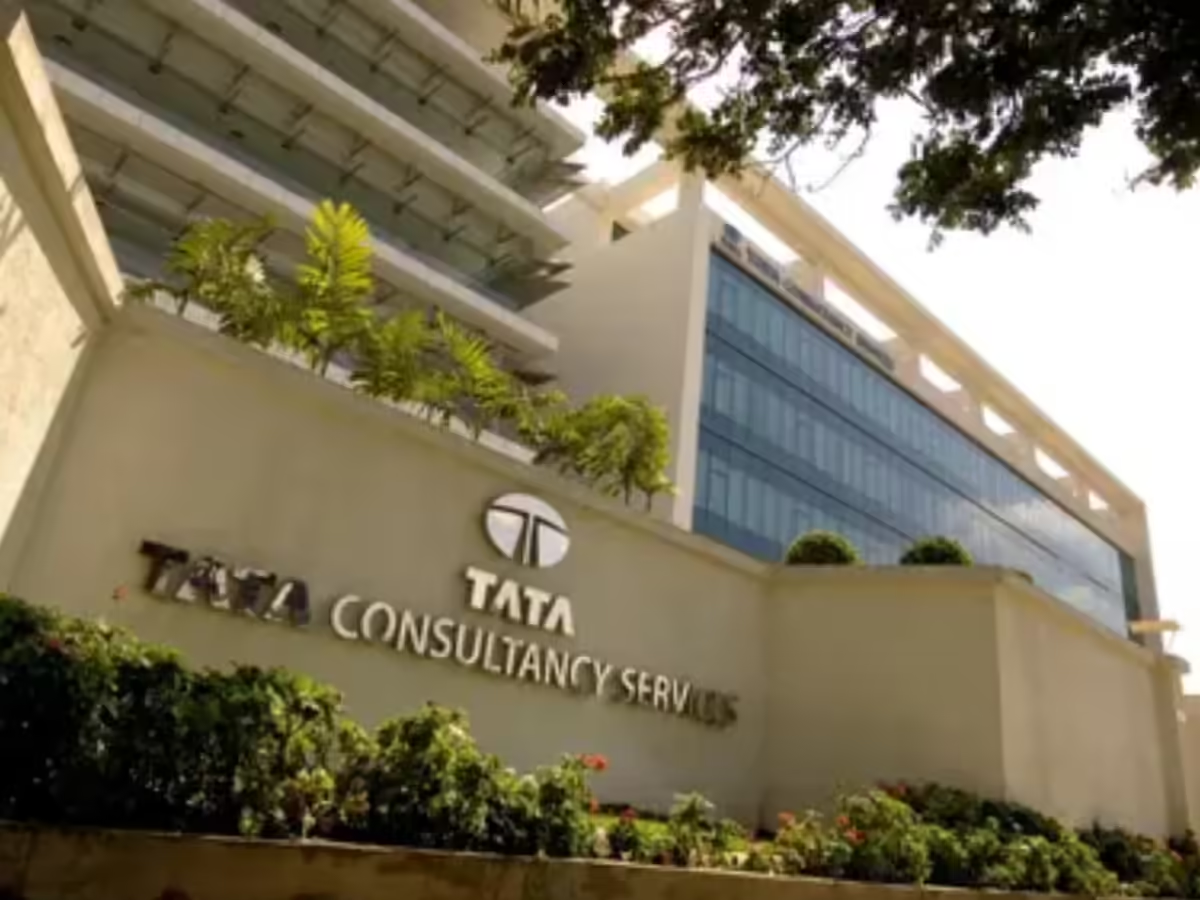
Here's the thing about damage control in corporate India: it almost always sounds the same. On Tuesday, Nasscom rolled out the standard playbook after allegations of sexual harassment emerged from TCS's BPO operations in Nashik. The industry body wants everyone to know that Indian tech companies take this stuff seriously. Like, really seriously.
“The Indian technology industry is built on a foundation of respect, dignity and safety. The industry operates under strict governance frameworks and unequivocal standards for employee safety and workplace conduct.”
— Nasscom official statement
That's the official line, anyway. But the timing of this statement tells a different story. It came right as police investigations into the TCS Nashik facility deepened, with authorities reportedly finding evidence that misconduct extended beyond the initial complaints.
What Actually Happened at TCS Nashik?
Details are still emerging, but here's what we know so far. The sexual harassment allegations center on TCS's BPO unit in Nashik, Maharashtra. This isn't some small satellite office we're talking about. TCS is India's largest IT services company by market cap, and their BPO operations handle sensitive work for clients around the world.
Police have been investigating the case, and things apparently got more complicated when they found evidence suggesting the misconduct wasn't limited to a single incident or perpetrator. That's a problem. It's one thing to have a bad actor slip through the cracks. It's another to have what might be a systemic issue at a major facility.
Nasscom's response? These incidents are isolated in nature and don't reflect a systemic pattern within the industry. Which, okay, maybe. But you can see why some people might be skeptical when the investigation is literally ongoing.
Then Came the Infosys Allegations
Because apparently one crisis wasn't enough for Indian IT this week, a social media post on X dropped claims about what was described as harassment at Infosys's BPM unit in Pune. The post specifically used the term jihadi harassment, which adds a communal angle that's bound to generate even more heat.
What's BPM vs BPO?
BPM (Business Process Management) and BPO (Business Process Outsourcing) are often used interchangeably. Both refer to back-office operations that companies outsource to service providers. TCS and Infosys both run massive BPM/BPO operations alongside their traditional software services.
Infosys moved quickly to address the allegations. Their response was pretty much copy-paste corporate crisis management.
“Infosys maintains a zero-tolerance approach to any form of harassment or discrimination and is committed to providing a safe, inclusive, positive, and respectful workplace in all jurisdictions in which it operates.”
— Infosys spokesperson
Look, I'm not saying these companies don't have policies in place. They absolutely do. India's POSH Act (Prevention of Sexual Harassment at Workplace) requires it. Every company above a certain size has to have an Internal Complaints Committee. There are training sessions. There are anonymous reporting mechanisms. The infrastructure exists.
The question is whether that infrastructure actually works when it matters.
Another look at how tech industry faces increasing scrutiny and backlash from multiple angles
The Industry's Credibility Problem
Here's why this matters beyond the immediate allegations. India's IT services industry employs over 5 million people directly. These aren't just jobs, they're the backbone of the country's middle-class aspiration engine. For millions of young Indians, landing a job at TCS or Infosys or Wipro represents making it.
When harassment allegations surface at these companies, it's not just a corporate PR problem. It affects how millions of employees, especially women, feel about their workplaces. And it affects how parents feel about their daughters working night shifts at BPO facilities.
The BPO sector has historically faced particular scrutiny. Night shifts, younger workforce demographics, and high-pressure targets create environments where power dynamics can get messy. Companies know this. That's why they invest heavily in security measures, transport, and harassment prevention training.
But training only works if there's actual accountability when things go wrong.
What Nasscom Gets Right (And Wrong)
To be fair to Nasscom, they're not wrong that Indian IT companies generally do have robust policies on paper. The POSH Act compliance is taken seriously because the penalties for non-compliance are real. Companies conduct regular training. They have reporting mechanisms.
- Internal Complaints Committees are mandatory under POSH Act
- Regular harassment prevention training is standard at major IT firms
- Anonymous reporting channels exist at most large companies
- Swift action is promised, though outcomes vary widely
But there's a difference between having policies and having culture. And culture is where things get complicated.
The IT industry in India has grown incredibly fast over the past two decades. Employee counts at these companies are massive. TCS alone has over 600,000 employees worldwide. At that scale, ensuring consistent culture across every office, every floor, every team becomes genuinely difficult.
That doesn't excuse misconduct. But it does explain why incidents can occur even when leadership is sincere about prevention.
The Social Media Factor
One thing that's changed dramatically in recent years is how these allegations surface. The Infosys situation literally started with a post on X. That's the new reality for corporate India. You can have all the internal reporting mechanisms you want, but if someone decides to take their complaint public first, you're playing defense from minute one.
This creates a weird dynamic. On one hand, social media gives victims a platform when internal processes fail them. On the other hand, it can also be used to spread unverified claims that damage reputations unfairly. Companies are stuck trying to respond to allegations that might be completely true, completely false, or somewhere in between.
The Double-Edged Sword
Social media has become both a tool for accountability and a vector for misinformation in workplace harassment cases. Companies now monitor platforms like X and LinkedIn for mentions as part of their crisis response protocols.
What Happens Next
The TCS investigation is ongoing. Police involvement suggests this isn't going to be swept under the rug, at least not entirely. If evidence of wider misconduct holds up, we might see actual consequences beyond corporate statements.
For the broader industry, this is a reminder that zero-tolerance policies only mean something if they're enforced. Every major IT company in India will be reviewing their processes right now, not because they suddenly care more than before, but because they're all thinking there but for the grace of God go I.
The real test isn't what happens in the press releases. It's what happens in the conference rooms and HR meetings that nobody sees. Do the people who report misconduct face retaliation? Do the people accused face actual investigation? Are outcomes transparent?
Those are the questions that determine whether India's IT industry actually has zero tolerance for harassment, or just zero tolerance for bad PR.
Frequently Asked Questions
What is the POSH Act in India?
The Prevention of Sexual Harassment at Workplace Act (2013) requires all Indian companies with more than 10 employees to have an Internal Complaints Committee and defined procedures for handling harassment complaints.
How big is TCS's BPO operation?
TCS is India's largest IT company with over 600,000 employees globally. Their BPO/BPM services handle everything from customer support to complex business processes for clients worldwide.
What did Nasscom actually say about the allegations?
Nasscom defended the industry's overall standards while acknowledging incidents occur. They emphasized that misconduct is treated seriously and that such cases are isolated rather than systemic.
Are the Infosys allegations confirmed?
No. The claims originated from a social media post on X, and Infosys has only said they're aware of the posts while reaffirming their zero-tolerance policy. No investigation outcomes have been announced.
We'll be watching how both investigations develop. If past cases are any indication, the outcomes will depend heavily on media attention and public pressure. That's not how workplace safety should work, but it's often how it does work.
Source: Tech-Economic Times / ET
Manaal Khan
Tech & Innovation Writer
Also Read

رأي مغاير: كيف يؤثر اختراق الأمن الداخلي الأميركي على شركاتنا الخاصة؟
في ظل اختراق عقود الأمن الداخلي الأميركي مع شركات خاصة، نناقش تأثير هذا الاختراق على مستقبل الأمن السيبراني. نستعرض الإحصاءات الموثوقة ونناقش كيف يمكن للشركات الخاصة أن تتعامل مع هذا التهديد. استمتع بقراءة هذا التحليل العميق

الإنسان في زمن ما بعد الوجود البشري: نحو نظام للتعايش بين الإنسان والروبوت - Centre for Arab Unity Studies
في هذا المقال، سنناقش كيف يمكن للبشر والروبوتات التعايش في نظام متكامل. سنستعرض التحديات والحلول المحتملة التي تضعها شركات مثل جوجل وأمازون. كما سنلقي نظرة على التوقعات المستقبلية وفقًا لتقرير ماكنزي

إطلاق ناسا لمهمة مأهولة إلى القمر: خطوة تاريخية نحو استكشاف الفضاء
تعتبر المهمة الجديدة خطوة هامة نحو استكشاف الفضاء وتطوير التكنولوجيا. سوف تشمل المهمة إرسال رواد فضاء إلى سطح القمر لconducting تجارب علمية. ستسهم هذه المهمة في تطوير فهمنا للفضاء وتحسين التكنولوجيا المستخدمة في استكشاف الفضاء.