Matter Smart Home: Why CTOs Are Standardizing Now
Key Takeaways
- Matter eliminates vendor lock-in, letting you switch ecosystems without replacing hardware
- Thread mesh networking keeps devices running during Wi-Fi outages, critical for security systems
- Amazon, Apple, and Google all support Matter, making it the safest long-term bet for IoT investments
Read in Short
Matter is the first smart home standard backed by Amazon, Apple, and Google simultaneously. It eliminates ecosystem lock-in, reduces integration complexity, and keeps devices operational during network issues. For any business leader investing in smart office infrastructure or evaluating home automation, Matter compatibility should be a non-negotiable requirement in 2026.
According to [MakeUseOf](https://www.makeuseof.com/im-only-buying-matter-smart-home-devices/), the smart home market has reached an inflection point where buying only Matter-compatible devices makes strategic sense, eliminating the chaos of incompatible ecosystems that plagued early adopters. This shift has implications far beyond consumer convenience. It signals a maturing IoT market where interoperability is finally becoming the default rather than the exception.
What Is Matter and Why Should Business Leaders Care?
Matter is a unified connectivity standard developed by the Connectivity Standards Alliance, with backing from Amazon, Apple, Google, Samsung, and over 550 other companies. Think of it as USB-C for smart devices. Before USB-C, you needed different cables for different devices. Matter does the same thing for IoT: one standard that works across all major platforms.
For CTOs evaluating smart office deployments or executives building out home automation, this matters because it eliminates the biggest headache in IoT: vendor lock-in. Buy a Matter-compatible smart lock today, and it will work with Alexa, Google Home, Apple HomeKit, and whatever platform emerges next year. That's not marketing fluff. It's built into the certification requirements.
How Does Matter Reduce Smart Home Integration Costs?
The hidden cost of smart home technology isn't the devices themselves. It's the integration work. Non-standardized devices require custom configurations, multiple apps, and often dedicated hubs that don't talk to each other. One tech journalist who covered the space for years described starting out by just buying products without checking compatibility, ending up with devices that couldn't communicate and all failed when Wi-Fi went down.
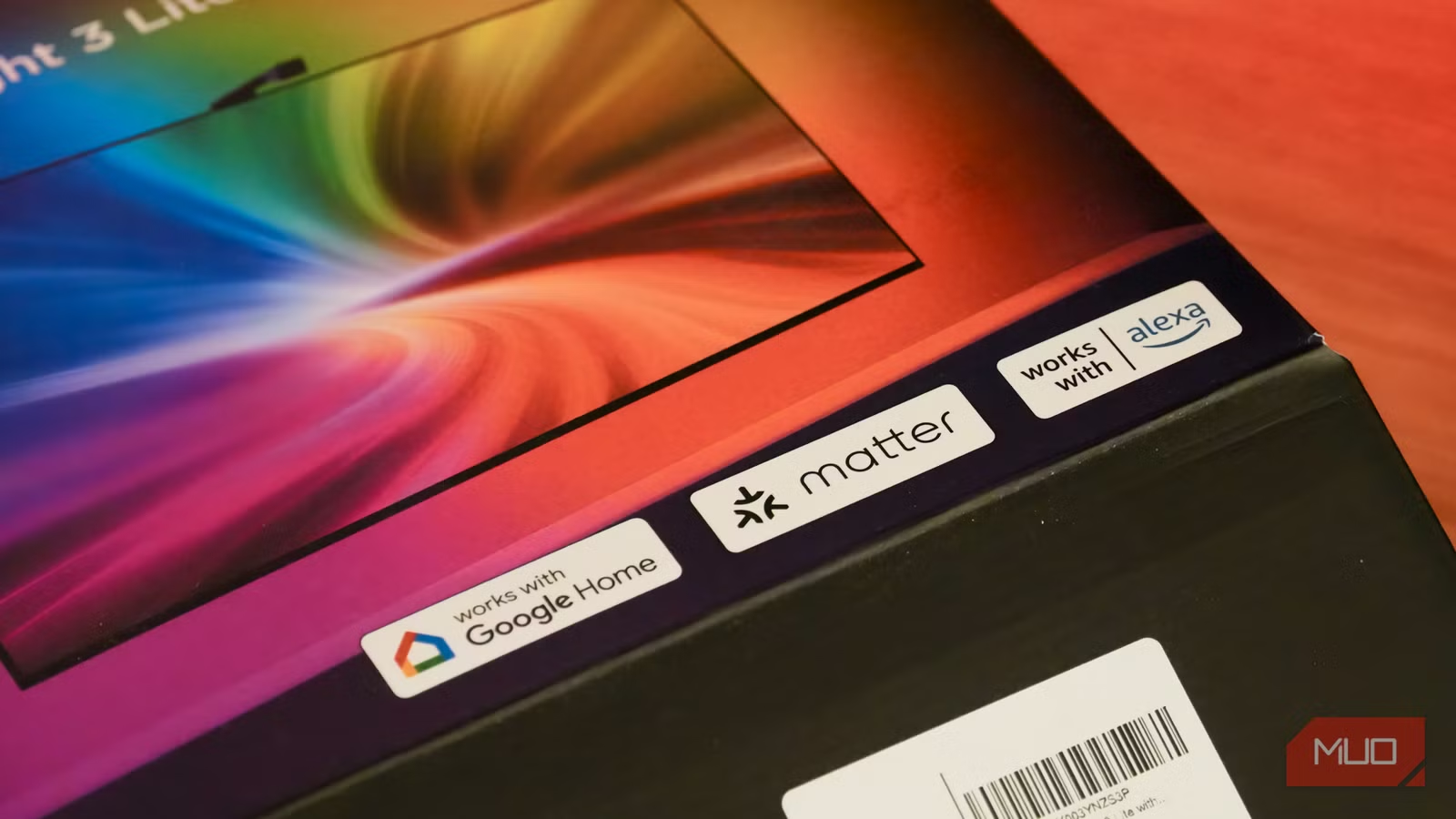
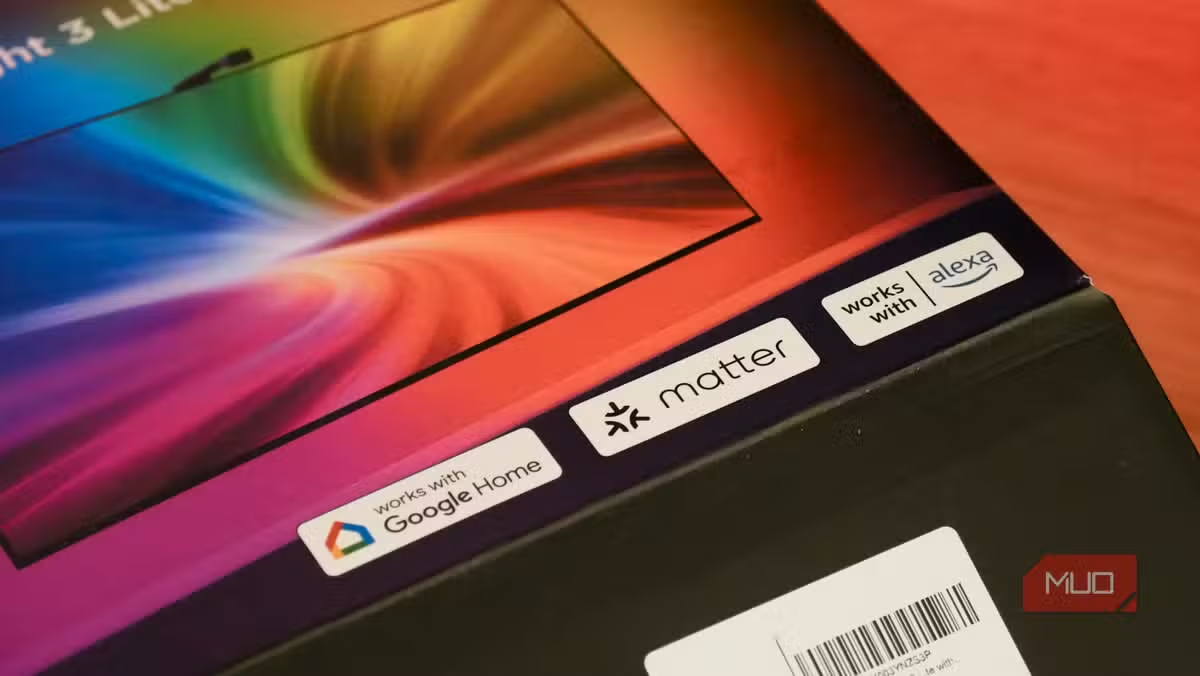
Matter solves this by establishing a common language. When you see the Matter logo, you know three things immediately: it will work with your existing ecosystem, it will integrate with devices from other manufacturers, and it will continue working even if the original company goes out of business. That last point is crucial for any business making long-term infrastructure investments.
| Factor | Pre-Matter Era | Matter Era |
|---|---|---|
| Device Selection | Limited to one ecosystem | Any Matter-certified device |
| Integration Time | Hours per device | Minutes with automatic discovery |
| Vendor Lock-in | High switching costs | Zero switching costs |
| Hub Requirements | Often multiple hubs needed | Single hub or hub-free |
| Long-term Support | Dependent on manufacturer | Standard ensures compatibility |
Thread vs Wi-Fi: Why Network Resilience Matters
Matter works alongside another technology called Thread, and understanding their relationship is essential for making smart purchasing decisions. Thread is a low-power mesh networking protocol. Unlike Wi-Fi, which requires every device to connect directly to your router, Thread devices connect to each other, creating a resilient network that doesn't collapse when one node fails.
For business applications, this distinction is critical. A smart security system running on Wi-Fi alone becomes useless during an internet outage. A Thread-based system continues operating locally because the devices communicate directly with each other. Matter devices that support Thread offer this resilience while still maintaining cloud connectivity when available.
Executive Summary: Thread vs Traditional Wi-Fi IoT
Thread creates a mesh network where each device strengthens the overall system. More devices means better coverage, not more strain on your router. For any deployment with 10+ smart devices, Thread-based Matter products significantly outperform Wi-Fi-only alternatives in reliability and range.
Which Smart Home Ecosystems Support Matter?
Here's where Matter differs from every previous smart home standard: all the major players are in. Amazon Alexa, Apple HomeKit, Google Home, and Samsung SmartThings all support Matter. This unprecedented alignment means your investment is protected regardless of which ecosystem you prefer today or might switch to tomorrow.
Amazon has been particularly aggressive in Matter adoption. For users already invested in the Alexa ecosystem, this simplifies future purchases considerably. As one industry observer noted, when they see Matter on a package now, they know almost instantly it will work with their existing setup. That confidence eliminates the research overhead that previously ate hours before every smart home purchase.
- Amazon Alexa: Full Matter support through Echo devices (4th gen and newer)
- Apple HomeKit: Native Matter integration through HomePod and Apple TV
- Google Home: Matter controller capability in Nest Hub and Nest speakers
- Samsung SmartThings: Hub-based Matter support with broad device compatibility
Network resilience matters beyond smart homes. Learn how to build redundancy into AI-dependent workflows.
The Business Case for Matter-Only Purchasing Policies
For organizations managing smart office infrastructure or executives standardizing their home setups, adopting a Matter-only purchasing policy makes financial sense. The upfront cost of Matter devices is comparable to non-Matter alternatives, but the total cost of ownership drops significantly due to reduced integration complexity and eliminated ecosystem switching costs.
Consider the scenario of a growing company that started with Google Home devices, then acquired a team that used Alexa, then hired an executive who insisted on Apple HomeKit for the boardroom. Pre-Matter, this would require three separate systems with no interoperability. With Matter, everything works together from day one.
✅ Pros
- • Future-proof investment protected by multi-company standard
- • Zero ecosystem switching costs when changing platforms
- • Simplified vendor management with single compatibility requirement
- • Better reliability through Thread mesh networking support
- • Reduced training overhead with consistent cross-platform behavior
❌ Cons
- • Not all device categories have Matter options yet
- • Some legacy devices cannot be upgraded to Matter
- • Initial Matter rollout had some firmware stability issues
- • Premium brands sometimes lag in Matter certification
What Smart Home Devices Should You Buy First?
Strategic smart home deployment starts with devices that offer the highest impact-to-complexity ratio. Smart lighting consistently ranks first because it's low-risk, immediately useful, and helps you understand how Matter devices behave in your specific environment before investing in more critical systems.
After lighting, smart locks and security sensors offer the next tier of value. These devices benefit most from Thread's local operation capability, ensuring your security infrastructure works even during internet disruptions. Smart thermostats round out the foundation, offering measurable ROI through energy savings that typically pay back the device cost within 12-18 months.
- Smart lighting (bulbs, switches, and dimmers) for immediate impact and low risk
- Smart locks with Thread support for reliable security
- Motion and door sensors to build out security monitoring
- Smart thermostats for measurable energy cost reduction
- Smart plugs for legacy device integration and energy monitoring
Security considerations extend to smart home devices. Understand the risks of connected infrastructure.
Common Mistakes When Building a Matter Smart Home
The most expensive mistake in smart home deployment is buying devices without a plan. Random purchases lead to compatibility issues, redundant hubs, and functionality gaps that require additional spending to resolve. The second most common mistake is over-investing in first-generation products before the technology stabilizes.
Matter has been available long enough now that most certification issues have been resolved, but it pays to check reviews for specific products before purchasing. Early Matter firmware implementations had stability problems that have largely been fixed through updates, but some devices from smaller manufacturers still lag behind.
“It pays to take the time and plan your smart home out. Most smart home beginners waste money on devices they don't need.”
— Industry best practice
Frequently Asked Questions About Matter Smart Home
Frequently Asked Questions
How much do Matter smart home devices cost compared to non-Matter alternatives?
Matter devices typically cost the same or 5-15% more than equivalent non-Matter products. The premium, when present, is offset by eliminated hub requirements and cross-platform flexibility. A Matter smart bulb runs $15-30, smart locks $150-300, and thermostats $100-250.
Can I upgrade my existing smart home devices to Matter?
Some devices can receive Matter support through firmware updates. Check with your manufacturer. However, many older devices lack the hardware requirements for Matter certification and will need replacement. This is particularly true for devices older than 2022.
Is Matter worth the investment for a small office?
Yes, especially for offices with 5+ smart devices. The integration simplification and vendor flexibility provide immediate value. Start with lighting and climate control for the fastest ROI, then expand based on specific operational needs.
How long does it take to set up a Matter smart home system?
Initial setup for a basic Matter system (hub, 5-10 devices) takes 1-2 hours. Matter's automatic device discovery eliminates most manual configuration. Adding new devices typically takes under 5 minutes each after the initial setup.
Do Matter devices work without internet?
Matter devices with Thread support can operate locally without internet connectivity. Basic functions like turning lights on/off continue working. However, voice control and remote access require internet connectivity to reach cloud services.
Logicity's Take
From our work building connected systems for clients, we've seen the integration nightmare that proprietary IoT creates firsthand. Matter represents a genuine shift in how the industry operates. The fact that Amazon, Apple, and Google agreed on anything is remarkable. That they agreed on an open standard is borderline miraculous. For Indian businesses evaluating smart office infrastructure, Matter compatibility should be a procurement requirement starting now. The local availability of Matter devices in India has improved significantly through 2025-2026, with major brands like Philips Hue, Eve, and Nanoleaf all shipping Matter-certified products through Amazon India. One practical note: Thread border routers (like HomePod Mini or certain Echo devices) are essential for getting the full benefit of Matter. Without Thread support, you're still dependent on Wi-Fi for every device, which defeats much of the resilience advantage. Budget for at least one Thread border router per floor in any deployment.
Need Help Implementing This?
Logicity helps businesses build connected infrastructure that scales. Whether you're deploying smart office systems or integrating IoT data into your existing workflows, our team can help you avoid the common pitfalls and build something that works long-term. Reach out to discuss your specific requirements.
Source: MakeUseOf
Manaal Khan
Tech & Innovation Writer
اقرأ أيضاً

رأي مغاير: كيف يؤثر اختراق الأمن الداخلي الأميركي على شركاتنا الخاصة؟
في ظل اختراق عقود الأمن الداخلي الأميركي مع شركات خاصة، نناقش تأثير هذا الاختراق على مستقبل الأمن السيبراني. نستعرض الإحصاءات الموثوقة ونناقش كيف يمكن للشركات الخاصة أن تتعامل مع هذا التهديد. استمتع بقراءة هذا التحليل العميق

الإنسان في زمن ما بعد الوجود البشري: نحو نظام للتعايش بين الإنسان والروبوت - Centre for Arab Unity Studies
في هذا المقال، سنناقش كيف يمكن للبشر والروبوتات التعايش في نظام متكامل. سنستعرض التحديات والحلول المحتملة التي تضعها شركات مثل جوجل وأمازون. كما سنلقي نظرة على التوقعات المستقبلية وفقًا لتقرير ماكنزي

إطلاق ناسا لمهمة مأهولة إلى القمر: خطوة تاريخية نحو استكشاف الفضاء
تعتبر المهمة الجديدة خطوة هامة نحو استكشاف الفضاء وتطوير التكنولوجيا. سوف تشمل المهمة إرسال رواد فضاء إلى سطح القمر لconducting تجارب علمية. ستسهم هذه المهمة في تطوير فهمنا للفضاء وتحسين التكنولوجيا المستخدمة في استكشاف الفضاء.