Indian Startup IPOs 2026: ₹47,000 Cr Pipeline Reshapes Exit Strategy
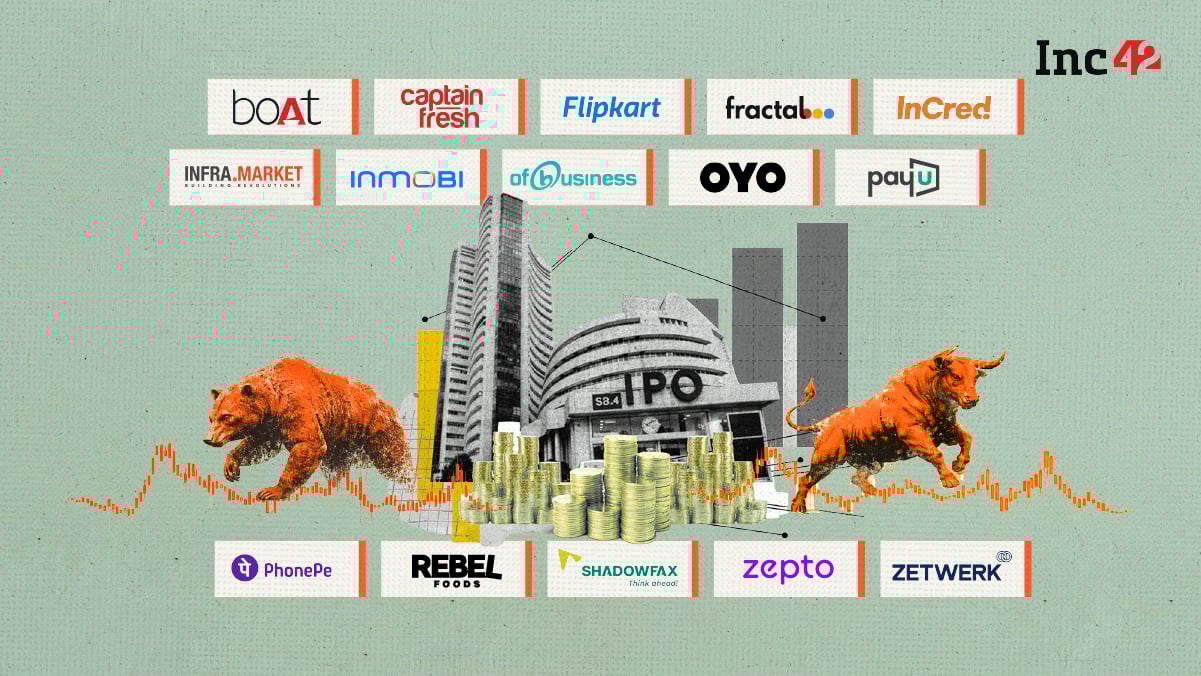
Key Takeaways
- 23 startups have filed DRHPs with SEBI, with 24 more preparing IPO plans
- Flipkart, Zepto, OYO, InMobi and Zetwerk could raise ₹47,000 Cr combined
- Public markets now reward profitability and governance over growth-at-all-costs
According to [Inc42's Indian Startup IPO Tracker 2026](https://inc42.com/features/indian-startup-ipo-tracker-2026/), twenty-three startups have already filed their draft red herring prospectuses with SEBI, while over 24 more are finalizing their IPO plans, making 2026 potentially the biggest year for tech listings in Indian history.
If you're a founder, early investor, or board member at a growth-stage startup, this wave matters. The rules of the exit game have changed. Public market investors aren't buying growth stories anymore. They want profits, governance, and capital efficiency. Companies that don't deliver are seeing flat or negative post-listing returns.
What's Driving the 2026 Startup IPO Boom?
The 2025 IPO season set the stage. Eighteen startups successfully listed, raising a combined ₹41,248 Cr. That success wasn't accidental. Three factors aligned: strong GDP growth revived investor appetite, SEBI simplified DRHP filings and relaxed ESOP rules, and retail participation exploded as demat accounts crossed 20 Cr.
For founders, the ESOP reforms were particularly meaningful. They can now retain more ownership through the listing process, keeping skin in the game that public investors want to see. The OFS (Offer for Sale) component dominated 2025 issues, giving early backers the liquidity exits they'd been waiting for.
- Simplified DRHP filings reduced regulatory friction
- Flexible ESOP rules let founders retain meaningful ownership
- 20 Cr+ demat accounts created massive retail demand
- GDP growth projections improved overall market sentiment
"Besides the readiness that startups showed in their unit economics, there is also an increase in the founders committing to their businesses for next couple of decades and grow their businesses by adding adjacent profit pools," said Ashish Kumar, cofounder and general partner at Fundamentum Partnership. "Something that the public markets reward handsomely."
Which Startups Are Filing for IPOs in 2026?
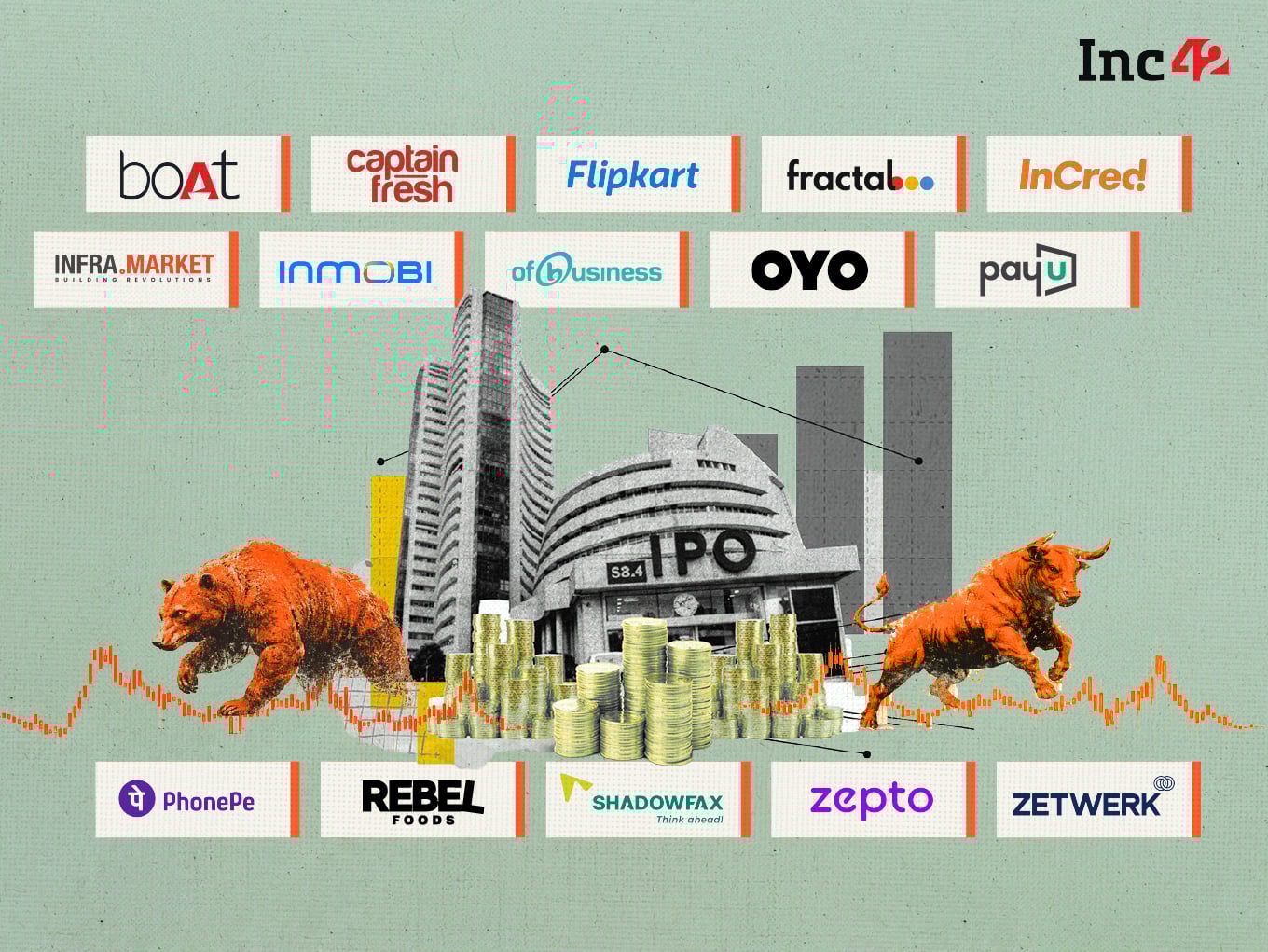
The pipeline reads like a who's who of Indian tech. Flipkart, Zepto, OYO, InMobi, and Zetwerk are the headline names. Together, these five unicorns could raise over ₹47,000 Cr. That's more than the entire 2025 IPO haul from a single cohort of companies.
But the pipeline goes deeper. Twenty-three startups have already filed DRHPs with SEBI, meaning they've crossed the major regulatory hurdle. Another 24 are in various stages of preparation. For board members at growth-stage companies, this creates both opportunity and competition for investor attention.
| Company | Sector | Expected Raise | IPO Stage |
|---|---|---|---|
| Flipkart | E-commerce | ₹25,000 Cr+ | Preparation |
| Zepto | Quick Commerce | ₹8,000 Cr+ | Preparation |
| OYO | Hospitality Tech | ₹6,000 Cr+ | DRHP Filed |
| InMobi | AdTech | ₹4,000 Cr+ | Preparation |
| Zetwerk | Manufacturing | ₹4,000 Cr+ | Preparation |
Why Are 2026 IPO Listings Underperforming?
Here's the uncomfortable truth: the five startups that listed in Q1 2026 have delivered flat or disappointing returns. This isn't market noise. It's a signal that investor expectations have shifted dramatically.
Public market investors aren't venture capitalists. They don't get excited about TAM slides and hockey-stick projections. They want predictable cash flows, sustainable unit economics, and operational discipline. Growth alone doesn't cut it anymore.
“IPO-bound startups in 2026 will be increasingly defined by their ability to demonstrate predictable cash flows, sustainable unit economics, and operational discipline rather than headline growth alone.”
— Rehan Yar Khan, Managing Partner, Orios Venture Partners
This recalibration forces a strategic question for every founder considering a 2026 or 2027 listing: Are you IPO-ready by the old rules, or by the new ones? The old rules rewarded revenue growth and market share. The new rules reward profitability, governance, and capital efficiency.
How Should Founders Prepare for a 2026 IPO?
The playbook has changed. If you're 18-24 months from a potential listing, here's what the market now demands:
- Prove unit economics at scale, not just in pilot markets
- Show a clear path to EBITDA profitability with realistic timelines
- Demonstrate governance maturity: independent directors, audit committees, compliance frameworks
- Reduce cash burn rate and show capital efficiency metrics
- Build adjacent revenue streams that expand your profit pools
The companies that succeed in 2026's public markets will be those that balance scale with financial prudence. That's a different skill set than the blitzscaling that VCs rewarded in 2018-2021. Board composition matters now. CFO quality matters. Your ability to communicate a long-term value creation story matters.
Executive Summary: IPO Readiness Checklist
Before filing your DRHP, ensure you can demonstrate: (1) Positive or near-positive unit economics, (2) Declining cash burn trajectory, (3) Independent board members with public company experience, (4) Clean cap table with clear secondary sale provisions, (5) Audited financials for 3+ years with consistent accounting policies.
What Does the 2026 IPO Wave Mean for Early Investors?
If you're a VC or angel investor sitting on pre-IPO stakes, 2026 offers liquidity opportunities that didn't exist two years ago. But timing matters more than ever. The OFS-heavy structure of recent IPOs means early backers can exit, but only if the listing performs.
The lesson from Q1 2026's flat listings is clear: don't push portfolio companies to list before they're ready. A disappointing debut can lock up your capital for months while you wait for lock-up periods to expire and the stock to recover.
✅ Pros
- • Record liquidity opportunity for early-stage investors
- • SEBI reforms make the listing process smoother
- • Strong retail demand creates oversubscription potential
- • OFS structure allows partial exits without dilution
❌ Cons
- • Underwhelming post-listing performance in Q1 2026
- • Public markets demanding profitability proof
- • Lock-up periods can trap capital if stock underperforms
- • Competition for investor attention with 47+ companies in pipeline
For startups optimizing costs before IPO, infrastructure decisions matter for unit economics
How Will Public Market Expectations Shape Private Valuations?
The recalibration in public markets creates downstream effects for private companies still raising. If public investors won't pay 20x revenue for unprofitable growth, late-stage VCs won't either. Expect Series C and D valuations to compress for companies that can't show a credible path to profitability.
This isn't necessarily bad news. Companies that do show strong fundamentals will stand out more clearly. The "spray and pray" approach to startup investing is giving way to concentrated bets on operationally excellent businesses. That's healthier for the ecosystem long-term.

What Sectors Will Dominate 2026 Startup IPOs?
The diversity of the pipeline is striking. E-commerce (Flipkart), quick commerce (Zepto), hospitality tech (OYO), adtech (InMobi), and manufacturing (Zetwerk) represent very different business models. But they share one thing: they've all had to prove they can make money, not just grow.
For business leaders evaluating the market, this sector diversity matters. It suggests the IPO window isn't limited to one hot category. If your company has strong fundamentals, your sector isn't a barrier. The constraint is operational maturity, not market vertical.
Tech infrastructure decisions for scaling teams preparing for public market scrutiny
Indian Startup IPO 2026: Strategic Questions for Your Next Board Meeting
Whether you're a founder considering a listing, an investor evaluating exit timing, or a board member advising on strategy, here are the questions to bring to your next meeting:
- What's our realistic timeline to EBITDA profitability?
- Can we demonstrate unit economics in our top 5 markets, not just our best one?
- Do we have the governance infrastructure public markets expect?
- How does our cash burn trajectory compare to recently listed peers?
- What adjacent profit pools can we credibly pursue in the next 24 months?
Logicity's Take
We're a Hyderabad-based AI and web development agency, not investment bankers. But we work with startups preparing to scale, and we see the operational reality behind these IPO numbers. The shift toward profitability isn't just about financial metrics. It's about building systems that work at scale without constant firefighting. Companies that invest in automation, clean data infrastructure, and efficient workflows now will have an easier time demonstrating the operational discipline public markets demand. We've helped clients implement AI-powered customer support that cuts costs 30-40% while improving response quality. That's exactly the kind of capital efficiency story that resonates with public market investors. The companies filing DRHPs in 2026 likely made these infrastructure investments 2-3 years ago. If you're targeting a 2027 or 2028 listing, the time to build operational maturity is now, not six months before you file.
Frequently Asked Questions About Indian Startup IPOs 2026
Frequently Asked Questions
How much are Indian startups expected to raise in IPOs in 2026?
The top five unicorns alone (Flipkart, Zepto, OYO, InMobi, Zetwerk) could raise over ₹47,000 Cr. With 23 DRHPs already filed and 24+ more in preparation, total 2026 raises could significantly exceed 2025's record ₹41,248 Cr.
What are SEBI's requirements for startup IPOs in 2026?
SEBI has simplified DRHP filings and relaxed ESOP rules. Key requirements include audited financials, corporate governance standards, minimum public shareholding, and compliance with listing regulations. The streamlined process has reduced regulatory friction for new-age tech companies.
Why are 2026 startup IPO listings underperforming compared to 2025?
Public market investors are now prioritizing profitability, sustainable unit economics, and governance over growth metrics. The five startups that listed in Q1 2026 delivered flat or disappointing returns because they couldn't demonstrate the financial discipline investors now demand.
Is it worth waiting to IPO until market conditions improve?
The issue isn't market conditions. It's company readiness. Strong fundamentals, proven profitability, and governance maturity matter more than timing. Companies with weak metrics will struggle regardless of market sentiment, while operationally excellent businesses will find receptive investors.
How long does the SEBI IPO approval process take for startups?
After DRHP filing, SEBI review typically takes 2-4 months depending on query complexity. Companies should budget 6-9 months from filing to listing, accounting for regulatory review, marketing, and pricing. The simplified DRHP process has reduced but not eliminated this timeline.
Need Help Building for Scale?
Logicity helps growth-stage startups build the operational infrastructure that public markets reward. From AI-powered automation to scalable web platforms, we help you demonstrate capital efficiency before you need to prove it to SEBI. Get in touch to discuss your technology roadmap.
Source: Inc42 Media / Team Inc42
Manaal Khan
Tech & Innovation Writer
اقرأ أيضاً

رأي مغاير: كيف يؤثر اختراق الأمن الداخلي الأميركي على شركاتنا الخاصة؟
في ظل اختراق عقود الأمن الداخلي الأميركي مع شركات خاصة، نناقش تأثير هذا الاختراق على مستقبل الأمن السيبراني. نستعرض الإحصاءات الموثوقة ونناقش كيف يمكن للشركات الخاصة أن تتعامل مع هذا التهديد. استمتع بقراءة هذا التحليل العميق

الإنسان في زمن ما بعد الوجود البشري: نحو نظام للتعايش بين الإنسان والروبوت - Centre for Arab Unity Studies
في هذا المقال، سنناقش كيف يمكن للبشر والروبوتات التعايش في نظام متكامل. سنستعرض التحديات والحلول المحتملة التي تضعها شركات مثل جوجل وأمازون. كما سنلقي نظرة على التوقعات المستقبلية وفقًا لتقرير ماكنزي

إطلاق ناسا لمهمة مأهولة إلى القمر: خطوة تاريخية نحو استكشاف الفضاء
تعتبر المهمة الجديدة خطوة هامة نحو استكشاف الفضاء وتطوير التكنولوجيا. سوف تشمل المهمة إرسال رواد فضاء إلى سطح القمر لconducting تجارب علمية. ستسهم هذه المهمة في تطوير فهمنا للفضاء وتحسين التكنولوجيا المستخدمة في استكشاف الفضاء.