Huawei patents vertical tri-fold phone with S-shaped fold
Key Takeaways
- Huawei's patent shows a vertical tri-fold phone that folds into an S-shape with two hinges
- The design shrinks the display to one-third its full size when closed
- A special shield in the patent addresses signal loss when folded
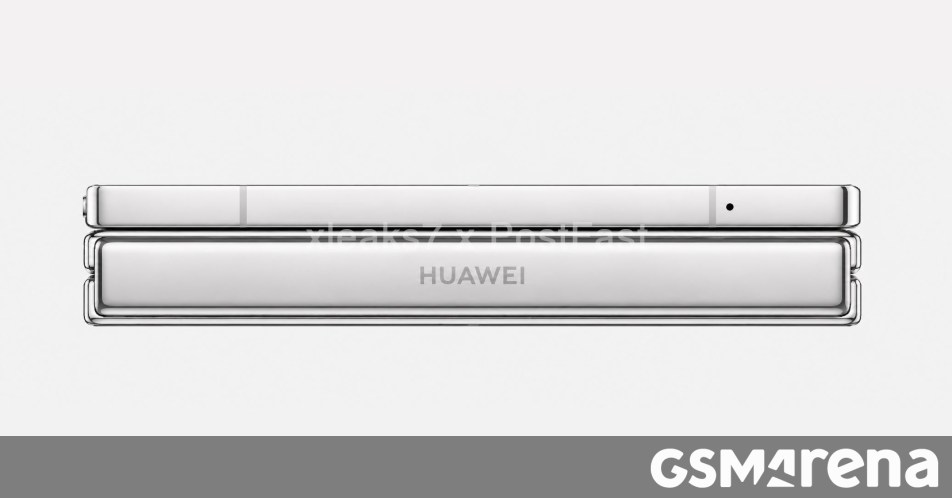
Huawei has filed a patent for a vertical tri-fold smartphone that folds into a compact S-shape using two hinges. The design, shared by leakers xleaks7 and PostFast, represents a new direction for foldables: applying the tri-fold concept to the flip phone segment rather than the tablet-style book fold Huawei used in its Mate XT Ultimate.
No manufacturer has shipped a vertical tri-fold device. Huawei's patent suggests the company wants to be first again, just as it was with the Mate XT Ultimate, which launched in 2024 as the world's first commercial tri-fold smartphone.
How the vertical tri-fold design works
The patent describes a phone with three screen panels connected by two hinges. When fully extended, the device presents a tall, narrow display optimized for scrolling content like social media feeds or messaging apps. Fold it closed and the screen compresses to roughly one-third of its open length.
Think of a standard flip phone like the Samsung Galaxy Z Flip, which folds once in the middle. Huawei's concept adds a second fold, creating an S-curve when closed. The result is a device that's potentially more compact than current flip phones but with significantly more screen real estate when opened.
One engineering detail stands out in the patent filing: a special shield designed to reduce signal interference when the phone is fully folded. This addresses a real problem with multi-layer flexible devices, where stacked metal and glass components can block radio signals.
“The patent describes a special shield that helps reduce signal interference when the device is fully folded, a critical engineering hurdle for multi-layer flexible devices.”
— Industry Analyst, Tech Market Insights
Where would a vertical tri-fold fit in Huawei's lineup?
The patent mockups suggest this design could land in Huawei's Pura series, which has historically focused on camera performance and premium design. A Pura-branded vertical tri-fold would position the device as a fashion-forward statement piece rather than a productivity tool like the Mate XT.
The use case differs from horizontal tri-folds. Where the Mate XT unfolds into something approaching a small tablet, a vertical tri-fold would remain phone-shaped at all times, just taller or shorter. That makes it better suited for one-handed use and pocket portability, but less useful for watching video or working on documents.
The durability question
Reddit users on r/foldables and r/Huawei have raised concerns about the design's durability. With two hinges instead of one, there are more potential failure points. Both hinges are exposed when the device is closed, leaving them vulnerable to dust, debris, and pocket lint.
Current flip phones already struggle with visible creases where the screen folds. A double-fold S-curve would create two creases running across the display. How noticeable these would be during normal use remains an open question until someone builds a working prototype.
There's also the matter of weight distribution. Folding a phone into thirds concentrates all the mass into a smaller area, making the device thicker and potentially awkward to grip. Samsung's original Galaxy Fold faced criticism for being too chunky when closed, and that was a single-fold design.
Patents don't guarantee products
It bears repeating: this is a patent, not a product announcement. Companies file patents on concepts they never ship, sometimes to block competitors, sometimes to explore ideas that prove impractical. Huawei has the manufacturing capability to build complex foldables, proven by the Mate XT. Whether this particular design makes business sense is another matter.
The foldable market remains small relative to conventional smartphones. High-end devices dominate sales in some markets. In Canada, premium phones account for 88% of smartphone purchases. In the US, that figure drops to around 50%. Foldables sit at the extreme high end, which limits their addressable audience.
A vertical tri-fold would likely cost even more than current flip phones, which already struggle to justify their premium over standard flagships. The value proposition has to be compelling enough to overcome both the price and the durability concerns that still shadow the foldable category.
Logicity's Take
Huawei's vertical tri-fold patent is technically impressive but commercially uncertain. The Mate XT proved Huawei can ship complex foldables, but that device targeted buyers who want maximum screen in a portable format. A vertical tri-fold solves a different problem: extreme compactness. Whether enough buyers want a phone that folds to watch-like dimensions, at the cost of two screen creases and exposed hinges, is the real question. This feels like a concept car that might influence future designs rather than a product headed for shelves in 2025.
Frequently Asked Questions
What is a vertical tri-fold phone?
A smartphone with two hinges that allow it to fold twice in an S-shape, shrinking the device to approximately one-third of its unfolded length while keeping it oriented vertically like a traditional phone.
Has Huawei announced a vertical tri-fold product?
No. Huawei has only filed a patent for the design. Patents often cover concepts that never reach production, so this does not confirm an upcoming product.
How does this differ from the Huawei Mate XT?
The Mate XT folds horizontally like a book, opening into a tablet-sized display. The vertical tri-fold would fold along the short axis, remaining phone-shaped but becoming more compact when closed.
What are the main concerns with a vertical tri-fold design?
Two screen creases instead of one, both hinges exposed when closed which could allow dust ingress, and the challenge of managing thickness when the device is folded into thirds.
More on advanced manufacturing techniques shaping next-gen hardware
Need Help Implementing This?
If you're tracking foldable technology trends or evaluating component suppliers for your hardware roadmap, our analysts can help you separate signal from noise in patent filings and market forecasts. Reach out to Logicity's research team for custom briefings.
Source: GSMArena.com / Michail
Manaal Khan
Tech & Innovation Writer
اقرأ أيضاً

رأي مغاير: كيف يؤثر اختراق الأمن الداخلي الأميركي على شركاتنا الخاصة؟
في ظل اختراق عقود الأمن الداخلي الأميركي مع شركات خاصة، نناقش تأثير هذا الاختراق على مستقبل الأمن السيبراني. نستعرض الإحصاءات الموثوقة ونناقش كيف يمكن للشركات الخاصة أن تتعامل مع هذا التهديد. استمتع بقراءة هذا التحليل العميق

الإنسان في زمن ما بعد الوجود البشري: نحو نظام للتعايش بين الإنسان والروبوت - Centre for Arab Unity Studies
في هذا المقال، سنناقش كيف يمكن للبشر والروبوتات التعايش في نظام متكامل. سنستعرض التحديات والحلول المحتملة التي تضعها شركات مثل جوجل وأمازون. كما سنلقي نظرة على التوقعات المستقبلية وفقًا لتقرير ماكنزي

إطلاق ناسا لمهمة مأهولة إلى القمر: خطوة تاريخية نحو استكشاف الفضاء
تعتبر المهمة الجديدة خطوة هامة نحو استكشاف الفضاء وتطوير التكنولوجيا. سوف تشمل المهمة إرسال رواد فضاء إلى سطح القمر لconducting تجارب علمية. ستسهم هذه المهمة في تطوير فهمنا للفضاء وتحسين التكنولوجيا المستخدمة في استكشاف الفضاء.