How to Run Claude Code Locally Without API Costs
Key Takeaways
- Claude Code itself is free. The costs come from API calls to Sonnet or Opus.
- You can swap the cloud endpoint for Ollama, running open-weight models locally.
- This setup keeps your code on your machine with no subscription or usage bills.
The Real Cost Isn't Claude Code
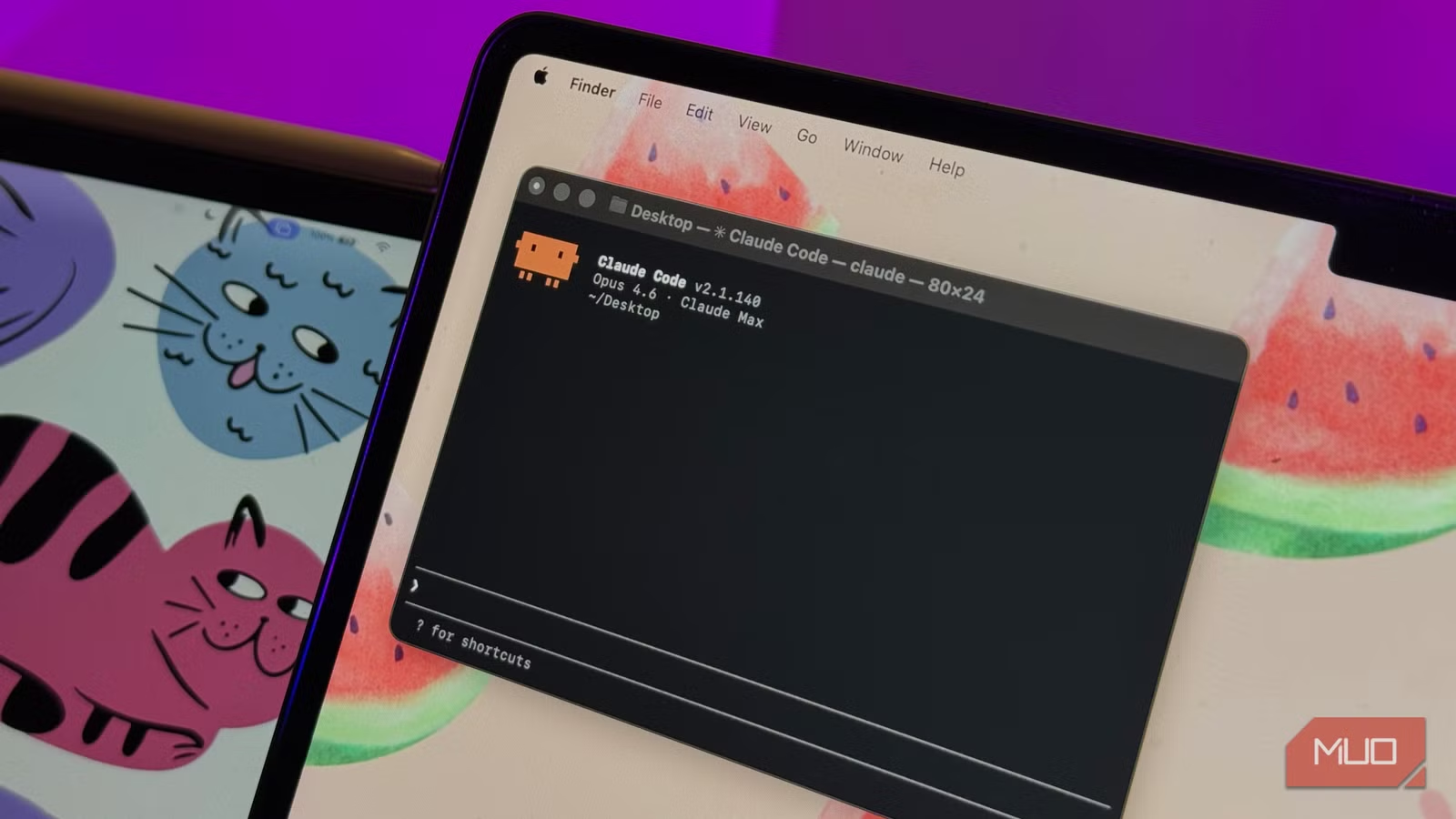
Claude Code is free to install. You can download it right now without paying anything. The expense comes from what happens after you run it.
Every task you assign, every file Claude Code reads, every change it makes gets routed through Anthropic's models by default. Sonnet or Opus, depending on your configuration. Those API calls are what appear on your bill.
Think of Claude Code as a coordinator. It decides which files matter, figures out what needs to change, and runs terminal commands. The reasoning and code generation happen inside the language model. And the model is what costs money.
“By moving the AI inside the terminal and giving it file system access, we've finally closed the gap between 'chatting' about code and actually building software.”
— Raghav Sethi, Tech Writer, MakeUseOf
At $20 a month for the Pro plan, the price is reasonable if you're coding daily. If you're not, justifying that recurring cost gets harder. But nothing about the setup requires Anthropic's models. You can swap the endpoint entirely.
Enter Ollama: Local Models, Zero Bills
Ollama is a tool that runs open-weight models locally on your hardware. No API. No subscription. No usage tracking. You download a model once and run it as many times as you want.
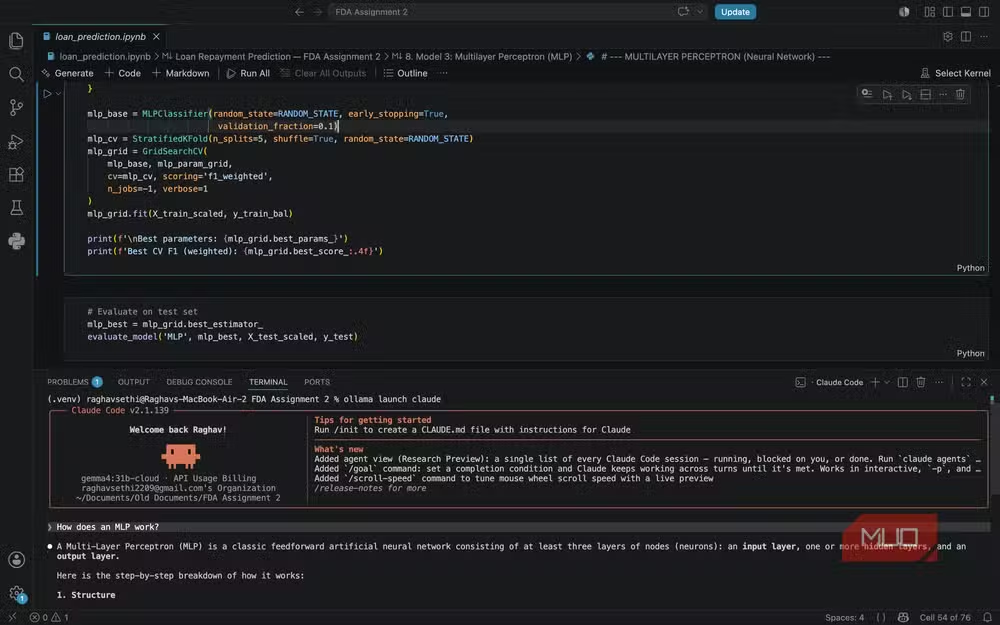
The setup replaces Anthropic's cloud endpoint with a local one. Claude Code still handles the orchestration. It still reads your files, plans changes, and executes commands. But the actual inference happens on your machine instead of Anthropic's servers.
This approach has two immediate benefits. First, your code never leaves your machine. For anyone working on proprietary software or under strict data policies, that matters. Second, you pay nothing beyond electricity and the hardware you already own.
What You Need to Get Started
- A machine with decent RAM. More RAM means larger models and better performance.
- Ollama installed on your system.
- Claude Code installed and configured to point to a local endpoint.
- An open-weight model downloaded through Ollama. Options include Llama, Mistral, and CodeLlama variants.

The configuration process involves changing where Claude Code sends its requests. Instead of Anthropic's API, you point it at localhost where Ollama serves the model. The exact steps vary by editor integration, but the principle stays the same: swap the endpoint, keep the workflow.
Trade-offs Worth Knowing
Local models aren't as capable as Sonnet or Opus. Anthropic's models have been trained specifically for coding tasks and refined through extensive feedback. Open-weight alternatives are catching up, but there's still a gap in complex reasoning and multi-file refactoring.
Your hardware matters. Running a 70B parameter model on a laptop with 16GB of RAM will be slow or impossible. Smaller models work fine but sacrifice capability. The sweet spot depends on what you're building and what you're willing to tolerate.
✅ Pros
- • No recurring costs after initial setup
- • Code stays on your machine, improving privacy
- • Works offline once configured
- • No usage caps or throttling
❌ Cons
- • Local models are less capable than Anthropic's cloud options
- • Requires decent hardware, especially RAM
- • Initial setup has a learning curve
- • Model updates require manual downloads
Why This Matters Now
Claude Code has become central to how many developers work. The tool's ability to navigate file systems, execute shell commands, and run tests autonomously has created what some call "vibe coding." You focus on architecture. The AI handles implementation details.
But autonomy comes with concerns. Granting an agent shell access raises security questions. The April 2026 source code leak revealed features Anthropic was developing, including persistent background agents. That disclosure sparked heated debate on HackerNews and Reddit about where this technology is heading.
Running locally doesn't eliminate those concerns, but it changes the risk profile. Your data stays on your machine. You control what the agent can access. For teams with strict compliance requirements, that control might be non-negotiable.
Logicity's Take
If you're running local models on a MacBook, battery optimization becomes critical.
More on how Claude's agentic capabilities are reshaping development workflows.
Frequently Asked Questions
Is Claude Code actually free?
Yes, the tool itself costs nothing. The charges come from API calls to Anthropic's language models like Sonnet or Opus.
Can I use Claude Code completely offline?
With Ollama and a local model, yes. Once configured, you don't need an internet connection to use Claude Code.
What hardware do I need to run local models?
It depends on the model size. Smaller models work on 16GB RAM. Larger ones need 32GB or more for reasonable performance.
Are local models as good as Anthropic's cloud models?
No. Sonnet and Opus are more capable, especially for complex reasoning and multi-file refactoring. Local models are improving but still trail behind.
Is this setup secure?
Your code stays on your machine, which reduces exposure. But granting any AI agent shell access carries inherent risks. Review permissions carefully.
Need Help Implementing This?
Source: MakeUseOf
Manaal Khan
Tech & Innovation Writer
اقرأ أيضاً

رأي مغاير: كيف يؤثر اختراق الأمن الداخلي الأميركي على شركاتنا الخاصة؟
في ظل اختراق عقود الأمن الداخلي الأميركي مع شركات خاصة، نناقش تأثير هذا الاختراق على مستقبل الأمن السيبراني. نستعرض الإحصاءات الموثوقة ونناقش كيف يمكن للشركات الخاصة أن تتعامل مع هذا التهديد. استمتع بقراءة هذا التحليل العميق

الإنسان في زمن ما بعد الوجود البشري: نحو نظام للتعايش بين الإنسان والروبوت - Centre for Arab Unity Studies
في هذا المقال، سنناقش كيف يمكن للبشر والروبوتات التعايش في نظام متكامل. سنستعرض التحديات والحلول المحتملة التي تضعها شركات مثل جوجل وأمازون. كما سنلقي نظرة على التوقعات المستقبلية وفقًا لتقرير ماكنزي

إطلاق ناسا لمهمة مأهولة إلى القمر: خطوة تاريخية نحو استكشاف الفضاء
تعتبر المهمة الجديدة خطوة هامة نحو استكشاف الفضاء وتطوير التكنولوجيا. سوف تشمل المهمة إرسال رواد فضاء إلى سطح القمر لconducting تجارب علمية. ستسهم هذه المهمة في تطوير فهمنا للفضاء وتحسين التكنولوجيا المستخدمة في استكشاف الفضاء.