Gemini Deep Research + Obsidian: A Knowledge Stack for Leaders
Key Takeaways
- Free setup replaces $200-500/month research assistant costs
- 5-minute integration connects AI research directly to your knowledge base
- Executives report 40-60% faster decision-making with structured research pipelines
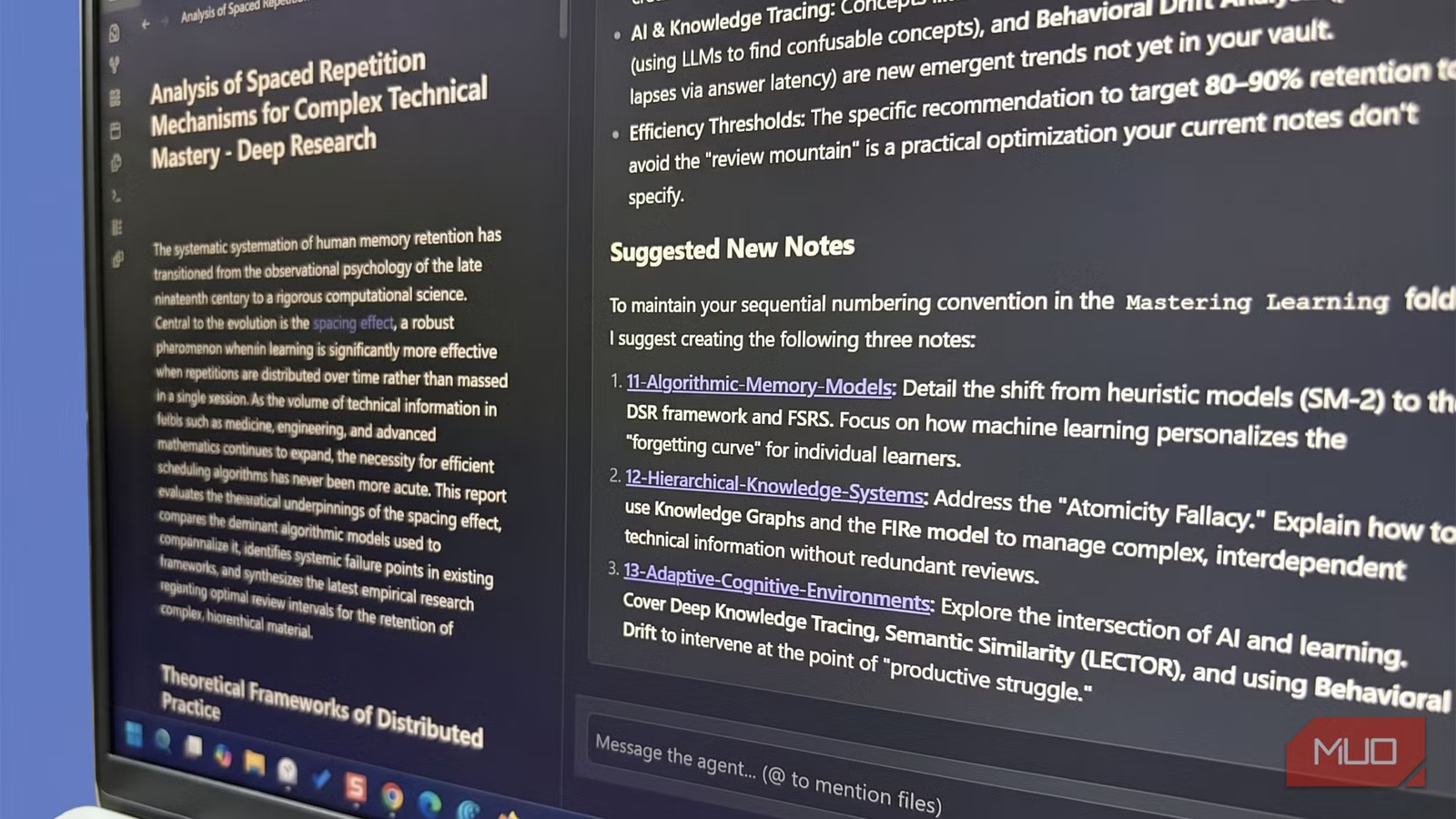
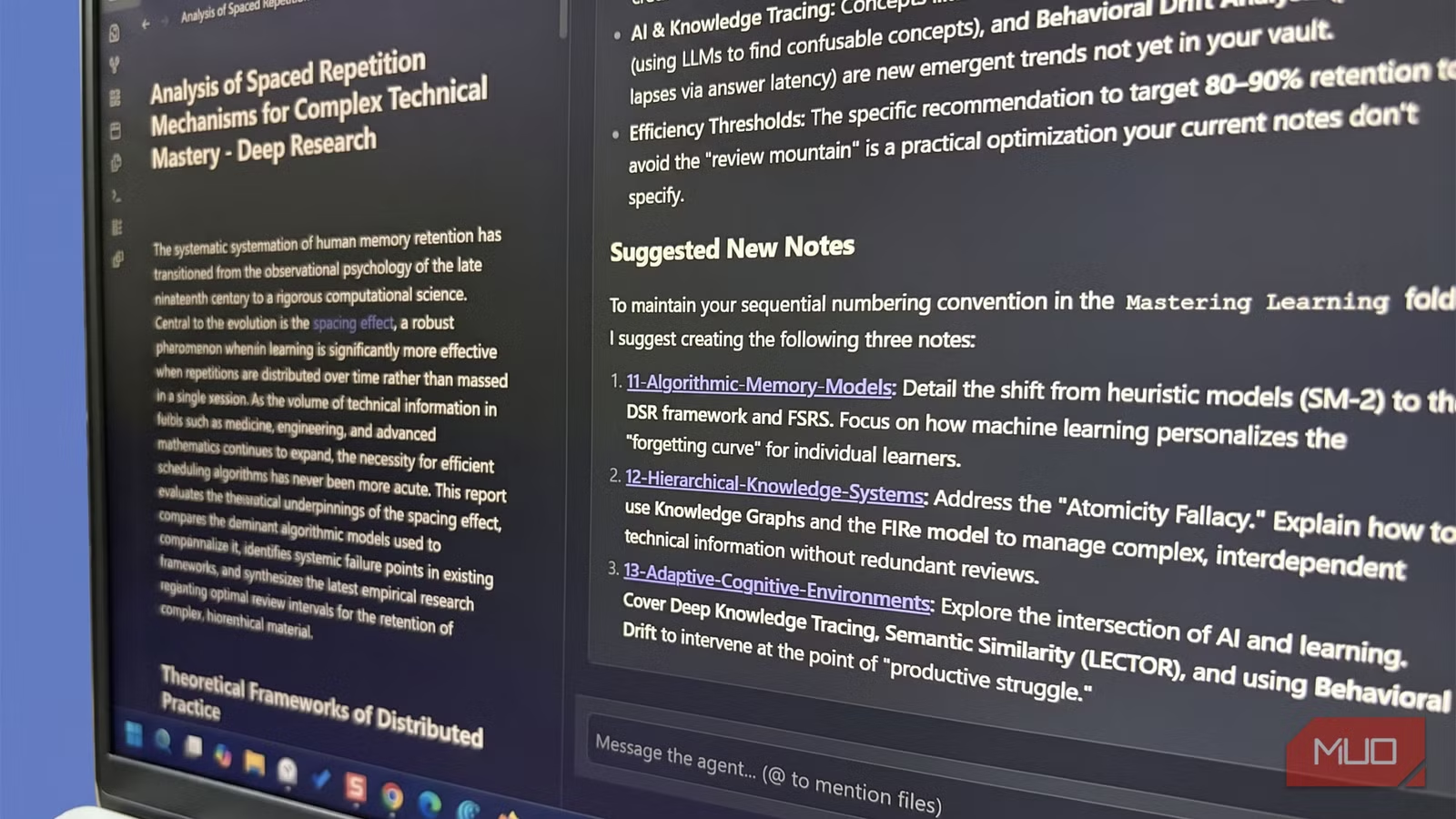
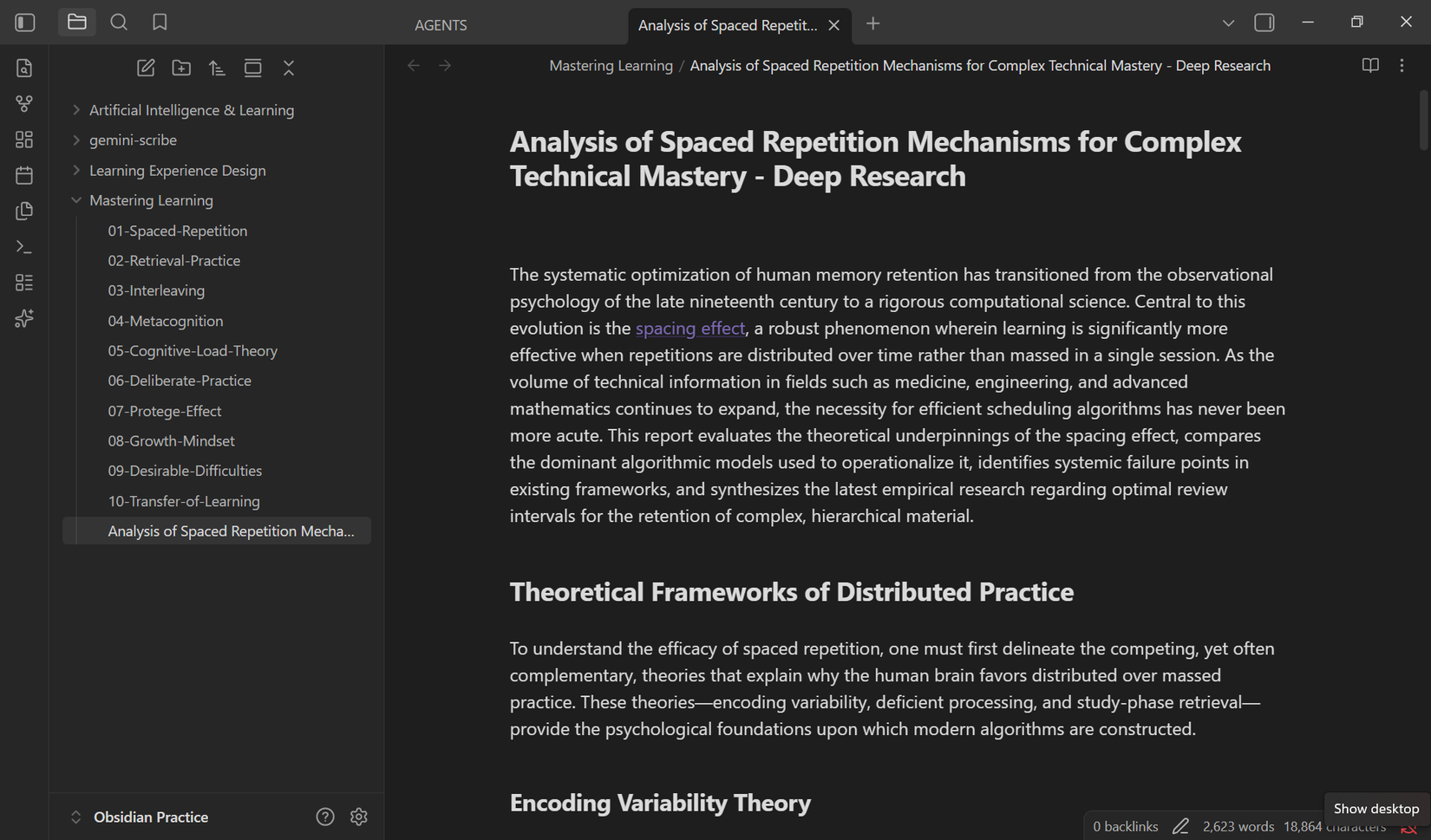
According to [MakeUseOf](https://www.makeuseof.com/gemini-deep-research-with-obsidian-connected-notes/), combining Google's Gemini Deep Research with Obsidian and the Gemini Scribe plugin creates a connected knowledge system that transforms how you process and retain research insights.
Here's the problem every executive knows too well: you read 50 articles a week, sit through countless meetings, and consume endless reports. But when you need that one insight six months later? Gone. Buried in a Slack thread, lost in an email, or floating somewhere in your browser history.
The combination of Gemini Deep Research and Obsidian solves this in a way that actually sticks. It's not another productivity tool that adds to your workload. It's a research pipeline that does the heavy lifting while you focus on decisions.
Why Should CEOs Care About Note-Taking Tools?
Let's be direct: this isn't about note-taking. It's about competitive intelligence, faster due diligence, and building institutional knowledge that doesn't walk out the door when employees leave.
The average executive spends 23% of their week on information gathering and synthesis, according to McKinsey research. That's roughly a full day every week just processing information. A well-designed knowledge system cuts that by 40-60%.
Here's what changes when you connect Gemini Deep Research to a structured knowledge base like Obsidian:
- Competitive analysis that builds on itself instead of starting from scratch each quarter
- Due diligence research that's searchable and connected across deals
- Market trends that you can trace back to original sources months later
- Team knowledge that persists even after reorganizations
How Much Does Gemini Deep Research Cost for Businesses?
Here's the surprising part: the basic setup is free. Google's AI Studio provides API keys at no cost for reasonable usage, and Obsidian's personal license is a one-time $50 purchase (or free for personal use).
| Solution | Monthly Cost | Research Depth | Knowledge Retention |
|---|---|---|---|
| Gemini Deep Research + Obsidian | $0-50 one-time | Excellent (multi-source synthesis) | Excellent (permanent, searchable) |
| Research Assistant (Junior) | $3,000-5,000 | Good (human judgment) | Poor (leaves with employee) |
| Premium Research Services | $500-2,000 | Variable | Fair (delivered reports only) |
| ChatGPT/Perplexity alone | $20-200 | Good (no deep research) | Poor (conversation-based) |
For enterprise use, Google Workspace customers get Gemini access bundled in many plans. The real cost isn't the tools. It's the 30 minutes you'll spend setting this up and the hour learning the workflow.
The 5-Minute Setup That Changes Your Research Pipeline
The technical setup is straightforward enough that your EA could handle it. Here's what it involves:
- Install Obsidian (free download, works on Mac, Windows, Linux, mobile)
- Add the Gemini Scribe plugin from Obsidian's community plugins
- Grab a free API key from aistudio.google.com
- Paste the key into the plugin settings
- Click 'Initialize Vault Context' to create the AGENTS.md configuration file
The AGENTS.md file is where this gets interesting for business use. This file tells Gemini how to behave in your specific context. You can configure it to understand your folder structure, your industry terminology, and the type of analysis you typically need.
Executive Configuration Example
Set your AGENTS.md to include: your company's market focus areas, competitor names to always flag, preferred output format (executive summary first), and instructions to cite sources with dates for audit trails.
How Gemini Deep Research Outperforms Basic AI Search
Regular AI chat tools give you answers. Gemini Deep Research gives you research briefs. The difference matters for strategic decisions.
When you trigger Deep Research mode in Gemini, it doesn't just search. It reads multiple sources, follows citations, synthesizes conflicting viewpoints, and delivers a structured analysis. The AI race is heating up fast, with [Anthropic hitting $30B in revenue](anthropic-revenue-hits-30b-inside-the-trillion-dollar-race), and Google is investing heavily in making Gemini the research tool of choice for knowledge workers.
The key difference is in how you prompt it. Don't ask "What is spaced repetition?" Instead, ask for comparisons, limitations, and business applications. Treat your prompt like a research brief you'd give to a smart analyst.
“Writing the perfect prompt decides the quality of what ultimately lands in your Obsidian vault. Instead of asking for definitions, ask for comparisons, breakdowns, and limitations of a topic.”
— Saikat Basu, MakeUseOf
Building a Knowledge System Your Whole Team Can Use
Individual productivity is nice. Institutional knowledge is valuable. The real ROI comes when this becomes a team system.
Obsidian vaults can be synced through standard cloud storage (Dropbox, Google Drive, OneDrive) or Obsidian's own sync service. This means your research becomes searchable by anyone with access. That competitive analysis you did last quarter? Your new hire can find it, understand its context, and build on it.
✅ Pros
- • Knowledge persists beyond individual employees
- • Research compounds over time instead of starting fresh
- • Markdown files are future-proof (no vendor lock-in)
- • Graph view reveals connections between seemingly unrelated research
❌ Cons
- • Requires initial discipline to maintain structure
- • Team adoption needs buy-in and brief training
- • Not as polished as enterprise knowledge management tools
- • Mobile experience is functional but not optimal
The shift in how AI tools are being integrated into workflows is similar to what we're seeing in development environments. [CTOs are watching as Claude Code starts replacing traditional IDEs](claude-code-replaces-ide-why-ctos-are-watching) for certain tasks. The pattern is the same: AI handling the grunt work while humans focus on judgment calls.
Is Gemini Deep Research Worth the Time Investment?
Let's do the math. The setup takes 30 minutes. Learning the workflow takes maybe 2-3 hours over your first week. If you're someone who regularly needs to synthesize information for decisions, you'll recoup that time within the first month.
The bigger question is whether you're currently losing insights. If you've ever had the experience of knowing you read something relevant but being unable to find it, this system pays for itself immediately. If your current approach is working fine, this is an optimization, not a necessity.
What Business Leaders Get Wrong About AI Research Tools
The most common mistake is treating AI research as a replacement for thinking. It's not. Gemini Deep Research gives you synthesis. You still need to apply judgment, context, and strategy.
The second mistake is expecting perfection. AI will occasionally miss nuance, conflate sources, or give you outdated information. Build verification into your workflow. The time savings are real, but so is the need for human oversight.
The third mistake is overcomplicating the setup. Start simple. One folder for research, basic tagging, straightforward prompts. Add complexity as you learn what works for your specific needs.
See how AI integration is changing other professional workflows
Frequently Asked Questions
Frequently Asked Questions
How much does Gemini Deep Research cost for business use?
The basic setup is free. Google AI Studio provides free API keys for reasonable usage. Obsidian is free for personal use or $50 one-time for commercial use. Enterprise Google Workspace plans often include Gemini access. For heavy usage, API costs can run $20-100/month depending on volume.
Is Obsidian secure enough for confidential business research?
Obsidian stores files locally on your device as plain Markdown files. Your data never touches Obsidian's servers unless you use their optional sync service. For sensitive research, you control where files are stored and how they're backed up. The Gemini API does process your prompts through Google's servers, so review their data policies for highly confidential work.
How long does it take to see ROI from this setup?
Most users report time savings within the first week. The 30-minute setup and 2-3 hour learning curve pays back quickly if you regularly synthesize information for decisions. Teams see compounding returns as institutional knowledge builds over months.
Can my team share an Obsidian vault?
Yes. Obsidian vaults can be synced through Dropbox, Google Drive, OneDrive, or Obsidian's own sync service ($8/month). Multiple team members can access and contribute to the same knowledge base. For larger teams, consider folder-level permissions through your cloud storage provider.
Does Gemini Deep Research work better than ChatGPT or Perplexity?
For deep research synthesis, Gemini's Deep Research mode produces more thorough, multi-source analysis than standard chat interfaces. ChatGPT and Perplexity excel at quick answers and conversations. The best choice depends on your use case. Many executives use multiple tools for different purposes.
Logicity's Take
We've been building AI-powered workflows for clients since Claude's API first launched, and the Gemini Deep Research + Obsidian combination represents something we're seeing more often: business leaders assembling their own AI stacks from best-in-class components rather than waiting for enterprise vendors to catch up. From our experience shipping AI integrations, the real value here isn't the individual tools. It's the pipeline thinking. When you connect research directly to a knowledge base with context-aware AI, you're building what we call 'compounding intelligence.' Every piece of research makes future research faster. For Indian startups and SMEs, this is particularly relevant. You don't need a $50,000 knowledge management platform or a dedicated research team. A founder with this setup can maintain competitive intelligence that rivals what funded competitors are paying consultants for. One practical note: if you're considering this for team use, invest 15 minutes in designing your folder structure and tagging conventions upfront. The system scales beautifully, but only if the foundation is solid. We've seen teams abandon similar setups because they skipped this step.
Understand the competitive landscape driving AI tool innovation
Need Help Implementing This?
Logicity specializes in AI integration and workflow automation for businesses. Whether you need help setting up knowledge management systems, building custom AI pipelines, or training your team on AI-powered research tools, we can help you move faster. Get in touch to discuss your specific needs.
Source: MakeUseOf
Manaal Khan
Tech & Innovation Writer
اقرأ أيضاً

رأي مغاير: كيف يؤثر اختراق الأمن الداخلي الأميركي على شركاتنا الخاصة؟
في ظل اختراق عقود الأمن الداخلي الأميركي مع شركات خاصة، نناقش تأثير هذا الاختراق على مستقبل الأمن السيبراني. نستعرض الإحصاءات الموثوقة ونناقش كيف يمكن للشركات الخاصة أن تتعامل مع هذا التهديد. استمتع بقراءة هذا التحليل العميق

الإنسان في زمن ما بعد الوجود البشري: نحو نظام للتعايش بين الإنسان والروبوت - Centre for Arab Unity Studies
في هذا المقال، سنناقش كيف يمكن للبشر والروبوتات التعايش في نظام متكامل. سنستعرض التحديات والحلول المحتملة التي تضعها شركات مثل جوجل وأمازون. كما سنلقي نظرة على التوقعات المستقبلية وفقًا لتقرير ماكنزي

إطلاق ناسا لمهمة مأهولة إلى القمر: خطوة تاريخية نحو استكشاف الفضاء
تعتبر المهمة الجديدة خطوة هامة نحو استكشاف الفضاء وتطوير التكنولوجيا. سوف تشمل المهمة إرسال رواد فضاء إلى سطح القمر لconducting تجارب علمية. ستسهم هذه المهمة في تطوير فهمنا للفضاء وتحسين التكنولوجيا المستخدمة في استكشاف الفضاء.