ESO's Laser Guide Stars: How Fake Stars Sharpen Space Images
Key Takeaways
- The ESO's VLTI uses four lasers to create artificial reference stars 160,000 light-years toward the Tarantula Nebula
- Laser guide star systems help telescopes correct for atmospheric blurring in real time
- Only a handful of observatories worldwide use this adaptive optics technique, with ESO's system operational since 2016
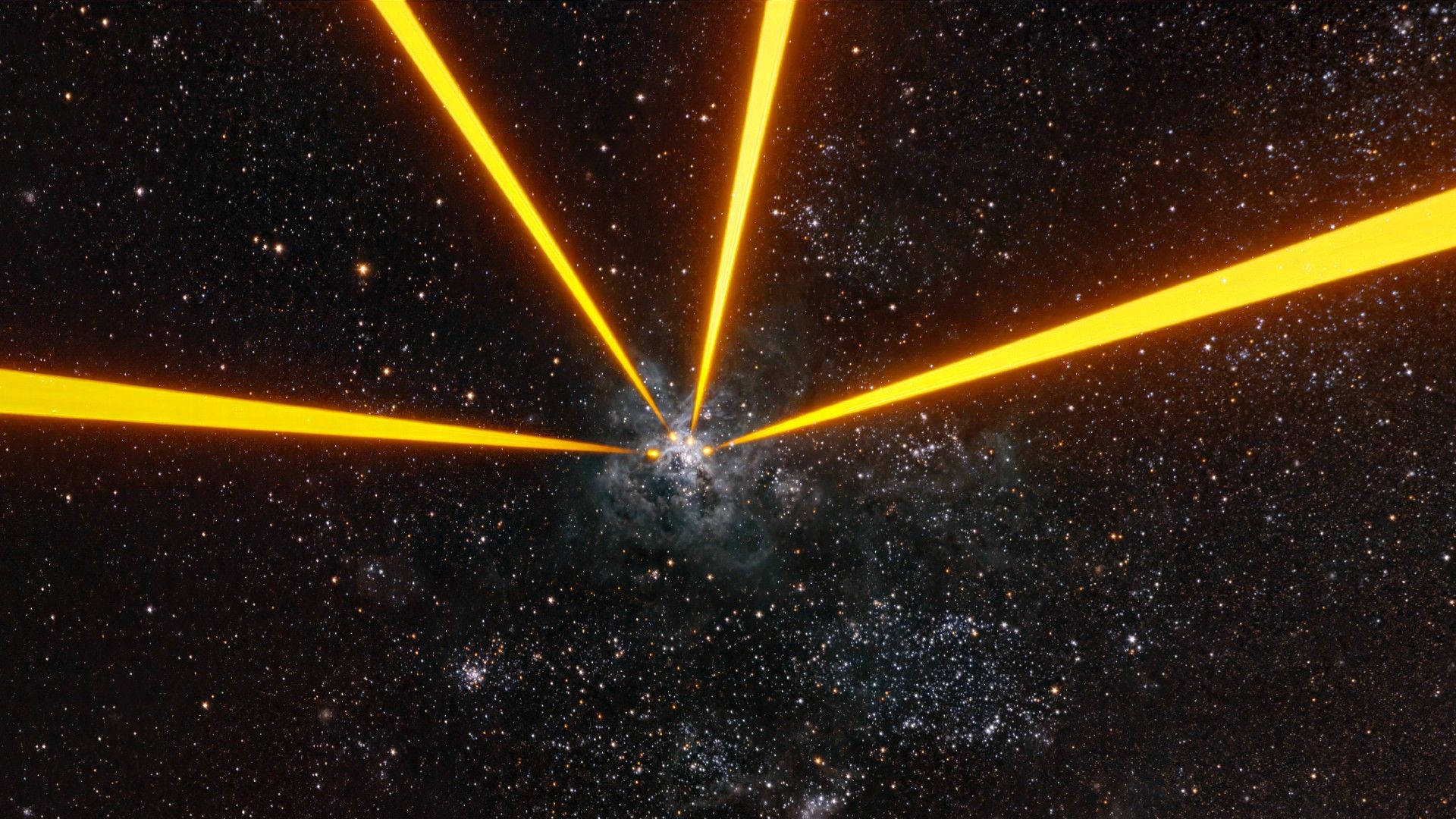
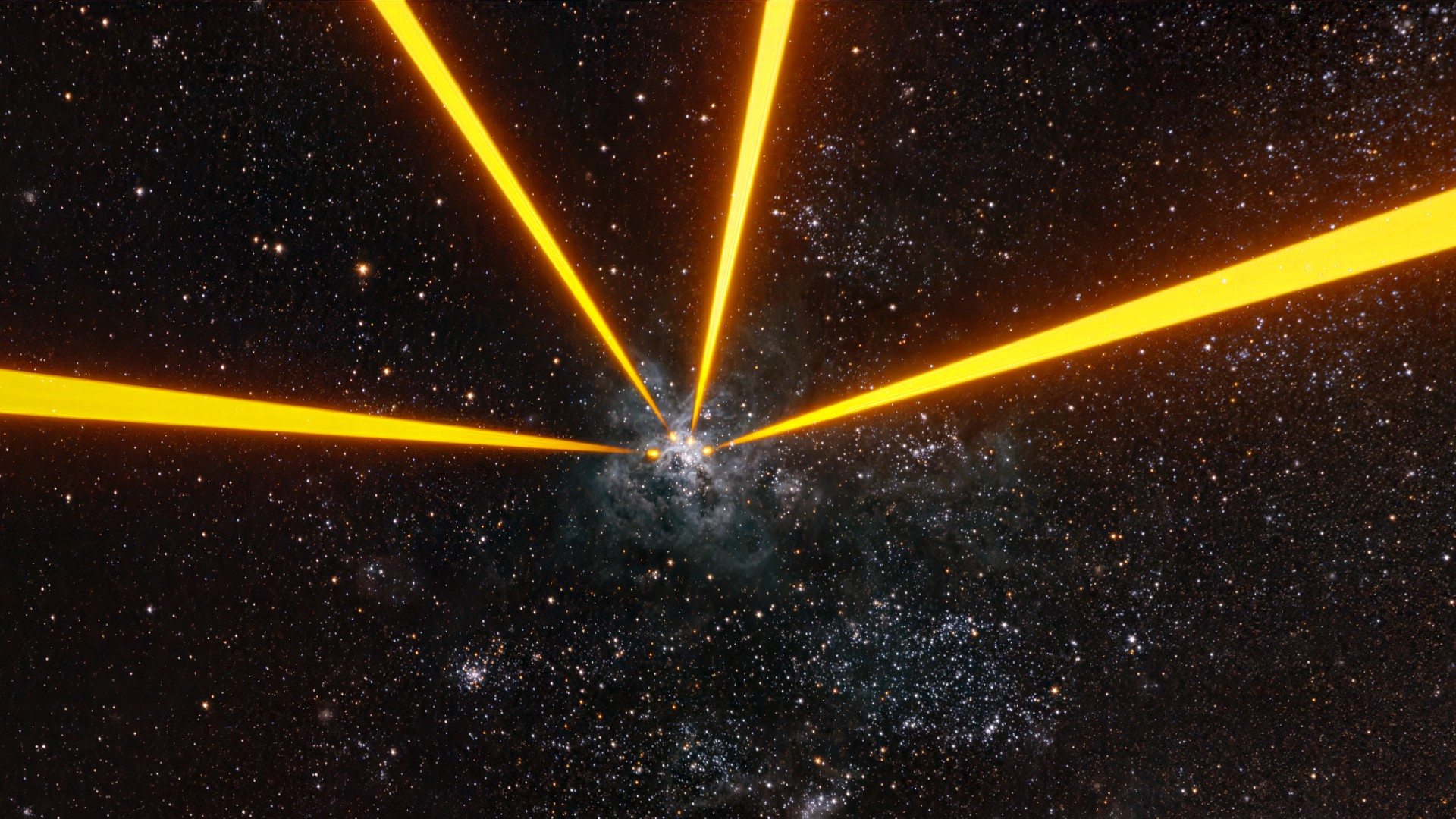
A new photograph from the European Southern Observatory looks like the opening crawl of a Star Wars film. Four bright yellow laser beams shoot into a star-filled sky from Chile's Atacama Desert. The target: a nebula 160,000 light-years away.
"It might look like we started a space war, but we didn't," the ESO wrote in a statement accompanying the image.
The lasers are part of a system that creates "artificial stars" to help astronomers see the universe more clearly. The technique represents one of the biggest advances in ground-based astronomy over the past decade.
What the Lasers Actually Do
Earth's atmosphere constantly shifts and ripples. This turbulence blurs light from distant objects before it reaches telescope mirrors. Stars twinkle because of this effect. It's pretty to watch, but it ruins astronomical images.
Laser guide stars solve this problem. The ESO's Very Large Telescope Interferometer (VLTI) fires four lasers into the upper atmosphere. These beams excite sodium atoms about 90 kilometers up, creating bright points of light that act as reference stars.
Astronomers know exactly where these artificial stars should appear. By measuring how the atmosphere distorts them, computers can calculate the turbulence in real time. The telescope's adaptive optics system then adjusts its mirrors hundreds of times per second to cancel out the distortion.
Why Point at the Tarantula Nebula
The Tarantula Nebula sits in the Large Magellanic Cloud, a satellite galaxy of the Milky Way. At 160,000 light-years distant, it's one of the most active star-forming regions visible from Earth.
Studying regions like this helps astronomers understand how stars are born. But the distance means the light is faint and easily blurred. Adaptive optics with laser guide stars can produce images nearly as sharp as those from space telescopes.
A Technology Still in Its Youth
The VLTI consists of four separate telescopes that work together as one large virtual instrument. Its Four Laser Guide Star Facility has been operational since 2016.
Only a handful of observatories worldwide use laser guide star systems. The technology requires precise engineering, powerful lasers, and sophisticated software to process atmospheric data in real time. Building and operating these systems costs millions of dollars.
But the investment pays off. Ground-based telescopes with adaptive optics can now rival the Hubble Space Telescope in image sharpness for certain observations. They're also much cheaper to build and maintain than orbital instruments.
Logicity's Take
What Comes Next
The Extremely Large Telescope, also under construction in Chile's Atacama Desert, will use an even more advanced laser guide star system. When it begins operations later this decade, it will produce the sharpest images ever taken from Earth's surface.
These technologies matter beyond astronomy. The same adaptive optics principles apply to satellite communication, medical imaging, and any field where light must pass through a distorting medium. What starts as space science often ends up in everyday technology.
More astronomy viewing opportunities this month
Frequently Asked Questions
What are laser guide stars?
Laser guide stars are artificial reference points created by firing lasers into the upper atmosphere. They excite sodium atoms, producing bright spots that astronomers use to measure atmospheric turbulence and correct for image distortion.
How do adaptive optics work in telescopes?
Adaptive optics systems measure atmospheric distortion using reference stars (natural or artificial), then adjust telescope mirrors hundreds of times per second to cancel out the blurring effect.
Where is the Very Large Telescope located?
The ESO's Very Large Telescope Interferometer sits atop Cerro Paranal in Chile's Atacama Desert, one of the driest and clearest sites on Earth for astronomical observation.
How far away is the Tarantula Nebula?
The Tarantula Nebula is approximately 160,000 light-years from Earth, located in the Large Magellanic Cloud, a satellite galaxy of the Milky Way.
Need Help Implementing This?
Source: Latest from Space.com
Huma Shazia
Senior AI & Tech Writer
اقرأ أيضاً

رأي مغاير: كيف يؤثر اختراق الأمن الداخلي الأميركي على شركاتنا الخاصة؟
في ظل اختراق عقود الأمن الداخلي الأميركي مع شركات خاصة، نناقش تأثير هذا الاختراق على مستقبل الأمن السيبراني. نستعرض الإحصاءات الموثوقة ونناقش كيف يمكن للشركات الخاصة أن تتعامل مع هذا التهديد. استمتع بقراءة هذا التحليل العميق

الإنسان في زمن ما بعد الوجود البشري: نحو نظام للتعايش بين الإنسان والروبوت - Centre for Arab Unity Studies
في هذا المقال، سنناقش كيف يمكن للبشر والروبوتات التعايش في نظام متكامل. سنستعرض التحديات والحلول المحتملة التي تضعها شركات مثل جوجل وأمازون. كما سنلقي نظرة على التوقعات المستقبلية وفقًا لتقرير ماكنزي

إطلاق ناسا لمهمة مأهولة إلى القمر: خطوة تاريخية نحو استكشاف الفضاء
تعتبر المهمة الجديدة خطوة هامة نحو استكشاف الفضاء وتطوير التكنولوجيا. سوف تشمل المهمة إرسال رواد فضاء إلى سطح القمر لconducting تجارب علمية. ستسهم هذه المهمة في تطوير فهمنا للفضاء وتحسين التكنولوجيا المستخدمة في استكشاف الفضاء.