Contact Sensors Beyond Security: 4 Smart Business Uses
Key Takeaways
- Water leak contact sensors can prevent average repair costs of $11,000 by detecting issues within minutes
- HVAC-integrated contact sensors reduce energy costs by 10-15% in commercial spaces
- Inventory and supply monitoring with contact sensors cuts manual check time by 60%
According to [MakeUseOf](https://www.makeuseof.com/places-to-put-a-contact-sensor-that-have-nothing-to-do-with-security-or-doors/), contact sensors have applications far beyond traditional security setups, including water leak detection, appliance monitoring, and creative home automation scenarios that most businesses overlook.
Most facility managers think of contact sensors as glorified door alarms. Open the door, get an alert. Close the window, system armed. But that's like buying a smartphone and only using it to make calls. The real ROI from these $15-30 devices comes from applications your security vendor probably never mentioned.
Whether you're running a small office, managing retail locations, or overseeing warehouse operations, contact sensors offer surprisingly powerful automation capabilities. The trick is thinking beyond the security use case and asking: what else opens and closes in my business that I need to track?
Read in Short
Contact sensors are underutilized business tools. Beyond security, they detect water leaks before costly damage, automate HVAC based on window status, monitor supply levels in storage, and track equipment usage. At under $30 per unit with 3-5 year battery life, the ROI is measured in days, not years.
What Are Contact Sensors and Why Should Business Leaders Care?
A contact sensor is a two-piece device that detects whether something is open or closed. One piece contains a magnet, the other contains a sensor. When they separate, your connected system knows about it instantly. Simple technology, but the business applications are extensive.
The cost equation is what makes this interesting for decision-makers. A quality contact sensor runs $15-30, connects to existing smart building infrastructure, and has a 3-5 year battery life. Compare that to specialized monitoring equipment that costs 10x more and requires professional installation.
Here's what's changed recently: modern contact sensors integrate with platforms like SmartThings, Home Assistant, and commercial building management systems. That means the data flows into dashboards you're already using. No new software subscriptions, no training costs, no IT headaches.
How Do Water Leak Contact Sensors Prevent Costly Damage?
Water damage is the silent business killer. A small leak under a sink or behind a refrigerator can go undetected for weeks. By the time someone notices, you're looking at mold remediation, equipment replacement, and potential business interruption.
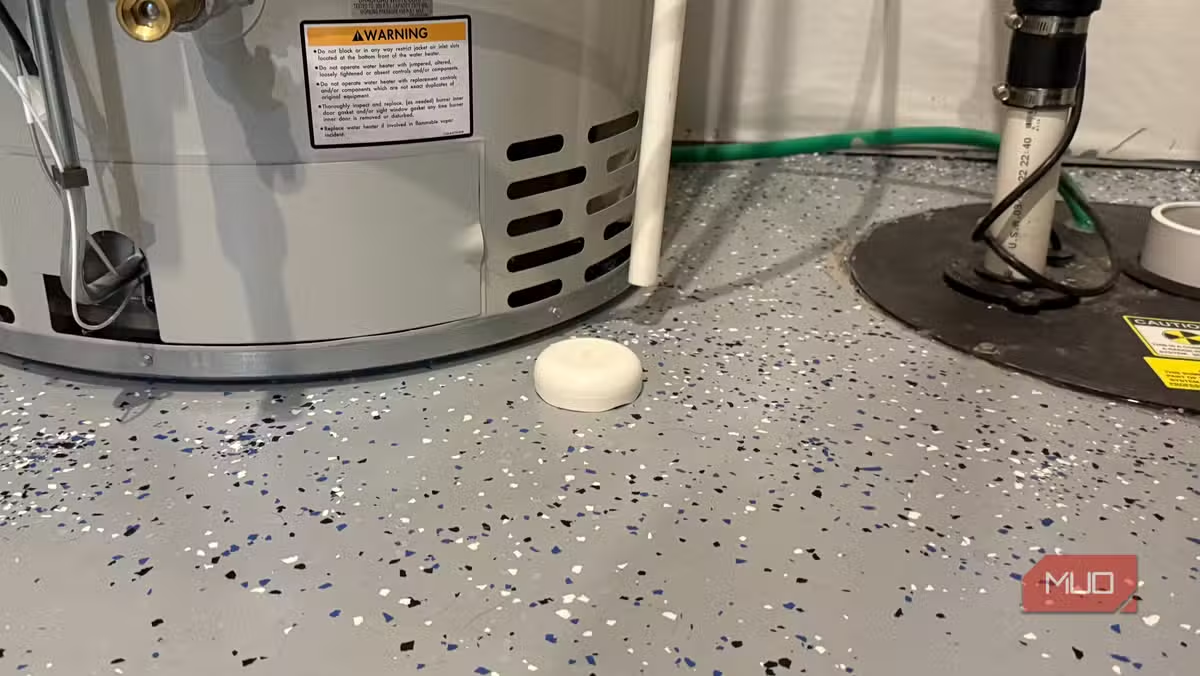
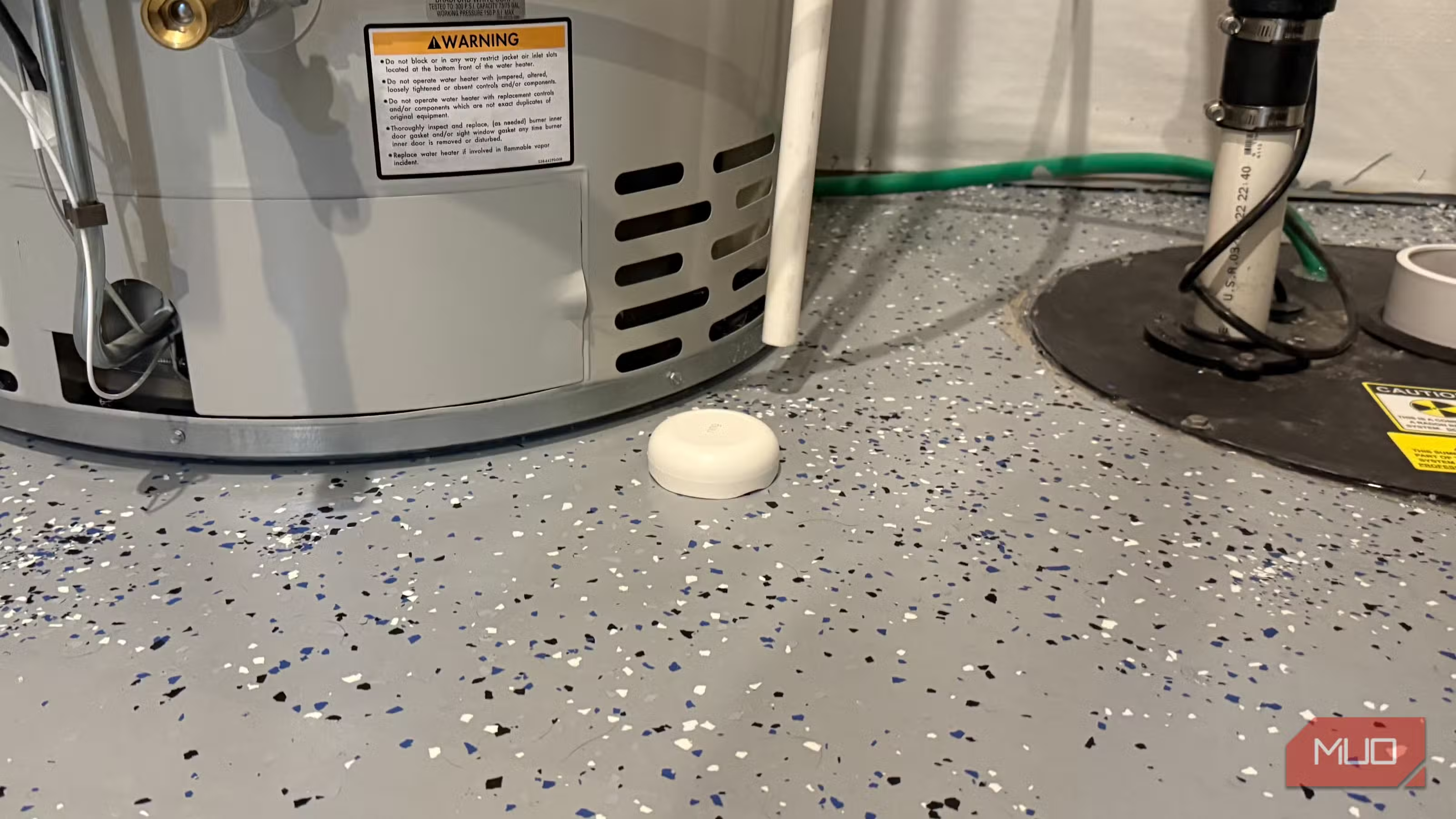
Water leak contact sensors work differently than door sensors. They typically come as a two-piece system: a main unit that plugs in or runs on batteries, and a contact probe that sits where water would pool during a leak. The moment moisture touches the probe, you get an alert.
- Behind commercial refrigeration units where condensation lines can clog
- Under break room sinks and dishwashers
- Near HVAC drain pans that can overflow
- In server rooms where cooling systems create condensation
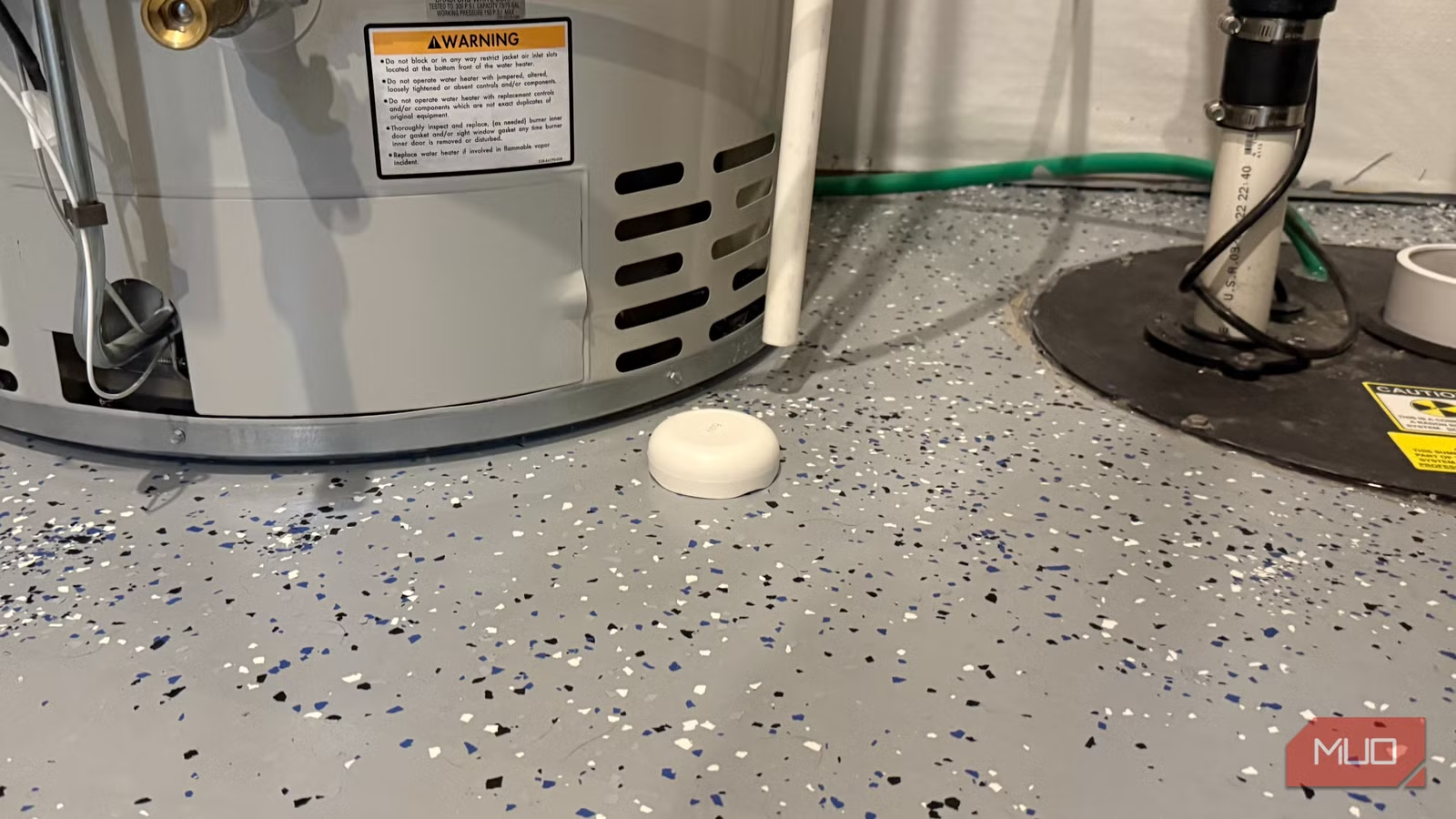
- Near water heaters in utility closets
- In basements or lower levels where sewer backups occur
The SimpliSafe Water and Flooding Sensor mentioned in the source article represents the consumer end of this market. For commercial applications, look at options from Monnit, Sensaphone, or enterprise-grade solutions from Honeywell that integrate with building management systems.
The Insurance Angle
Many commercial insurance policies offer premium discounts of 5-15% for properties with connected water detection systems. Check with your carrier. The sensors could pay for themselves through premium reduction alone, before you factor in damage prevention.
Can Contact Sensors Cut Your Energy Costs?
Here's a scenario every facility manager recognizes: it's July, the HVAC is running full blast, and someone has propped open the loading dock door. Or a window in the conference room has been left open overnight. Energy dollars literally flying out the window.
Contact sensors solve this by integrating with your HVAC system. When a window or exterior door opens, the system can automatically adjust climate control for that zone. No more cooling the outdoors on your company's dime.
The integration is straightforward if you're using a modern building automation system. Platforms like Home Assistant for smaller operations or commercial systems like Tridium Niagara can accept input from contact sensors and trigger HVAC zone adjustments automatically.
For operations tracking systems that integrate with IoT sensors
| Application | Sensor Cost | Annual Savings Potential | Payback Period |
|---|---|---|---|
| HVAC + Door Sensors (10 doors) | $200-300 | $800-1,500 | 2-4 months |
| Water Leak Detection (5 sensors) | $100-150 | $2,000-11,000 (damage prevention) | Immediate |
| Supply Cabinet Monitoring (3 cabinets) | $60-90 | $500-800 (labor savings) | 1-2 months |
| Equipment Usage Tracking (5 units) | $100-150 | $300-600 | 3-6 months |
What Supply Chain Problems Can Contact Sensors Solve?
Inventory management doesn't require expensive RFID systems for every application. Sometimes you just need to know: was this supply cabinet opened today? Is the first aid kit being accessed frequently? Did someone check the server room?
Contact sensors on supply cabinets, storage rooms, and equipment enclosures create a lightweight activity log. You're not tracking individual items, but you're tracking access patterns. That's often enough to identify problems.
- Medical offices tracking controlled substance cabinet access
- Retail stockrooms monitoring high-value inventory areas
- Warehouses tracking which zones are accessed during specific shifts
- Restaurants monitoring walk-in cooler door open time (food safety)
- Manufacturing facilities tracking tool crib access
The data becomes valuable over time. If your cleaning supply cabinet is opened 15 times a week at one location but only twice at another with similar square footage, something's off. Either someone's taking supplies home, or one location is dramatically over-cleaning. Both are worth investigating.
How Do Contact Sensors Enable Equipment Automation?
This is where creativity pays off. Contact sensors can trigger actions beyond simple alerts. Open the supply closet, lights turn on automatically. Close the conference room door, the occupied sign illuminates. Open the cash drawer, the security camera starts recording.
The technical setup requires a hub or automation platform. For small businesses, SmartThings or Hubitat work well. Larger operations should look at commercial building automation systems or platforms like n8n for custom workflows.
Security considerations for IoT devices in business environments
Implementation Example: Restaurant Walk-In Cooler
A contact sensor on a walk-in cooler door can trigger: 1) Light on when opened, off when closed. 2) Alert if door open more than 5 minutes. 3) Log total open time per day for health inspection records. 4) Night-time alerts if accessed outside business hours. Total cost: $25 sensor + existing hub. Previous solution: $400 commercial timer system.
What's the Real Cost of Contact Sensor Deployment?
Let's break down actual costs for a small to medium business deployment. This assumes you're starting from scratch with no existing smart building infrastructure.
- Hub or gateway: $50-150 for consumer-grade (SmartThings, Hubitat), $200-500 for commercial
- Contact sensors: $15-30 each for basic, $40-75 for commercial-grade with longer range
- Water leak sensors: $20-35 each, often sold in multi-packs
- Installation: DIY in most cases, 15-30 minutes per sensor including testing
- Ongoing costs: Battery replacement every 3-5 years ($3-8 per sensor)
A typical deployment for a 5,000 square foot office might include 10 door/window sensors, 5 water leak sensors, and 3 cabinet sensors. Total hardware cost: $400-600. Annual operating cost: under $50 for batteries. Compare that to a single water damage incident or one month of HVAC waste.
Which Contact Sensors Work Best for Business Applications?
The consumer market is flooded with options, but business applications have different requirements. You need reliable connectivity, longer range, better battery life, and ideally, commercial support.
| Brand | Best For | Price Range | Battery Life | Protocol |
|---|---|---|---|---|
| Aqara | Small offices, retail | $15-25 | 2 years | Zigbee |
| Eve | Apple-heavy environments | $30-40 | 3 years | Thread/Matter |
| Monnit | Commercial, industrial | $50-80 | 5+ years | Proprietary/WiFi |
| Sensaphone | Temperature-sensitive | $60-100 | 5+ years | Cellular/WiFi |
| Honeywell | Enterprise integration | $75-150 | 5+ years | BACnet/Modbus |
For most small businesses, Aqara sensors with a Hubitat or Home Assistant hub offer the best balance of cost and capability. If you're in healthcare, food service, or other regulated industries, invest in commercial-grade sensors from Monnit or Sensaphone that provide audit-ready logging.
Similar cost-benefit analysis for business technology decisions
Frequently Asked Questions About Contact Sensors for Business
Frequently Asked Questions
How much do contact sensors cost for a small business?
Basic contact sensors cost $15-30 each, with commercial-grade options running $50-100. A typical small office deployment of 15-20 sensors plus a hub costs $400-800 total. Ongoing costs are minimal, just battery replacement every 3-5 years.
Can contact sensors integrate with existing building management systems?
Yes, but it depends on your current system. Modern BMS platforms from Honeywell, Johnson Controls, and Siemens support various sensor protocols. For older systems, you may need a gateway device. Consumer sensors using Zigbee or Z-Wave require a hub that can bridge to your BMS.
Are contact sensors secure against hacking?
Modern sensors using Zigbee 3.0, Z-Wave, or Thread protocols include encryption. However, like any IoT device, they should be on a separate network from critical business systems. Commercial sensors from established vendors typically meet enterprise security requirements.
How long does it take to install contact sensors?
Individual sensors take 15-30 minutes to install and configure. A full small business deployment of 15-20 sensors typically takes 4-8 hours including hub setup and automation configuration. No professional installation required for most applications.
What's the ROI timeline for contact sensor deployment?
Water leak sensors provide immediate ROI by preventing a single incident. HVAC-integrated sensors typically pay back in 2-4 months through energy savings. Supply monitoring sensors save labor within the first month. Most complete deployments achieve positive ROI within 90 days.
Logicity's Take
We work primarily on AI agents and web development, not IoT deployments. But here's what we've observed from clients who've integrated sensor data into their operations: the value isn't in the hardware, it's in the automation layer on top. A $25 contact sensor connected to n8n or a simple webhook can trigger Slack alerts, update inventory spreadsheets, log compliance data, or initiate work orders automatically. We've seen Indian SMBs spend lakhs on 'smart building' solutions when a handful of consumer sensors plus some basic automation scripting would accomplish 80% of the functionality at 5% of the cost. The technology barrier here is almost zero. The real barrier is thinking creatively about what you need to track. If your facility manager or operations lead understands your pain points, they can likely implement a contact sensor solution over a weekend. For more sophisticated integrations with existing software systems, that's where development help makes sense.
Need Help Implementing This?
Logicity specializes in automation workflows and system integrations for growing businesses. If you're looking to connect contact sensors or other IoT devices to your existing software stack, we can help design and build the automation layer that turns simple sensor data into actionable business intelligence. Reach out for a consultation on your specific use case.
Source: MakeUseOf
Huma Shazia
Senior AI & Tech Writer
اقرأ أيضاً

رأي مغاير: كيف يؤثر اختراق الأمن الداخلي الأميركي على شركاتنا الخاصة؟
في ظل اختراق عقود الأمن الداخلي الأميركي مع شركات خاصة، نناقش تأثير هذا الاختراق على مستقبل الأمن السيبراني. نستعرض الإحصاءات الموثوقة ونناقش كيف يمكن للشركات الخاصة أن تتعامل مع هذا التهديد. استمتع بقراءة هذا التحليل العميق

الإنسان في زمن ما بعد الوجود البشري: نحو نظام للتعايش بين الإنسان والروبوت - Centre for Arab Unity Studies
في هذا المقال، سنناقش كيف يمكن للبشر والروبوتات التعايش في نظام متكامل. سنستعرض التحديات والحلول المحتملة التي تضعها شركات مثل جوجل وأمازون. كما سنلقي نظرة على التوقعات المستقبلية وفقًا لتقرير ماكنزي

إطلاق ناسا لمهمة مأهولة إلى القمر: خطوة تاريخية نحو استكشاف الفضاء
تعتبر المهمة الجديدة خطوة هامة نحو استكشاف الفضاء وتطوير التكنولوجيا. سوف تشمل المهمة إرسال رواد فضاء إلى سطح القمر لconducting تجارب علمية. ستسهم هذه المهمة في تطوير فهمنا للفضاء وتحسين التكنولوجيا المستخدمة في استكشاف الفضاء.