Claude vs ChatGPT vs Gemini: Which Summarizes PDFs Best?
Key Takeaways
- Claude produced the most structured, accurate summary with specific numbers from the source document
- ChatGPT and Gemini both struggled with vague language or missed key details
- The test used identical prompts and the same 121-page Amazon investor filing for fair comparison
The Problem With AI Summaries
AI tools have become standard equipment for office workers dealing with emails, notes, and long documents. But the real question isn't whether AI can summarize something. It's whether you can trust what it gives you.
Rich Hein, a veteran tech journalist, decided to put this to the test. His reasoning was practical: a bad summary can be worse than no summary at all. If it misses key details, focuses on fluff, or sounds confident while skipping important sections, you still have to go back and do the work yourself.
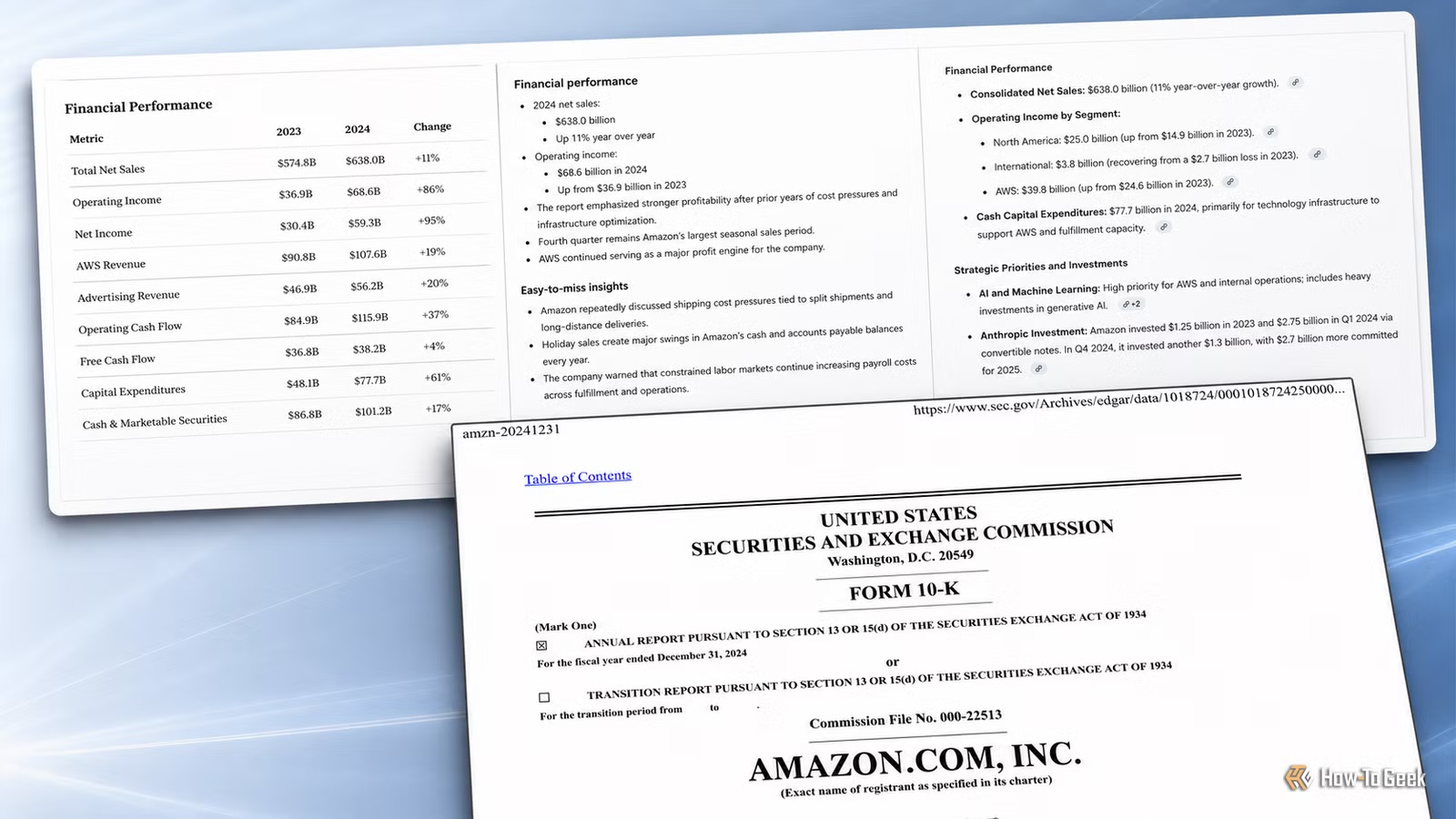
For the test, he used a public 121-page Amazon investor filing. Same PDF, same prompt, uploaded to Gemini, ChatGPT, and Claude. The prompt asked for a structured summary with top takeaways, business segments, financial performance, strategic priorities, risks, and easy-to-miss insights.
What Made This a Fair Test
Hein was careful about methodology. He didn't ask three AI tools three slightly different questions and then pretend the results were comparable. Each tool received the exact same file and the exact same prompt.
The judging criteria matched real work situations. Did the summary include the important parts of the document? Did it use actual numbers instead of vague business language? Did it avoid fluff? Was it easy to scan? Most importantly, could you rely on it without immediately rereading the whole PDF?
This last point matters most for professionals. If you're going to quote specific findings, figures, and claims from long documents, you need an AI that gives you the specifics, not one that sounds polished but leaves out the substance.

Why This Test Matters for Your Workflow
PDF summarization is one of the most common AI use cases in professional settings. Investor filings, research reports, legal documents, technical specifications. These all land on desks as dense PDFs that someone has to parse.
The difference between a good AI summary and a mediocre one is the difference between 10 minutes of review and 2 hours of reading. But only if you can trust what the AI gives you.
Hein's criteria focused on what actually matters: accuracy with specific numbers, completeness without padding, and structure that makes scanning easy. These are the same criteria you'd use evaluating a summary from a junior analyst.
The Verdict: One Pulled Ahead
According to Hein, one AI "pulled ahead pretty quickly." While the full detailed comparison shows how each tool handled the prompt, the core finding was clear: the tools are not interchangeable for this task.
The winning tool delivered what Hein was looking for: a summary that saved time without creating anxiety about what got left out. It used actual figures from the filing rather than generic business language. It structured information in a way that made scanning practical.
| Criteria | What Good Looks Like | What Bad Looks Like |
|---|---|---|
| Specificity | Actual numbers and dates from source | Vague phrases like 'significant growth' |
| Completeness | All major sections covered | Key sections skipped or glossed over |
| Structure | Clear headings, easy to scan | Wall of text requiring close reading |
| Reliability | Can quote from it confidently | Need to verify everything in original |
What This Means for Picking Your Tool
If you're summarizing documents for your own reference, any of these tools will give you a starting point. But if you're using AI summaries for work product, reports, or decisions that matter, the choice of tool makes a real difference.
The test also highlights the importance of prompting. Hein asked for specific elements: takeaways, business segments, financial performance, strategic priorities, risks, and easy-to-miss insights. A generic "summarize this" prompt would likely produce worse results from all three tools.
For professionals who regularly work with long PDFs, running your own comparison with a document from your actual work might be worth the hour it takes. The tool that works best for investor filings might not be the same one that handles legal contracts or technical documentation most effectively.
Another practical test of AI capabilities in everyday tasks
Logicity's Take
Frequently Asked Questions
Which AI is best for summarizing long PDFs?
In this test using a 121-page Amazon investor filing, Claude produced the most reliable summary with specific numbers and clear structure. However, results may vary by document type.
Can AI accurately summarize investor filings?
Yes, but quality varies significantly between tools. The best results come from structured prompts asking for specific elements like financials, risks, and strategic priorities.
How should I prompt AI for document summaries?
Ask for specific elements you need: top takeaways, key metrics, risks, and any details that are easy to miss. Generic 'summarize this' prompts produce weaker results.
Is ChatGPT or Claude better for document analysis?
This test found Claude produced more accurate, structured summaries of a long investor filing. ChatGPT and Gemini both had issues with vague language or missing key details.
Need Help Implementing This?
Source: How-To Geek
Manaal Khan
Tech & Innovation Writer
اقرأ أيضاً

رأي مغاير: كيف يؤثر اختراق الأمن الداخلي الأميركي على شركاتنا الخاصة؟
في ظل اختراق عقود الأمن الداخلي الأميركي مع شركات خاصة، نناقش تأثير هذا الاختراق على مستقبل الأمن السيبراني. نستعرض الإحصاءات الموثوقة ونناقش كيف يمكن للشركات الخاصة أن تتعامل مع هذا التهديد. استمتع بقراءة هذا التحليل العميق

الإنسان في زمن ما بعد الوجود البشري: نحو نظام للتعايش بين الإنسان والروبوت - Centre for Arab Unity Studies
في هذا المقال، سنناقش كيف يمكن للبشر والروبوتات التعايش في نظام متكامل. سنستعرض التحديات والحلول المحتملة التي تضعها شركات مثل جوجل وأمازون. كما سنلقي نظرة على التوقعات المستقبلية وفقًا لتقرير ماكنزي

إطلاق ناسا لمهمة مأهولة إلى القمر: خطوة تاريخية نحو استكشاف الفضاء
تعتبر المهمة الجديدة خطوة هامة نحو استكشاف الفضاء وتطوير التكنولوجيا. سوف تشمل المهمة إرسال رواد فضاء إلى سطح القمر لconducting تجارب علمية. ستسهم هذه المهمة في تطوير فهمنا للفضاء وتحسين التكنولوجيا المستخدمة في استكشاف الفضاء.