Claude vs ChatGPT vs Gemini: Which AI Actually Explains Bugs?
Key Takeaways
- Claude provided the best debugging experience by explaining the bug step-by-step before offering a fix
- ChatGPT fixed the code but failed to explain the underlying Python behavior, training users to stop thinking
- The 'vibe coding' trend of blindly accepting AI fixes is creating un-debuggable technical debt across teams
The Test: A Classic Python Trap
Tech writer Jorge Aguilar ran a simple experiment. He fed the same buggy Python code to Gemini, Claude, and ChatGPT, then watched what came back. The bug was a classic Python gotcha: using a dictionary or list as a default function parameter.
Here's why it breaks. Python creates default arguments once, when the function is first defined. Not each time you call the function. So every call shares the same dictionary. Data from one user can bleed into another user's session. It's a subtle, dangerous bug that junior developers hit constantly.
Any AI can rewrite broken code. The real test is whether it can teach you why the code was broken in the first place.
Claude: Step-by-Step Teaching
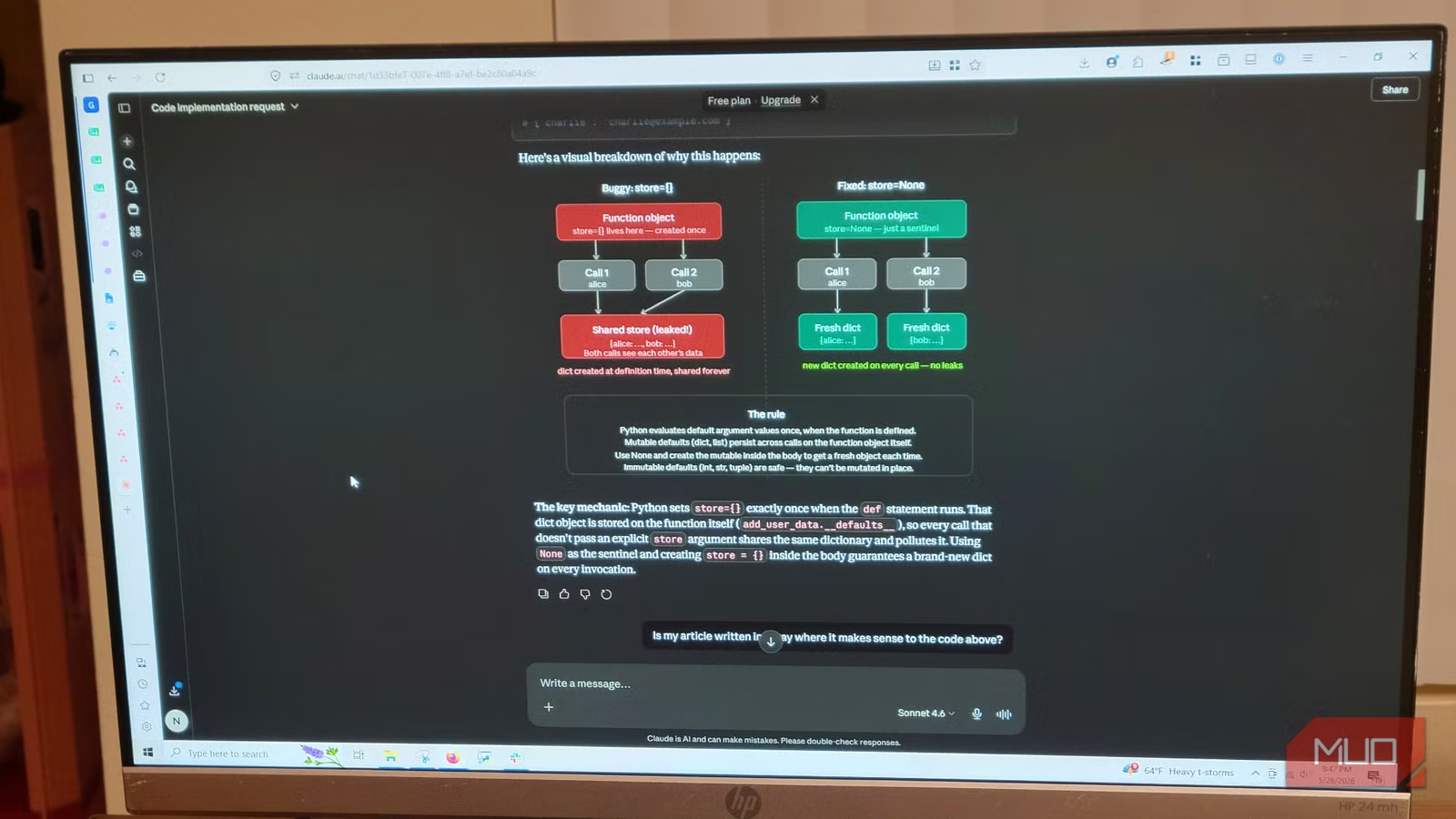
Claude performed best. Instead of just patching the code, it walked through the problem step by step. It pointed to the exact line where things went wrong. It explained that Python stores default arguments on the function object itself at definition time.
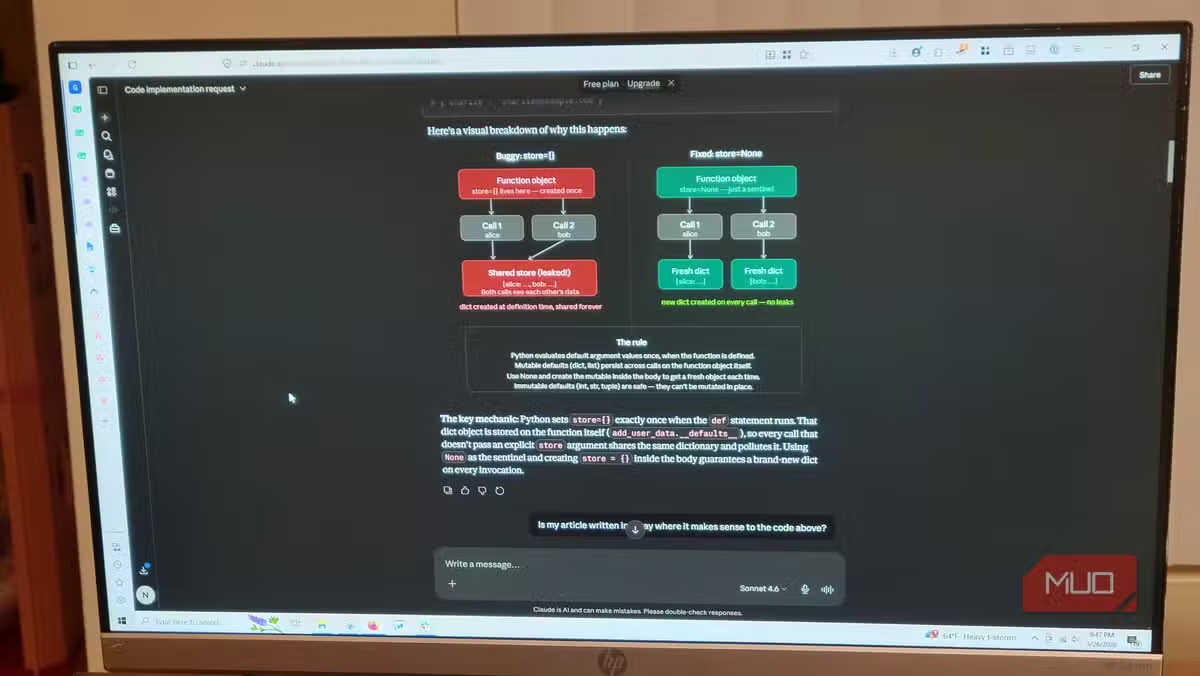
Claude then explained the fix: use None as the default and create a fresh object inside the function body. This gives you something you can actually use elsewhere. You understand the pattern, so you can spot the same mistake in future code.
“Fixing a bug is only half the battle; if you don't understand *why* it broke, you've just created a ticking time bomb for the next deploy.”
— Jorge Aguilar, Writer/Editor
Gemini: Solid Reasoning
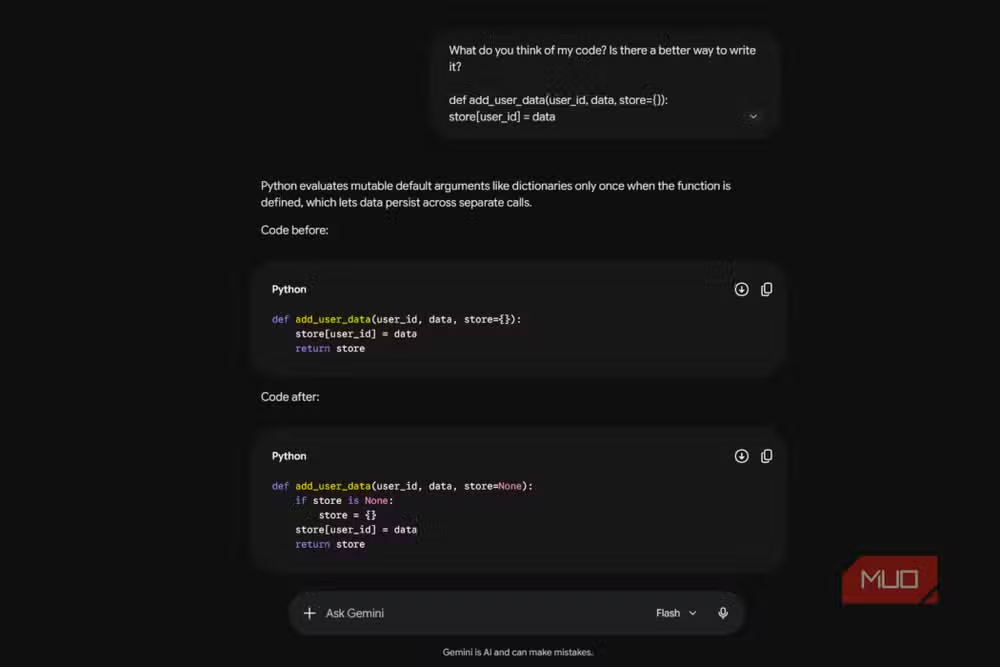
Gemini also performed well. It thought through the problem clearly and provided context about the underlying Python behavior. While not as detailed as Claude's walkthrough, it gave Aguilar enough to understand why the bug existed.
ChatGPT: Fixed Code, No Explanation
ChatGPT did exactly what you'd hope an AI wouldn't do. It handed back a fixed version with no explanation. On the surface, that looks like a win. The error is gone. The code runs. Problem solved.
But that's actually the result you don't want. You learned nothing. You can't spot the same bug next time. You're now dependent on an AI to catch and fix issues you don't understand.
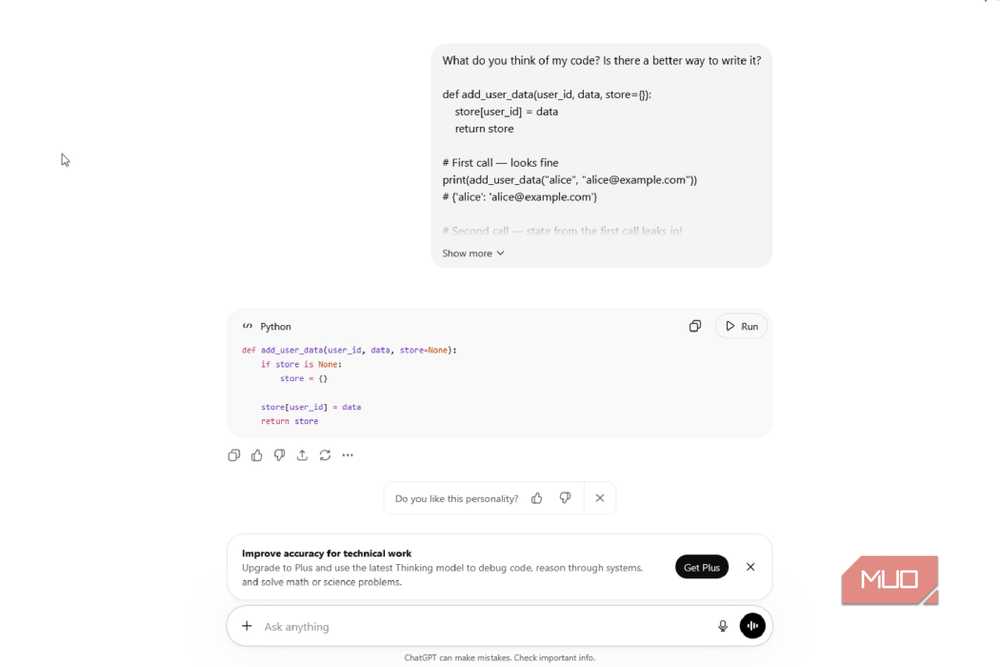
Aguilar put it bluntly: giving back bare code should be considered a failure. If an AI can't explain why something broke, it might as well be wrong.
The Vibe Coding Problem
This test highlights a growing concern in software development: vibe coding. The term, coined by AI researcher Andrej Karpathy, describes a workflow where developers blindly accept AI-generated code without reviewing or understanding it.
“I 'Accept All' always, I don't read the diffs anymore.”
— Andrej Karpathy, AI Researcher
According to 2025 industry surveys, 70% of AI-generated code gets accepted without deep review in vibe coding workflows. The consequences are real. One estimate puts the annual productivity loss from AI-hallucinated technical debt at $1.2 billion across major enterprise software teams.
Tools like Cursor and Replit have made it easy to build software via natural language prompts. This enables rapid prototyping. But critics argue it creates a dangerous knowledge gap. Developers end up managing systems they don't understand. The result is un-debuggable spaghetti code and security vulnerabilities.
A viral cautionary tale circulated on X earlier this year. A developer built an entire SaaS product using AI, only to suffer immediate security breaches. The root cause: they didn't understand the code the AI had written for them.
Why Explanation Matters
Good debugging isn't just about making the error go away. It's how developers build a real understanding of how their systems work. An AI that explains its reasoning helps you stay in control of your own code. One that just generates patches trains you to stop thinking.
The debate is heated in developer circles. Many senior engineers view vibe coding as a reckless abandonment of core software engineering principles. Proponents argue it democratizes software creation for non-technical users. The consensus seems to be that AI is excellent for boilerplate but dangerously unreliable for architectural reasoning and edge-case debugging.
Related coverage on AI coding tool changes affecting developer workflows
Practical Takeaways
- When debugging with AI, demand explanations. If the model just hands back fixed code, ask it to explain why the original broke.
- Claude currently offers the best teaching-oriented debugging experience for Python issues.
- Gemini provides solid reasoning but less detailed walkthroughs.
- ChatGPT's default behavior of fixing without explaining can reinforce bad habits.
- Always review AI-generated diffs. The 'Accept All' workflow creates technical debt you'll pay for later.
| Model | Fixed the Bug | Explained Root Cause | Teaching Quality |
|---|---|---|---|
| Claude | Yes | Yes | Step-by-step walkthrough |
| Gemini | Yes | Yes | Solid reasoning provided |
| ChatGPT | Yes | No | Bare code only |
Logicity's Take
Frequently Asked Questions
Which AI is best for debugging Python code?
In this test, Claude performed best by explaining the root cause of bugs step-by-step before offering fixes. Gemini also provided good reasoning. ChatGPT fixed the code but didn't explain why it was broken.
What is a mutable default argument bug in Python?
Python creates default function arguments once at definition time, not each call. If you use a list or dictionary as a default, every call shares the same object. Data can bleed between calls, causing subtle bugs.
What is vibe coding?
Vibe coding is a workflow where developers accept AI-generated code without reviewing or understanding it. The term was coined by Andrej Karpathy. Critics say it creates un-debuggable technical debt.
Should developers trust AI-generated code fixes?
AI fixes should be reviewed and understood, not blindly accepted. If an AI can't explain why code was broken, you won't be able to spot similar bugs in the future or maintain the codebase effectively.
How do I get better debugging explanations from ChatGPT?
Explicitly ask ChatGPT to explain why the code was broken before providing a fix. By default, it may just return corrected code without context.
Need Help Implementing This?
Source: MakeUseOf
Huma Shazia
Senior AI & Tech Writer
اقرأ أيضاً

رأي مغاير: كيف يؤثر اختراق الأمن الداخلي الأميركي على شركاتنا الخاصة؟
في ظل اختراق عقود الأمن الداخلي الأميركي مع شركات خاصة، نناقش تأثير هذا الاختراق على مستقبل الأمن السيبراني. نستعرض الإحصاءات الموثوقة ونناقش كيف يمكن للشركات الخاصة أن تتعامل مع هذا التهديد. استمتع بقراءة هذا التحليل العميق

الإنسان في زمن ما بعد الوجود البشري: نحو نظام للتعايش بين الإنسان والروبوت - Centre for Arab Unity Studies
في هذا المقال، سنناقش كيف يمكن للبشر والروبوتات التعايش في نظام متكامل. سنستعرض التحديات والحلول المحتملة التي تضعها شركات مثل جوجل وأمازون. كما سنلقي نظرة على التوقعات المستقبلية وفقًا لتقرير ماكنزي

إطلاق ناسا لمهمة مأهولة إلى القمر: خطوة تاريخية نحو استكشاف الفضاء
تعتبر المهمة الجديدة خطوة هامة نحو استكشاف الفضاء وتطوير التكنولوجيا. سوف تشمل المهمة إرسال رواد فضاء إلى سطح القمر لconducting تجارب علمية. ستسهم هذه المهمة في تطوير فهمنا للفضاء وتحسين التكنولوجيا المستخدمة في استكشاف الفضاء.