ChatGPT Now Connects to Bank Accounts via Plaid
Key Takeaways
- ChatGPT now connects to over 12,000 financial institutions through Plaid integration
- The feature creates a unified dashboard showing spending, investments, subscriptions, and upcoming payments
- Currently limited to ChatGPT Pro users in the US on web and iOS
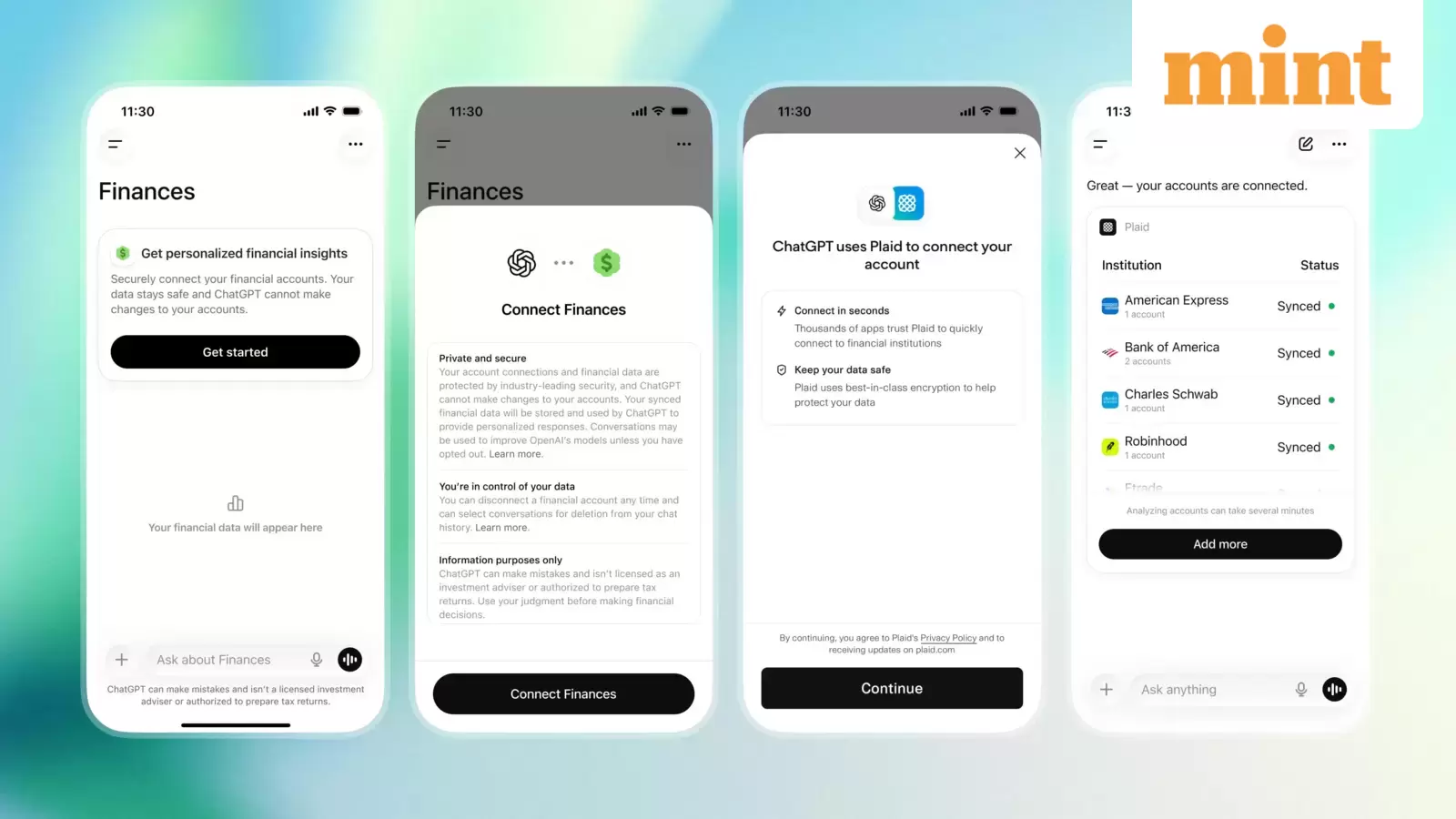
OpenAI has added a personal finance feature to ChatGPT that lets users connect their bank accounts, investment portfolios, and credit cards directly to the AI assistant. The feature uses financial technology platform Plaid to link over 12,000 institutions including American Express, Bank of America, and Robinhood.
Once connected, ChatGPT creates a dashboard showing portfolio performance, spending trends, upcoming payments, and subscriptions in one place. Users can then ask the AI questions about their actual financial situation rather than hypotheticals.
How the Feature Works
Users can access the feature two ways. They can click the new Finances section in ChatGPT's sidebar and hit 'Get started'. Or they can type commands like '@Finances, connect my accounts' directly in the chat.
After connecting, ChatGPT syncs and categorizes transactions. This process can take several minutes depending on account history.
OpenAI gave examples of what users can ask once connected:
- "Help me build a plan to buy a house in my area in the next 5 years"
- "Look at my subscriptions and help me choose what to cancel"
- "Can I afford to take a lower-paying job if it gives me more flexibility to be home with the kids"
Users can also add context about their financial situation, like a mortgage or savings goal. ChatGPT stores this under a feature called Financial Memories for future conversations.
What ChatGPT Can and Can't See
OpenAI drew clear lines around data access. ChatGPT can see balances, transactions, investments, and liabilities. It uses this data to visualize finances and answer questions.
The chatbot cannot see full account numbers. It also cannot make changes to any connected accounts. This is a view-only integration.
“With your financial accounts connected, ChatGPT can combine that reasoning with your real financial context and what you've shared about your goals, lifestyle, and priorities, helping you spot patterns, understand trade-offs, and plan for big decisions in a way that feels more personal and complete.”
— OpenAI blog post
The company noted that personal finance conversations fall under the same model training settings as regular ChatGPT chats. Users who have opted out of training will have their financial conversations excluded too.
Availability and Future Plans
The feature is rolling out to ChatGPT Pro users in the US on web and iOS. OpenAI has not announced Android availability yet.
The company plans to bring the feature to Plus subscribers eventually. It also announced that Intuit integration is coming later this year, which would add TurboTax, QuickBooks, and Mint data to the mix.
OpenAI also mentioned that its new GPT-5.5 model handles personal finance queries better than previous versions, though the company did not provide specifics on what "stronger" means in practice.
A deeper look at the privacy implications of connecting financial accounts to AI
The Competitive Context
Personal finance apps like Mint (now Credit Karma), YNAB, and Copilot Money already aggregate financial accounts. ChatGPT's entry adds conversational AI to the mix. Instead of navigating menus and charts, users can ask questions in plain English.
The 200 million monthly users asking finance questions suggests OpenAI saw demand for this feature. Those users were already getting generic advice. Now they can get answers based on their actual numbers.
✅ Pros
- • Natural language queries replace menu navigation
- • Unified view across 12,000+ institutions
- • Financial Memories feature provides persistent context
- • Cannot make account changes, reducing security risk
❌ Cons
- • US-only and Pro-tier only at launch
- • No Android support yet
- • Financial data subject to ChatGPT's training policies unless opted out
- • Relies on Plaid's connection stability
Logicity's Take
Frequently Asked Questions
Can ChatGPT access my bank account and make transactions?
No. ChatGPT can view balances, transactions, and investments but cannot see full account numbers or make any changes to accounts.
Which banks work with ChatGPT's new finance feature?
Over 12,000 financial institutions through Plaid, including American Express, Bank of America, and Robinhood. Intuit integration is coming later this year.
Is ChatGPT's finance feature available on Android?
Not yet. It's currently available on web and iOS for ChatGPT Pro users in the US only.
Will ChatGPT use my financial data to train its AI models?
Financial conversations follow the same model training settings as regular chats. If you've opted out of training, your financial data is excluded.
How much does ChatGPT's personal finance feature cost?
It's currently included with ChatGPT Pro subscription. OpenAI plans to bring it to Plus subscribers later.
Need Help Implementing This?
Source: mint / Aman Gupta
Huma Shazia
Senior AI & Tech Writer
اقرأ أيضاً

رأي مغاير: كيف يؤثر اختراق الأمن الداخلي الأميركي على شركاتنا الخاصة؟
في ظل اختراق عقود الأمن الداخلي الأميركي مع شركات خاصة، نناقش تأثير هذا الاختراق على مستقبل الأمن السيبراني. نستعرض الإحصاءات الموثوقة ونناقش كيف يمكن للشركات الخاصة أن تتعامل مع هذا التهديد. استمتع بقراءة هذا التحليل العميق

الإنسان في زمن ما بعد الوجود البشري: نحو نظام للتعايش بين الإنسان والروبوت - Centre for Arab Unity Studies
في هذا المقال، سنناقش كيف يمكن للبشر والروبوتات التعايش في نظام متكامل. سنستعرض التحديات والحلول المحتملة التي تضعها شركات مثل جوجل وأمازون. كما سنلقي نظرة على التوقعات المستقبلية وفقًا لتقرير ماكنزي

إطلاق ناسا لمهمة مأهولة إلى القمر: خطوة تاريخية نحو استكشاف الفضاء
تعتبر المهمة الجديدة خطوة هامة نحو استكشاف الفضاء وتطوير التكنولوجيا. سوف تشمل المهمة إرسال رواد فضاء إلى سطح القمر لconducting تجارب علمية. ستسهم هذه المهمة في تطوير فهمنا للفضاء وتحسين التكنولوجيا المستخدمة في استكشاف الفضاء.