AI Eats Memory Supply: Chipflation to Squeeze Hardware Through 2027
Key Takeaways
- Memory supply for non-AI markets will fall 12-15% short through 2027 despite 30% capacity expansion
- AI demand has pushed memory prices up six-fold in the past year
- Hyperscalers are locking in supply through long-term agreements, leaving traditional OEMs fighting over scraps
The Memory Squeeze Nobody Predicted
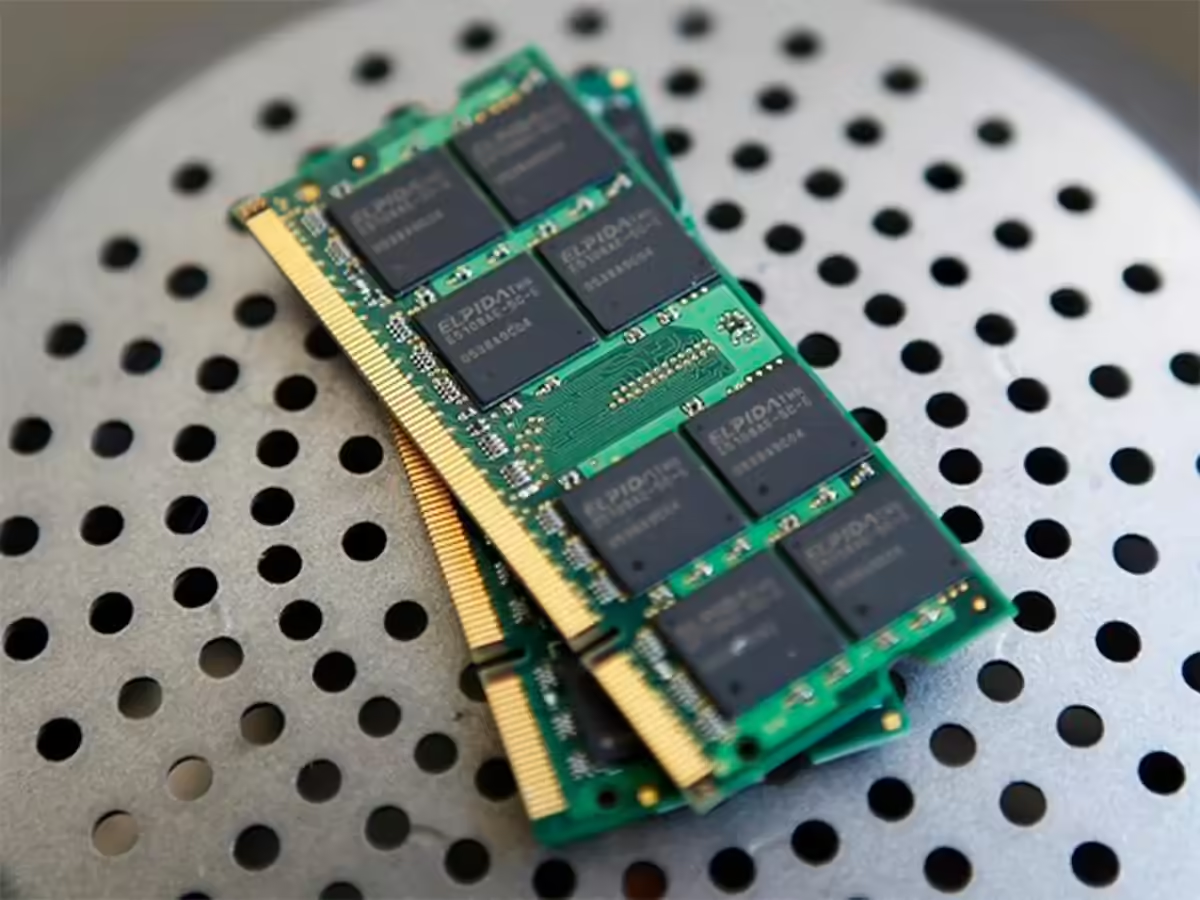
Memory storage will remain a structural bottleneck through 2027. AI demand continues to absorb Dynamic Random-Access Memory (DRAM), High Bandwidth Memory (HBM), and enterprise Solid-State Drive (SSD) supply faster than manufacturers can expand capacity.
Morgan Stanley expects allocation-based supply chains, not spot pricing, to dominate the memory market. Non-AI buyers will face tighter pools, higher costs, and weaker access. The traditional semiconductor cycle where supply eventually catches up to demand? That's not happening this time.
“This is a persistent supply-demand reset that won't be fixed by simply adding new capacity. AI is absorbing everything, leaving the rest of the market in a structural squeeze.”
— Shawn Kim, Head of Europe and Asia Technology Team at Morgan Stanley
The Numbers Behind the Crisis
Total DRAM wafer capacity will expand 30% by 2027. Sounds like good news. It isn't. Supply available for smartphones, PCs, autos, and industrial markets is projected to fall 12-15% short anyway. The reason: suppliers are prioritizing high-margin HBM and server memory for AI applications.
AI demand has pushed memory prices up six-fold in the past year. Hyperscalers and AI buyers are locking in capacity through long-term agreements, prepayments, and strategic commitments. That replaces commodity-market pricing and leaves a smaller, more volatile supply pool for traditional OEMs.
What Is Chipflation?
Morgan Stanley coined the term "Chipflation" to describe a fundamental shift in microelectronics economics. For decades, chip prices followed a predictable pattern: they fell. Moore's Law meant more transistors for less money, year after year. That era is ending.
Memory inflation is no longer just a component-price issue. It's a structural change affecting the entire digital economy. HBM is essential for AI accelerators but consumes disproportionate advanced DRAM capacity. As suppliers crowd HBM, server DRAM, and enterprise SSDs, less remains for smartphones, PCs, autos, networking, and industrial markets.
Winners and Losers in the New Memory Economy
The divide between memory suppliers and downstream hardware companies is sharpening. Memory chip producers benefit from stronger pricing, margins, and visibility. Samsung, SK Hynix, and Micron are in an enviable position.
OEMs and cloud buyers outside AI face a different reality. They must absorb higher cost of goods sold, pass costs to consumers, cut specs, delay launches, or face demand destruction in price-sensitive consumer markets.
- Memory suppliers: stronger pricing, better margins, long-term visibility
- Large cloud buyers: can secure supply through prepayments and capitalize costs
- Consumer hardware OEMs: allocation stress, higher costs, spec cuts, launch delays
- Non-AI cloud buyers: squeezed between rising costs and competitive pricing pressure
Samsung's capacity expansion plans amid the memory supply crunch
Consumer Impact: Beyond the CPI Numbers
Headline consumer inflation effects may look modest due to small basket weights. But the pressure shows up elsewhere: in producer price indexes, corporate margins, cloud bills, capex budgets, and delayed technology deployment.
Insufficient chip supply can slow data center projects, cloud development, and productivity growth. The crisis began as an AI infrastructure constraint but is now spreading across the digital economy.
Tech communities are already debating which consumer sectors will feel the squeeze first. The consensus points toward mid-range gaming laptops and smartphones seeing significant price hikes or downgraded specs by late 2026. DIY PC builders are predicting a return to what some call the "stagnation era" where hardware remains expensive and difficult to upgrade for years.
Policy Won't Save Us Soon
Policy responses like US or China subsidies, tax credits, or permitting reform could ease pressure eventually. But supply responses take years to build, qualify, and ramp. A new fab announced today won't produce chips until 2028 at the earliest.
With US policy assumed to stay restrictive on China chip exports, near-term relief looks unlikely. The result is a durable supply-demand reset rather than a typical semiconductor upcycle.
How AI data center demand is reshaping other industries
What Happens Next
Chipflation is demand-driven by AI infrastructure rollout, making this cycle broader than a normal semiconductor upcycle. The fundamentals suggest this pressure continues through at least 2027.
Companies outside the AI supply chain face strategic choices. Lock in supply through long-term agreements if you can afford the capital commitment. Redesign products around available components. Accept lower margins. Or exit price-sensitive market segments entirely.
For consumers, expect higher prices, slower upgrade cycles, and possible spec downgrades on non-premium devices. The golden age of cheap, ever-improving consumer electronics may be pausing.
Logicity's Take
Frequently Asked Questions
What is chipflation?
Chipflation is Morgan Stanley's term for the shift from historical price deflation in microelectronics toward sustained price increases, driven primarily by AI demand absorbing memory supply.
How long will the memory shortage last?
Morgan Stanley projects the structural shortage will persist through at least 2027, as new capacity takes years to build, qualify, and ramp to production.
Why can't chip manufacturers just make more memory?
They are expanding, with 30% more DRAM wafer capacity expected by 2027. But AI applications consume that capacity and more, leaving non-AI markets with 12-15% less supply than they need.
Which products will be most affected by chipflation?
Mid-range smartphones, gaming laptops, PCs, automotive systems, and networking equipment face the biggest squeeze, as suppliers prioritize high-margin AI memory products.
Can government subsidies fix the memory shortage?
Subsidies and policy reforms can help eventually, but building new fabs takes 3-5 years minimum. Near-term relief is unlikely regardless of policy changes.
Need Help Implementing This?
Source: Tech-Economic Times / ET
Manaal Khan
Tech & Innovation Writer
اقرأ أيضاً

رأي مغاير: كيف يؤثر اختراق الأمن الداخلي الأميركي على شركاتنا الخاصة؟
في ظل اختراق عقود الأمن الداخلي الأميركي مع شركات خاصة، نناقش تأثير هذا الاختراق على مستقبل الأمن السيبراني. نستعرض الإحصاءات الموثوقة ونناقش كيف يمكن للشركات الخاصة أن تتعامل مع هذا التهديد. استمتع بقراءة هذا التحليل العميق

الإنسان في زمن ما بعد الوجود البشري: نحو نظام للتعايش بين الإنسان والروبوت - Centre for Arab Unity Studies
في هذا المقال، سنناقش كيف يمكن للبشر والروبوتات التعايش في نظام متكامل. سنستعرض التحديات والحلول المحتملة التي تضعها شركات مثل جوجل وأمازون. كما سنلقي نظرة على التوقعات المستقبلية وفقًا لتقرير ماكنزي

إطلاق ناسا لمهمة مأهولة إلى القمر: خطوة تاريخية نحو استكشاف الفضاء
تعتبر المهمة الجديدة خطوة هامة نحو استكشاف الفضاء وتطوير التكنولوجيا. سوف تشمل المهمة إرسال رواد فضاء إلى سطح القمر لconducting تجارب علمية. ستسهم هذه المهمة في تطوير فهمنا للفضاء وتحسين التكنولوجيا المستخدمة في استكشاف الفضاء.