AGI AI858 review: PCIe 5.0 SSD hits 14,000 MB/s for $254
Key Takeaways
- The AGI AI858 2TB reaches 14,000 MB/s sequential reads and 13,000 MB/s writes at $254, undercutting most PCIe 5.0 competitors
- Silicon Motion's 6nm SM2508 controller runs cooler than first-gen PCIe 5.0 chips, and AGI includes a heatsink
- The drive lacks companion software, but third-party tools like CrystalDiskInfo fill the gap
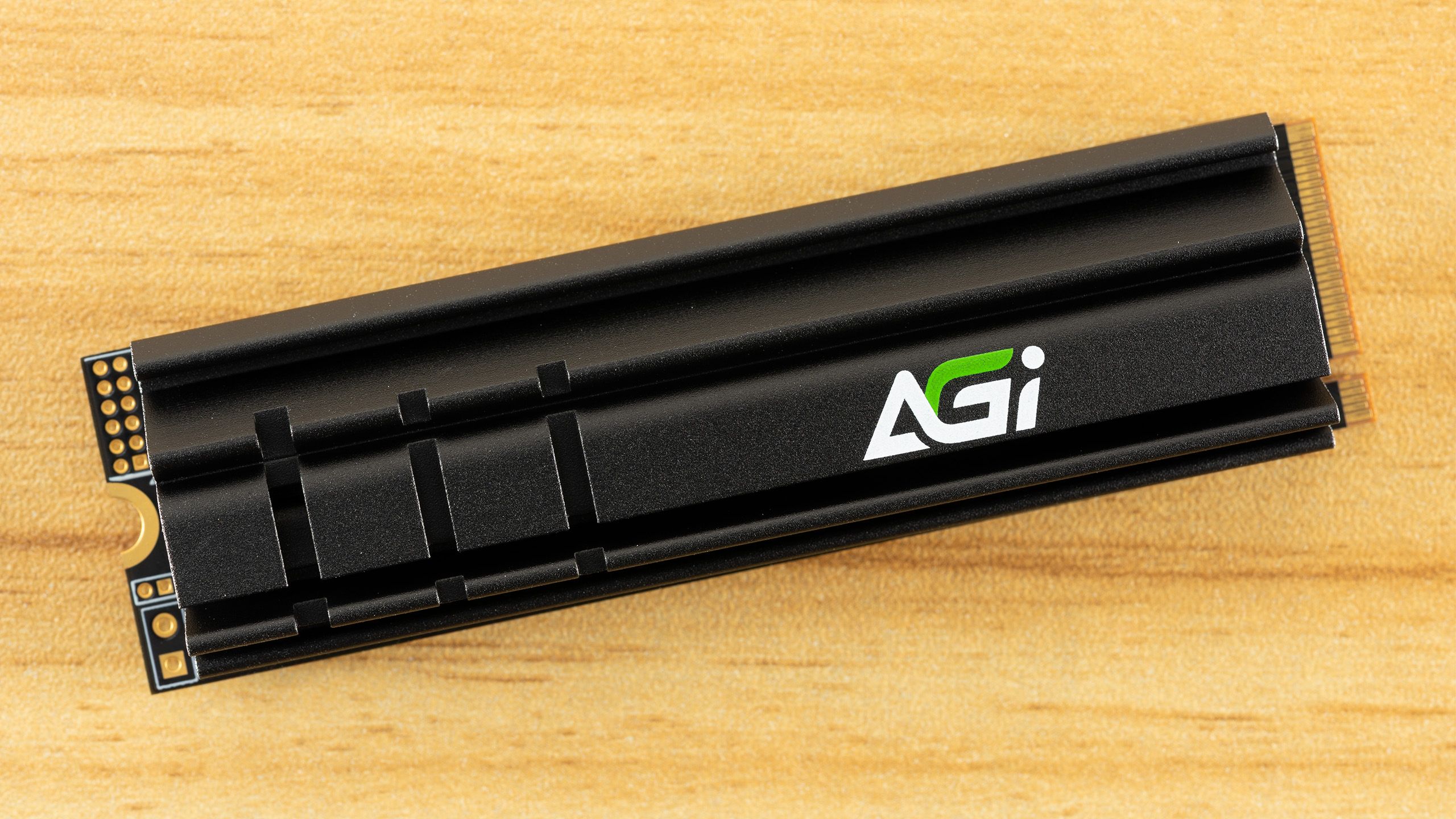
AGI's AI858 2TB SSD hits 14,000 MB/s sequential reads for $254, making it one of the cheapest ways to tap PCIe 5.0 speeds. Tom's Hardware tested the drive and found solid all-around performance, low random read latency, and an included heatsink. The catch? Zero software support from AGI.
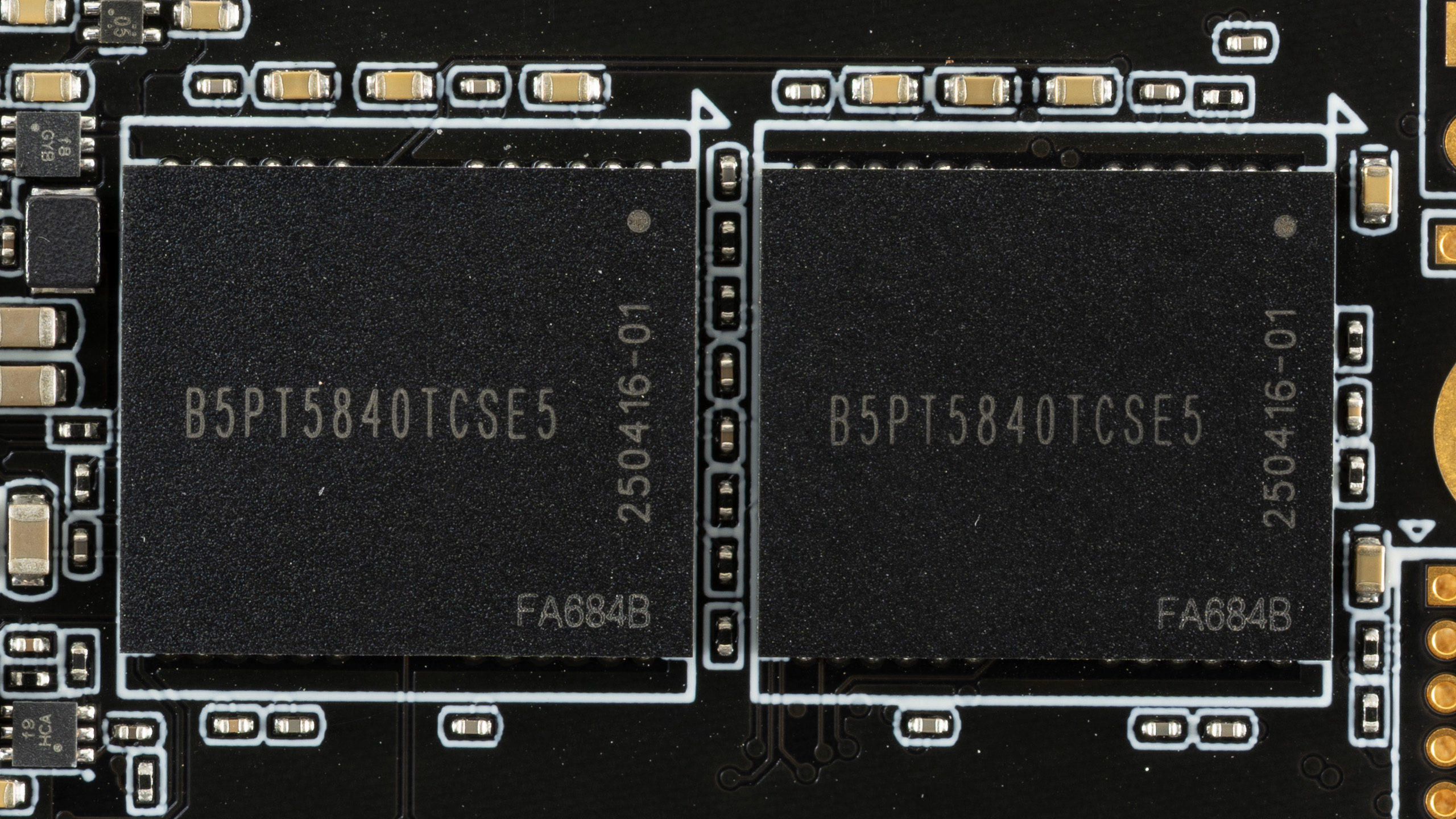
AGI is not a household name. The company sells memory products at steep discounts, and its previous AI818 SSD earned a lukewarm reception two years ago. The AI858 represents a genuine course correction, pairing Micron's 232-layer TLC flash with Silicon Motion's SM2508 controller, the same 6nm chip powering several higher-priced competitors.
What speeds does the AGI AI858 actually deliver?
The 2TB model lists 14,000 MB/s sequential reads and 13,000 MB/s sequential writes. AGI does not publish random IOPS figures, but Tom's Hardware notes that the SM2508 and Micron flash combination typically reaches 700K to 1,000K IOPS, in line with other drives in this class. The 1TB variant drops to 10,000 MB/s writes, so the 2TB or 4TB capacities offer the best value per dollar spent.
Pricing sits at $254 for 2TB and $513 for 4TB at the time of review. That undercuts the Seagate FireCuda 540 and Samsung 990 Pro while matching or beating their headline speeds. The 1TB model at $254 is harder to justify given the write speed penalty.
Why does the SM2508 controller matter?
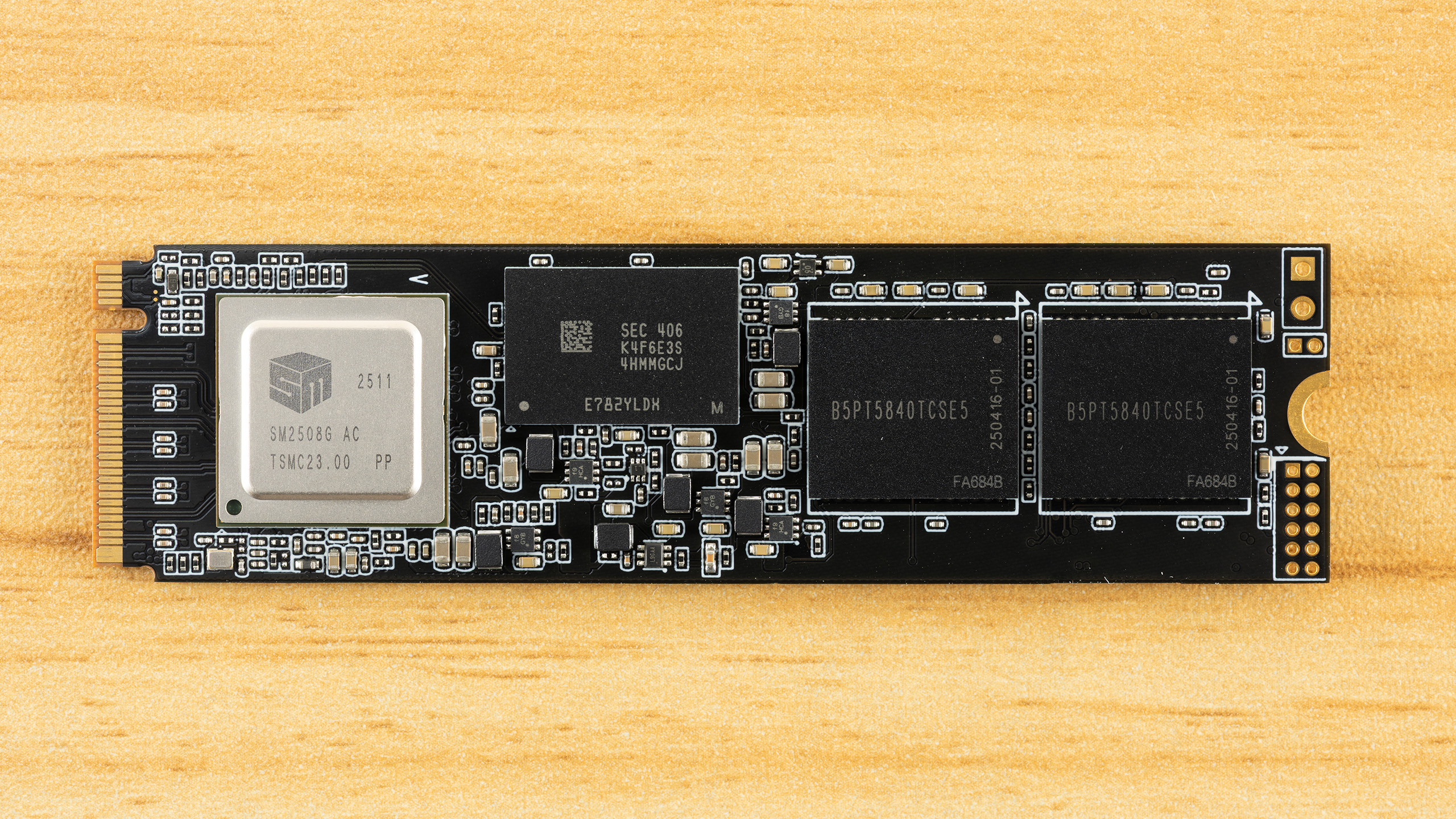
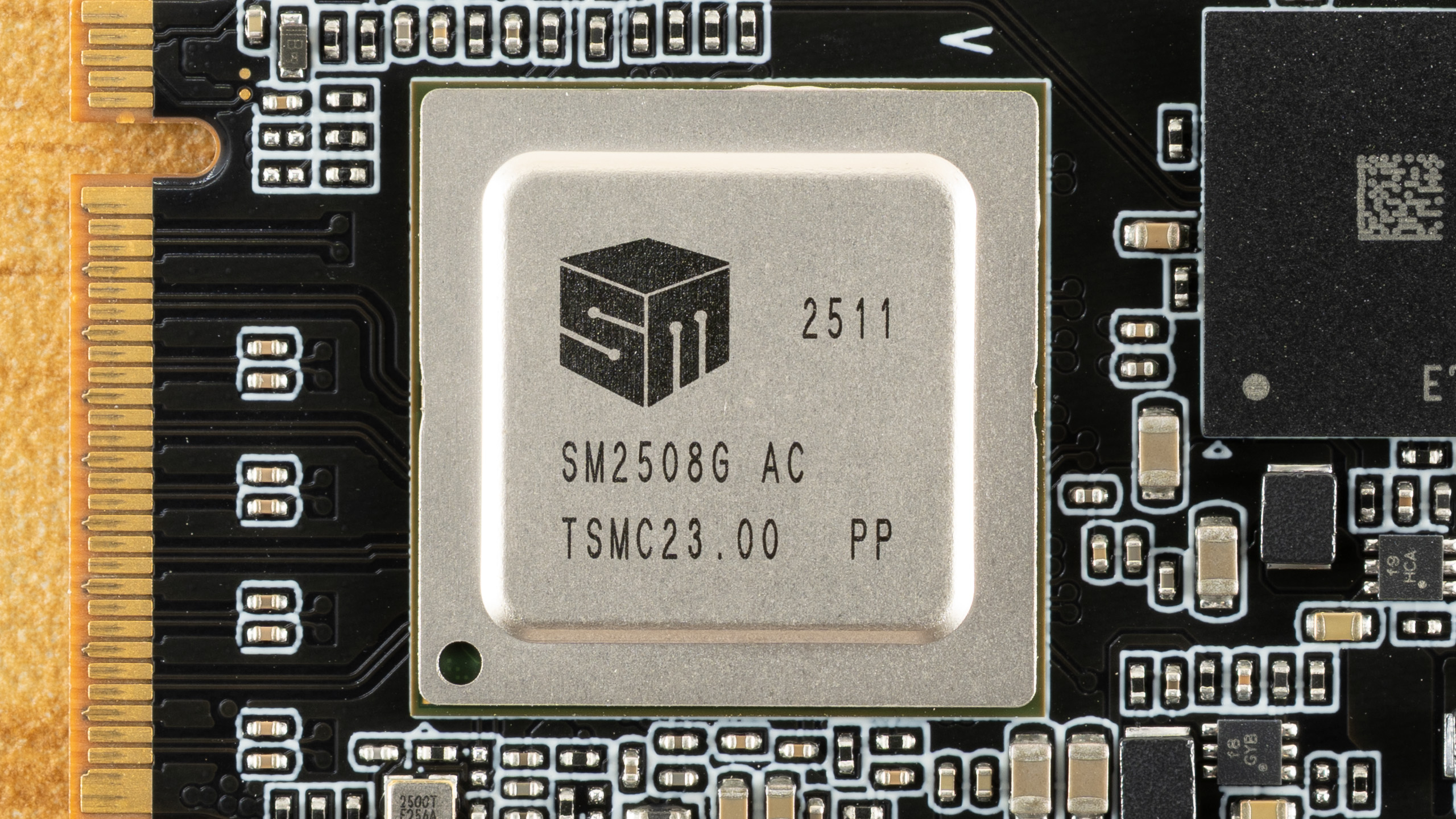
Silicon Motion's SM2508 is built on a 6nm process, a significant shrink from the 12nm and 7nm controllers that launched with early PCIe 5.0 drives. Smaller transistors mean lower power draw and less heat. First-gen PCIe 5.0 SSDs ran hot enough to require active cooling or throttle under sustained loads. The SM2508 sidesteps that problem.
AGI pairs the controller with a single Samsung LPDDR4 DRAM module in a 2GB configuration. DRAM-backed SSDs maintain a mapping table in fast volatile memory, which lowers latency on random reads, the most common operation for OS drives and databases.
Does the included heatsink work?
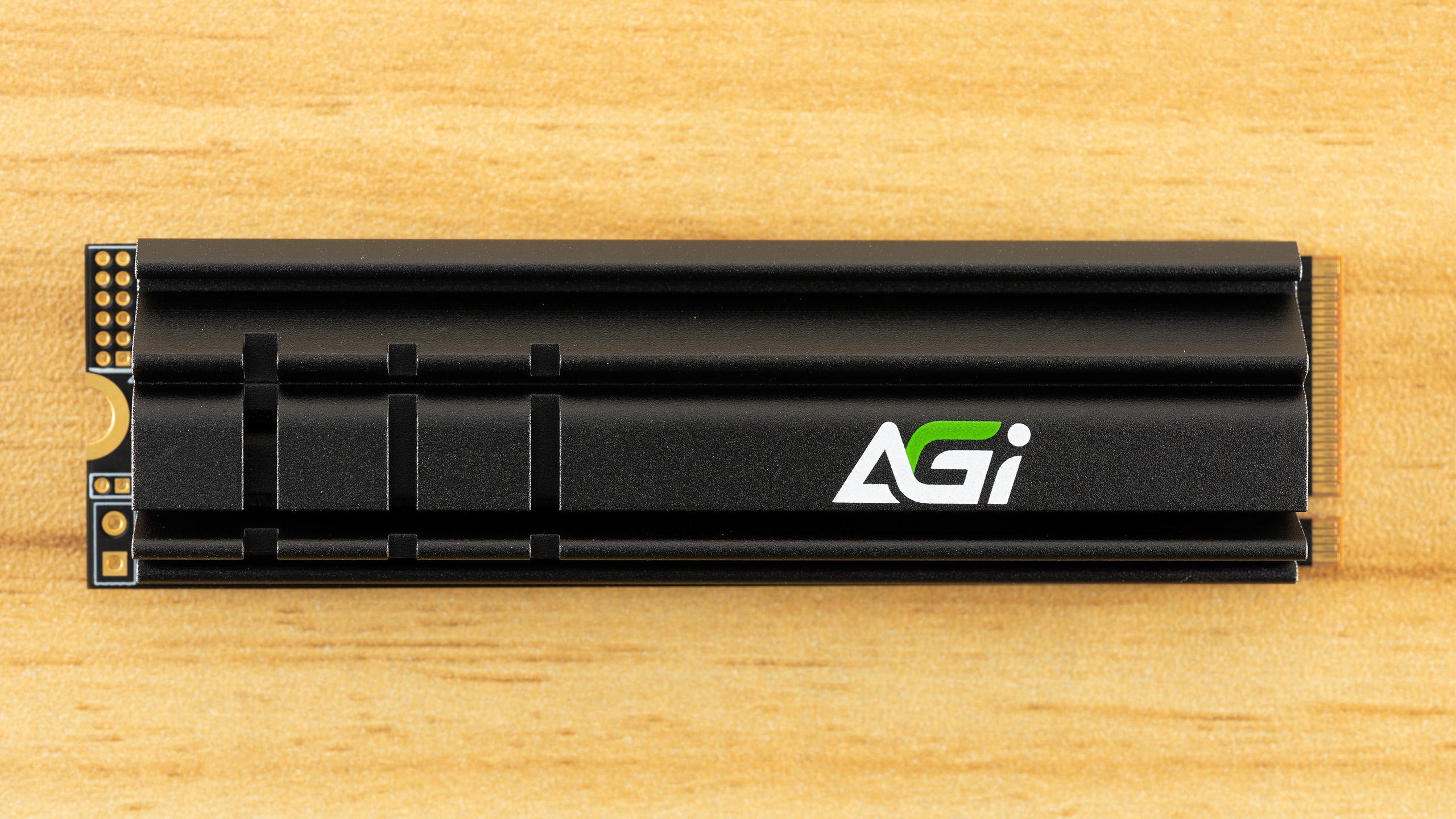
Yes. The AI858 ships with a heatsink pre-installed, and Tom's Hardware calls it effective. For desktop builds, this is a welcome inclusion. PS5 owners can use the drive in a pinch, but the double-sided design and heatsink height may complicate installation in slimmer enclosures or laptops.
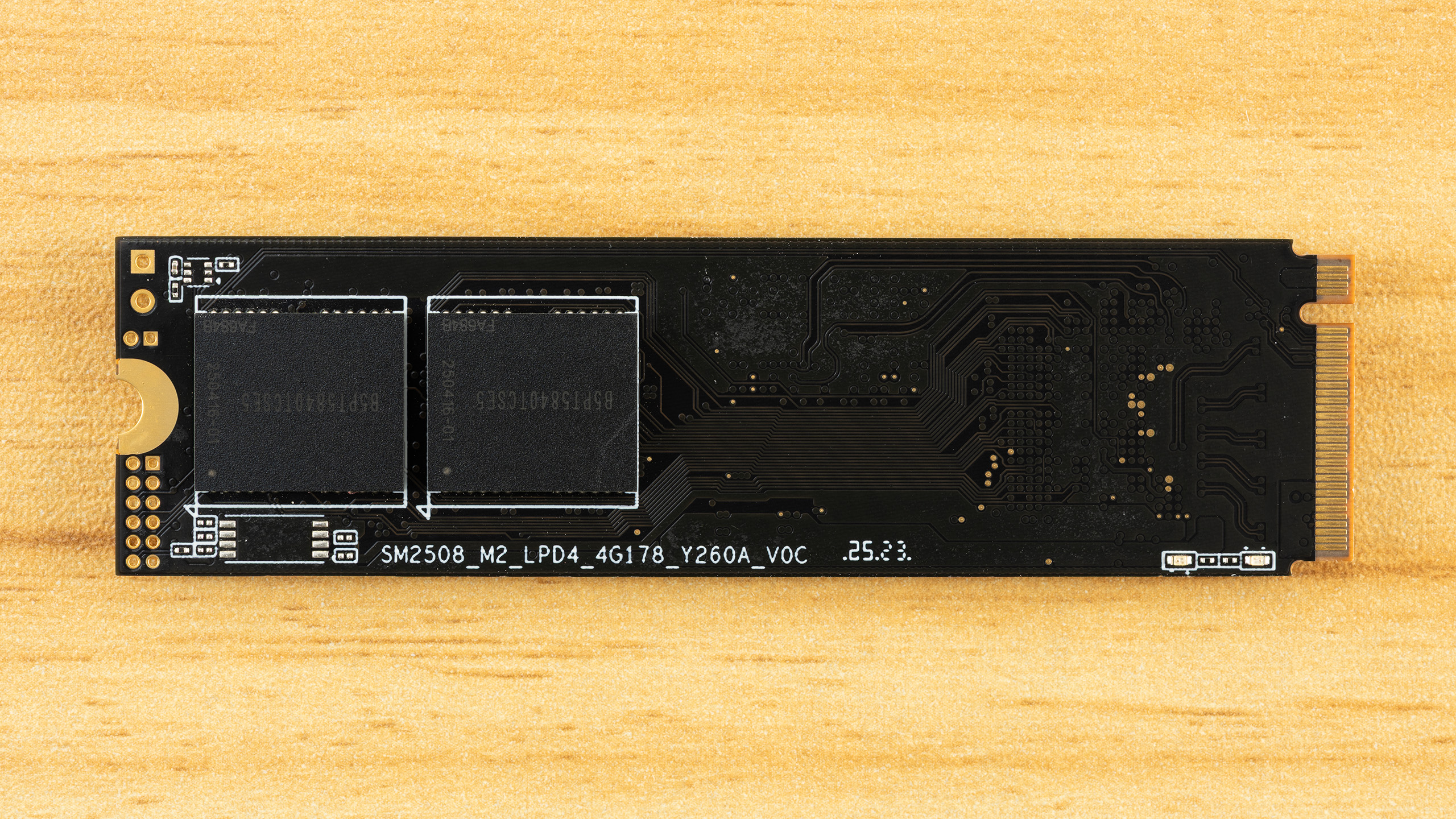
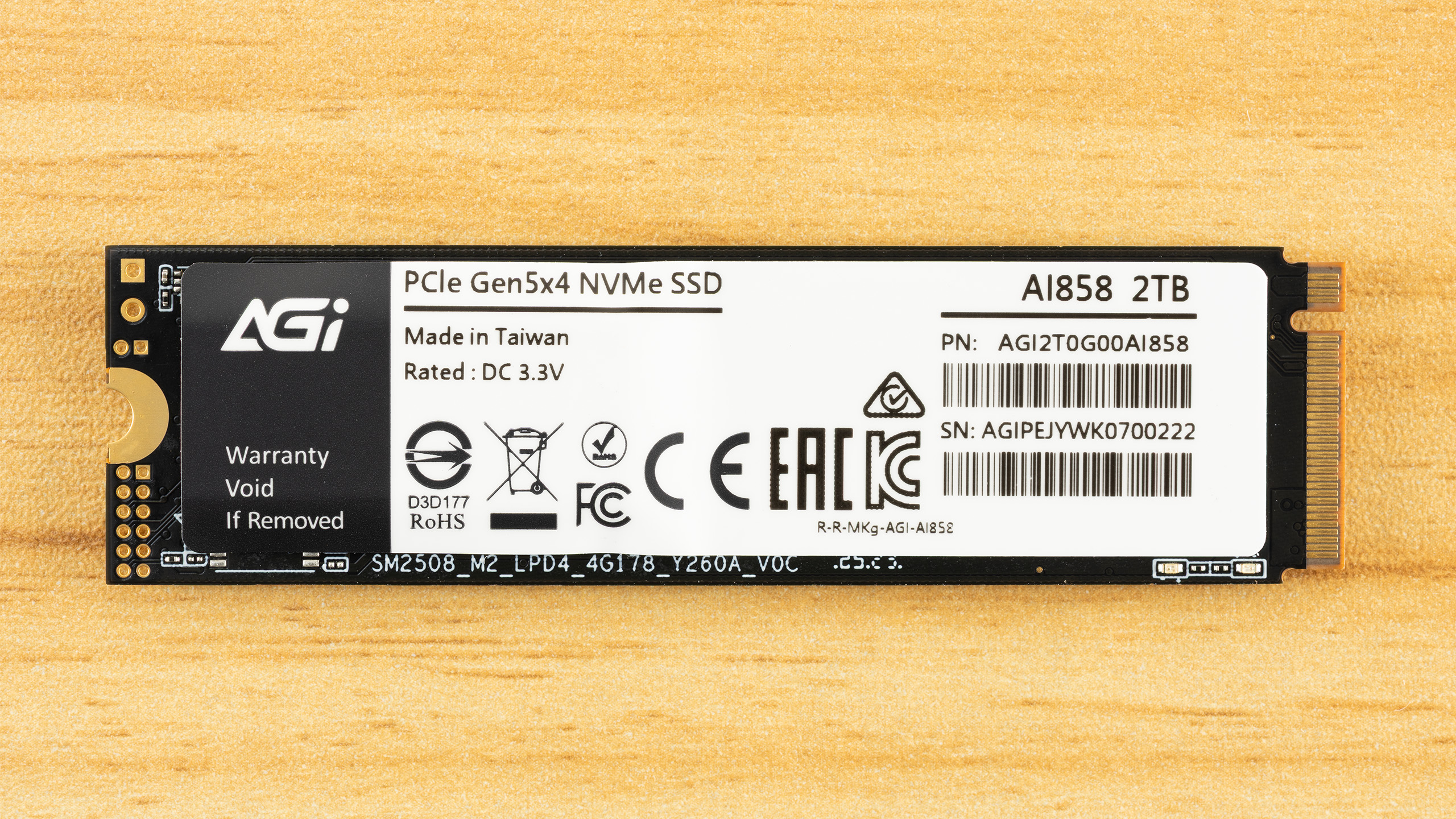
The PCB silkscreen reveals manufacturing details: SM2508 controller, LPDDR4 DRAM, four BGA178 NAND packages, and a production date of week 23 of 2025. That kind of transparency helps buyers verify components match the spec sheet.
What's missing from the AGI AI858?
Software. AGI provides nothing beyond a spec sheet PDF. No drive health utility, no firmware updater, no cloning tool. Tom's Hardware recommends CrystalDiskInfo for SMART data, CrystalDiskMark for benchmarks, and Clonezilla or Rescuezilla for disk imaging. These are free and capable, but competitors like Samsung and WD bundle their own apps with firmware push notifications and secure erase options.
The warranty is standard: five years and 1,500 TBW for the 2TB model, scaling to 3,000 TBW at 4TB. That's slightly above average for consumer NVMe drives but not exceptional. The bigger question for buyers is AGI's track record on firmware updates and RMA responsiveness compared to established brands.
How does the AI858 compare to alternatives?
| Drive | Capacity | Seq. Read | Seq. Write | Price |
|---|---|---|---|---|
| AGI AI858 | 2TB | 14,000 MB/s | 13,000 MB/s | $254 |
| Seagate FireCuda 540 | 2TB | 10,000 MB/s | 10,000 MB/s | $280 |
| Samsung 990 Pro | 2TB | 7,450 MB/s | 6,900 MB/s | $200 |
| TeamGroup G70 Pro | 2TB | 7,400 MB/s | 6,600 MB/s | $327 |
The Samsung 990 Pro remains cheaper, but it tops out at PCIe 4.0 speeds. The FireCuda 540 matches the AI858's interface but trails on raw throughput. TeamGroup's G70 Pro offers more capacity options, including 8TB, but costs more and delivers lower peak speeds. For buyers who need PCIe 5.0 performance today without paying flagship prices, the AI858 occupies a narrow but compelling niche.
Should you buy the AGI AI858?
If you're building a new workstation or gaming rig with a PCIe 5.0 motherboard and want to saturate that bandwidth without spending $400+, the AI858 makes sense. The SM2508 controller is proven, the Micron flash is mainstream, and the heatsink is included. The missing software is annoying but not disqualifying. For PS5 users or laptop upgraders, the double-sided design and heatsink height may cause fitment issues.
Community sentiment on forums like r/NewMaxx is cautiously optimistic. Enthusiasts appreciate the price-to-performance ratio but remain skeptical of AGI's long-term firmware support. If you're comfortable with third-party tools and the occasional firmware hunt, the AI858 rewards that tolerance with genuine PCIe 5.0 speeds at a PCIe 4.0 budget.
Frequently Asked Questions
Is the AGI AI858 compatible with PS5?
Technically yes. The M.2 2280 form factor fits, and speeds exceed PS5 requirements. However, the double-sided design and included heatsink may require removal or replacement to fit the console's SSD bay.
Does the AGI AI858 need a heatsink?
AGI includes one pre-installed. PCIe 5.0 drives generate more heat than Gen4, so a heatsink is strongly recommended. The included unit is effective for desktop use.
What controller does the AGI AI858 use?
Silicon Motion's SM2508, a 6nm chip that runs cooler than earlier PCIe 5.0 controllers. It supports NVMe 2.0 and pairs with LPDDR4 DRAM.
How long is the AGI AI858 warranty?
Five years, with endurance ratings of 750 TBW (1TB), 1,500 TBW (2TB), and 3,000 TBW (4TB).
Does AGI provide SSD management software?
No. AGI offers no companion software. Use CrystalDiskInfo for drive health and Clonezilla for cloning.
Logicity's Take
The AI858 signals that PCIe 5.0 has matured past the early-adopter tax. Two years ago, Gen5 drives cost $600+ for 2TB and ran hot enough to throttle. Now you can hit 14,000 MB/s for $254 with an effective heatsink included. AGI's brand reputation remains the wild card. Buyers comfortable with a lesser-known vendor get flagship speeds at midrange prices; those who prioritize long-term support may still prefer Samsung or WD despite paying more.
Another high-performance component hitting aggressive price points this month
Understanding the chip packaging tech behind controllers like the SM2508
Need Help Implementing This?
Building a workstation or storage array around PCIe 5.0 drives? Logicity's hardware consulting team can help you spec components, benchmark real-world workloads, and avoid compatibility pitfalls. Reach out at consulting@logicity.in.
Source: Latest from Tom's Hardware
Manaal Khan
Tech & Innovation Writer
اقرأ أيضاً

رأي مغاير: كيف يؤثر اختراق الأمن الداخلي الأميركي على شركاتنا الخاصة؟
في ظل اختراق عقود الأمن الداخلي الأميركي مع شركات خاصة، نناقش تأثير هذا الاختراق على مستقبل الأمن السيبراني. نستعرض الإحصاءات الموثوقة ونناقش كيف يمكن للشركات الخاصة أن تتعامل مع هذا التهديد. استمتع بقراءة هذا التحليل العميق

الإنسان في زمن ما بعد الوجود البشري: نحو نظام للتعايش بين الإنسان والروبوت - Centre for Arab Unity Studies
في هذا المقال، سنناقش كيف يمكن للبشر والروبوتات التعايش في نظام متكامل. سنستعرض التحديات والحلول المحتملة التي تضعها شركات مثل جوجل وأمازون. كما سنلقي نظرة على التوقعات المستقبلية وفقًا لتقرير ماكنزي

إطلاق ناسا لمهمة مأهولة إلى القمر: خطوة تاريخية نحو استكشاف الفضاء
تعتبر المهمة الجديدة خطوة هامة نحو استكشاف الفضاء وتطوير التكنولوجيا. سوف تشمل المهمة إرسال رواد فضاء إلى سطح القمر لconducting تجارب علمية. ستسهم هذه المهمة في تطوير فهمنا للفضاء وتحسين التكنولوجيا المستخدمة في استكشاف الفضاء.