007 First Light Skips FSR 4 and XeSS, Joins 2026's Pattern

Key Takeaways
- 007 First Light supports DLSS 4.5 with Multi Frame Generation but only includes FSR 3.1.5 with no frame generation
- Intel XeSS is completely absent from the game, continuing a pattern seen in other 2026 releases
- Nvidia denies blocking competitors' tech, stating it provides tools for any developer to integrate DLSS
If you own an Nvidia RTX graphics card, you probably haven't noticed a problem. Every major 2026 release supports the full DLSS AI suite. But AMD Radeon and Intel Arc owners are starting to see a pattern. And it's not a good one.
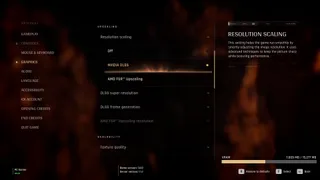
IO Interactive's 007 First Light launched with DLSS 4.5 Super Resolution and Multi Frame Generation. The game lets Nvidia users switch between DLAA for pixel-perfect anti-aliasing or scale down to Ultra Performance mode. It's the full package.
AMD users get less. The game offers FSR Quality, Balanced, and Performance modes. No native AA option. No Ultra Performance. No FSR Frame Generation. And for RX 9000-series owners hoping for FSR 4, the game ships with version 3.1.5 instead.
Intel XeSS? Not present at all.
A Pattern Across 2026 Releases
007 First Light isn't an outlier. Several major 2026 games show the same gap between Nvidia support and everyone else.
Forza Horizon 6 offers a decent spread of FSR and XeSS upscaling modes, including Native AA. But it's stuck on FSR 3.1.5, and neither AMD nor Intel frame generation is available.
Pragmata does include FSR 4.1. That's progress. But there's no frame generation, and XeSS is absent entirely.
Resident Evil: Requiem comes closest to parity. It has the full suite of FSR 3 and 4, plus DLSS 4 (upgradeable to 4.5 via the Nvidia App). But XeSS support is still missing.
| Game | DLSS | FSR Version | FSR Frame Gen | XeSS |
|---|---|---|---|---|
| 007 First Light | 4.5 + Multi Frame Gen | 3.1.5 | No | No |
| Forza Horizon 6 | Yes | 3.1.5 | No | Partial |
| Pragmata | Yes | 4.1 | No | No |
| Resident Evil: Requiem | 4 / 4.5 | 3 & 4 | Unknown | No |
Path tracing and AI-based ray tracing denoisers present an even starker divide. AMD and Intel GPUs can't use these features in current games, even though recent Radeon hardware has the capability. AMD's FSR Redstone denoiser still hasn't shipped.
Is Nvidia Blocking Competitors?
Some players suspect Nvidia might be contractually preventing developers from implementing AMD and Intel tech. But the company denies this directly.
“Nvidia does not and will not block, restrict, discourage, or hinder developers from implementing competitor technologies in any way.”
— Keita Iida, vice president of developer relations at Nvidia
Nvidia says it provides support and tools for developers to integrate DLSS. The company even created Nvidia Streamline to make integration easier. But making DLSS easy doesn't explain why FSR and XeSS lag behind.
What's Actually Happening
The likely explanation is simpler than conspiracy. Nvidia dominates the discrete GPU market. Developers prioritize where their players are. DLSS is also more mature, better documented, and has more engineering support behind it.
AMD's FSR 4 only launched with RDNA 4 earlier this year. Intel's Arc GPU adoption remains limited. Developers working on tight schedules may implement what's easiest and most requested.
That doesn't make it fair. Someone who bought an RX 9070 XT or Arc B580 deserves current upscaling tech in current games. The performance gap between FSR 3.1.5 and FSR 4 matters, especially at 4K.
What AMD and Intel Need to Do
AMD needs to ship FSR Redstone. The denoiser has been announced but remains unavailable. Without it, AMD users can't access path tracing even when their hardware supports it.
Intel needs to push XeSS adoption harder. The technology works well when implemented, but it's becoming the forgotten option. If games keep launching without it, Arc GPU owners will have fewer reasons to stick with the platform.
Both companies could also offer more direct engineering support to studios. Nvidia embeds engineers with developers. That hands-on approach gets DLSS into games before launch day.
Logicity's Take
Frequently Asked Questions
Does 007 First Light support AMD FSR 4?
No. The game only supports FSR 3.1.5 with Quality, Balanced, and Performance modes. It lacks FSR Frame Generation as well.
Is Intel XeSS available in 007 First Light?
No. Intel XeSS is completely absent from the game's upscaling options.
Which upscaling technology does 007 First Light support best?
Nvidia DLSS 4.5 with Super Resolution and Multi Frame Generation. Nvidia users get the full feature set including DLAA and Ultra Performance modes.
Why do 2026 games favor DLSS over FSR and XeSS?
Nvidia's market dominance, mature development tools, and direct engineering support with studios make DLSS the path of least resistance for developers.
Will AMD FSR 4 be added to 007 First Light later?
There's no official confirmation. Some games receive post-launch updates for newer upscaling versions, but it depends on the developer's priorities.
Memory manufacturers are riding AI and gaming demand to record valuations
Need Help Implementing This?
Source: PCGamer latest
Manaal Khan
Tech & Innovation Writer
اقرأ أيضاً

رأي مغاير: كيف يؤثر اختراق الأمن الداخلي الأميركي على شركاتنا الخاصة؟
في ظل اختراق عقود الأمن الداخلي الأميركي مع شركات خاصة، نناقش تأثير هذا الاختراق على مستقبل الأمن السيبراني. نستعرض الإحصاءات الموثوقة ونناقش كيف يمكن للشركات الخاصة أن تتعامل مع هذا التهديد. استمتع بقراءة هذا التحليل العميق

الإنسان في زمن ما بعد الوجود البشري: نحو نظام للتعايش بين الإنسان والروبوت - Centre for Arab Unity Studies
في هذا المقال، سنناقش كيف يمكن للبشر والروبوتات التعايش في نظام متكامل. سنستعرض التحديات والحلول المحتملة التي تضعها شركات مثل جوجل وأمازون. كما سنلقي نظرة على التوقعات المستقبلية وفقًا لتقرير ماكنزي

إطلاق ناسا لمهمة مأهولة إلى القمر: خطوة تاريخية نحو استكشاف الفضاء
تعتبر المهمة الجديدة خطوة هامة نحو استكشاف الفضاء وتطوير التكنولوجيا. سوف تشمل المهمة إرسال رواد فضاء إلى سطح القمر لconducting تجارب علمية. ستسهم هذه المهمة في تطوير فهمنا للفضاء وتحسين التكنولوجيا المستخدمة في استكشاف الفضاء.