Xiaomi 17T vs 17T Pro: Is the €150 Upgrade Worth It?
Key Takeaways
- The 17T Pro packs a 7,000mAh battery versus 6,500mAh in the vanilla, with 100W wired and 50W wireless charging
- Display differences are minimal. The 144Hz refresh rate on the Pro is rarely utilized in real-world use
- The standard 17T actually has better, livelier speakers with more pronounced mids
The Xiaomi 17T series arrives eight months after the 15T launch, and buyers face a familiar question: is the Xiaomi 17T good enough, or does the 17T Pro justify its €150 premium? Unlike previous generations, Xiaomi has made a deliberate choice to differentiate these phones beyond just internals. The 17T is now a compact flagship. The 17T Pro is the battery and charging champion.
This isn't just spec sheet padding. The two phones now serve different users with different priorities. Here's what actually matters in the comparison.
Size and Build: Same Materials, Different Footprint
For the first time in the T series, the vanilla and Pro models have different dimensions. The 17T is shorter, narrower, and lighter than the 17T Pro because it carries a smaller display. Previous generations like the 15T and 15T Pro shared identical footprints.
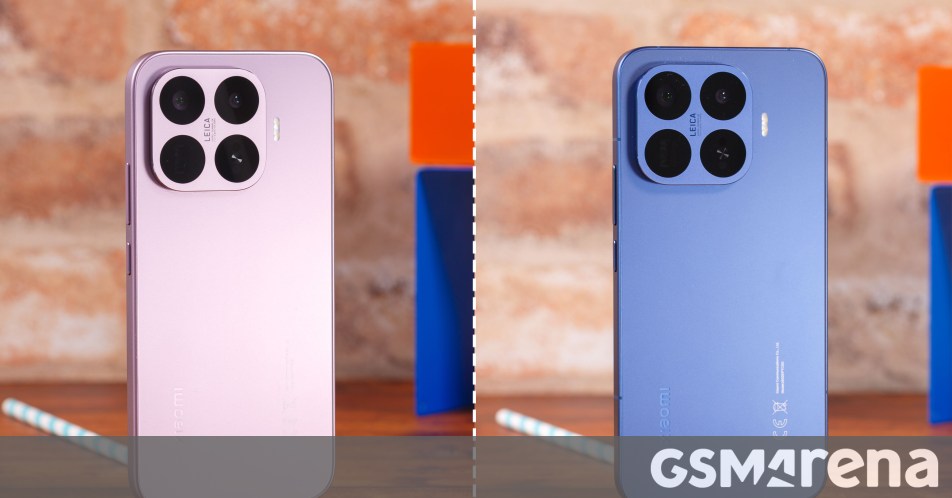
Both phones use the same materials: Gorilla Glass 7i on front and back, aluminum frame, IP68 water and dust resistance. Color options are identical across both models. If you want a more pocketable flagship without sacrificing build quality, the 17T wins by default.
Display: The 144Hz Myth
The 17T Pro has a larger screen. It also supports 144Hz refresh rate versus 120Hz on the standard model. Those are the only display differences. Brightness, 12-bit color depth, Dolby Vision, and HDR10+ support are identical.
Here's the catch: 144Hz rarely gets used. During testing, the 17T Pro almost never hit that maximum refresh rate in real-world apps. Most content and interfaces cap at 120Hz anyway. If you're choosing the Pro for the display alone, reconsider.
| Feature | Xiaomi 17T | Xiaomi 17T Pro |
|---|---|---|
| Battery capacity | 6,500mAh | 7,000mAh |
| Wired charging | 67W | 100W |
| Wireless charging | No | 50W |
| Max refresh rate | 120Hz | 144Hz |
| Size | Compact | Larger |
| IP rating | IP68 | IP68 |
Battery: Where the Pro Pulls Ahead
This is the clearest win for the 17T Pro. It packs a 7,000mAh silicon-carbon battery versus 6,500mAh in the standard model. In every battery test, the Pro outlasted the vanilla 17T. Screen-on and screen-off runtimes were disproportionately higher on the Pro, suggesting the larger battery isn't the only factor. Display and chipset efficiency seem to play a role too.
“We didn't just want to make a bigger battery; we wanted to rewrite the density laws of smartphone hardware.”
— Lei Jun, Founder & CEO of Xiaomi
Xiaomi's official launch highlighted fitting that 7,000mAh cell into an 8.3mm body as a breakthrough moment. For users who need multi-day battery life, this alone could justify the upgrade.
Charging: Speed and Wireless Options
The 17T Pro charges at 100W wired. The 17T caps at 67W. At the 15-minute, 30-minute, and full-charge checkpoints, the Pro is considerably faster. The gap isn't trivial. If you're the type who charges while getting ready in the morning, the Pro gives you meaningful extra battery in that window.
The Pro also supports 50W wireless charging when paired with a Xiaomi wireless charger. The standard 17T has no wireless charging at all. For desk workers or anyone with wireless pads already in their setup, this is a genuine convenience feature.
Speakers: The 17T's Surprise Win
Here's an unexpected result: the cheaper phone sounds better. The Xiaomi 17T's speakers are louder and livelier than the 17T Pro. Mids are more pronounced, giving vocals more presence. Bass is underwhelming on both, which is typical for smartphones, but the 17T is clearly more enjoyable for media consumption.
If you watch a lot of video content without headphones, the standard model delivers a better experience.
Chipset and Performance
Both phones run MediaTek Dimensity chips. The source confirms they're from the same lineup, though specific model numbers and benchmark comparisons weren't detailed. What's clear is that both devices deliver flagship-tier performance. The Pro's chip appears to be more efficient, contributing to those better battery numbers.
The Pricing Reality
The €150 gap is significant. For that money, the Pro gives you 500mAh more battery, faster wired charging, wireless charging capability, a larger screen, and a theoretically higher refresh rate that rarely activates. You lose nothing on build quality, water resistance, or core features.
“The 17T series is no longer just a 'budget alternative'; with the inclusion of flagship-grade periscope zoom and Si/C battery tech, it forces us to rethink what a premium flagship can cost.”
— Sarah Chen, Lead Analyst at TechRadar
Online communities are split. Reddit users on r/Xiaomi and r/Android question whether the new features justify what they see as a departure from the "flagship killer" value proposition. On HackerNews, discussion focuses more on the underlying tech: 3nm process nodes and cross-platform file sharing implications.
Who Should Buy Which?
Buy the Xiaomi 17T if you want a compact flagship with strong speakers and don't need wireless charging. The 120Hz display is indistinguishable from 144Hz in daily use. You'll save €150 and get a phone that fits better in pockets and smaller hands.
Buy the Xiaomi 17T Pro if battery life is your top priority. The 7,000mAh cell and 100W charging solve phone anxiety. Wireless charging is a genuine convenience if you already have the infrastructure. The larger display matters if you consume a lot of media.
✅ Pros
- • 17T Pro delivers significantly longer battery life with 7,000mAh cell
- • 100W wired and 50W wireless charging provide genuine speed advantages
- • Both models share premium IP68 build and Gorilla Glass 7i
- • Standard 17T offers compact form factor without compromising core features
❌ Cons
- • 144Hz refresh rate on Pro rarely activates in real-world use
- • 17T Pro costs €150 more with diminishing returns on display quality
- • Standard 17T loses wireless charging entirely
- • Bass performance is underwhelming on both models' speakers
Logicity's Take
Frequently Asked Questions
Is the Xiaomi 17T Pro worth €150 more than the 17T?
For most users, no. The main advantages are battery capacity (7,000mAh vs 6,500mAh), wireless charging, and faster wired charging. The 144Hz display rarely activates in real use.
Which Xiaomi 17T model has better speakers?
The standard Xiaomi 17T has louder, livelier speakers with more pronounced mids. The Pro has weaker audio performance despite its higher price.
Does the Xiaomi 17T support wireless charging?
No. Only the 17T Pro supports wireless charging at 50W with a compatible Xiaomi charger.
How long does the Xiaomi 17T Pro battery last?
With its 7,000mAh silicon-carbon battery, Xiaomi claims nearly two days of usage on a single charge. Testing showed it outperformed the standard 17T in all battery benchmarks.
Are the Xiaomi 17T and 17T Pro the same size?
No. Unlike the previous 15T generation, the 17T is noticeably smaller, shorter, narrower, and lighter than the 17T Pro due to its smaller display.
How Apple is approaching flagship thermal management
Recent charging issues affecting competing flagships
Need Help Implementing This?
Source: GSMArena.com / Ro
Manaal Khan
Tech & Innovation Writer
اقرأ أيضاً

رأي مغاير: كيف يؤثر اختراق الأمن الداخلي الأميركي على شركاتنا الخاصة؟
في ظل اختراق عقود الأمن الداخلي الأميركي مع شركات خاصة، نناقش تأثير هذا الاختراق على مستقبل الأمن السيبراني. نستعرض الإحصاءات الموثوقة ونناقش كيف يمكن للشركات الخاصة أن تتعامل مع هذا التهديد. استمتع بقراءة هذا التحليل العميق

الإنسان في زمن ما بعد الوجود البشري: نحو نظام للتعايش بين الإنسان والروبوت - Centre for Arab Unity Studies
في هذا المقال، سنناقش كيف يمكن للبشر والروبوتات التعايش في نظام متكامل. سنستعرض التحديات والحلول المحتملة التي تضعها شركات مثل جوجل وأمازون. كما سنلقي نظرة على التوقعات المستقبلية وفقًا لتقرير ماكنزي

إطلاق ناسا لمهمة مأهولة إلى القمر: خطوة تاريخية نحو استكشاف الفضاء
تعتبر المهمة الجديدة خطوة هامة نحو استكشاف الفضاء وتطوير التكنولوجيا. سوف تشمل المهمة إرسال رواد فضاء إلى سطح القمر لconducting تجارب علمية. ستسهم هذه المهمة في تطوير فهمنا للفضاء وتحسين التكنولوجيا المستخدمة في استكشاف الفضاء.