Xiaomi 17T Series Launches With Periscope Cameras, 7,000mAh Batteries
Key Takeaways
- Both 17T models now include 50MP 5x periscope cameras with 10x lossless zoom and 30cm macro capability
- Silicon-carbon battery tech pushes capacity to 6,500mAh on 17T and 7,000mAh on 17T Pro
- Launch bundles offer Redmi Pad 2 for €100 or Xiaomi Pad 8 for €300, saving up to 50%
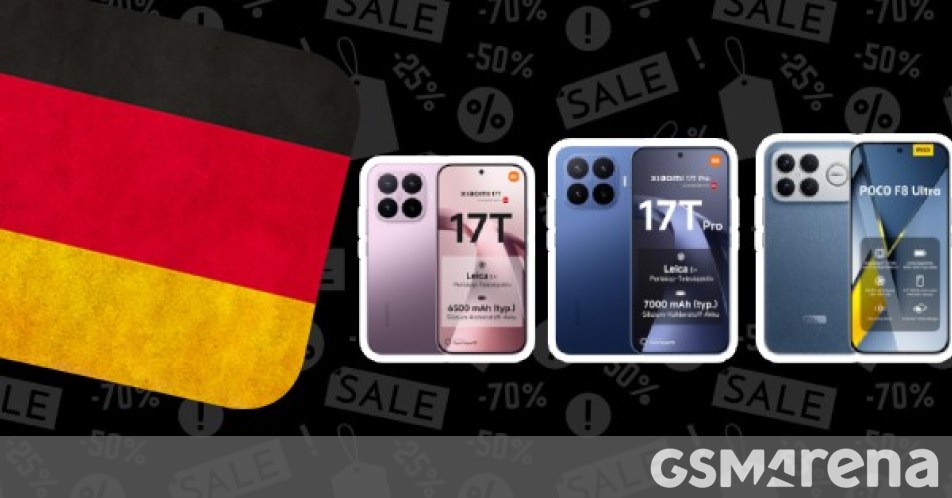
Xiaomi skipped the 16T entirely. The company's new 17T series aligns with its flagship numbering while pushing periscope camera hardware into a price bracket typically dominated by basic telephoto lenses.
The two phones launched this week in Europe. The standard Xiaomi 17T starts at €100 more than last year's 15T, a price hike Xiaomi justifies with camera and battery upgrades that were previously reserved for its Ultra line.
“The 17T series bridges the gap between our premium flagship and high-performance mid-range, bringing professional-grade periscope zoom to a broader audience.”
— Lu Weibing, President of Xiaomi Corporation
The Camera Upgrade That Matters
Last year's 15T had a 2x telephoto with a 46mm equivalent focal length. The 17T jumps to a 50MP periscope module with 5x optical zoom and 115mm equivalent. That's the same camera hardware found in the 17T Pro.
The periscope shoots 30cm macro shots and handles 10x lossless zoom through sensor cropping. Xiaomi pairs it with a 50MP main camera using a 1/1.55" sensor, a 12MP ultrawide, and a 32MP selfie camera.
The 17T Pro gets a larger main sensor at 1/1.31" with 1.2µm pixels compared to the standard model's 1.0µm pixels. In practical terms, this means better low-light performance and slightly more detail in good lighting.
Silicon-Carbon Batteries Change the Math
Xiaomi shrunk the 17T's display to 6.59" from the 15T's larger panel, but the battery grew by 1,000mAh to 6,500mAh. The company credits silicon-carbon battery technology, which packs more energy into the same physical volume.
The Pro model keeps its 6.83" display and pushes battery capacity to 7,000mAh. That's 1,500mAh more than its predecessor. Both phones support reverse charging at up to 22.5W, turning them into power banks for earbuds, watches, or other phones.
Charging speeds split between the two models. The 17T maxes out at 67W with Xiaomi's HyperCharge adapter or 50W with standard USB PPS chargers. The 17T Pro jumps to 100W wired charging and adds 50W wireless.
Display and Chip Differences
Both phones use 12-bit OLED panels, but refresh rates differ. The standard 17T runs at 120Hz while the Pro pushes to 144Hz. Whether you'll notice the 24Hz difference depends on your sensitivity to motion smoothness.
Under the hood, the 17T runs MediaTek's Dimensity 8500 while the Pro gets the flagship Dimensity 9500. The performance gap matters most for intensive games and sustained workloads. For everyday tasks, both chips handle everything without issue.
| Spec | Xiaomi 17T | Xiaomi 17T Pro |
|---|---|---|
| Display | 6.59" 120Hz OLED | 6.83" 144Hz OLED |
| Battery | 6,500mAh | 7,000mAh |
| Charging | 67W wired | 100W wired, 50W wireless |
| Chipset | Dimensity 8500 | Dimensity 9500 |
| Main camera sensor | 1/1.55" (1.0µm pixels) | 1/1.31" (1.2µm pixels) |
| Periscope | 50MP 5x/115mm | 50MP 5x/115mm |
The Tablet Bundle Strategy
Xiaomi isn't discounting the phones themselves. Instead, the company offers tablet bundles at launch. Buy either 17T model and you can add a Redmi Pad 2 for €100 (normally €200) or a Xiaomi Pad 8 for €300 (normally €450).
The Redmi Pad 2 makes sense as a secondary screen or media player. It has a 9.7" 120Hz IPS LCD, Snapdragon 6s 4G Gen 2 chipset, and 7,600mAh battery. The 4GB RAM limitation shows in heavy multitasking, but microSD expansion helps with the 64GB storage.
The Xiaomi Pad 8 targets productivity users. Its 11.2" 144Hz display pairs with a Snapdragon 8s Gen 4 chip, more RAM, and a 9,200mAh battery with 45W charging. No microSD slot, but built-in storage comes in higher configurations.
European Market Positioning
Xiaomi didn't bring the 17 Max or 17 Pro Max to Europe. That leaves three options in the company's flagship line for European buyers: the two 17T models, the smaller Xiaomi 17, and the expensive Xiaomi 17 Ultra.
The Poco F8 Ultra sits as an interesting alternative. It costs less than the standard 17T while packing a Snapdragon 8 Elite Gen 5 chipset that matches or beats the Dimensity 9500 in the 17T Pro. If camera quality matters less than raw performance, the Poco might be the better buy.
Is the €100 Price Increase Worth It?
Online discussions in r/Xiaomi and tech forums split on this question. Supporters point to the periscope camera, which typically appears in phones costing €200-300 more. Critics argue that €100 buys meaningful upgrades from competitors.
The answer depends on how you shoot. If you regularly zoom past 2x, the jump from a basic telephoto to a 5x periscope with macro capability changes what photos you can take. If you rarely zoom, the battery improvements alone may not justify the premium.
Logicity's Take
Frequently Asked Questions
When will the Xiaomi 17T series be available outside Europe?
Xiaomi hasn't announced global availability dates. The 17T series launched in Europe first, with other regions typically following within 4-8 weeks based on past T-series rollouts.
Can the Xiaomi 17T charge wirelessly?
No, only the 17T Pro supports wireless charging at 50W. The standard 17T is limited to wired charging at 67W with HyperCharge or 50W with USB PPS.
What's the difference between the 17T and 17T Pro cameras?
Both have the same 50MP 5x periscope. The Pro gets a larger 1/1.31" main sensor with bigger pixels (1.2µm vs 1.0µm), improving low-light shots and overall detail.
How long do the tablet bundle deals last?
Xiaomi positions these as launch promotions. Past bundle deals have typically run 4-6 weeks after release, though availability depends on tablet stock.
Is the Dimensity 9500 better than Snapdragon 8 Gen 3?
They trade blows in benchmarks. The Dimensity 9500 leads in multi-core tasks and efficiency, while Snapdragon chips often edge ahead in GPU performance. Real-world differences are minimal for most users.
Another silicon-carbon battery implementation in a different device category
Contrasting approach to premium smartphone positioning
Need Help Implementing This?
Source: GSMArena.com / Peter
Huma Shazia
Senior AI & Tech Writer
اقرأ أيضاً

رأي مغاير: كيف يؤثر اختراق الأمن الداخلي الأميركي على شركاتنا الخاصة؟
في ظل اختراق عقود الأمن الداخلي الأميركي مع شركات خاصة، نناقش تأثير هذا الاختراق على مستقبل الأمن السيبراني. نستعرض الإحصاءات الموثوقة ونناقش كيف يمكن للشركات الخاصة أن تتعامل مع هذا التهديد. استمتع بقراءة هذا التحليل العميق

الإنسان في زمن ما بعد الوجود البشري: نحو نظام للتعايش بين الإنسان والروبوت - Centre for Arab Unity Studies
في هذا المقال، سنناقش كيف يمكن للبشر والروبوتات التعايش في نظام متكامل. سنستعرض التحديات والحلول المحتملة التي تضعها شركات مثل جوجل وأمازون. كما سنلقي نظرة على التوقعات المستقبلية وفقًا لتقرير ماكنزي

إطلاق ناسا لمهمة مأهولة إلى القمر: خطوة تاريخية نحو استكشاف الفضاء
تعتبر المهمة الجديدة خطوة هامة نحو استكشاف الفضاء وتطوير التكنولوجيا. سوف تشمل المهمة إرسال رواد فضاء إلى سطح القمر لconducting تجارب علمية. ستسهم هذه المهمة في تطوير فهمنا للفضاء وتحسين التكنولوجيا المستخدمة في استكشاف الفضاء.