Why your $300 earbuds sound terrible on calls
Key Takeaways
- Bluetooth earbuds switch from high-quality A2DP profile (48kHz) to low-quality HFP (8-16kHz) the moment you join a call
- Premium music codecs like aptX, LDAC, and AAC don't apply to the microphone path — they only work for playback
- Tiny MEMS microphones positioned near your ear canal, not your mouth, compound the problem with physics
Your wireless earbuds can make music sound studio-polished and cancel enough train noise to briefly forget you're sharing public space with humanity. Then someone on a Teams call tells you that you sound like you're broadcasting from a bathroom in a moving vehicle. This isn't a fluke, and firmware updates rarely fix it.
The gap between how your earbuds handle music and how they handle calls comes down to a fundamental Bluetooth limitation that has nothing to do with price. You can spend $50 or $500 — the call quality ceiling stays roughly the same.
Why do earbuds sound great for music but awful on calls?
When your earbuds play music, they use a Bluetooth profile called A2DP (Advanced Audio Distribution Profile). This profile streams high-quality audio in one direction only, supporting codecs like AAC, aptX, and LDAC at sample rates up to 48kHz. That's the pipeline your expensive earbuds use when they impress you at the gym.
The moment you take a call, everything changes. Your earbuds need two-way communication, which forces a switch to the Hands-Free Profile (HFP). And HFP is where quality collapses.
HFP is built around low-bit-rate voice audio, typically using narrowband CVSD at 8kHz or wideband mSBC at 16kHz. CD audio, for comparison, runs at 44.1kHz. The most common Bluetooth call scenario gives you 16kHz mono audio — your immersive stereo music experience collapses into something closer to a flat telephone feed.
Premium codecs don't help your microphone
Here's what trips up most buyers: aptX Adaptive, LDAC, and AAC are all A2DP technologies. They handle playback from a device to your headphones. They play no role in the call microphone path.
Upgrading to earbuds with a fancier music codec doesn't change how you sound to the person on the other end of your Zoom call. These are separate pipelines with separate constraints. The marketing spec sheet that lists premium codec support is irrelevant once you're speaking into that tiny microphone.
On Windows, this problem becomes especially visible. Unless your PC, Bluetooth hardware, drivers, earbuds, Windows build, and calling app all properly support the newer LE Audio path, activating the microphone pushes the headset into a lower-quality communications mode. The same earbuds can sound better on a phone call than on a laptop in Teams. The earbuds aren't changing; the audio chain is.
The physics problem: tiny mics, wrong position
Even if Bluetooth call audio weren't a quality ceiling, earbuds would still fight physics every time you speak. The hardware picking up your voice isn't a studio condenser microphone. It's a tiny MEMS capsule sitting near your ear canal, pointed roughly toward your face, competing with everything in your environment.
A standard phone call with your device held near your mouth puts the microphone 15 to 30 centimeters from your lips. A desk headset with a boom arm gets even closer. Your earbuds? They're positioned at your ear, trying to capture sound that's bouncing off walls, mixing with keyboard clicks, and competing with that coworker's conversation three desks over.
Reddit threads in r/headphones regularly feature frustrated users testing $300 earbuds against wired options. The verdict is consistent: cheap $10 wired headphones with an inline mic often sound clearer on Zoom calls than flagship wireless buds.
Will Bluetooth LE Audio fix this?
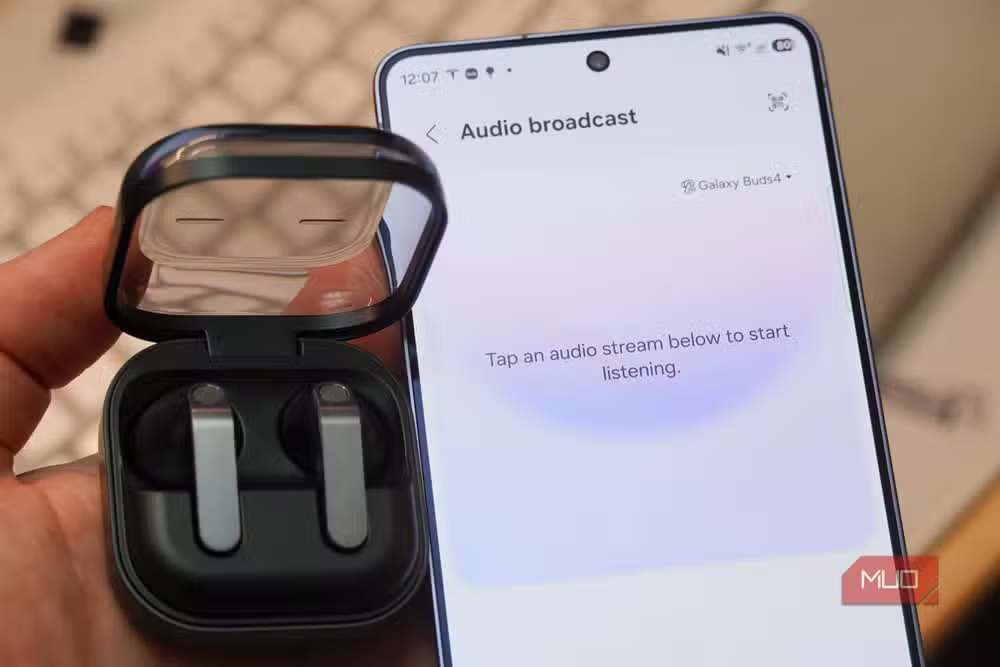
The only promising fix on the horizon is Bluetooth LE Audio and its LC3 codec. This newer standard can maintain higher-quality audio during two-way communication without the brutal quality tradeoffs of HFP.
The catch: LE Audio requires support across your entire chain. Your earbuds, phone or PC, Bluetooth chipset, operating system, and calling app all need to support it. Partial adoption means fallback to the same legacy HFP that's been disappointing callers for over a decade.
As of mid-2026, LE Audio adoption remains patchy. Android 14+ and iOS 17+ support it, but Windows implementation lags. Many calling apps still default to legacy profiles even when LE Audio is available. Full ecosystem support is likely still 18-24 months away for most users.
What actually works right now?
Until LE Audio becomes universal, your options are limited but clear:
- Use a dedicated USB headset with a boom mic for important calls — the mic position matters more than the price
- Switch to your laptop or phone's built-in mic instead of the earbuds when call quality matters
- Check if your earbuds and device both support LE Audio, and verify your calling app uses it
- For Windows users, wired headphones often outperform even flagship Bluetooth options on calls
The uncomfortable truth is that no amount of premium earbud spending solves a protocol-level bottleneck. Until the entire Bluetooth audio stack catches up to what we expect from modern communication, your calls will continue to sound worse than your music.
Android's native Bluetooth audio features have improved significantly
Frequently Asked Questions
Why do expensive earbuds sound bad on calls but great for music?
Earbuds use different Bluetooth profiles for each task. Music uses A2DP at up to 48kHz sample rate, while calls switch to HFP at only 8-16kHz. This protocol limitation affects all wireless earbuds regardless of price.
Does aptX or LDAC codec improve call quality on wireless earbuds?
No. Premium codecs like aptX, LDAC, and AAC only work for music playback (A2DP profile). They have no effect on the microphone path used during calls, which runs through the separate HFP profile.
Will Bluetooth LE Audio fix wireless earbud call quality?
Yes, eventually. LE Audio's LC3 codec can maintain higher quality during two-way communication, but it requires support across your earbuds, device, OS, and calling app. Full adoption is likely 18-24 months away for most users.
Why do my earbuds sound worse on laptop calls than phone calls?
Windows Bluetooth implementation often falls back to lower-quality legacy profiles even when better options exist. The same earbuds may sound better on a phone where the Bluetooth stack handles the connection more efficiently.
What's the best solution for clear call audio right now?
A USB headset with a boom microphone positioned close to your mouth will outperform even flagship wireless earbuds on calls. The mic position matters more than the price or codec support.
Logicity's Take
This is a rare case where the premium market has genuinely failed consumers for over a decade. Earbud makers continue advertising music codec support while knowing those specs are irrelevant for the increasingly common use case — work calls. The industry's slow LE Audio rollout suggests manufacturers have little incentive to solve a problem that current marketing successfully obscures. Buyers should treat any earbud purchase primarily as a music device until LE Audio adoption becomes universal.
Need Help Implementing This?
If your team struggles with call quality on remote meetings, consider standardizing USB headsets with boom mics for client-facing calls. For a quick audit of your current Bluetooth audio setup across Windows and mobile devices, reach out to us at contact@logicity.in.
Source: MakeUseOf
Manaal Khan
Tech & Innovation Writer
اقرأ أيضاً

رأي مغاير: كيف يؤثر اختراق الأمن الداخلي الأميركي على شركاتنا الخاصة؟
في ظل اختراق عقود الأمن الداخلي الأميركي مع شركات خاصة، نناقش تأثير هذا الاختراق على مستقبل الأمن السيبراني. نستعرض الإحصاءات الموثوقة ونناقش كيف يمكن للشركات الخاصة أن تتعامل مع هذا التهديد. استمتع بقراءة هذا التحليل العميق

الإنسان في زمن ما بعد الوجود البشري: نحو نظام للتعايش بين الإنسان والروبوت - Centre for Arab Unity Studies
في هذا المقال، سنناقش كيف يمكن للبشر والروبوتات التعايش في نظام متكامل. سنستعرض التحديات والحلول المحتملة التي تضعها شركات مثل جوجل وأمازون. كما سنلقي نظرة على التوقعات المستقبلية وفقًا لتقرير ماكنزي

إطلاق ناسا لمهمة مأهولة إلى القمر: خطوة تاريخية نحو استكشاف الفضاء
تعتبر المهمة الجديدة خطوة هامة نحو استكشاف الفضاء وتطوير التكنولوجيا. سوف تشمل المهمة إرسال رواد فضاء إلى سطح القمر لconducting تجارب علمية. ستسهم هذه المهمة في تطوير فهمنا للفضاء وتحسين التكنولوجيا المستخدمة في استكشاف الفضاء.