Why Samsung Dropped Its Class 3 Face Unlock
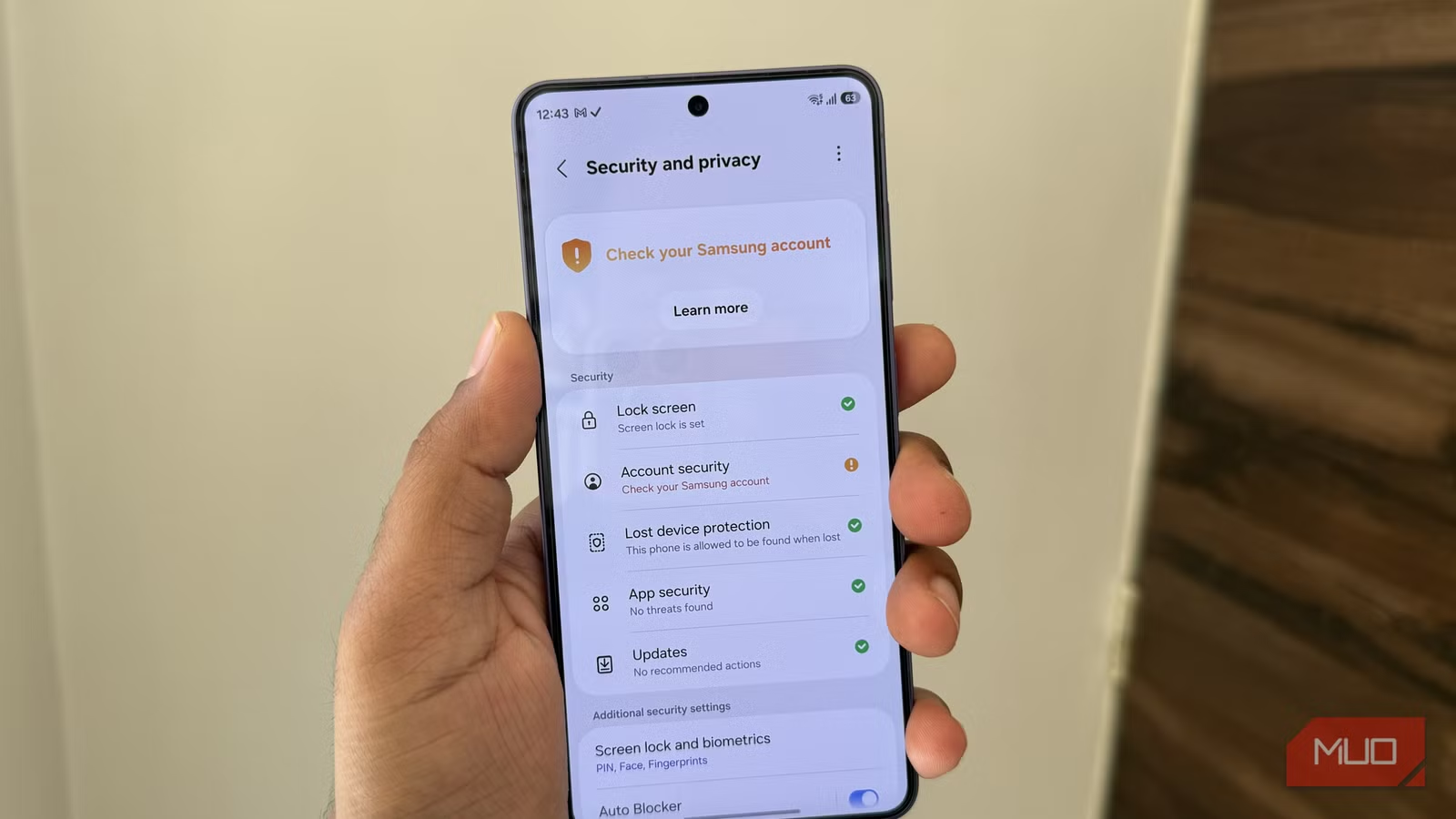
Key Takeaways
- Samsung removed its Class 3 facial recognition from Galaxy phones, downgrading security
- Google Pixel is now the only U.S. Android phone with Class 3 face unlock
- Only Class 3 biometrics can authorize banking apps and mobile payments
The biometric hierarchy most users don't know about
Every time you unlock your phone with your face or fingerprint, Android is making a security judgment. Google classifies biometric sensors into three tiers: Class 1 (Convenience), Class 2 (Weak), and Class 3 (Strong). The classification determines what your biometrics can actually do.
Class 1 and Class 2 biometrics work fine for unlocking your phone. But they can't authorize sensitive actions. Banking apps, payment services, and apps handling financial data require Class 3 biometrics. If your face unlock doesn't meet the Class 3 standard, you'll fall back to PIN or password for anything involving money.
Google evaluates biometrics on three metrics: spoof acceptance rate (how often a fake can trick it), impostor acceptance rate (how often it lets the wrong person in), and false acceptance rate. Class 3 systems must hit strict thresholds on all three.
What makes face unlock hard to get right
Facial recognition is notoriously difficult to implement securely with a single camera. A standard front-facing camera captures a 2D image. That's easy to spoof with a photograph or even a video of the phone owner's face.
Apple's Face ID solves this with multiple sensors packed into that oval camera cutout on iPhones. The system uses a flood illuminator, infrared camera, and dot projector to map your face in three dimensions. A photo won't fool it because the system needs depth data.
Android manufacturers have tried various approaches. Some added iris scanners. Others use infrared cameras. Samsung, for a time, had a combination that met Google's Class 3 standard. Then the company walked away from it.
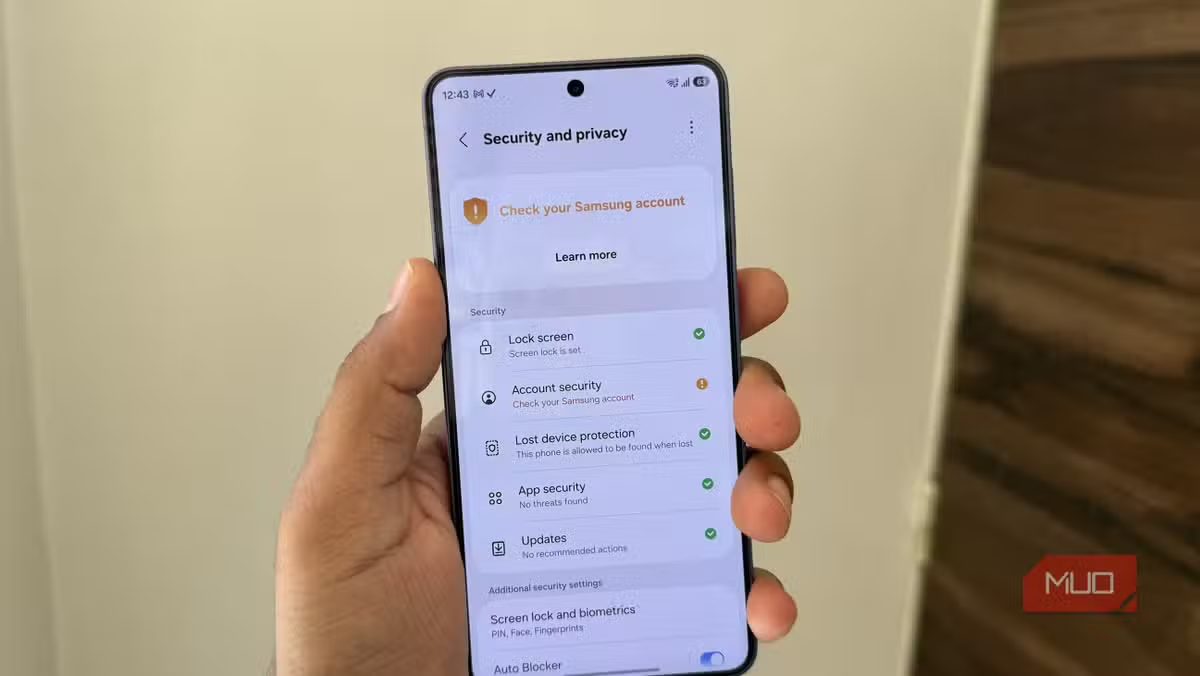
Samsung's retreat from secure face unlock
Samsung had the most secure face unlock system on Android. The company's implementation combined multiple sensor inputs to achieve Class 3 certification. Galaxy users could authorize mobile payments and access banking apps using just their face.
Then Samsung removed it. The company stripped the Class 3 facial recognition from Galaxy phones without much explanation. Current Galaxy devices still have face unlock, but it's been downgraded to a convenience feature. You can unlock your phone with your face, but you can't approve a Google Pay transaction.
The likely reasons are cost and hardware constraints. True 3D facial recognition requires dedicated sensors that take up space inside the phone. As Samsung pushed toward thinner bezels and under-display cameras, accommodating depth sensors became harder. The company may have decided the engineering tradeoffs weren't worth it.
What Galaxy users are left with
Samsung's fingerprint sensors still meet the Class 3 standard. Galaxy phones use either ultrasonic or optical fingerprint readers, and both can hit the required security thresholds. So Galaxy users aren't locked out of secure biometrics entirely.
But there's a convenience gap. Face unlock is faster in many scenarios. You glance at your phone and it's already unlocked. With fingerprint, you need to position your finger on the sensor. For users who relied on Samsung's face unlock for payments, the downgrade means extra steps.
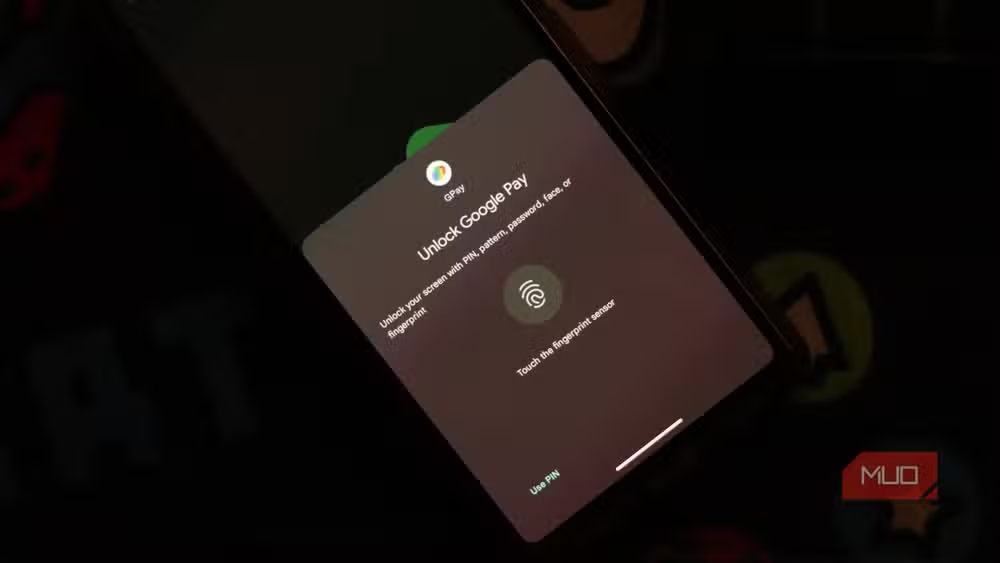
Google Pixel stands alone
With Samsung out of the picture, Google Pixel is the only phone brand in the U.S. market with Class 3 facial recognition. The Pixel lineup includes the sensor hardware needed for secure 3D face mapping.
This puts Google in an unusual position. The company that sets Android's biometric standards is also the only one meeting them for face unlock. Other manufacturers haven't invested in the required hardware, leaving Pixel as the sole option for users who want face-based authentication for sensitive apps.
Why this matters beyond convenience
The gap between Class 2 and Class 3 isn't just about app permissions. It reflects real security differences. A Class 2 face unlock can be fooled more easily. In theory, someone with a high-quality photo of your face might be able to get past a Class 2 system.
For most users, this risk is theoretical. But for anyone handling sensitive information on their phone, the biometric class matters. Enterprise users, executives with access to confidential data, and anyone who treats their phone as a secure device should understand what their biometrics can and can't protect.
The broader issue is that Android's biometric ecosystem is fragmented. Apple offers one phone line with one face unlock system that works for everything. Android users have to research whether their specific phone's specific sensors meet specific standards. That's not a great user experience.
Logicity's Take
What to do about it
If you use a Samsung phone and relied on face unlock for payments, switch to fingerprint authentication. Samsung's ultrasonic fingerprint sensors are Class 3 certified and work with banking apps and payment services.
If face unlock is a priority, the Pixel lineup is currently the only Android option in the U.S. that meets the Class 3 standard. That may change as other manufacturers add depth sensors, but right now the market is thin.
For enterprise deployments, verify which biometric class your organization's phones support before relying on facial recognition for sensitive workflows. The device settings may not make this obvious.
Related: mobile device security becomes critical when breaches expose personal data
Frequently Asked Questions
Can I use face unlock for banking apps on Samsung?
No. Samsung's current face unlock is Class 2, which doesn't meet the security requirements for banking and payment apps. Use fingerprint authentication instead.
Which Android phones have Class 3 face unlock?
In the U.S. market, only Google Pixel phones currently have Class 3 facial recognition. Samsung previously had it but removed the feature.
Is Samsung's fingerprint sensor still secure?
Yes. Samsung's ultrasonic and optical fingerprint sensors meet the Class 3 biometric standard and can authorize payments and banking apps.
Why did Samsung remove Class 3 face unlock?
Samsung hasn't stated official reasons. Likely factors include hardware costs, space constraints from thinner bezels, and engineering tradeoffs in phone design.
What's the difference between Class 2 and Class 3 biometrics?
Class 3 biometrics meet stricter security thresholds for spoof and impostor acceptance rates. Only Class 3 can authorize sensitive actions like payments and banking.
Need Help Implementing This?
Source: MakeUseOf
Huma Shazia
Senior AI & Tech Writer
اقرأ أيضاً

رأي مغاير: كيف يؤثر اختراق الأمن الداخلي الأميركي على شركاتنا الخاصة؟
في ظل اختراق عقود الأمن الداخلي الأميركي مع شركات خاصة، نناقش تأثير هذا الاختراق على مستقبل الأمن السيبراني. نستعرض الإحصاءات الموثوقة ونناقش كيف يمكن للشركات الخاصة أن تتعامل مع هذا التهديد. استمتع بقراءة هذا التحليل العميق

الإنسان في زمن ما بعد الوجود البشري: نحو نظام للتعايش بين الإنسان والروبوت - Centre for Arab Unity Studies
في هذا المقال، سنناقش كيف يمكن للبشر والروبوتات التعايش في نظام متكامل. سنستعرض التحديات والحلول المحتملة التي تضعها شركات مثل جوجل وأمازون. كما سنلقي نظرة على التوقعات المستقبلية وفقًا لتقرير ماكنزي

إطلاق ناسا لمهمة مأهولة إلى القمر: خطوة تاريخية نحو استكشاف الفضاء
تعتبر المهمة الجديدة خطوة هامة نحو استكشاف الفضاء وتطوير التكنولوجيا. سوف تشمل المهمة إرسال رواد فضاء إلى سطح القمر لconducting تجارب علمية. ستسهم هذه المهمة في تطوير فهمنا للفضاء وتحسين التكنولوجيا المستخدمة في استكشاف الفضاء.