Why One Compromised Device Can Take Down Your Home Network

Key Takeaways
- 38% of smart home devices have been compromised at least once, making every IoT gadget a potential entry point
- Network segmentation using VLANs is the most effective way to contain damage from a single compromised device
- 62% of successful smart home breaches still trace back to default factory passwords
Most people build their home network around one question: how fast can I make this? Bigger plan, flashier router, more bars. Speed is what you feel every day, and it's what the box at the store screams about.
Tech journalist Monica J. White stopped asking that question. She started asking a less fun one: what happens when this fails?
"The biggest mistake is treating your home network as a private, secure perimeter," White wrote in a recent How-To Geek guide. "In 2026, you should assume every smart toaster and bulb is a potential backdoor."
The numbers back her up. According to recent security research, 38% of smart home devices have been compromised at least once. Home networks face an average of 29 cyberattack attempts daily. IoT-related malware incidents increased 124% year-over-year entering 2026.
The Walled Garden Myth
White's argument challenges a comforting assumption: that everything inside your home network is trusted, while everything outside is the enemy.
The reality is different. The scariest device on your network is probably one you forgot you own. A cheap Wi-Fi camera. A lone smart plug. A TV that phones home constantly. These devices run firmware that rarely gets patched. Any one of them can become the foothold an attacker uses to reach everything else.
Once a single device is compromised, an attacker on your local network can often see traffic, probe other devices, and move laterally to your personal computers or NAS drives containing sensitive data.
“Security is not a product you buy, but a process you practice. Once you stop trusting the devices on your LAN, you start building the architecture that actually keeps you safe.”
— Mikko Hypponen, Chief Research Officer at WithSecure
Network Segmentation: The Core Defense
White's solution borrows from enterprise security: network segmentation. This approach isolates devices into separate virtual networks (VLANs), so a compromised smart plug cannot communicate with your work laptop or access your file server.
Security researchers consistently describe segmentation as the single most effective way to protect a home network from IoT-based attacks. It contains the damage when one device goes bad.
The principle is called "Zero Trust." Rather than assuming devices inside your network are safe, you assume they're already compromised and build barriers accordingly.
The Implementation Problem
The theory is sound. The practice is harder.
Discussions on r/homelab and Hacker News frequently highlight the difficulty of implementation. While users agree with the Zero Trust necessity, many criticize the lack of consumer-friendly router software that makes segmentation simple.
One common complaint: complex network configurations break streaming services or smart home automations. Hacker News commenters call this the "Wife/Husband Approval Factor." If your network hardening makes Netflix buffer or smart lights stop responding to voice commands, your household will revolt.
This tension between security and usability explains why most home networks remain flat. Setting up VLANs requires router firmware that supports them (many consumer routers don't), knowledge of network configuration, and patience to troubleshoot the inevitable breakage.
Building for Failure
White's broader point extends beyond security. She advocates building home networks with the assumption that something will fail.
A drive dies. A router bricks itself during a firmware update. A power flicker corrupts something at the worst possible moment. These aren't hypotheticals. They're inevitabilities.
Planning for failure means asking different questions. Not "how do I maximize speed?" but "what happens to my work files when this NAS drive fails?" Not "what's the cheapest smart camera?" but "what access does this camera have if someone hijacks it?"

Practical First Steps
For those who want to start hardening their home network without a complete overhaul, White's approach suggests several starting points.
- Change default passwords on every device. This single step would prevent 62% of successful breaches.
- Inventory your connected devices. You cannot secure what you don't know exists.
- Check if your router supports guest networks or VLANs. Guest networks can isolate IoT devices from your main computers.
- Disable remote management features you don't use. Every open port is a potential entry point.
- Update firmware regularly. Unpatched devices are the primary attack vector.
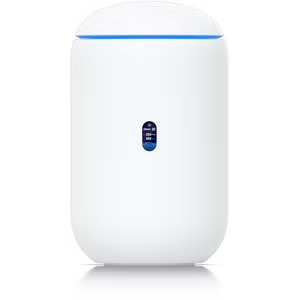
For those with more technical appetite, enterprise-grade solutions like UniFi or pfSense offer full VLAN support. The learning curve is real, but the security gains are substantial.
Logicity's Take
Understand how attackers exploit network weaknesses over extended periods
If you're managing smart home devices, AI tools can help configure them securely
Frequently Asked Questions
What is network segmentation and why does it matter?
Network segmentation divides your home network into isolated zones using VLANs. If one device is compromised, attackers cannot use it to access devices in other zones. This contains breaches to a single segment rather than exposing your entire network.
Which devices are most vulnerable on a home network?
Cheap IoT devices like smart plugs, cameras, and TVs are most vulnerable. They often run outdated firmware, rarely receive security patches, and may use default passwords. These become entry points for attackers to reach more valuable devices.
Do I need special equipment to segment my home network?
Basic segmentation can use your router's guest network feature. Full VLAN segmentation requires a router that supports VLANs (like UniFi or pfSense-based hardware) and often a managed switch. Consumer mesh routers typically don't offer these features.
Will network segmentation break my smart home devices?
It can. Many smart home devices need to communicate across your network. Segmentation requires careful configuration to allow necessary traffic while blocking dangerous access. This is the main reason home users avoid implementing it.
What is Zero Trust networking?
Zero Trust assumes no device on your network is inherently trustworthy, even devices you own. Instead of a single perimeter defense, you verify and restrict every connection. Enterprise networks have used this approach for years.
Need Help Implementing This?
Source: How-To Geek
Manaal Khan
Tech & Innovation Writer
اقرأ أيضاً

رأي مغاير: كيف يؤثر اختراق الأمن الداخلي الأميركي على شركاتنا الخاصة؟
في ظل اختراق عقود الأمن الداخلي الأميركي مع شركات خاصة، نناقش تأثير هذا الاختراق على مستقبل الأمن السيبراني. نستعرض الإحصاءات الموثوقة ونناقش كيف يمكن للشركات الخاصة أن تتعامل مع هذا التهديد. استمتع بقراءة هذا التحليل العميق

الإنسان في زمن ما بعد الوجود البشري: نحو نظام للتعايش بين الإنسان والروبوت - Centre for Arab Unity Studies
في هذا المقال، سنناقش كيف يمكن للبشر والروبوتات التعايش في نظام متكامل. سنستعرض التحديات والحلول المحتملة التي تضعها شركات مثل جوجل وأمازون. كما سنلقي نظرة على التوقعات المستقبلية وفقًا لتقرير ماكنزي

إطلاق ناسا لمهمة مأهولة إلى القمر: خطوة تاريخية نحو استكشاف الفضاء
تعتبر المهمة الجديدة خطوة هامة نحو استكشاف الفضاء وتطوير التكنولوجيا. سوف تشمل المهمة إرسال رواد فضاء إلى سطح القمر لconducting تجارب علمية. ستسهم هذه المهمة في تطوير فهمنا للفضاء وتحسين التكنولوجيا المستخدمة في استكشاف الفضاء.