Why Curved TVs Disappeared From Living Rooms
Key Takeaways
- Curved TVs required viewers to sit in a precise center position, making them impractical for family viewing
- The 20-30% price premium over flat panels couldn't be justified by the subtle visual benefits
- Curved screens survive only in gaming monitors where single-user setups make sense
The IMAX Promise That Fell Flat
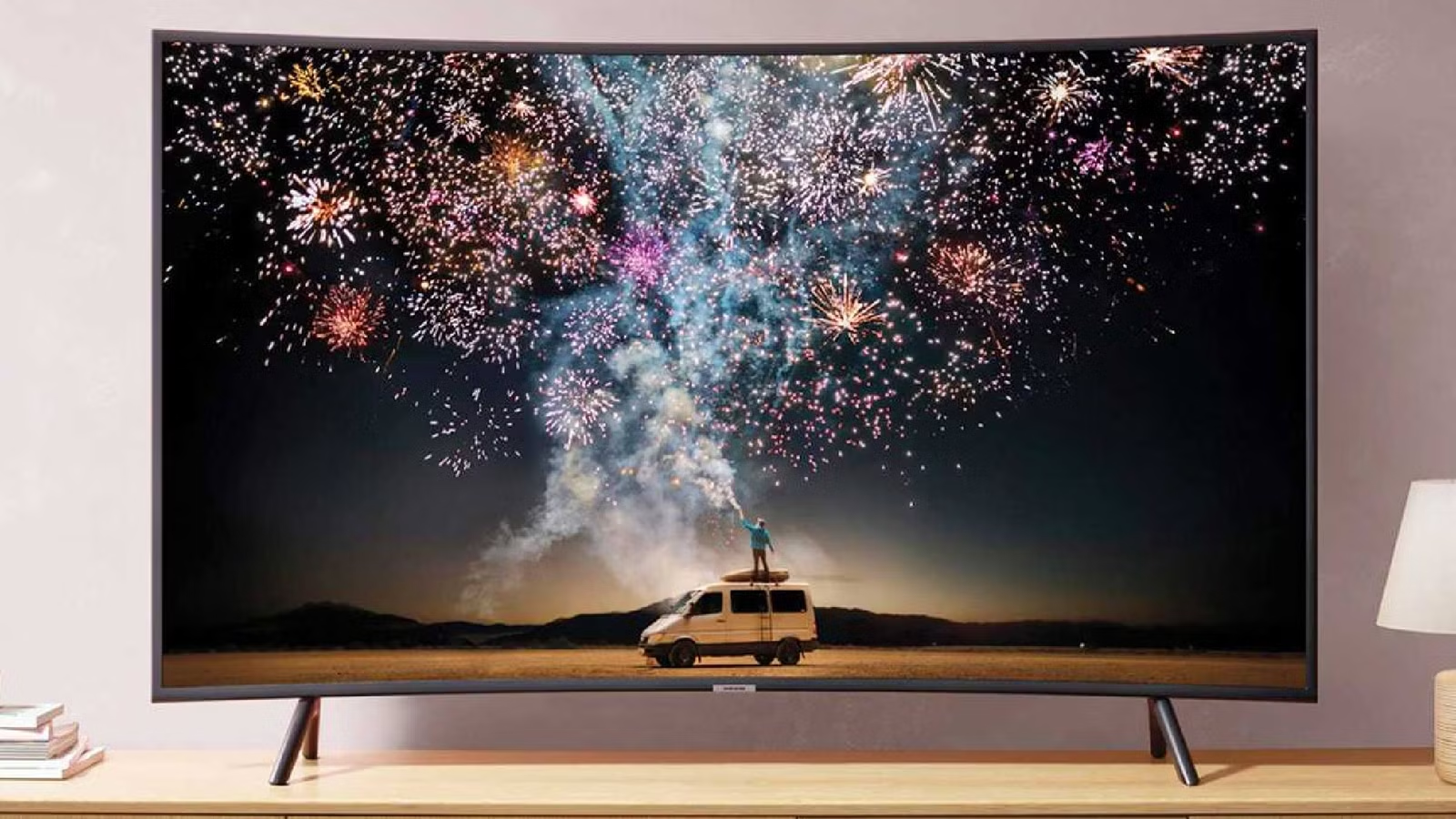
Samsung unveiled curved TVs at CES 2013 with a simple pitch: bring the IMAX theater experience home. The curve would wrap around your field of vision, making you feel like part of the action. LG, Sony, and Panasonic quickly followed.
At their peak between 2014 and 2016, curved TVs captured 28% of the global TV market. They were early adopters of HDR technology and often featured OLED panels with infinite contrast ratios. The premium positioning worked initially. Buyers paid 20-30% more than comparable flat panels.
But the IMAX comparison had a fundamental problem. IMAX screens curve dramatically across 70+ feet. A 55-inch TV in your living room? The curve is barely perceptible.
“Curved TVs are visually impressive 'dope tech,' but not a necessary upgrade for most people; they are more of a design statement than a functional improvement.”
— Marques Brownlee, Tech Reviewer
The Sweet Spot Problem
The core issue was geometry. Curved screens only look right from one position: dead center at the exact distance the curve was designed for.
“The curve is most effective when sitting in the 'sweet spot' — the center of the curve's radius — which makes the screen feel larger and more immersive.”
— Linus Sebastian, Founder of Linus Media Group
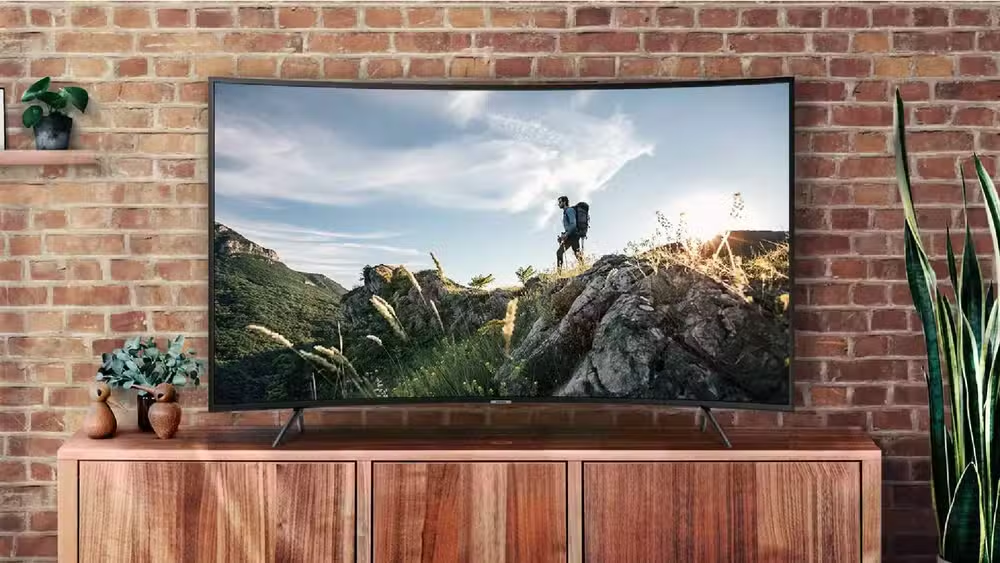
Sit anywhere else and the image distorts. Colors shift. One side appears closer than the other. For a solo viewer in a dedicated home theater, this might work. For a family of four on a sectional couch, it's a disaster. The person on each end gets a warped picture.
Reddit's r/hometheater community became a graveyard of buyer's remorse. Users complained about forcing guests into specific seats. The social awkwardness of explaining why someone couldn't sit where they wanted became a running joke.
Practical Problems Piled Up
Beyond viewing angles, curved TVs created real-world headaches. Wall mounting was either impossible or required expensive specialty brackets that pushed the TV far from the wall, defeating the sleek aesthetic buyers wanted.
Light reflections became unpredictable. A window that caused one small glare spot on a flat TV would create a stretched, curved reflection across a curved panel. Room lighting had to be carefully controlled.
- Screen delamination: users reported the screen peeling away from the frame over time
- Backlight bleed was more visible and harder to ignore on curved edges
- Furniture placement was constrained by the need to center seating precisely
- Resale value dropped faster than flat equivalents as demand dried up
Manufacturing costs stayed high. The curved glass required specialized production lines that couldn't achieve the economies of scale flat panels enjoyed. As OLED and QLED flat panels improved rapidly, the value proposition for curved screens evaporated.
Where Curved Screens Actually Make Sense
Curved displays didn't die completely. They found a home in gaming monitors, where the technology's limitations become advantages.
A gaming monitor has one user sitting 2-3 feet away, perfectly centered. The curve wraps around peripheral vision in a way that genuinely improves immersion. Ultrawide monitors benefit most. A 49-inch flat panel would require constant head turning. A curved version keeps the edges roughly equidistant from your eyes.
Gamers also report reduced eye strain on curved monitors. The uniform viewing distance means your eyes don't constantly refocus between center and edges.
What Manufacturers Learned
By 2020, Samsung and LG had quietly discontinued curved TV production. The companies pivoted to what buyers actually wanted: thinner bezels, brighter HDR, larger sizes, and better smart TV software.
The curved TV era taught manufacturers that showroom wow factor doesn't translate to living room satisfaction. A technology that impresses during a 30-second demo can frustrate for years in daily use.
Today's premium TV competition focuses on mini-LED backlighting, QD-OLED panels, and AI upscaling. None of these require compromises on viewing angles or room layout. The lesson stuck.
Logicity's Take
Frequently Asked Questions
Are curved TVs still being manufactured?
No major manufacturer produces curved TVs for living rooms anymore. Samsung and LG stopped production around 2020. Curved displays are now exclusively made for gaming monitors.
Is a curved TV better than a flat TV?
For most living room setups, no. Curved TVs only look correct from one centered viewing position. Flat TVs provide consistent image quality from any angle, making them better for group viewing.
Why do curved monitors still exist if curved TVs failed?
Gaming monitors are used by one person sitting close and centered. This setup matches exactly how curved displays work best. The single-user scenario that killed curved TVs in living rooms is standard for desktop monitors.
What should I look for in a TV instead of a curved screen?
Focus on panel technology (OLED or QLED), HDR support, refresh rate if you game, and smart TV platform quality. These features affect daily viewing far more than screen shape.
Another example of tech features that sound good but cost more than they're worth
Need Help Implementing This?
Source: MakeUseOf
Huma Shazia
Senior AI & Tech Writer
اقرأ أيضاً

رأي مغاير: كيف يؤثر اختراق الأمن الداخلي الأميركي على شركاتنا الخاصة؟
في ظل اختراق عقود الأمن الداخلي الأميركي مع شركات خاصة، نناقش تأثير هذا الاختراق على مستقبل الأمن السيبراني. نستعرض الإحصاءات الموثوقة ونناقش كيف يمكن للشركات الخاصة أن تتعامل مع هذا التهديد. استمتع بقراءة هذا التحليل العميق

الإنسان في زمن ما بعد الوجود البشري: نحو نظام للتعايش بين الإنسان والروبوت - Centre for Arab Unity Studies
في هذا المقال، سنناقش كيف يمكن للبشر والروبوتات التعايش في نظام متكامل. سنستعرض التحديات والحلول المحتملة التي تضعها شركات مثل جوجل وأمازون. كما سنلقي نظرة على التوقعات المستقبلية وفقًا لتقرير ماكنزي

إطلاق ناسا لمهمة مأهولة إلى القمر: خطوة تاريخية نحو استكشاف الفضاء
تعتبر المهمة الجديدة خطوة هامة نحو استكشاف الفضاء وتطوير التكنولوجيا. سوف تشمل المهمة إرسال رواد فضاء إلى سطح القمر لconducting تجارب علمية. ستسهم هذه المهمة في تطوير فهمنا للفضاء وتحسين التكنولوجيا المستخدمة في استكشاف الفضاء.